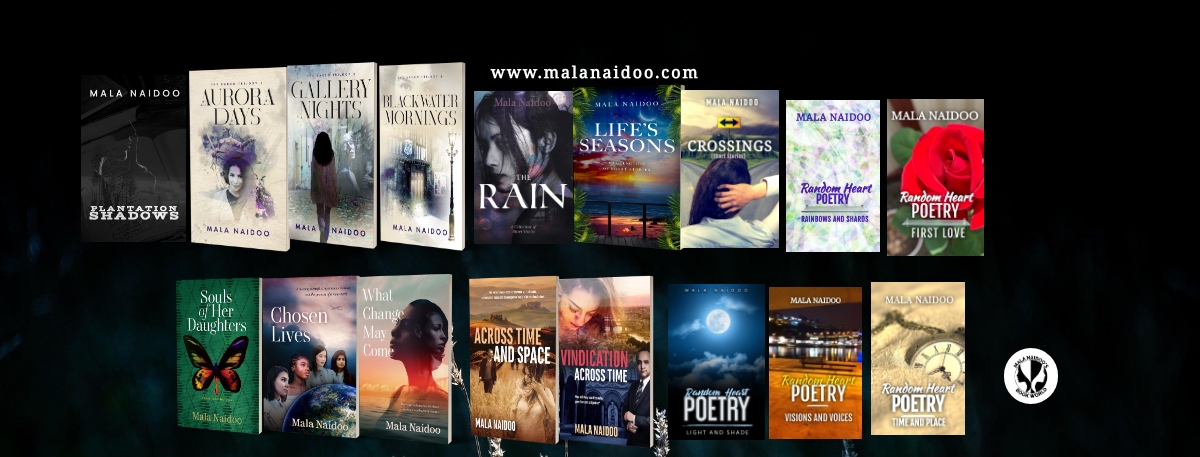
School BOOK TALK

It’s with gratitude that I write this post today in respect for the invitation to speak on reading and writing at a local school whose English Faculty and Librarian are tirelessly working to foster a love for reading to encourage students to expand their horizons and improve their speaking and writing skills.


Leading up to my talk, students were asked to send me their response to, ‘I enjoy reading because…’ – a simple question that elicited some thoughtful responses from teenagers.

School Book Talk

Here are a few lines that suggest that young readers seek refuge between the pages of a book:

  • I enjoy reading because it is a spectacular and intriguing ticket to a distinctive and captivating dimension which either creates a gulp of despair or a shiver down my spine.
  • I enjoy reading because it allows me to be in two places at once.
  • I enjoy reading because it allows me to escape reality without leaving the comfort of my home
  • I enjoy reading because it allows me to broaden my horizons without having to get on a ship and sail halfway across the world…
  • I love reading because my heart is satisfied- my heart learns more than my brain can ever know- I learn priceless lessons. It’s the portal to my heart.


Additionally to complement the study of Cry Freedom I was asked to share my apartheid, South African experience on a personal level to forge greater connections to students’ appreciation and understanding of the world through the study of their school selected text.

The sharing of a terrible history elicited compassion and questions from students on how one overcomes this decimation of one’s people and identity and yet remain simple and humble, free from anger. My response was, that drawing from family values, the people one associates with and careful selection of role models will ultimately work in sync to fortify and support the entrance into light from darkness. I cited Nelson Mandela’s ideology of tolerance, acceptance, and forgiveness as the selfless way forward. This attribute shapes the crafting of the character, Marcia Ntuli, in my novel Across Time and Space.

The final message was that reading expands understanding of diverse ways of thinking, promotes exposure to varied writing styles and elicits inspiration from the unique crafting of characters and their experiences.Ultimately it’s about allowing strength to grow from fear.


I declare after all there is no enjoyment like reading! How much sooner one tires of anything than of a book! – When I have a house of my own, I shall be miserable if I have not an excellent library. ~ Jane Austen


Here’s to many hours of delightful and informative reading!

What are your views on the benefits of reading for teenagers today and into the future? Extend the conversation today.

← Back

Thank you for your response. ✨

Need A Good Book?

Librarians are Writers’ Greatest Allies in their Ability to Influence the Joy of Reading


It gives me great pleasure, today, to introduce you to Fiona Sharman who has kindly shared her passion for her favourite books. One of Fiona’s favourite quotes is from ‘Pride and Prejudice’, when Mr. Bennet says, ‘for what do we live but to make sport for our neighbours, and laugh at them in turn?’


Fiona Sharman


Fiona works as a Teacher-Librarian at an all-girls’ school in Sydney but her friends think this is a cover for her slight obsession with reading and the beauty of well-crafted language. She came to librarianship by way of a background spent teaching English and History. Fiona is a passionate educator who loves working with and supporting young women but horse riding, sailing, traveling and generally seeking new adventures are what she enjoys when she’s not at work. Actually, books frequently accompany her on these adventures (except the horse riding) and her memories of great reads are interwoven with memories of great travel experiences –  Lucky Jim (Vietnam), The Blind Assassin (India), The Fishing Fleet (sailing in Burma)… you get the idea.  The historian in her is committed to non-fiction especially biography, the nature-lover is devoted to landscape memoirs, the feminist loves strong female protagonists, and the English teacher appreciates beautiful prose in whatever form it may come.


Here are ten of her all-time favourite reads and why she loves them.

1. Jane Eyre by Charlotte Bronte

The original, timeless, strong female protagonist. Bronte’s use of narrative voice captivates the reader from the first page, be they 14 or 40 years of age. Anyone who has ever felt like an outsider can relate to Jane and will champion her independent spirit.

2.The Blind Assassin by Margaret Atwood

I LOVE this book. Atwood is a genius but it’s also the time period, characters, split narrative, suspense and tightly controlled plot-line that won me over hook, line, and sinker.

3. The Shepherd’s Life by James Rebanks

This is so much more than a memoir account of a Lake District farmer’s life. Rebanks captures the history and beauty of the Lake District, the relationship between those who live on the fells and their environment, and contemporary conservation issues. Beyond this, Rebanks celebrates the richness of cultural traditions and humanity’s deep connection to the cycles of the natural world. He positions readers to ponder the value of informal education and knowledge in relation to more formal education systems.  Pheww…

4. A Fine Balance by Rohinton Mistry

I once read a review of this book where the reviewer exclaimed that they ‘felt sorry for anyone who hasn’t read this book’. I am not sure I can top that. Without spoiling the story, the title is a nod to the invisible line between hope and despair and it is a deeply humane story. It’s beautifully controlled narrative is set against the backdrop of the ‘Emergency Act’ of Indira Gandhi in 1970s India. Personally, I genuinely enjoy and have studied Indian history (which clearly helps) but this is a stunning book without needing to know its political context.

5. The Human Stain by Phillip Roth

A compelling story set against the background of the Clinton-Lewinsky scandal of the 1990s. While Roth’s characters are clearly flawed, it is his deeper commentary on the prejudices of the broader society that are exposed and questioned in this book. The title is also fabulous as it works on so many levels, literal and metaphorical, throughout the story.  A very thought-provoking read about individuals and the societies that determine their fate.

6. The Painted Veil by Somerset Maugham

When people ask me what I mean by ‘beautiful prose’ I usually say “Somerset Maugham”. I ADORE this man’s ability to capture in a few words or lines an entire era, its values, prejudices or (merely) the essence of human experience. I love that Maugham created female characters (like Kitty) who expose the injustices of patriarchy in real but subtle ways. I read this book (not all of it) curled up in the gorgeously excessive Victorian style Hopetoun Tea Rooms in Melbourne’s Block Arcade. The staff was so lovely that I was able to keep my table for lunch through until afternoon tea (this place usually has a queue outside all day every day). It was a total sensory indulgence – between the food, the décor and this exquisite novel. Bliss.

7. Six Degrees of Separation by Paul Guare

This play is profound in its simplicity. Inspired by true events it uses a dual-sided Kandinsky painting to expose the superficiality of an extremely affluent family in New York. Metaphorically, I’ve come across a number of ( the main character) Ouisa’s in my life but she is the most aptly drawn example that I’ve seen on the page. Constantly over-dramatising her own existence whilst simultaneously diminishing the real suffering of others, Guare uses Ouisa to show readers the starkness of the socio-economic divide and the misplacement of Western materialistic values.

8. Vile Bodies by Evelyn Waugh

No ‘best’ list of mine could be complete without acknowledging Evelyn Waugh. His satirical style is a delight as he captures the excesses of the 1920s and the Bright Young Things. Irreverent and fun.

9. The Last Painting of Sara de Vos by Dominic Smith

This contemporary novel asks the moral question of whether mistakes made early in life should be paid for later, regardless of how much the individual has striven to make amends for their misjudgement. Set against the world of art, Smith’s narrative cleverly links Renaissance Europe to 1960s New York to contemporary Sydney.  An engaging and suspenseful read.

10.  Burial Rites by Hannah Kent

I wanted to give a ‘shout out’ to this very talented Australian author.  It is not so much the subject matter that draws you in, rather it is Kent’s keen ability to evoke a foreign time, place and cultural context in such a way that the reader truly loses themselves in the story. I liked that this work was inspired by true events and that it so cleverly builds suspense and drama, right until the final chapter.


I wish you many happy hours of reading and encourage you to take a pick from Fiona’s generous sharing of her favourite books.

Please leave a comment in the message box below to start the conversation on your favourite books or add your thoughts on Fiona Sharman’s book selection.

← Back

Thank you for your response. ✨

Fear: Thy Strength

After an evening at the amazing Headlong, Nottingham and Almeida Theatre production of 1984, the timeless warning of the danger of unchecked power and the futility of resistance invited thoughts about the state of society in other areas of power, control and fear.

The passive aggressive comment, the staring down to intimidate, the proclamations of intellectual superiority, cultural, religious or racial bias uttered from a monocultural, bigoted point of view instils fear in the targeted individual, reverberating with the mental torture Orwell’s character, Winston Smith undergoes.

Sleepless nights, dreaded days, endless bouts of nausea, skulking in the shadows away from penetrating eyes, questions about questions.

The long day’s journey into another sleepless night becomes relentless. Guilt, self-questioning and a whittling away of self-confidence reeks of the fascism of workplace politics.

Competitiveness of the narcissistic ladder climbing co-worker or the sadistic joy in pulling others down is yet another corrosive dimension of inhumanity.

Systemic torment dims the light of the once vibrant, optimistic individual, the light is interrupted as dark days take over. Winston Smith tried to hang onto the waning light in Nineteen Eighty-Four.

With every knock…

The eroded self-confidence and panic attacks sends the tormented individual hurtling into a bottomless pit of mental anguish …


Each act of power and control, topples the victim blow-by-blow…


BUT

While the message is bleak, while it might not seem possible, there is a light at the end of the long, dark tunnel, the light of strength.


Fear is thy strength when compassion and love grow from the depths of pain.
In fear, there resides hope.


Hope is the light — fiction and poetry hold the power to transform fear to courage as all struggles pass, they exist in the now—the page turns as truth lifts its head to the sun. 


George Orwell predicted a future that has become a reality today, not only within the realm of politics and governance but also serves as a cautionary note to take a closer look in the mirror to decide if our souls are indeed supportive or destructive of each other.

A dark message sheds light on what should be rectified to save ourselves and the ‘unborn’, the next generation, from even darker inhumane acts.


What will you do today to uplift someone from the quagmire of human cruelty?


Share and Comment:


← Back

Thank you for your response. ✨

To Speak or not to Speak

A writing life is one of solitude if writing in crowded spaces is not conducive to creative thought.

While writing fiction might entail living within the confines of one’s imagination, there emerges the gratitude for precious moments spent with close friends and family who understand the writer’s period of ‘absence’ from the social hub. The art of conversation keeps books alive as stories unfold, are morphed and recreated to generate hours of pleasurable reading.


Precious moments are often a coffee catch up and soulful reconnecting.


Being in the moment, in conversation with the person should be valued for the human connection with authentic people who do not pry, question only when needing honest clarification, and accept the sheer pleasure of personal engagement.


Being in conversation with someone, seeing their joy and fear, hearing their laughter and feeling their moments of distress is priceless-no mobile phone interaction or other social media platform can replicate the shared face to face rather than face-time interactions. To be able to reach out and touch someone’s hand to console them or share belly-aching laughter is the essence of human communication and interactions.


I recall some years ago being in a restaurant in LA, having an early dinner, after a day of sightseeing, when I noticed a young family, parents and two children at dinner with heads down, eyes glued to their handheld devices as they scrolled through their distractions, eating dinner in silence.


Cyberspace engagement in favour of human company is creeping into relationships, eroding the exhilaration of animated or quiet conversation between and among people. This makes those in company, particularly the elderly, for whom a virtual world does not equate with social engagement, feel ignored or unimportant.


Looking someone in the eye as they speak to you indicates you are present in the moment and responsive to what they are saying. Attentiveness says you are valued.


My idea of good company is the company of clever, well -informed people who have a great deal of conversation; that is what I call good company. ~ Jane Austen


Conversation about the weather is the last refuge of the unimaginative~ Oscar Wilde


A single conversation across the table with a wise person is worth a month’s study of books. ~ Chinese Proverb


Are we slipping further and further into an age where the only conversation we might be exposed to will be the dialogue in a novel?


Are you keeping the art of face-to-face conversation alive? Share today what you value the most about conversations with good friends and family, or if you have a different view. Please share your views in the comment box below.


← Back

Thank you for your response. ✨

Book Launch – Writer’s Joy!

I look back on Sunday with a glad and grateful heart. To see so many positive, supportive readers, friends, and family at the book launch of ‘Across Time and Space’ makes the process of writing a blessing – a joy!

What a wonderful afternoon of sharing ideas and experiences, reading and making new friends. To gather with people who are appreciative of the craft of writing is what cradles a writer through the quiet periods of solitude when the creative muse is the only other presence. Authentic voices that speak in the language of the mind and soul make readers want more as they eagerly anticipate further stories.

To see aspiring young writers wanting to know more about the craft is invigorating.

My message has been and always will be – We all have a story to tell. Let your voice be heard, and do not let fear inhibit you.

This reader’s view sums up the connection to characters and events:

‘To be able to recognise human effort and spirit and hear voices that echo the wisdom that long creates our sense of self is the essence of the novel, Across Time and Space’. The sentimental and poignant voices of the characters are authentic in their quest for recognition of self and existence, with both protagonists striving for justice both literally and metaphorically. The courage of conviction and desire for liberation may come at a cost, but dismantling the shackles of human limitation is far more rewarding. ‘Across Time and Space’ proves that the difference between impossibility and improbability is our fear – abolishing fear and harking into our soul will set us free. I truly believe from a reader’s perspective, that’s what the psychological journey of Marcia and Meryl is all about. ~ (Khadija Taiba –  reader perspective at the book launch of ‘Across Time and Space.’

Across Time and Space straddles the positivity of coexistence in society regardless of difference, a message that is palpable today.  Decisions, choices, danger, and love connect to our essential state of being. Bullying and professional injustice, crime, and deception are knitted into the fabric of life where challenges serve to create the best version of those who struggle. The endurance of the human spirit shines as the brightest star on the darkest night in this tale of possibilities now and into the future.

I hope you will pick up a copy of ‘Across Time and Space’ and share your connections.

Which characters and situations resonate with you?

Amazon

Kobo

Books2Read

Barnes and Noble


Please Share and Comment

← Back

Thank you for your response. ✨


Sensitivity in Stories

A post read recently suggested writing from a knowledge base and not from imaginative creations that might be insensitive if writing about mental illness, physical disabilities, emotional disorders etc. While I agree with being sensitive by not causing injury to others, art should mimic and extend reality if understanding and connections are to be formed.

The question is – does one have to proceed with caution when creating a character with mental illness or a physical disability in a novel?

The depiction becomes insensitive when it supports stereotypes, insults, separates and denigrates actions and situations the character is placed in. To create a character who overcomes a difficulty by honing other powerful skills or having amazing support from family and community to achieve goals is indeed not insensitive but rather supportive of what a cohesive humanity is – certainly a message for raising the lot of the human condition.

The foremost purpose of writing, fiction, in particular, is to entertain the reader more than to inform. However, if the writer is able to strike a balance between entertain and inform, the reader is likely to gain valuable understanding from such a piece of writing. If written without dictating what is right and wrong then sensitivity should prevail and the writer is more likely to connect with the consciousness of the reader which might motivate the reader to read more books by the same writer.

When entertainment and purposeful information are included in a work of fiction, a level of research is necessary to sustain the story to its logical, authentic conclusion. If the storyteller/writer has first-hand experience of events, social issues, illness, particular ways of thinking and behaving then research is not the prerequisite as it would be for a nonfiction book that covers specialised areas such as crime, history, science, psychology, culture, economics etc.

Research will not go amiss in fiction writing, it should add colour and depth to the story plot and character representations. When creating characters with a medical condition, research around the condition or perhaps speaking to a medical specialist on how the condition manifests will add authenticity to the story. How much research should one engage in is dependent on how significant that character is to the overarching story or plot. Striking a seamless balance between the story and research is essential to avoid having the story appear like an ‘unofficial’ handbook or textbook. Shaping characters in true to life situations are more likely to lead to an enjoyable reading experience. For the writer to create authenticity in a story, it is necessary that the purpose of writing is to entertain first and then inform on matters that pertain to character and plot.

The writer has to give voice first to what he or she is passionate about. If one is to expose the harsh reality of particular situations prevalent in society, then that which makes the reader uncomfortable is equally necessary. We bandy around that we need to be ‘moved’ for change to occur – to be ‘moved’ is either happily or unhappily so, with joy or sadness. If we are to be catalysts for thought change through writing fiction or nonfiction books, it should come with some thought-provoking messages – George Orwell’s Nineteen Eighty-Four might leave readers either grateful that they have control of the decisions they make in life or it might result in a re-examination of whether they are indeed free.

Fiction and nonfiction books are of equal value to the reader when they create thought change or thought searching connections.

What do you think? Should sensitivity be at the heart of all our writing? Should the writer entertain, inform and shock the reader?

I would love to hear your thoughts. Please comment below.

← Back

Thank you for your response. ✨


What’s Your Line? Who’s Your ‘Person’?


Why do certain quotations remain etched in memory long after the lines have been read or heard?

The association is attached to an emotion – painful or jubilant. When similar situations recur the lines that created an impact are recalled, linking the past emotional association to the present. Painful or joyous emotional experiences are triggered by words that emulate and express what the heart feels. Lyrics of particular songs act as a balm to ease pain, reignite bliss or act as a conduit to purge pent-up emotions.  Likewise, a character in a novel triggers an emotional response in the reader who feels a kinship with the character. Connections through language and people are the commonality we seek to belong in an ever-changing world.

Do you connect with any of these lines from literature?

‘I can’t go back to yesterday because I was a different person then’

-Lewis Carrol – Alice’s Adventures in Wonderland

‘I know not all that may be coming, but be it what it will, I’ll go to it laughing.’

-Herman Melville –Moby-Dick

‘The pieces I am, she gather them and give them back to me in all the right order.’

-Toni Morrison, Beloved

‘Do I dare / Disturb the universe?’

-TS. Eliot, The Love Song of J. Alfred Prufrock

‘People generally see what they look for, and hear what they listen for’

-Harper Lee, To Kill a Mockingbird 

‘I have been bent and broken, but – I hope – into a better shape.’

-Charles Dickens, Great Expectations

‘Perhaps one did not want to be loved so much as to be understood.’

-George Orwell, Nineteen Eighty-Four

‘Even the darkest night will end and the sun will rise’

– Victor Hugo, Les Miserables


What about the characters in literature that strike a chord with you?

  •         Catherine Earnshaw from Emily Bronte’s Wuthering Heights– in her torrid love for and forsaking of Heathcliff
  •          Hamlet from Shakespeare’s The Tragedy of Hamlet, Prince of Denmark- caught in the web of the fratricide against his father and his mother’s marriage to the murderer, his uncle.
  •         Atticus Finch from Harper Lee’s To Kill a Mockingbird- a father par excellence- role model extraordinaire.
  •       Frankenstein’s monster in Mary Shelley’s Frankenstein- abandoned creation seeking love.
  •         Jay Gatsby from F. Scott Fitzgerald’s The Great Gatsby– he creates exorbitant wealth to impress the girl who has his heart.
  •        Dorian Gray from Oscar Wilde’s The Picture of Dorian Gray- a handsome aristocrat who loses his virtue that his portrait cannot hide.
  •        Winston Smith from George Orwell’s, Nineteen Eighty-Four– living in hope and rebelling to reclaim his unattainable individuality.
  •       King Lear from Shakespeare’s King Lear- an aging king who is misguided in dividing his kingdom based on the narcissistic need to hear how much he is loved.

There are countless evocative lines and characters that bring a connection in a moment of greatest need.

What is your favourite literary line? Who is your most endearing literary character?

Join the community today.  Share your comment in the box below. Start a discussion on the literary allusions evident in the novel.


← Back

Thank you for your response. ✨

Why do We Crave the Truth?

In a world where people and politics become questionable, a world in which we are manipulated, gulled and seduced into believing everything we are served each day, leaves us wondering, is ignorance bliss or is it better the devil you know?

What’s your choice to be?

The question we all toss around is, What is the truth, pray do tell me, in a bid to remove our own sense of perceived ignorance on a matter or situation around us. The truth we crave might yield many a sleepless night and deeply felt pain… but pursue it we must.

My sequel to Across Time and Space to be announced soon (watch this space) sees the protagonist relentless in her pursuit of the truth. Much is revealed that is not always palatable for the protagonist. Layer after layer of truths unfold, each truth confusing the one before.  Yes, the complexity of life in what we want to know and what we reject, creates a truth only we understand. Likewise, literature, fiction, in particular, should reflect this universal dilemma.

Ultimately the truth will prevail, so should characters in our stories wait in an unprepared moment for the truth to emerge ? Should they assume the role of truth sleuth to steel themselves against speculations on the truth/s that will emerge?

Add another complication to the truth: an individual’s denial of a particular truth or complete fabrication of a known truth.
The complexity deepens.
What is fact?  What is fiction?
Why does feeling one is being duped make the individual so tormented and restless?

Othello is manipulated by the cunning Iago whose vulnerability creates the need to be accepted and loved, above all by his wife Desdemona. This is his Achilles’ heel. He pursues a lie because he upholds that  ‘seeing is believing’ – he needs ocular proof. The slow seduction of deception is powerful in the face of vulnerability – all reason is lost. In this tale of woe lies a dire message – to listen to ‘all sides to a story,’ for therein lies the truth based on individual reasoning drawn from collective perceptions. The truth is subjective – gaining momentum when emotions blind reason or time alters perceptions.

A good story should reflect global attitudes through the representation of a character/s and their actions.

What will the sequel to Across Time and Space reveal?

How do we create characters who accept the truth or truthful representations of others? What is acceptance or the dubiousness and rejection of others based on?

Acceptance could be based on:
– consistent kind deeds or gestures
– owning up to a transgression
– humility of the character/s in the expression of their values
– reactions to the deception of others
– a forgiving nature
– a gentle and giving nature
– one who makes no claims to greatness
– one who will uphold a view even if they are the only one in the room doing so
– body language – looking one directly in the eye when confronted

Rejection could be based on:
– negative attitudes and behaviours towards others – judgemental
– jealousy and envy
– sycophantic displays
– narcissism
– one who makes excuses for not delivering what  is expected of them
– pack mentality on ‘versions’ of the truth.
– displaying body language of one who is sly, looking away unable to deliver a straight answer.

So is ‘seeing’ really the only way to believe?


?

Timeless Wise words

A lie can travel halfway around the world while the truth is putting on its shoes

-Mark Twain

——————–

Never tell the truth to people who are not worthy of it

-Mark Twain

——————–

Facts do not cease to exist because they are ignored

-Aldous Huxley, Complete Essays

———————

The world is indeed a mixture of truth and make-believe. Discard the make-believe and take the truth

-Sri Ramakrishna

——————–

As long as you are pure of heart, you speak the truth

-Umar ibn al-Khattab

——————-

?

Hidden truths will be unveiled in the sequel to Across Time and Space.

Have you read my novel, Across Time and Space?

I look forward to reading your views in the comment box on why we need to know the truth.


← Back

Thank you for your response. ✨

What’s In a Name?

Have you ever stopped to ask people you meet along the corridors of life, ‘what does your name mean?’ Or ‘Are you named after a family member?’

Have you ever entertained thoughts of changing your name because it hindered you in some way or are you the proud bearer of your name?

***

So what’s in a name? 

A thinking, vibrant being

A giving, caring individual

A hard-working, self-sacrificing soul

A woman, a mother, a wife, a daughter

A man, a father, a husband, a son

A loving grandparent

An innocent child, given a name with love and pride

Identity

A name might have meaning behind it based on family history, heritage or culture.


Who are we to judge the person, behind a name, the name we’ve never heard before?

Such is the individual’s dilemma that some face, that we face,  regardless whether the name is ethnic or western in origin.


 What is judged in a name that has no western origin?

* English proficiency in speaking and writing

* Concerns regarding professionalism

* Does the person have an accent?

* Does the name bearer understand and apply the rigours of social etiquette in the place and company they find themselves in?

* Is the person intelligent?

* Does the person understand the law of their chosen homeland?

* Does the person read intellectual and philosophical texts?

* Is the person educated?

*Is the person one to be feared or mistrusted?

*Where was the person educated?

* Where does the person live?

* What’s that postcode again?

What voice does the ethnic name bearer want to be heard?

I am me.

Get to know me.

Talk to me.

Try to understand me.

I would like to get to know you and understand you.

I live in a home with civilised values.

I might have the same goals you have.

I have a history.

I respect your history.

Please don’t judge me before you know me.

I don’t judge you, I seek to understand.

I am an ethnic individual, by whose definition I might ask?

I really don’t want another moniker.

My name means rosary/meditation beads/garland of flowers.

Hello.

What’s your name?


What does your name mean? How does it define you as you see yourself and your worth, which we all have, to share in this world?


This makes me feel that I came into this world to write my nam upon the face of life with big letters.~ Khalil Gibran (1883-1931) Lebanese-American Artist, poet and writer


A name pronounced is the recognition of the individual to whom it belongs. He who can pronounce my name aright, he can call me, and is entitled to my love and service ~ Henry David Thoreau (1817-1862) American naturalist, poet and philosopher.


Be yourself, everyone else is already taken ~Oscar Wilde (1854-1900) Irish playwright, essayist, and poet


Celebrate diversity, celebrate the cultural origins of names. Value for the individual should come from what one upholds or defends to enhance the human condition. 

Was there a time in your life when you wanted to change your name to extend the opportunities that might have been available to you if your name had no particular ethnic or western origin?

Please comment in the box below, a history shared opens the pathway to understanding, tolerance and acceptance for a world we can boldly, safely and respectfully traverse.

← Back

Thank you for your response. ✨


The Jury’s out on Mr Darcy!


Being a juror is a serious civic duty for some, for others, it creates a sense of entitlement and empowerment. For a fiction writer it is a place to observe human behaviour up close for an extended period.

This recalls an experience from over a decade ago.

The early pleasantries of being a fellow juror soon diminished when baggage from  past and present private worlds seeped in, threatening to stymie a just call on the evidence presented.

Evidence pointed clearly to who was guilty, but, the demography of the victim, in this case, created speculation on innocence by two jurors  who seemed set for a hung jury. Every flawed, argument was presented to prove the apparent victim was the guilty one.

The judge stood strong, you’ve been a good bunch so far, go back and deliberate further, if you have to spend another week here you will have to. A verdict is imperative.

Frustration filled the deliberation room, the air was tense  as heads butted, bigots surfaced, anger flared and personal issues came to the fore, those people are the worst elements in society attitude created deep-seated animosity in what began as a somewhat easy going, multicultural panel just a few days earlier. Most were committed to seeing justice served and were uncomfortable with the manipulations of two.

The legal team dropped hints during the process, too, that their client, the accused, was  no Mr. Darcy – a subtle reminder to one of the jurors mooting for a hung jury, the one who casually mentioned during the early days, of affable newness, that an overseas holiday was booked and expressed the hope that jury duty should be done and dusted  by then – then the reminder that the holiday booked might have to be shelved if the deliberation continued -miraculoulsy this led to a sudden turnaround from the hand in glove team of two.

Morning brought a dramatically revised attitude, the previously innocent person was now guilty as sin – all obtuse reasoning now tossed!

Mercurial!

Fodder for a piece of fiction on human behaviour!

Personal baggage weighing down the stooping shoulders of the juror should be left at the door of the jury room,  just as the mobile phone is surrendered for safe keeping – to prevent external interference in the deliberation and evaluation of evidence.

Later it was revealed that the accused was being brought to court every day under tight security from prison. The accused was also under suspicion, to be tried at a later date for some other unmentionable crime! Oh what juice for story!

No Mr. Darcy indeed!

What’s your take on jury duty? Twelve Angry Men or smooth sailing? Human attitudes are fascinating to observe around a table for twelve.

Ultimately, the facts, the truth and the outcome must gel if justice is to be served!

Share your views in the comment box below, subscribe to be notified when the next blog is posted. Your email address is protected and will not be shared with others.

← Back

Thank you for your response. ✨


Villainous Characters

The most memorable characters in literature are often those who remain indelible for their villainous acts, making them timeless scoundrels of literature!

Shakespeare has shaped villainous characters that resonate through time. In creating a dark and dangerous character, turn to some of his notable characters to consider why you loathe them enough to remember their ruthless antics with lucidity.

Are you writing a thriller?

How far will you go? How evil will your characters be? What atrocities will they commit? Will they be politicians? Leaders of some institution, a religious organisation perhaps. Is there a peculiarity other than the evil nature of this character? What positions of power do they occupy or are they aspiring to claim power? Who will they prey on – successful people, kind individuals or the weak and vulnerable? What do they want from life? Will they learn a lesson? Will they become kind and compassionate – perhaps by some ingenious stroke of luck, fate?


Remember Iago? 

‘The Moor is of a free and open nature.’

Artful manipulator, toying with the insecurities of Othello, the magnificent military man in a white world, loved by the beautiful Desdemona, his prized possession –  Iago’s manipulation leads to a brutal and bloody end. The characterisation of Iago is powerfully portrayed to make the audience despise him.

 And what about the evil sisters and the wicked and dissatisfied bastard?


Goneril and Regan in King Lear are the evil sisters, corrupt daughters of the king who manipulate the need in their father when he divides his kingdom based on how much his daughters love him.

‘Sir, I love you more than words can wield the matter; Dearer than eyesight, space…’

Edmund, the illegitimate son of Gloucester, half-brother of Edgar is out to be acknowledged, to claim that which he was denied. He, too, manipulates Gloucester, in his bitterness against the world, to turn his father against his son Edgar, his half-brother.


‘A credulous father and a brother noble,…

‘My father compounded with my mother under the Dragon’s tail, and my nativity was under Ursa major, so that follows, I am rough and lecherous,’


Two fathers so terribly wronged by their children. Look at daily media reports on domestic violence, incest, and murder at the hands of family members.

And then the desire for the crown and the position of first Lady?
Lady Macbeth and Macbeth, not to mention the conniving witches – ruthless and bloody endings in the quest for power and position.

Lady Macbeth’s power of persuasion is evident in her manipulation of her husband,

‘That I may pour my spirits in thine ear’

Local politics? International politics? Domestic politics? Timeless indeed!

A friend turning on a friend- is this the ‘fault in our stars’ or peer pressure? Really?
Julius Caesar – Brutus, noble friend to Caesar is at first two-thirds sold by the conspirators and then they have him all.

‘I kiss thy hand, but not in flattery, Caesar.’

He, too, plants a knife-wielding blow, mortally wounding his once respected friend.

Shakespeare created characters that are timeless representations of human foibles and the plight of the human condition.

In creating your villainous characters, think about what loathsome qualities will make them timeless, the bard certainly got it right. And there are many more examples, what about  Hamlet?  Mother and uncle behaving badly!

Here’s a memorable line on villainous, scoundrels from The Tempest. Ariel quotes Ferdinand to Prospero,

 Hell is empty and all the devils are here!’

Who are the notorious scoundrels in literature that are memorable for you?


Add your comment below, subscribe for email notifications for  future postings.

← Back

Thank you for your response. ✨

Wellness While You Write


Everyone is a writer- authors, students, teachers, business executives, talk show hosts, journalists, doctors, lawyers, engineers and the list goes on. Some of us write for longer periods in our day and others in short spurts, depending on what you do and want to achieve from your writing.

How do you take care of your energy levels, nutrition, body and mind, when writing pins you to your desk for most of your day?


When the writing muse comes calling, all else is forgotten, the writer lives in the space where ideas unfold upon ideas, time stands still. 


Often writing in the comfort of our own space can lead to poor eating patterns. This might seem like common sense but we need to be reminded to sustain ourselves for the long haul. Writing is mental, creative energy that needs sustenance – yes sustenance – I don’t mean food for the soul – that is important, but, you need good wholesome food, first, before the reward food if it’s your choice. Do you keep a jar of lollies at your writing desk?

Here’s a strategy for a healthier writer body and mind:

If you start your day at 5 am and head to the kettle for your coffee fix. Stop. You need to sustain your energy for the duration of your writing day/ hours.

Try this for three days and note the difference.

  •  fill a jug with water, slice half an English cucumber or a whole Lebanese cucumber, and add it to the water.Cucumber is a source of vitamin B. Leave the skin on and you add vitamin C to your drink which is much needed to ward off colds with winter advancing in this neck of the woods. A dash of chopped mint is optional but a great herb to add. Adding a thin slice of lemon will pack on more vitamin C.
  •  while the water, cucumber, and mint infuse,  get in a few back stretches while standing in the kitchen and a few more cat stretches on the carpet or exercise mat if you have one readily available. Arching and relaxing your back will serve you well for a day or hours in your writing chair.

Now for the refreshing drink:

  •  a tall glass of cucumber-infused water should be sipped while standing up – only because you will be sitting in your chair for an extended time. Keep the blood flowing like you would on a long haul flight.
  •  having that cup of coffee should come after the cucumber infused water which would have energised you by now, clearing the mind, cleansing and oxygenating the blood. The antioxidants perform their magic. Cucumber is an anti-inflammatory food which might aid with swelling feet if you are prone to this after hours of sitting at your laptop.It might help your aching fingers or wrists after hours/days of typing too.
  •  if you are an exercise junkie, (if you can fit that in with your writing schedule) and need your morning run, eat a banana before you head off.
  •  now for breakfast, you’ve stretched, cleansed, had your coffee treat or banana and run, what should your choice of breakfast be before you hit the writing page?  

Here are some options depending on whether you are vegetarian, vegan, gluten-free, lactose intolerant or diabetic etc.

  •  a small slice of fruit, if you had the banana, skip this step, – a small bowl of rolled oats will sustain you for hours of writing – if you prefer eggs – poach them and eat with a slice or two of lightly grilled tomato.
  •  If you have avocado on hand, a slice will add to a healthy mix. Limit bread to wholemeal/gluten-free if you are going to have a slice of toast.
  • take your jug of cucumber infused water and leave it close to your writing desk to sip at will – why should you do this? It hydrates you, keeps you clear-headed, mentally alert and the bonus is you will be forced to stand up to walk to the toilet! 

As writers, time does not exist when in the creative maze of writing, two hours may seem like twenty minutes. 

You might ask, what about lunch and dinner?

      A light lunch perhaps, a topping of your choice (no to jams and spreads) on wholemeal or gluten-free crackers or bruschetta followed by a cup of green tea. Dinner could include grilled or steamed vegetables, fish, or any lean protein of your choice with a salad, followed by a cup of herb tea and perhaps…perhaps… a tiny treat of your choice.

Here’s hoping this works for you as it does for me, if you have suggestions on how you remain well and sustain yourself on your writing days, please share by writing in the comment box below.


Wishing you many healthy, happy writing hours!

Please share how you maintain a healthy desk-bound body, mind and spirit?

← Back

Thank you for your response. ✨


Authenticity

We want to believe.

We crave loyalty.

We need assurance.

We are human after all.

  • In creating characters in fictional tales, those that resonate with the reader are the characters who are either perceived as most authentic in their expressions of truth or deception.  Literature mirrors the fabric of humanity highlighting concerns on the human condition creating understanding and connections with the reader. Readers want to identify with characters in the books they read to keep hopes and aspirations alive.


  • In conversation, the following were identified as underpinning the expression of authenticity

#  motives,
#  relationships
#  sincerity

What does it truly mean to be an authentic person?

Fifteen character components that I identify as essential in this quest for personal authenticity or that which you create in your characters could include:


  • being true to yourself first before you can be true to others
  • going it alone even if you are the only person in the room holding a different view
  • saying you can’t do it anymore or that you need assistance
  • risking friendship by saying you feel used or need to be heard.
  • being proud of one’s origins, culture and values
  • acknowledging the presence of others
  • being comfortable in your own skin
  • being truly happy for others in all they accomplish
  • embracing diversity/ withholding judgment on race, culture, religion, sexual orientation, disability, political affiliation, socio- economic standing
  • greeting with a smile that extends from the soul to the eyes to the mouth
  • upholding the truth as it is
  • not allowing fear to govern choices
  • protecting vulnerability rather than exploiting it.
  • reaching out to those in need even if you don’t have enough for yourself
  • striving to be the best version of yourself.


How Difficult is it to be Authentic?

It does not require one to renounce worldly aspirations nor live like a saint or hermit.
Being authentic is simply being you, not a carbon print of someone else or living up to the expectations of others.


If you are always trying to be normal you will never know how amazing you can be- Maya Angelou

To be yourself in a world that is constantly trying to make you something else is the greatest accomplishment.- Ralph Waldo Emerson

There is nothing more rare, nor more beautiful, than a woman being unapologetically herself; comfortable in her perfect imperfection. To me, that is the essence of true beauty.- Dr. Steve Maraboli


Should your brave new world of being true to yourself be feared?

Only if you lose – your way – yourself – in a sea of manipulation and deception. The character, Meryl in Across Time and Space undergoes a steep learning curve to emerge as…I leave you to find out…and the sequel will reveal more.
When you are surrounded by authentic people, you feel the positive vibration around you. This energy allows you to flourish. Separating the wheat from the chaff comes with life experience as you glide towards the true, the real you.


Here’s to creating enhanced versions of ourselves and the characters we create

Like, Comment and Share.

← Back

Thank you for your response. ✨


Energising Creative Thought


Here are a few practical suggestions to a question posed this week which is a significant and very real concern:

‘How to centre yourself and clear your thoughts before writing?’

  • The time of day when your energy levels are high and you are rested is a good time to sit down to gather your thoughts.
  • Have a plan for what you hope to achieve for that particular writing session- is it a paragraph, a chapter or some research on a new idea? I have a skeleton plan of what I would like to create in my chapters- this is done through dot points which help to structure my thoughts that I build upon as I write.
  • Keep a journal on random thoughts that emerge each day.


  • If gathering your thoughts hits a roadblock, try this exercise:
  1. Look around the room you are in – what object catches your eye, write a brief description of that object using as many sensory images as you can come up with – visual, auditory, olfactory, tactile.
  2. Consider why you might have been drawn to that object – Colour? Shape? Associated memory? Who was the person who might have given you the object or where and when it became yours?
  3. Write a paragraph on the size, shape, colour, ownership and memory associated with the object.
  4. Record your thoughts, in your phone or other recording device, by speaking about the object first,  then write them down as you hear it on your recording adding on  the ideas as you go.
  • If this does not spark your creative energy, pick up a book, turn to any page and read the first line – stop – absorb – now write down what you think might happen next.
  • A quiet space, undisturbed, gives voice to your thoughts to pick up the pen or tap on your keyboard, a quiet space will lead to thoughts being centred where the noise of a crowded space might distract  creative thought. This also depends on whether you can work with complete stillness, as I do, you might find a bustling coffee shop, as the protagonist, Meryl,  in my novel, Across Time and Space, does suitable to creative thought  if undisturbed by intrusive newcomers like the infamous, ‘roving professor’.
  • Once you find the space that is conducive to creative thought, tune into your inner clock, establish a rhythm to clear and centre your thoughts. If this does not happen in one sitting, go back later, or the next day – persistence and consistency is the key.

The most potent muse of all is our inner childStephen Nachmanovitch 

Happy Writing!


← Back

Thank you for your response. ✨


Unforgettable

Nelson Mandela’s name was and remains magical to the tongue, heart, and mind, to all who lived in hope of acceptance, tolerance, understanding, and democracy. Amidst the much-anticipated release of Nelson Mandela from incarceration into civilian life, a life of iconic stature, I waited with bated breath.   South Africa exploded in a tidal wave of celebration creating a carnival atmosphere of street dancing, a cappella singing and a profound sense of unity!

The early 1980s was conscientised by the ideology that students were the voice of a nation – students could improve the human condition that prevailed in South Africa by raising their voices in a cry for democracy, freedom, the right to vote and be accepted as human with no references to race,  to be acknowledged by nationality – simply ‘South African’.

The release of Nelson Mandela was palpable.   The moment hung on the ears and lips of a nation whose citizens were shunted into ‘Group Area’ zonings in a country where the Immorality Act made love across the colour line a crime.

Amidst the celebratory mood that prevailed, one night stands out as a flaring beacon, etched in memory.

Nelson Mandela was visiting the community I lived in, he was to address residents in this little monocultural town, to quell fear and spread wisdom that a peaceful transition to democracy was essential.

Throngs gathered outside the venue from around midday to secure a spot to see this iconic man in the flesh. He was the timeless hope alive in the human breast of apartheid oppression.

At 6:30 pm in strode a tall, lean, upright figure, smiling broadly, waving a greeting like a father returning to his family after a day at work.

The community hall erupted in an emotional outpouring of song and dance  – men, women, and children wept as wave after hypnotic wave of:  ‘O, Mandela!  O, Mandela! O, Mandela! rose in a unified chant to the rooftop and beyond into the night sky.

Strangers hugged each other and shook hands. I stood up on a chair to get a better view of Nelson Mandela, holding onto my little girl and husband both of whom were immersed in the jubilation of that moment – here was the man who held the promise of an end to suffering, the urgency for literacy for all, the hope for justice and equity regardless of race, gender, socio-economic status, ethnicity, culture, sexual orientation and religion. We waited for him through long, dark and terrible days…

The soaring joy of that moment lives in my psyche – the legend enshrined in my parents’ home was now before me, in the flesh, smiling, humble,  caressing all with love and hope, without a trace bitterness from the solitude of twenty-seven years of incarceration with hard labour– his soul was unmarred. Here was the symbol of grace, dignity, compassion, and warmth, spreading the word by his very presence–  one can make a difference regardless of the challenges faced.

To denounce the identity, contributions, and presence of a people is tantamount to obliterating their very existence – such was the horror and brutality of the apartheid era in South Africa and many such oppressed nations around the world.

 Basking in the light of Nelson Mandela’s presence, I was as proud of my identity and the colour of my skin, as was every other person in that small community hall – those who had endured the full blight of oppression.

I have relived that moment –  of seeing the gigantic Nelson Mandela, many times in my life – it’s the wind in my sails, the fuel in my tank, it keeps me whole and free…

#RIPMADIBA (b.18/7/1918)

Share your thoughts in the comment box below:

← Back

Thank you for your response. ✨

Imagine Being There


Place in a story is vital to ground where and why characters react to or create situations which drive the plot of a story. Within identified locations, characters become loved or despised for the actions and reactions they indulge in.

People connect to a place for an array of reasons because it holds the memory of:

  • a brilliant childhood/not so brilliant childhood
  • first love/first break-up
  • marriage/honeymoon/divorce
  • travelling to landscapes or geographic locations where culture, cuisine, architecture, history or local people either inspire or horrify
  • favourite authors/celebrities who lived in those settings
  • the stories heard or read about  places making them part of one’s experience
  • loss and grief
  • spirituality
  • the devastation of war and politics
  • personal heritage associated with a place
  • the comfort of home, a bedroom, a garden, study

The reasons are endless making it necessary when writing a story to anchor it in a specific place or a few places to create a sense of physical reality for the reader. Place, in fiction, does not have to be grounded in a real geographic location, the sights, sounds and smells –  odours or aromas of a place will bring it to life for the reader based on how effective the sensory imagery is in connecting the reader to the context of the action.


The lines below portray an inescapable landscape that confines and stifles. The narration indicates familiarity with a place which makes it experiential for the reader through the author’s specific framing of location. Here, the place is named creating the reality the reader craves, when a place remains unnamed, evocative sensory imagery creates a link in the reader’s imagination.

The heat in the street was terrible, and dust was all about him, and that special Petersburg stench, so familiar to all who are unable to get out of town in summer –Author, Fyodor Dostoyevsky, Crime and Punishment.


 In the creation of a fictional place the writer is the creative camera lens, beginning with a wide view, then zooming into backstreets before giving close up consideration to:

  • Demography – who will be created in this terrain- will it be a multicultural environment? What morals and values might come to light,  is there an alternate way of thinking endorsed by a group?
  • What is the socio-economic dynamic of this place?
  • What’s the weather like?
  • What sounds are heard in this place?
  • Is this a city or rural setting- what other aspects will you include to define this landscape?
  • Is it a busy or laid back place?
  • Is this a contemporary world or a lost and forgotten world?

Let the reader reach his or her own conclusion but be sure to add drama to most scenes and emotions that characters go through- this will allow the reader to speculate why particular locations elicit human reactions the way they do.

I leave you with these lines that reveal the human condition through the words of Alan Paton in his  novel, Cry the Beloved Country:

The great red hills stand desolate, and the earth has torn away like flesh. The lightning flashes over them, the clouds pour down upon them, the dead streams come to life, full of the red blood of the earth. Down in the valleys, women scratch the soil that is left, and the maize hardly reaches the height of a man. They are valleys of old men and old women, of mothers and children. The men are away, the young men and the girls are away. The soil cannot keep them anymore.


Please Like, Share and Comment

← Back

Thank you for your response. ✨

Is Commitment on Your Agenda?

Across Time and Space explores commitment in relationships in romance, friendship and family relationships. Whether or not it leads to the commitment of, ‘I do’ – commitment is a primal need in relationships for one to feel valued. The protagonist in Across Time and Space has been in a relationship for a length of time, a comfortable, complacency envelopes the relationship creating restlessness that becomes the catalyst for unimagined challenges.

This begs the question, does commitment mean unstinting devotion and loyalty akin to ‘til death do us part?’ The answers are vast and varied depending on the values one has embraced or formed.

Being raised in a time and place which instilled that a promise of commitment meant fulfilment of that promise on a nominated, ceremonial day which comes with its own merits and flaws. This might be considered ‘old world’ or fit for ‘Cinderella and her Prince Charming’, yet the expectation is that couples will unite or commit in a way they deem appropriate to both of them. Yes, the operative word is both – not ‘one’ making a decision, on a whim, that life’s path has beckoned a change for ‘one’ without consideration for how this might impact on the other half of both. Such is the life of the protagonist in Across Time and Space and her partner – good people in their own right who buckle under the fear of commitment, fear for the loss that might be incurred in all that has yet to be achieved in life.

This leads me to why should commitment be feared as the end to individuality and relinquishing of one’s dreams? Commitment should encompass all spheres of one’s life in relationships: singular and joint dreams, commitment to professional ideals and commitment to going off on a whim if its one’s choice to do so by acknowledging that both need to be aware of such changes. Meryl, in  Across Time and Space will clarify the choices she makes to catch the star of her destiny that she feared might never be realised in her lifetime.

Commitment can have its dark and dangerous side when passion overrides reason. This brings to mind Catherine and Heathcliffe in Emily Bronte’s Wuthering Heights where both are inextricably and destructively hemmed to each other. Stepping outside literature as we turn on our televisions to the reality of the evening news or an online article on domestic violence which results from unhealthy commitment which is power and control. Supposed commitment, commitment without reason creates a dark, terrible and often tragic situation.

Commitment in family relationships be it as mother, father, grandparent, carer or extended family member should be based on trust, approval, open communication and support from love shared  to promote good mental health.

Love, respect and freedom of choices are a right that should not be debated, it’s a basic human right – a human right that should acknowledge commitment to respectful consideration through communication  before heading off alone into the sunset.

Commitment to values  includes commitment to the values of place, the place we call home – the country- the city- the street- our backyards. It is often those who cannot commit on a personal level who cannot commit to democracy, justice and a fair go.

Reason should always caution passion, dreams should be lived for peace and joy to reign for both halves in any relationship and for all in our choice of place that we call home.

What’s your take on commitment to all things in life?  I would love to know your thoughts.

Please Like, Share and Comment

← Back

Thank you for your response. ✨

Why We Write, Why We Read

The oasis of literature we have been reading since time immemorial inspires us to continue reading, be it a writer of choice, genre or writer’s style that draws us into the writer’s world, forming connections to events, people and places. Inspiration gained leads the reader’s quest to search for meaning in novels, plays and poems. When discovered, a universal consciousness emerges to tell us we are indeed not alone or different.


Writing makes a difference when given thoughtful and respectful consideration


The writing urge and process emanate from a place that resides deep in the soul of the writer. It could be a major world event or a passing incident that triggers an emotional connection, thus fueling the passionate purpose to create understanding which fosters human connectedness. This motivates tireless hours of writing. A message, when written from the heart has the potential to inspire and reverberate across time and space.

Voices and visions of human atrocities never die, they visit as the muse that beckons the creation of stories, plays and poems on suffering, fear, loss, hope, and above all, renewal.


Literature, through the writer’s lens, has the power to provide profound life lessons while entertaining the reader. 


Writing with passion in the voices and visions from different contexts suggest that we are indeed connected, regardless of our geographical location or ethnicity. A universal consciousness provides clarity, anytime, anywhere, to anyone, on the necessity to improve the human condition.


The written word should unify rather than divide.


Happy Reading, Happy Writing


Please share your thoughts in the comment box below:


← Back

Thank you for your response. ✨

Women You are More

It was a good week reading and hearing the voices that speak up and out about acknowledging women in literature and in every professional, political and social sphere. The momentous global Women’s Marches this year are indicative that times have indeed changed, however, silence or ‘Feminism Lite’ as warned by Chimamanda Ngozi Adichie, subvert the right of a woman to proudly be herself, to be seen and heard for what she believes is good for her.


Women Helping Women                     


Ironically the media on this day, 10 March 2017, has reported, much to the chagrin in many quarters of society, that stay at home mums,  are draining the country of much-needed skills. This understating of the role stay at home mums play in raising children, raising the next generation to be upstanding citizens and contributors to the world of tomorrow is questioned and frowned upon as not making a valuable contribution to society and hindering the economy?

This says that the War of Women against such opinions, studies and other such claims is an ongoing battle. Margaret Atwood’s states that The Handmaid’s Tale is more relevant than ever and Jude Kelly, theatre director and producer enlightens in a TedWomen talk on  ‘Why Women should tell stories of humanity’.

                                                            ***

My Tribute to YOU

  • YOU are amazing in all you juggle in your day
  • YOU are amazing in the boundless energy and strength you demonstrate
  • YOU are amazing for your selfless dedication to your profession, family, friends, community
  • YOU endure each day with no complaints with an ever-ready smile for others
  • YOU are the rock when things fall apart
  • YOU are kind, generous and loving
  • YOU are SPECIAL –  NOBODY can take that away.

                                                           ***

 I leave you with two powerful messages from MEN on the significance of YOU

THE HAND THAT ROCKS THE CRADLE IS THE HAND THAT RULES THE WORLD.

BLESSINGS on the hand of women!
Angels guard its strength and grace.
In the palace, cottage, hovel,
Oh, no matter where the place;
Would that never storms assailed it,
Rainbows ever gently curled,
For the hand that rocks the cradle
Is the hand that rules the world.

Infancy’s the tender fountain,
Power may with beauty flow,
Mother’s first to guide the streamlets,
From them, souls unresting grow—
Grow on for the good or evil,
Sunshine streamed or evil hurled,
For the hand that rocks the cradle
Is the hand that rules the world.

Woman, how divine your mission,
Here upon our natal sod;
Keep—oh, keep the young heart open
Always to the breath of God!
All true trophies of the ages
Are from mother-love impearled,
For the hand that rocks the cradle
Is the hand that rules the world.

Blessings on the hand of women!
Fathers, sons, and daughters cry,
And the sacred song is mingled
With the worship in the sky—
Mingles where no tempest darkens,
Rainbows evermore are hurled;
For the hand that rocks the cradle
Is the hand that rules the world

-William Ross Wallace (1819-1881)


As long as outmoded ways of thinking prevent women from making a meaningful contribution to society, progress will be slow. As long as the nation refuses to acknowledge the equal role of more than half of itself, it is doomed to failure.

– Nelson Mandela (1918-2013)


Please Like, Share and Comment

← Back

Thank you for your response. ✨

‘To Kill a Mockingbird’ Moment

Going to the movies for the first time was a landmark moment in many ways. Living during the ‘Group Areas Act’ era in South Africa meant living in racially segregated suburbs. Going to the Grand Theatre on the upper end of town implied being in the same space – somewhat anyway with white residents. This anticipated visit to the Grand Theatre generated tremendous excitement in a young child’s world to see, yes that’s right, ‘Snow White and the Seven Dwarves!’


Apart from being a momentous event in a young child’s life, it came as an awakening event that dwells deep in memory resurfacing with vigour when situations trigger the enlivening of such a memory.


Two queues lined up to buy tickets for the show – one ‘Whites only’ queue, the other, ‘Non- Whites only’ just as the local park benches and public toilets were labeled. This negative, exclusion labeling applied to the airport arrival and departure terminals areas too.

The stares across the racially segregated ticket purchase queues are remembered with the awkwardness and need to keep one’s eyes downcast for fear – fear that if the stare was returned it might be perceived as ‘doing the wrong thing, an unlawful act’ – such was the fear the dark child of apartheid felt.

Entry into the movie theatre, needless to say, had its separate entrance too, this time the Non-White entrance led to a flight of 100 steps up to the gallery. Non-Whites had to sit in the upstairs gallery while White patrons to the theatre sat in spacious seats downstairs. In the early teenage years, this ignited the child’s connection to Harper Lee’s ‘To Kill a Mockingbird,’ when Tom Robinson was on trial. Non-White folk who were confined to the upstairs gallery in the tightly packed Maycomb courthouse was reminiscent of the segregation at the Grand Theatre in the dark days of apartheid South Africa.

Peering over the upstairs railing from the high in the sky gallery, childlike curiosity prompted the voyeur within to see how ‘the other side lived’. Thinking back to that moment stirs the soul with sadness – the distance between the upstairs gallery, out of sight from the downstairs gallery, a hundred steps up – no stairway to heaven for an asthmatic child or aging grandparent who lovingly accompanied grandchildren on this momentous visit to the movies.
Snow White and the dwarves transported the child into a magical world leaving behind the racially divided queues and hidden away, out of view, sky-high seating.

Growing up in a racially aware, politicised home where Nelson Mandela’s release from prison lived in the hearts and minds of most adults, had a huge impact on the child. Non-White parents put aside their deeply felt grievances with grace and dignity to ensure their children were not denied the joys of seeing and experiencing the fairy tales they loved, come to life on the silver screen, albeit in a racially segregated theatre, so far removed from the reality of their daily lives.

Social justice was born from a perception of deeply felt social injustice in the child’s psyche on that very day, the day that Snow White made her debut on the big screen in a little town in South Africa.

Atticus Finch soon became Nelson Mandela of the Rainbow Nation where black and white exploded – a palette of many colours – merging in love, acceptance, kindness,  and tolerance.


Such were the days of the child’s early childhood in a country racially divided, decreed by the law of the land.


Walk away from hatred and unkindness, you deserve better, you have much to offer the world, walk away with grace and dignity to preserve your soul, walk away to love, acceptance and  kindness, walk away to a better world that awaits you…- MN

We all have stories to tell. What’s your story?


Share your story…make a difference

← Back

Thank you for your response. ✨

error: Content is protected !!