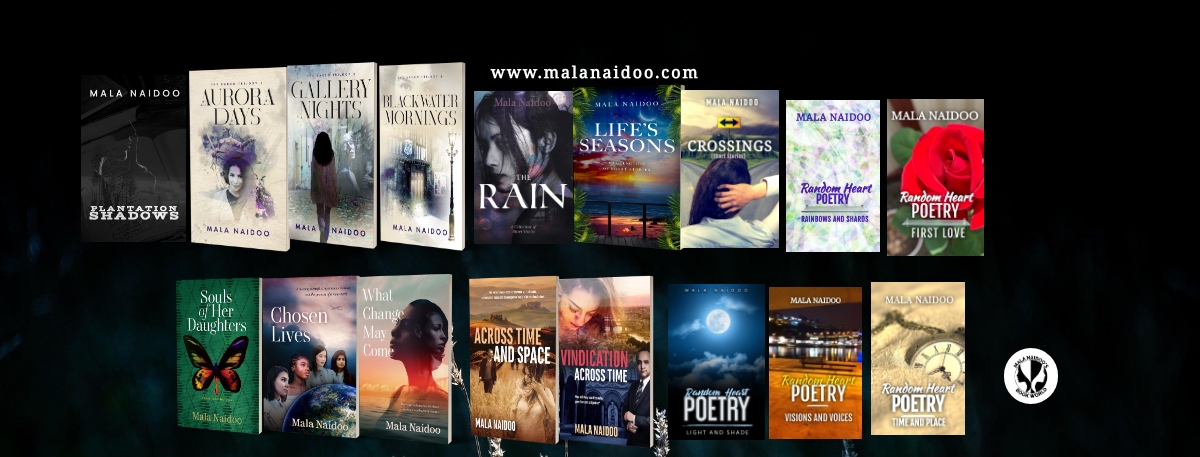
Complex Characters Who Feel Real – Part 2

Readers don’t fall in love with plots—they fall in love with people. That’s why complex characters are the lifeblood of compelling fiction. They’re the ones who linger in our minds, the ones we cheer for, cry over, or angrily debate with friends.

But what makes a character complex? And how do we write someone who feels less like a cardboard cutout and more like a fully formed human being?


 Give Characters True to Life Contradictions

Humans are walking contradictions. We want love but push people away. We crave success but sabotage ourselves. We believe in honesty but harbour secrets  (Plantation Shadowswhat is Milly’s secret?). These contradictions make characters interesting in their imperfections. Characters must grow from hardship, struggles, loss, etc to become the best versions of themselves. Readers need to identify with real life situations to connect with characters who echo aspects of their own lives.

Consider the following when crafting a complex characer

  • What do they think they want vs. what do they need?
  • What are their competing internal desires?
  • Where does their behaviour conflict with their beliefs, morals, or values?


Create a Backstory on Key Points that Advance the Character’s complexity

Build their history for yourself so you understand:

  • What shaped their worldview
  • Why they react emotionally the way they do
  • What they fear, avoid, or chase

Be selective about what is revealed in the backstory, offer teasers to your reader instead of telling it all. (Plantation Shadows)


Give The Complex Character Agency-Don’t Describe their Personality

Actions speak louder than a long list of adjectives.

Show the reader the inner persona through:

  • Their choices
  • The risks they take
  • What they refuse to do—even when pressured

The character does not have to be aggressive, A passive character can be intriguing if their passivity is a choice, not a default.

Flaws can Hurt the Complex Character and Others

Give characters real, consequential flaws. Flaws are the engine of character-driven storytelling.

Ask:

  • What is their most harmful belief about themselves or the world?
  • How does this flaw sabotage their goals?
  • How does it hurt the people around them?

Flaws that create conflict are flaws that matter— they are signposts to something deeper/larger.


Let The Complex Character Grow, Regress, or Transform

Complex characters are restless. They might outwardly hide their intentions. Slow feed how  they react to events, change their perspectives, and sometimes take a back step before a point of growth.

Explore:

  • Positive arcs(cynical → hopeful)
  • Negative arcs(idealistic → corrupted)
  • Flat arcs(unchanged internally but influential to others)

The character’s internal evolution when shaped by their experiences makes them believable and endearing because the reader has been drawn into their inner world.


Make Relationships Challenge The Character

A character’s interactions with others reveals more about them than any internal monologue.

Mull over:

  • Who pushes their buttons?
  • Who brings out the softness they try to hide?
  • Who forces them to confront truths they’d avoid alone?

Dynamic relationships create dynamic characters.


Mystery, Ambiguity, and Private Thoughts

You don’t have to reveal everything about a character immediately. People hold secrets—from others and from themselves. Let readers uncover the layers gradually. (Plantation Shadows – who holds a generational secret?)

A character is compelling when some of the interpretation is left to the reader.


Empathy

Complex characters when discovered, come alive through empathy. When a character is crafted as a person with their own desires, wounds, contradictions, and agency, the story deepens naturally. Allow them to surprise you, frustrate you, and challenge your drafting of their lives.

Look at the world around you, it abounds in complexities, and contradictions that carry the potential for growth, transformation, or regression—that makes characters human.

Make your complex character, live.

 Share ideas to grow  aspiring writers’ skills.

← Back

Thank you for your response. ✨

Villainous Characters

The most memorable characters in literature are often those who remain indelible for their villainous acts, making them timeless scoundrels of literature!

Shakespeare has shaped villainous characters that resonate through time. In creating a dark and dangerous character, turn to some of his notable characters to consider why you loathe them enough to remember their ruthless antics with lucidity.

Are you writing a thriller?

How far will you go? How evil will your characters be? What atrocities will they commit? Will they be politicians? Leaders of some institution, a religious organisation perhaps. Is there a peculiarity other than the evil nature of this character? What positions of power do they occupy or are they aspiring to claim power? Who will they prey on – successful people, kind individuals or the weak and vulnerable? What do they want from life? Will they learn a lesson? Will they become kind and compassionate – perhaps by some ingenious stroke of luck, fate?


Remember Iago? 

‘The Moor is of a free and open nature.’

Artful manipulator, toying with the insecurities of Othello, the magnificent military man in a white world, loved by the beautiful Desdemona, his prized possession –  Iago’s manipulation leads to a brutal and bloody end. The characterisation of Iago is powerfully portrayed to make the audience despise him.

 And what about the evil sisters and the wicked and dissatisfied bastard?


Goneril and Regan in King Lear are the evil sisters, corrupt daughters of the king who manipulate the need in their father when he divides his kingdom based on how much his daughters love him.

‘Sir, I love you more than words can wield the matter; Dearer than eyesight, space…’

Edmund, the illegitimate son of Gloucester, half-brother of Edgar is out to be acknowledged, to claim that which he was denied. He, too, manipulates Gloucester, in his bitterness against the world, to turn his father against his son Edgar, his half-brother.


‘A credulous father and a brother noble,…

‘My father compounded with my mother under the Dragon’s tail, and my nativity was under Ursa major, so that follows, I am rough and lecherous,’


Two fathers so terribly wronged by their children. Look at daily media reports on domestic violence, incest, and murder at the hands of family members.

And then the desire for the crown and the position of first Lady?
Lady Macbeth and Macbeth, not to mention the conniving witches – ruthless and bloody endings in the quest for power and position.

Lady Macbeth’s power of persuasion is evident in her manipulation of her husband,

‘That I may pour my spirits in thine ear’

Local politics? International politics? Domestic politics? Timeless indeed!

A friend turning on a friend- is this the ‘fault in our stars’ or peer pressure? Really?
Julius Caesar – Brutus, noble friend to Caesar is at first two-thirds sold by the conspirators and then they have him all.

‘I kiss thy hand, but not in flattery, Caesar.’

He, too, plants a knife-wielding blow, mortally wounding his once respected friend.

Shakespeare created characters that are timeless representations of human foibles and the plight of the human condition.

In creating your villainous characters, think about what loathsome qualities will make them timeless, the bard certainly got it right. And there are many more examples, what about  Hamlet?  Mother and uncle behaving badly!

Here’s a memorable line on villainous, scoundrels from The Tempest. Ariel quotes Ferdinand to Prospero,

 Hell is empty and all the devils are here!’

Who are the notorious scoundrels in literature that are memorable for you?


Add your comment below, subscribe for email notifications for  future postings.

← Back

Thank you for your response. ✨

Imagine Being There


Place in a story is vital to ground where and why characters react to or create situations which drive the plot of a story. Within identified locations, characters become loved or despised for the actions and reactions they indulge in.

People connect to a place for an array of reasons because it holds the memory of:

  • a brilliant childhood/not so brilliant childhood
  • first love/first break-up
  • marriage/honeymoon/divorce
  • travelling to landscapes or geographic locations where culture, cuisine, architecture, history or local people either inspire or horrify
  • favourite authors/celebrities who lived in those settings
  • the stories heard or read about  places making them part of one’s experience
  • loss and grief
  • spirituality
  • the devastation of war and politics
  • personal heritage associated with a place
  • the comfort of home, a bedroom, a garden, study

The reasons are endless making it necessary when writing a story to anchor it in a specific place or a few places to create a sense of physical reality for the reader. Place, in fiction, does not have to be grounded in a real geographic location, the sights, sounds and smells –  odours or aromas of a place will bring it to life for the reader based on how effective the sensory imagery is in connecting the reader to the context of the action.


The lines below portray an inescapable landscape that confines and stifles. The narration indicates familiarity with a place which makes it experiential for the reader through the author’s specific framing of location. Here, the place is named creating the reality the reader craves, when a place remains unnamed, evocative sensory imagery creates a link in the reader’s imagination.

The heat in the street was terrible, and dust was all about him, and that special Petersburg stench, so familiar to all who are unable to get out of town in summer –Author, Fyodor Dostoyevsky, Crime and Punishment.


 In the creation of a fictional place the writer is the creative camera lens, beginning with a wide view, then zooming into backstreets before giving close up consideration to:

  • Demography – who will be created in this terrain- will it be a multicultural environment? What morals and values might come to light,  is there an alternate way of thinking endorsed by a group?
  • What is the socio-economic dynamic of this place?
  • What’s the weather like?
  • What sounds are heard in this place?
  • Is this a city or rural setting- what other aspects will you include to define this landscape?
  • Is it a busy or laid back place?
  • Is this a contemporary world or a lost and forgotten world?

Let the reader reach his or her own conclusion but be sure to add drama to most scenes and emotions that characters go through- this will allow the reader to speculate why particular locations elicit human reactions the way they do.

I leave you with these lines that reveal the human condition through the words of Alan Paton in his  novel, Cry the Beloved Country:

The great red hills stand desolate, and the earth has torn away like flesh. The lightning flashes over them, the clouds pour down upon them, the dead streams come to life, full of the red blood of the earth. Down in the valleys, women scratch the soil that is left, and the maize hardly reaches the height of a man. They are valleys of old men and old women, of mothers and children. The men are away, the young men and the girls are away. The soil cannot keep them anymore.


Please Like, Share and Comment

← Back

Thank you for your response. ✨

error: Content is protected !!