Research and Fiction

Historical fiction either reveres, subverts, or shames the past through citing actual places, creating imagined characters and perhaps recreating a historical figure.


Historical fiction is the unequal blending of the real and the imaginary


Time is fluid in historical fiction, moving between the past and present depending on how the plot unfolds. Is it a character in the present time speaking, recalling a time past, or is the character narrating an experience having lived in a past era?


The cautionary reminder is in ensuring the imaginative aspect of the story is respectful of the truths of the time, while preserving the overarching fictional plot/characterisation and quality of the writing. Culture, values, and social issues researched lend an authentic historical flavour to the fiction crafted. Transporting the reader to a time past enhances the storytelling without rewriting a history textbook.


Find that sweet spot between what is fact and fiction to elevate the fiction on culture, values, and social mores.


Including actual historical figures is the writer’s choice in relation to whether they will be a speaking character in the fictional tale, or a few cursory references would suffice.

Research should not overpower fiction. History has been written and read many times over—add the imagined juice for an entertaining read that prompts speculation on whether the fictional aspects could have possibly occurred.

Memorable characters, a believable setting, an intriguing plot, and a dash of history is a good measure for a satisfying read.

Ultimately, knowing who the intended audience is for a particular work of fiction is just as important as the message it creates.

Honour the history researched to enhance the setting and add lustre to the fictional plot without repeating what has already been documented. Recreate rather than rewrite. The risk of overly recounting a history is losing the fiction to non-fiction. The decision ultimately rests with the author. Readers of fiction will be the primary audience.

In honouring the history, notions of sensitivity to time, place, and people should be observed. However, shaming a dark history is the fictional storyteller’s prerogative.

There are no clearly defined genre parameters when the power of the story is honoured in its ability to move and entertain which is paramount in fiction.


The truth that all historical writing, even the most honest, is unconsciously subjective, since every age is bound, despite itself, to make the dead perform whatever tricks it finds necessary for its own peace of mind. Carl Becker, American historian (1873-1945)


If you are neutral in situations of injustice, you have chosen the side of the oppressor. If an elephant has its foot on the tail of a mouse and you say that you are neutral, the mouse will not appreciate your neutrality. Bishop Desmond Tutu.


History is the study of all the world’s crime. Voltaire, French writer, and philosopher (1694-1778)


Fiction is the truth inside the lie. Stephen King


Truth is stranger than fiction, but it is because Fiction is obliged to stick to possibilities: Truth isn’t. Mark Twain.


Please share your thoughts in the comment box below.

← Back

Thank you for your response. ✨


Vanity Pride and Ego

Vanity, Pride and Ego – same family, different personalities, different agendas.

All three will have a negative impact if riding this wave is all that matters. It drains creative energy.

Vanity exudes a hollowness in its overindulgence on self, achievements, and appearance, etc. It is external.

Where does the artist sit on the pedestal of vanity?

One voice says, nowhere. Another asks, how will a receptive audience to the art be found if vanity is tossed aside? Vanity needs an audience. But, should it be at the cost of dominating one’s passion and purpose?


The muse, divine grace, or however inspiration is perceived,  is not invited by vanity. Mother Muse is not needed when narcissistic vanity believes it knows it all, and celebrates personal achievements, with no filter—in every waking moment— in multiple ways. I and me overshadow growth by ignoring the voices that have much to teach and share in learning new ways. The achievement has a use-by-date if not allowed to grow and expand in new and varied ways.

Then pride prods, ‘I have published my book, or sold my artwork! I’m so excited!’ This has a ring, different to vanity. It’s internal, it is joy over what the artist has created.  Children are invited to take pride in their work, push themselves to achieve their personal best. This level and definition of pride is a healthy option. Pride reflects reality—a joyous reaction to having produced a quality work of art. There’s a dignity in the self-esteem and self-respect that comes with this type of pride. Because pride is internal, when injured, it could create feelings of worthlessness. Which do we prefer? Known for vanity or having a sense of pride? Pride may breed feelings of superiority if unchecked, and released often outside the inner glow of accomplishment.

Then there’s ego, ‘Oi! look at me and all I have achieved. I am the best in my game.’ Remember the id, ego, and superego in a Psychology 101 class? It might be necessary if marketing one’s wares, but with ego comes the threat of overzealous self-importance – conceit. Not a favourite in any working, social, or home environment.

To succeed in what we do, we need balance. The ability to know and understand who we are, and how we are received is vital to acceptance for a sense of belonging to promote mental and emotional wellness.

When acceptance and belonging thrive, productivity increases.


Balance in everything is vital to how social perceptions are influenced


Is ego overblown pride? And what of vanity? Is it a wild show-pony craving an adoring audience, or the unrestrained expression of pride and ego?

Now, there lies the dilemma.

Be proud of your creative work, yes? Avoid ego and vanity? Over-inflated expressions of self,  run the risk of sitting on the precipice of love and revulsion. What is the artist’s choice to be?


Shakespeare’s timeless tales tell us that hubris and hamartia lead to a character’s downfall. Lear’s, ‘Which of you shall we say doth love us most’, albeit being an aging man, he might be perceived as vain in wanting to hear his three daughters’ competitive utterances of undying adoration before he divides his kingdom among them.


What are your thoughts?  Vanity? Pride, or Ego? Much the same, or different?


Happy Writing and Successful Publishing!

← Back

Thank you for your response. ✨

AllAuthor Interview

Where did you grow up? Do you think your background has colored your writing in any way?

I grew up in South Africa during the apartheid era. This horrendous annihilation of a sense of authentic self, visibility and acknowledgement, features in and through my novels in shaping the necessity for inclusivity.

What developed your interest in the suspense genre?

I have always enjoyed Crime Fiction and taught Crime Fiction as an Extension English Course which further developed my interest in suspense/mystery/thriller/crime fiction.

What was that one moment in your life when you realized that you wanted to write?

I was a closet writer for almost ten years and never thought of publishing my work until I read Stephen King’s On Writing and that pushed me over the threshold with my debut novel, Across Time and Space, followed by its sequel, Vindication Across Time.

How has been your experience of working as a teacher in South Africa and Australia in secular and non-secular institutions?

With the Group Areas racial segregation in South Africa, the schools I taught in were largely of my demography. My Australian teaching experience has been diverse, but regardless of the geographic location, the time and space, as it were, students are similar in their love of learning or in their need of motivation to learn. Socio-economic status does not make an iota of difference in a student’s capacity to learn or to soar to great heights.

When did you publish your website, Mala Naidoo’s Book World?

My website was published to coincide with my first book being published in 2017.

Who inspired the character of Viola Bardo in “Aurora Days”?

Viola Bardo is a music teacher and vigilante justice seeker — she is a figment of my imagination although her name was drawn from Shakespeare’s Viola in his play, Twelfth Night.

How was the idea for The Sisters Helping Sisters Organisation (SHSO) in “What Change May Come” developed?

The need for safe houses with the ever increasing global threat to women in toxic relationships spurred me to create such a fictional organisation to serve the diverse characters in Chosen Lives and What Change may Come.

Would you be friends with someone like Dr Grace Sharvin from “Souls of Her Daughters” in real life?

Absolutely! She has phenomenal strength and vulnerabilities that make her endearing as a compassionate being, both personally, and as head of ER at City Hospital. A wonderful friend indeed.

Which is your favorite story in “The Rain”?

This is a difficult question because I love them all. Every story was written during a week of torrential rain in Sydney so I feel I have lived through each one of the stories. The title story, The Rain is a favourite.

What was your favorite part, and your least favorite part, of the publishing journey?

Writing and seeing my book in hand is the favourite part, as is seeing the cover for the first time. Sending my manuscript to strangers in the publishing world and waiting for a response was a nail-biting experience.

What would you say is your interesting writing quirk?

I write a haiku on any topic that comes to mind and then dive into my novel writing.

What was one of the most surprising things you learned in creating your books?

I have to let the flow of the story guide the pen. It’s almost like being held hostage by the story when the characters dictate their actions.

Do you hear from your readers much? What kinds of things do they say?

A dedicated group of readers will drop me a line about something they connected with in any one of my novels or respond to a blog post I might put out that holds appeal for them.

What other authors are you friends with, and how do they help you become a better writer?

An online platform of authors through The Alliance of Independent Authors such as Orna Ross and Joanna Penn from The Creative Penn  have been great mentors.

What is your takeaway based on your experiences with AllAuthor?

A very friendly highly active service that I felt a connection to almost immediately.


Like, Share and Comment Below:

← Back

Thank you for your response. ✨

2020 and Beyond – Voices in Literature


Diverse voices exist in literature but are under-represented in traditional publishing

The tragedy of George Floyd’s death in the United States has sparked a resurgence for the recognition of black writers. Read the rumble in the UK here on what the newly found Black Writer’s Guild has initiated.

It is shocking to note that black writers are offered a lower advance to that of their white contemporaries, and editors ask for white characters to be added to books. At some universities, students are asked to write for a maninstream audience denying  rich cultural voices that confirm that we are indeed, …one under the sky of humanity.

As an author of colour, in Australia, I faced the dilemma of whether I should create a neutral ‘non-black’ pen name to get publishing recognition. But my writing mission is, In our angst and joy, we are ONE under the sky of humanity, which does not support using a pen name and so authenticity prevailed.

My apartheid past in South Africa had stolen the right to feel comfortable in my skin or to dare to speak out against racism. Hence my debut novel Across Time and Space and the sequel Vindication Across Time, present the bald face of racism as a universal disease through my eyes. My third novel, Souls of Her Daughters exposes injustice on multiple levels.


Fear makes one believe that a name that hints at race would be bypassed by publishers and readers. Listen to the words of author Michael La Ronn who articulates the issues black writer’s face in writing and publishing. Note what he says about gaslighting 


Racism – Inequality – Injustice – Prejudice – by any name must be caught and called in the books we read, movies we watch and conversations we have


The Zulu word Ubuntu refers to the human spirit as it should be:


  • I am because we are
  • humanity towards others
  • the belief in a universal bond of sharing that connects all humanity


In my writing of multicultural stories the spirit of Ubuntu prevails.


What will you be reading and watching in the renaissance of Black Lives Matter in literature?

The movies, In My Country poignantly depicts the Truth and Reconciliation Commission (TRC) in South Africa, and Rabbit-Proof Fence, a gut-wrenching  revelation on Australia’s Stolen Generation are reminders of human atrocities that should never be allowed to recur…

From  Uncle Tom’s Cabin and beyond, voices have raised the alarm but sadly the call to end racism fell on deaf ears. Now it must be made history, an unforgotten one to remind us that prejudice is heinous and should be obliterated from the stage of life. Diverse voices that are in the main ignored, share why the human condition needs a radical shake-up.


Feel the angst, walk a mile in the shoes of the racially downtrodden – only then will you know the corrosive impact of racism.


The wound of prejudice cuts deep to the soul leaving indelible scars.


But you pick your head up, as you do, to face another day no longer silent especially to subtle bias…


In the wake of the change in 2020 and beyond, walk a mile through these suggestions to know and feel that in our diversity the common factor is that we are emotional beings with the capacity to rectify prejudice by the stories we tell and read.


Here are ten suggestions where diverse voices rip out your heart to sensitise your soul.


  1. Long Walk to Freedom – Nelson Mandela
  2. . My Place -Sally Morgan
  3. Talking to My Country – Stan Grant
  4. To Kill a Mockingbird – Harper Lee
  5. The Underground Railroad – Colson Whitehead
  6. Between the World and Me – Ta-Nehisi Coates
  7. Cry the Beloved Country – Alan Paton
  8. The Power of One – Bryce Courtney
  9. The Bluest Eye – Toni Morrison
  10. Race Talk and the Conspiracy of Silence – Derald Wing Sue


May you write and read stories that share histories to sensitise our souls to dismantle racial bias.


← Back

Thank you for your response. ✨

Writing For Success

In my first post on the prolific and inspirational Trinidadian author and poet Brenda Mohammed, we got a glimpse into her writing journey.  Brenda has written twenty-five publications — her passion and dedication to literature is phenomenal.

Today we chat to Brenda Mohammed to catch up on her rapidly growing and expanding writing life and the scoop on her latest writing venture!


Tell us a little bit about yourself?

I am a former Bank Manager of a leading bank in Trinidad and Tobago. Later in life, I moved into the Insurance field and excelled there also. I always loved dealing with finance, and never dreamed that I would fall in love with Literature.


When did you start writing?

Actually, I was always a very good writer in my school days and won the top English Language prize when I graduated from High school at sixteen years of age.

When I joined the bank my superiors at the bank were always impressed with my ability to learn quickly, my efficiency in every department I was assigned, and also my writing skills.

When I was promoted to the job of Assistant Manager Credit I had to prepare detailed financial proposals for the Manager’s signature to be sent to the bank’s Head Office for approval. The Manager rarely changed a word, and the Bank’s Head Office always approved the proposals without any questions.

The Banking term for that was “clean sanctions,” something other Managers wished they could achieve. Later on, when I was appointed as Manager I continued with that skill and moved on to Senior Managerial positions. Yet, writing books never crossed my mind and I moved into Insurance where I also excelled, qualifying for membership in the Million Dollar Round Table, The Premier Association for Financial Professionals, {the name pertains to sales achieved and not earnings}, until I was struck by cancer and told by my doctor in Trinidad that she could do nothing for me.

To make a long story short, I survived and wrote the book, I am Cancer Free, which became a bestseller, and gave me the encouragement to write twenty-four more books.


You wrote twenty-five books. Can you tell us the genre of those books?

I write both fiction and non-fiction. The genres include Memoirs, Romance, Mystery, Poetry, Children, Science Fiction and Self Help.


Tell us something about your multi-award-winning book Zeeka Chronicles.


Zeeka Chronicles is about a vengeful man who misuses science in the year 2036 to create havoc in a small exotic island named Gosh. He is angry for two reasons. After his former lover jilted him, he married another on the rebound. His wife contracted the zika virus when she was pregnant. His child was born deformed as a result, and she died. He blamed the hospital for her death and his deformed child. This vengeful man kidnapped the son of his former lover and the story evolves thereafter.

The story is set in the year 2036 when there is great advancement in medical and information technology. It is a high-tech world.

Skillful robots are used as home helpers, and police use high tech weaponry, electric cars, and smartphones. The hospitals are well equipped with state of the art equipment and doctors and scientists are making significant breakthroughs and inventing cures for patients with critical illnesses.

Yet, in this high-tech world, the minds of some human beings remain evil.

Can Mankind ever achieve a sinless state? Will human beings forever continue to foster greed, malice, anger, jealousy, and the desire to control and take revenge?

I wrote this book to highlight the fact that material things can never improve the minds of some individuals.

Today, in spite of all the new and advanced developments, crime has increased to unstoppable levels. What will change humanity?

The benefits to readers are the underlying lessons to be learnt from the content, especially in light of the situation the world is experiencing today with COVID 19.


Who are the primary readers of your books?

My books are for both mature audiences and young adults and the children books are, of course for children.


What are you working on now?

I am working on the third story in a Mystery series – Barry Holmes Mysteries

What happened to Mary Loo has elements of romance, mystery and suspense. It will be a short story and should be ready for publishing by the end of May.

The book cover was designed by Mary L Schmidt.


Can you leave us with a valuable quote on Writing?

Writing is a mysterious journey of thoughts that can unravel the strangest imaginary plots.

Writing for me was exploring a new milestone.


What are your social accounts if people want to connect with you?

I am on Linked In, Twitter, Instagram, Pinterest, and Facebook, where I have nine author pages for each genre in which I write, and a personal page.

They are – Poetry to Enlighten, Zeeka Stories, Banker turns Writer, Romance Stories, Children’s Corner, Barry Holmes Mysteries, Brenda’s Video trailers, Fascinating Memoirs and Brenda’s Publications.

I am also available as the Founder of How to Write for Success Literary Forum.


Brenda Mohammed a former Bank Manager from Trinidad is a multi-award-winning author of 25 books, and Founder of the Literary Forums How to Write for Success, Poems for Suicide Prevention, Library of How to Write for Success, and Poems against Domestic Violence. Her award-winning book HOW TO WRITE FOR SUCCESS is popular amongst writers and University students.


She recently published three best-selling Anthologies – A Spark of Hope Volumes I and II, co-authored by 49 and 64 authors respectively, and Break the Silence: An Anthology against Domestic Violence by 87 authors. All three topped the charts on Amazon as Bestsellers No 1.

In November 2018 Brenda received two awards from Readers Favorite International at an award ceremony at the Regency Hotel in Miami for two of her books, ZEEKA CHRONICLES and I AM CANCER FREE.

She was inducted into the Indie Author’s Wall of Fame in January 2020.

Brenda was also honoured on 22nd February 2020 by the Peru Government for Excellence in Literature, and in August 2019 by the Seychelles Government for her Literary skills. 


You can connect with Brenda Mohammed through the links above.

I wish Brenda everything of the very best in her writing success.

Please like, share and comment.


← Back

Thank you for your response. ✨

Mothers Mirrored in Fiction

Mother’s Day this year has a different ring to the freedom of yesteryear.

The nation waited to hear if we would be allowed to visit our mothers on this special day of the year. Something we took for granted… our mothers would always be there to listen, comfort, cook an amazing meal, take care of grandchildren, advise on matters of the heart, and chastise bad behaviour.


Love the whole world as a mother loves her only child                      ~ Buddha


The hype leading to Mother’s Day has been a buzz from infancy.  2020 has been still but some retail stores have opened for a dash purchase of a gift and a card to celebrate our mothers to tell them we love them. We fervently add that we want our mothers to be safe and well during this global health crisis. Some among us ache to see our mothers, some have passed on,  and others are in social isolation — it has been two months of just telephone conversations and if possible, FaceTime, Zoom and Skype chats. The aching emptiness of the missed mama/nana hug is still not a possibility. A joyous expression of love is now a cause for global anxiety as we fear the unknown, the lethal. The comforting hug now a possible cause of harm.


Whenever you are in distress, just say to yourself:                                     ‘I have a mother’                                                                         ~The Holy Mother, Sarada Devi


Mothers occupy a universal, sacred place in our hearts. A mother’s unconditional love goes with her children from the cradle to the grave. Cultures revere mothers with a divinity deserving of profound respect and care. This value should undoubtedly be universal. The hearth of family and home is a mother.


Paradise lies at the feet of your mother                                               ~ Prophet Muhammad (PBUH)


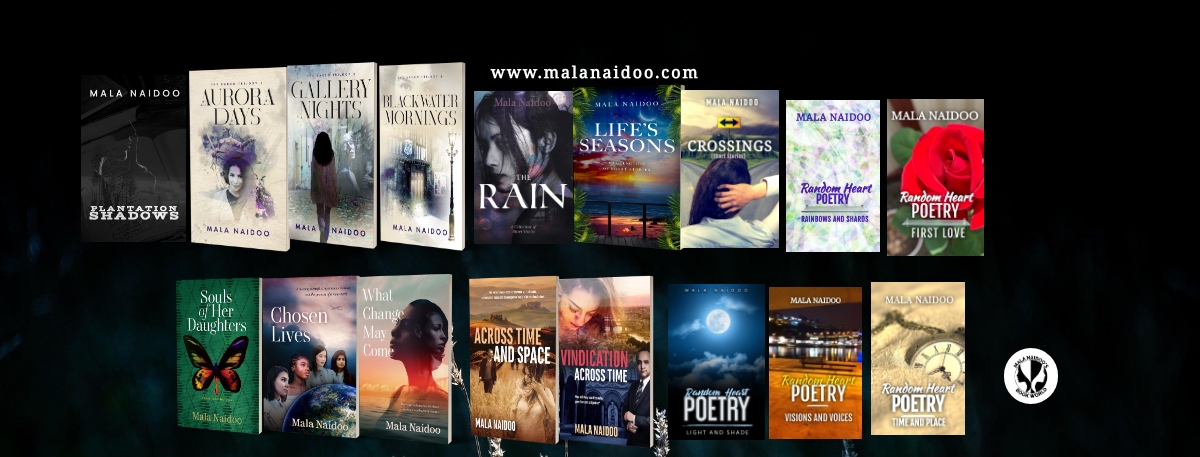
In paying tribute to all mothers today I also refer to the fictional mothers in, Souls of Her Daughters,  and two follow-up novels in the trilogy (each reads as a stand-alone novel too) Chosen Lives, and, What Change May Come.


This slideshow requires JavaScript.


Mothers Varuna and Elsie present as the yin-yang of motherhood. Mama Varuna is Grace’s bold and strong mother who has weathered hardship with loss and societal criticism. Patience’s mother, Mama Elsie is a mild-mannered mother who faces racism and hardship in apartheid South Africa. Both mothers raise their daughters as one family united in their cultural difference and struggles. The highs and lows of the lives of mothers and daughters captured in the daily lives of Grace and Patience are what makes Mother’s Day a constant expression of love.

To all mothers, and future mothers, you are the pillars of family and society and should be celebrated daily.


She opens her mouth with wisdom, and the teaching of kindness is on her tongue.’ ~ Proverbs 31:26


Share your thoughts in the comments.


Stay safe and well as restrictions ease in New South Wales and around the world.


Happy reading, happy writing.


← Back

Thank you for your response. ✨

From Prose to Poetry


Poetry excites, calms, awakens, regenerates


As a thriller fiction writer, poetry has been a significant aspect of my recreational reading and inspiration for my writing. Poets of the Romantic era notably Shelley, Keats, Wordsworth and Coleridge are among my selection of favourites as has been Yeats, Sylvia Plath and Emily Dickinson. African poets Mongane Wally Serote and Chinua Achebe, to name a few. All held my attention both as a student and educator. More recently, I turn to the inspiration of Orna Ross, an Irish poet and author. I relish reading poems from a global range of acclaimed published and aspiring poets in the rapidly growing group, How to Write for Success. This attests to the thirst for new voices to be heard and fundamentally the need for poetry in an era of uncertainty where we need to be reminded of beauty and wonder.

In a post titled Poetry Educates Prose I highlighted the benefits of poetry reading and writing to enhance style and succinct writing in prose.


After writing poetry for an audience of one and gradually venturing out to my better half and immediate family circle and a few trusted friends, I took the plunge to put together a collection of my light and shade poems. It has taken a year to sift through, rewrite and refresh and refresh once again, and no doubt that process will continue as skills develop along the way. A collection titled Random Heart Poetry: Light and Shade is the window to my soul


The moon has a significant impact on creativity, and culturally the celebration of auspicious events are determined by the aspect of the moon as per the lunar calendar. Some of my Instagram posts will reveal my fascination with the moon whenever she is in my realm.  The cover of Random Heart Poetry captures the essence of Light and Shade through the full moon, representative of the light we seek. The poetry collection reflects upon culture, identity, gender, race, migration, relationships and the wonder of nature.

 Random Heart Poetry: Light and Shade is available at Amazon and instore at a few select retailers.


Poetry is the unadorned human face reverberating with timeless truths ~Mala Naidoo


When power corrupts, poetry cleanses ~ John F Kennedy


Happy Writing, Happy Reading!

Share your love of poetry in the message box below.

← Back

Thank you for your response. ✨

Fiction Changemakers

If stories were never told — history would not exist — change would not occur.

So much that is fictional is drawn from reality.

The horrors that have occurred historically and afresh each day (as the daily news never fails to report) become the fictional realities writers create in imagined worlds. The fiction writer’s world is in tune with current and past societal occurrences. The subconscious mind sifts and imprints that which has emotive associations. From this collaboration of mind and emotions, the writer begins with a particular premise — then something magical happens — the pen takes on a life of its own.

Plotter or panster merge when that magic happens. Hey, presto! Fiction and reality commingle!

For this reason, mindful writing is imperative. It helps guide your book to a niche or a wider audience with a message melded to the entertainment a good book affords.


Every good story has a lesson to teach, an angst or joy to share


Where does the act of creative mindfulness emanate from?


The soul of the writer, his or her angst and joy sensitize the writer to the struggles people undergo — be it a socio-economic matter such as Charles Dickens’ novels  exposed on England’s elitism, and Jane Austen’s portraits of gender and social class. These are just two remarkable writers selected from a host of others of the day.


Today fictional writers create worlds around ‘me too,’ racism and power struggles. Power struggles and injustice are timeless from Fritz Lang’s 1927 German expressionist film Metropolis based on the 1925 novel by Thea von Harbouto, Orwell’s dystopian novel, Nineteen Eighty-Four and my current reading of American Dirt by Jeanine Cummins, referred to as a ‘high-octane’ story, are a few in the countless number of books that connect readers through discomfit to what it means to struggle and survive.


Political thrillers expose mismanagement, and immorality while entertaining readers with suspense, the drama of high stakes, etc.


If fiction mirrors reality it becomes a record for posterity like all good books. A ‘good book’ depends on which end of the moral spectrum both reader and writer share. If a book angers and soothes, keeps the reader on the edge of their seat by creating desired expectations for the protagonist — it’s a great story penned.


Fiction should make us uncomfortable enough to question where we went wrong, and how can we rectify it


Nothing is political in writing if it showcases reality. The word ‘political’ from my apartheid history conjures thoughts of being labelled as being on the wrong side of the law. Yet a political thriller exposes heinous human behaviour in organizations that we trust to uphold justice.


Fiction is reality dressed up as the world on the pages of a good book, one that dares expose the foibles of troubled societies


Discomfit, guilt and thought


Let’s continue to create fictional realities by rocking the boat of complacency in assuring that the history of the past and history in the making generate discomfort — discomfit elicits thought and one can only hope that positive action will follow to change catastrophes that are within the human scope and rectify atrocious human behaviour.


My stories cut to the bone on forgotten voices who deserve to be heard.


Here’s to more fictional stories for all our better tomorrows.


Happy Australian long weekend. Happy pleasurable reading hours.


← Back

Thank you for your response. ✨

Through Australian Eyes

As 2020 dawns it will be remiss not to look at the world that is changing before our very eyes.

Through Australian eyes, sadly, the ongoing bushfires have encircled our lives affecting health, and mindset with loss of human lives, homes, fauna and flora — this impacts the creative soul and spirit which is closely aligned to the natural cycle of life.  There is an unease that wants answers and quick solutions to a problem that has been steadily growing.

As we cry, ‘climate change’ — it is more about necessary unified ‘human change’ to rectify that which ails our burning country. Change can be initiated by ongoing fostering of awareness that we all have a part to play to improve the state of our country, the world and subsequently the human condition. As writers, this awareness becomes a moral obligation, as I see it. Books/stories are valued for the message/s they extend to make us aware that our angst is a global issue.


Natural disasters multiply around the world causing human decimation, yet the power to minimise this rests in human hands. I draw the analogy to writing, the creative arts — the passion exists, but a huge effort is required to produce quality art — passion without persistence is naught.

Literature today will speak into all our tomorrows about human negligence and irresponsibility in the quest for more. Like the wars of the past and those that exist in the here and now, it is a time for soul searching and a coming together to rectify that which has gone awry. Like editing a manuscript, we cannot take out without replenishing with good, better, and best to improve the story, poem, or essay — likewise, constant extraction from the earth must be restored.

Healing is not a band-aid fix to the problem — it takes a mammoth collaboration of all sectors of society to reach out and do what is necessary — cut back on all forms of pollution/emissions for a purer balanced tomorrow.

It’s never too late to begin afresh if it matters, like revisiting a manuscript to cleanse, to be rid of that which is not necessary, to clear the waters for something brighter, purer, clearer and better.


Let’s make the 2020’s a healing decade of body, mind, spoken and written word, the spirit, relationships and heal the earth we live on and from.

All positive contributions matter — raising one life, saving one wild animal or property is the beginning of survival from extinction by fire or other natural or human ills that befall the planet.

As we look forward to a bushfire-free future,  let us remember we all have a part to play to save this beautiful land we call home.


Have a safe and happy entrance into the next decade. May it be filled with many blessings.

May peace abound and the earth receive the blessing of rain, may poverty and pain diminish.


Happy Reading, Happy Writing and Publishing.


Please add your comments below:

← Back

Thank you for your response. ✨

Teacher Spotlight: Creative Influence

Writers might be influenced by a family member who writes, or motivation is drawn from a much-admired writer.  I come from a reading family and absorbed that passion as a child. This brought many pleasure-filled hours to an introverted child. 


Why Teachers Matter

The early teenage years opened another door — the door to the other side of reading, equally exhilarating — notably writing. This influence stemmed from my brilliant, nurturing high school English teachers.

One such teacher was Ms Devi Anderson.


Educating the mind without educating the heart is no education ~ Aristotle


The Enlightening Ms Anderson


My fourteen or fifteen-year-old first impression of my new teacher was that she was so young, vibrant and intelligent. She was passionate about literature and brought Shakespeare to life in a South African classroom, drawing connections, making her students feel the angst and joy of the bard’s characters, and life situations.


She was selfless and spontaneous in conducting weekend literary discussions on the texts studied, and additional literature she selected to extend students’ knowledge and passion for such works — yours truly devoured it all. The discussions were just that — not teacher-talk like so many classrooms of the time. You mattered and your voice was valued. You were praised for trying. Ms Anderson was a godsend to many, more particularly to me. Her presence in my school life had a profound influence on my teaching with a passion and thirst for literature.


In a flashback moment, I recall a lesson on haiku poetry. It was my first lesson on this poetic form,  Ms Anderson made it accessible and intriguing with her easy-going, warm manner. Every student received her attention, each made to feel that the work done was worthy of praise and encouragement.


I am not a teacher but an awakener ~ Robert Frost


From Shakespeare’s Twelfth Night with the love-sick Duke Orsino’s famous lines, If music be the food of love, play on… to novels and poems introduced,  my love for literature grew in intensity under the nurturing tutelage of Ms Anderson. Those early days, for which I am eternally grateful, paved the road to writing novels and short stories, and occasional poems in my adult life.


As Shakespeare’s fate would have it, by accident most strange, a bountiful  Fortune, (The Tempest),  so together with the helping hand of a schoolmate and Facebook, I reconnected with Ms Anderson across the Indian Ocean — I wanted my inspirational teacher to know how influential she was, when two roads diverged in a yellow wood, (Robert Frost), I followed her teaching passion.


Today, years later, we have reconnected.. Many lessons along my teaching career raised the appreciation I had for my English teachers with Ms Anderson sitting at the helm of the list.


It is with gratitude that I share her influence on my teaching career and writing life and the joy in reconnecting with her.


The impact of a teacher who makes all the difference, is never forgotten.


Please share your memorable teachers and their influence on your life or choices in the comment box below.

← Back

Thank you for your response. ✨

Writing Through Adversity

Writing has been well documented as having therapeutic value. Do you keep a personal diary, or a journal to record moments that are significant to you?  Would you write a memoir or autobiography? Have you tried poetry writing?


Fiction is an avenue that has therapeutic benefit when writing about angst through fiction or poetry. This has value in reaching readers who might face a similar situation. Receiving a reader’s comment on connecting with a character or situation makes writing move from the realm of fictional entertainment to enhancing life, creating a sense of belonging through the power of story/words that whisper,  ‘there are people who go through this, you are not alone, it’s not you…’


Human difficulties like our joys are universal and part of our shared humanity regardless of demography or any divisive label. We learn from each other, we share with each other — altruism is part of our human ‘feel good’ makeup. We feel good or secure in knowing that challenges are not unique. This is where fiction like a memoir/autobiography/biography and poetry has the ability to say, ‘I see you, I hear you, I feel your situation.’


‘In our angst and joy we are one under the sky of humanity’


Oftentimes something heard, something seen, or read triggers the imagination to create a story/poem — these seeds have their origin in human experience. Everything in life has imaginative storytelling potential. Historical fiction is a genre whereby much from history or literature is reimagined to suit a particular context adding timelessness to a story. 


Poems and stories, when turned inward, create… growth… healing… self-awareness


Shakespeare’s The Tempest reimagined by Margaret Atwood in her novel, Hag-Seed is an example.  Prospero becomes Felix a theatre director in a present-day context —  he is grieving the deaths of his wife and daughter and has been backstabbed by an aspirational colleague. His vulnerability is an evocative point of connection with the reader. Professional or workplace strife present timeless human dilemmas, but when tastefully explored as a novel’s premise or ideas, it has the potential to speak to many isolated, lonely individuals — there is no shame in being vulnerable. Shame sits on the shoulders of those who abuse vulnerability. The most endearing people, in reality, are those who have experienced hardship, financially, in grief or loss, abuse or ill-health — having walked in the shoes of many with struggles, wires empathy — as human experience should be if we hope to coexist in peace and harmony.

Fiction can remind us why it is essential to be true to who we are in our expressions of self and in our interactions with each other. 


In Souls of Her Daughters, Dr Grace Sharvin who heads a busy medical ER has unimaginable frailties but her strength is in her capacity to reach out to others while fighting her own demons. 


Life’s lessons come from the adversarial people met, and they become the basis upon which writers craft their villains. A little bit of this and a little bit of that blended in a cauldron and hey presto! The (im)perfect villain is born! The good people we meet shape perspectives on why adversarial individuals have no place in a shared world.

Timeless heart-warming and gut-wrenching stories on life’s challenges and celebrations.


Literature is a luxury, Fiction is a necessity — GK Chesterton


and

Albert Camus said,  Fiction is the lie through which we tell the truth.


Who can argue with such pearls of truth now? 


Life, literature, news of the day, and history portray human experiences that provide inroads to new fictional stories and evocative poetry that connect rather than divide by exposing, celebrating, loving, grieving and understanding what it really means to be human. We all, whether real or fictional are indeed not alone in adversity. 

Which novels and poems would you recommend to readers on overcoming adversity? Have you read A Spark of Hope?

← Back

Thank you for your response. ✨


Fiction: History, Culture, Truth

Every voice like every story has its place in the world. A niche audience might be readers of a particular history, people and culture of forgotten voices.
In an era that has in so many ways moved leaps and bounds forward, the opposite is true of human tolerance. Everywhere we dare to look, the capacity of the human spirit for evil outweighs the good around us, often overshadowing a multitude of voices and actions for common good.

Stories, fictional stories, even if thematically dark demonstrates the human capacity for change.
Fiction has had and continues to have the rite of passage to dismantle oppressive notions of the wicked side of human nature.


At the Sydney Writer’s Festival last week, the festival theme, ‘Lie To Me,’ resonated with memories, of the apartheid era where race and power/powerlessness named and played the game, and understanding of the impact of assimilation on the stolen generation.
An evening of storytelling affirmed the need to keep telling our societies’ truths to dispel the mistruths in the media, in politics and the use of social media as a tool to denigrate.

Forgetting past atrocities in no way heals the human condition. It’s a double-edged sword — remembering keeps the pain alive, but alive in recall that has the potential to thwart such heinous future acts. To quote Descartes, ‘I think therefore I am,’ is significant, but must be married to, ‘I feel therefore I am,’ and what better way than through a fictional story that ensures that the movement towards human value for all lives, does indeed matter.

Those who cannot remember the past are condemned to repeat it. ~ George Santayana

Cultural stories of forgotten people hold them in conscious thought, remembered as life lessons to pass on to the next generation. While such stories might have a micro niche audience because they tell of the far-flung corners of history, they must be told.

Lines from Vindication Across Time sees the character Marcia Ntuli telling Michael Morrissey, a human rights lawyer about her mother’s hardship as a single mother under the apartheid regime.

Mama Dolores…the police would barge into our home and drag her to the police station for questioning. They were rough with her, they broke things in the house… kicking her in the back, calling her an evil kaffir. It was horrible. ~ Vindication Across Time.

Michael walks in Marcia’s and Mama Dolores’s shoes to gain an understanding of what preceded democracy in a troubled land. His theoretical basis on what constitutes human rights has a ‘live’ life lesson in a recount of the terror Marcia’s mother endured at the hands of the district police. This, in turn, opens the depth of understanding on what might have been misreported in historically written and spoken accounts of this era. The voices of men/women struggling on the fringes of society are left forgotten if not told through story, to entertain and awaken compassion that a history forgotten is dangerous — it lurks in the dark corners of the mind ready to be unleashed in the terrors we experience today.

The storyteller has the power to dispel untruths by telling stories that make us uncomfortable, those stories that some publishers are reluctant to put out into the world, so why wait, when a world of empowerment, without gatekeepers, awaits the telling of unheard stories.

Go tell those stories today. Keep an underrepresented history alive, in the minds and hearts of a niche audience in engaging fictional stories -stories that tell of truths that have been swept under a forgotten, tattered rug.

Share your reading that has inspired a new wave of thinking in the comment box below.

Happy Reading, Happy Writing.

← Back

Thank you for your response. ✨

Perfection in Imperfection

Perfection is too exhausting. It’s not true to who we really are as individuals, communities, and societies.

Fictional characters echo this representation of imperfection without necessarily being labelled Shakespeare’s Iagos of the world –  they do exist – the first page of the daily newspaper or the first news item on the evening television news reveals that Iago exists in politics, education, the corporate world, and other dark corners.


Nobody is as good as gold…


My tag line, Perfection in Imperfection, the themes in my novels, and short stories, and essentially most novels, illustrate that life is just that – a mix of the good, the bad and the ugly. Nothing is perfect nor is anything entirely imperfect – there is always a reason for the apparent ‘imperfection,’ the interpretation of which is dependent on one’s value system in either accepting or rejecting a perceived ‘imperfection’. The psychological benefit of understanding that ‘perfection,’ as defined by ‘particular’ standards,  is not the norm, invites the greatest learning in appreciation, understanding and compassion which is born from trial and error or walking in the shoes of others.


Perfection bores, it disconnects the reader from the lack of reality evident in the world around. A saintly character who holds pious thoughts and performs selfless acts through the duration of a story might offer some inspiration, but insufficient entertainment value for the reader. Give that saintly character’s perfection a dent or two and they are endearing as human after all.

The socially moral cop with a particular weakness, perhaps peeling bags of onions, eating tubs of ice cream, or engaging in a ‘monkey-ish’ tossing of almonds into his/her mouth, or some such habit, when a case is in a deadlock or about be nailed, is either loved, creates amusement, or is despised. Inspector Aldo in Vindication Across Time, a man who controls the media and women, particularly the rich, widowed, and lonely like, Ana Kutnetsov, a housekeeper with a big heart, and a secret past, grates on every character’s nerves. He is enigmatically dark – a looming manifestation of Iago.

Literary heroines such as Tolstoy’s, Anna Karenina, illustrate this point, and Margaret Atwood’s speech, Spotty-Handed Villainesses, on the good-bad women of literature highlight the fallacy of crafting perfect female characters as unrealistically flawless or insanely bad. Flaws might engender empathy in the reader when weaknesses or vulnerabilities are exposed, not the overt Jekyll and Hyde associations – which exist, depending on the genre of the tale.

Nuanced human foibles draw connections and acceptance, that to err is human. From Count Dracula, Robin Hood, Ned Kelly, to Portia and Desdemona – it’s the yin and yang, the balancing between the scales of imperfection and perfection that makes them timeless characters through reader held values, and the emotions elicited.

Perfection in the natural world is not assured, periods of drought, fires, snow and floods, etc, strengthen human and animal reactions or behaviour to changeability.


As What Change May Come is released this week, my heroes and heroines are both weak and strong. Even the selfless character Patience has her weaknesses much to the embarrassment of her sister Grace. While there are consistencies of characterisation across the three novels, Souls of Her Daughters, Chosen Lives, and What Change May Come, there are times when change elicits or decrees an unexpected behaviour in the character. They are all human after all and aren’t we all?


Happy Writing, Happy Reading!


Please share your thoughts on the topic in the box below.


← Back

Thank you for your response. ✨

Fiction: Women and Culture

Every writer has a unique voice drawn from culture and values. Even when one opts to write a ‘different’ tale with ‘different’ people, the authentic self seeps into some aspects of the writing process.

Having been raised in South Africa my psyche is wired to the spirit of the people. I remember older women as the stalwarts in the home –  stalwarts with hearts of sheer gold. Writing this infuses me with warmth and tenderness. This is the reason for the crafting of Mama Elsie, in Souls of Her Daughters, Mama Thembu in Vindication Across Time and Grace’s mother Varuna whom Patience lovingly refers to as ‘Mama Varuna.’ Each of these women epitomises the significance of a mother in the home which accords them profound respect for the hardships they endure in a country that negates their existence.


The character Marcia Ntuli has the strength of character that her mother, an activist for women’s rights, exudes. Yet in seeking a new life, in a new country, she is subjected to professional racism until she is forced to give up her passion with a rapidly declining sense of self-worth. It’s only when Michael Morrissey, a human rights lawyer helps her through her dark days of self-doubt is she able to pick up the pieces of her shattered life. It is not the act of racism that is showcased but rather the resilience of the women and men who help victims find their way through inhuman situations.

In offering a lesson on how to uplift the human condition, it is men like Michael, Andrei, Brad, Keefe, Petros and Andrew who cherish the broken souls of my African women characters. A multicultural cast adds colour to the worlds of these women as the way of the world  – as it should be.

I learned to appreciate this after having lived in segregation under apartheid. My premise will always remain that in our angst and joy we are one under the sky of humanity. Idealistic, perhaps,  but hope has to be pursued to make a difference in how people perceive and engage with each other.

In The Rain – A Collection of Short Stories Thuli in the title story is a young, strong village woman who will do anything to keep her family together.

The song she sings to her children, a lullaby, Thula Thula Baba as she waits for the storm to end, is one I remember hearing from the cradle. It moves me to this day in its sweet, yet haunting sounds and meaning.

I give you Thula Thula Baba– a lullaby sung by mothers to calm their fretful babies while their husbands went into the cities to find work.

What Change May Come presents the coping strategies of sisters Grace and Patience in their struggle with irreversible change. Here the notion of perfection is challenged when one woman has motivations that clash with Patience’s perception of what it means to be human.

If stories open vistas of understanding and bring a lesson while entertaining – that is the footprint needed for a better today and even better tomorrow.

Go in peace.

← Back

Thank you for your response. ✨

How do you name them?

An interesting question recently from a reader prompted this post on whether the names of my characters were people I knew. As a writer I could say, yes, I do know my characters between the pages of my books, and fiction mirrors life as the angst, joy and foibles of individuals.


Meanings behind names have always intrigued me.


I  choose names for some characters that befit their personalities and behaviour or represent the opposite of what they are. In Souls of Her Daughters, Grace and Patience are indomitable women in the face of the catastrophes that befall them. Grace’s mother,  Varuna, has her name taken from the Sanskrit equivalent that attests to her strength as one who embraces all, hence she is the embodiment of the god of water and the celestial ocean surrounding the world.  Her inner strength and capacity in how she copes with the murder of her devoted, humble husband, and subsequent chastisement and ostracisation by her extended family does not alter her essential goodness. Grace, Varuna’s biological daughter, and Patience, her adopted daughter endure horrific persecution, of a cultural and tribal nature – Varuna will stop at nothing to ensure her family is reunited, while she continues being a person for others in her neighbourhood. 

In the sequel to Souls of Her Daughters, Chosen Lives sees the introduction of new characters, who are named in a similar vein, sometimes with demographic relevance, or drawn from Greek mythology – Xandria, defender of humankind, much the same as Alexis – helper or defender. Zuri, a Swahili derivative, means inspirational, beautiful, truth-seeker, and more. The head of the mission in  Chosen Lives, an underground movement for a new world of women leaders, is named Masuyo, which means to profit or benefit the world. A mission recruit, running a school for women in India is Akanya, meaning peace and humility which she exemplifies in her interactions with others. 

On the other hand, the character, Felicity, family friend and colleague to Patience, is far from what her name suggests, given her difficult childhood – her razor-sharp mind is admirable. The Arabic name, Azmil, means light, given to a young man who lost both his parents at the hands of rebel forces in Pakistan. The work he does, at the Well Study Centre,  makes him the light to many orphaned young women.  The snatched memory of his mother fosters his commitment to young women in his community.

The character, Audra, has a childhood of neglect by affluent parents, her name as explained in her testimony, is a celebration of the beauty of Audrey Hepburn. As she says, ‘to my Ramon,  I was Audra.’


A multi-cultural cast of characters representing diversity in harmony 


The third part of this trilogy, being written, will follow through with similar thought for new characters that emerge. Each of the three novels is a standalone read, too.


In my debut novel, Across Time and Space, and the sequel Vindication Across Time,  Keres Bathory is a name drawn from a combination of Greek mythology and a historical character – a combination of one who disturbs the universe.


Aspects of a character’s behaviour might be drawn from observation which is married with imagination to serve the role they play in novels.

What’s your fascination with names in stories or the people you meet?


Add your comment in the box below.


Happy reading, Happy writing!

← Back

Thank you for your response. ✨

Why We Need Migrant Literature

The world is a melting pot,  an ever-increasing paradise of voices that need to be heard if tolerance and understanding are to reign for peaceful coexistence.

Migrant literature, while evident through powerful voices, needs new sounds to add to the colourful history that should be shared if we are to live side by side.

Knowledge is necessary to foster understanding and compassion to move us closer to our innate humanity. Living in international communities in the 21st Century is a goldmine of multiculturalism that offers rich insights on culture and values.

What better way than to extend understanding through the literature we read and write. This could be a work of fiction, a non-fiction book, or a blog that creates connections to our neighbours near and far.


Literature is and should continue to be a vehicle that dispels ‘otherness’ or the ‘outsider’


Samantha Govender

I have for you today a reader’s perspective on what she enjoys about migrant literature in Australia. Samantha Govender, author of the blog site, Currychick – Spice it Up, covers everything from culture, history, education, lifestyle, glorious food, expat tales and more. She graciously agreed to answer my questions on migrant literature.


What is your home country?

‘I hail from the striking, picturesque country of South Africa nestled in the southern hemisphere.’


Why did you choose to migrate to Australia?

‘My LIFE AS AN EXPAT series on my blog charts that moving away from one’s country of birth is truly one of the most daunting life-changing experiences anybody can undergo. The crime and general political climate in South Africa were unnerving so the opportunity to move was an enticing prospect.  Many of my colleagues were seeking greener pastures and Australia seemed to be offering that.   When my husband finally agreed, I grabbed the bull by the horns and took the leap to leave my motherland.  In a nutshell, we sought a better life and future for our two children.’


What do you enjoy about Australia?

‘Beautiful one day perfect the next.’  Truly, I do not exaggerate when I call this country ‘heaven on earth.’  I love the people, the food, and the freedom. The safety and abundant, carefree living that comes with first world living, is supreme.  Australia has enveloped my family and made our move worthwhile. I feel blessed to call this magnificent place home.’


Name the three things you miss about South Africa?

‘The food ‘Bunny Chow’ (yum! read about it on my blog); the feeling of belonging and not having to constantly prove yourself; the culture in addition to friends and family that gives you a deep sense of belonging. I think only a migrant will cognize the profound need to belong.’


What is your genre of choice today? Has it changed in the last ten years?

‘My job is intensive so reading is my ‘go to’ place.  As much as I prefer print books, I am steering along with modern technology.  Thus, I use my iPad and Kindle a fair bit to download genres such as politics, health, well-being, and romance. Currently, I am reading Shashi Tharoor’s Inglorious Empire while hankering to read Mala Naidoo’s sequel Vindication Across Time. Finally, to answer the last part of the question, I would say yes. As I have grown older my taste for more thoughtful, serious reading has increased somewhat.’


What role does migrant literature play in Australia for you?

‘Migrant literature is necessary for establishing connections, to feel you are not alone in fears, hopes, joy, cultural expressions etc. Recently I listened to acclaimed novelist Salmon Rushdie whose perspective that some literature is timeless, mirrors mine.  Accordingly, I agree that migrant literature is vital in our current ever-changing society.’


Do you believe migrants should give voice to their culture and values through literature and other art forms?

‘Absolutely!  I think it’s the best channel and a means of expressing our story to others.  Be it a humble blog like mine or a letter to the editor; voicing our opinions as well as sharing our experiences are paramount to us being noticed and valued.  The trials and tribulations in addition to the magnificent experiences migrants undergo must be heard by all.  Literature and art open this communiqué giving us the ability to speak and more importantly to be heard.’


What other migrant voices would you like to read about?

‘I am always keen to try out new authors and meet people who have made life-changing choices in their migratory or other journeys in life.  I recently had an insightful conversation with a co-worker from South Korea who has made Australia home.  No doubt listening to and embracing migrants and their perspectives is an evolving, unending education.’

Continue reading “Why We Need Migrant Literature”

Are you particular about dates?

 Are you particular about dates?

Here’s the reason for asking.

I recently published Vindication Across Time as the print version late in September to coincide with my father’s birthday.


Cover Design- Working Type Studio- Luke Harris


The digital version on Kindle, Kobo, iBooks, BN will be released next week on my mother’s birthday. It’s up for preorder  on these sites now.

I can hear you ask, ‘Pray do tell us more!’

Some of the themes reflected in Vindication Across Time – the pursuit of truth and justice is a value I grew up with. The truth no matter how painful had to be acknowledged and implemented.

Lies were severely admonished in my childhood home regardless of any perceived justification for stretching the truth.

Truth and lies are dominant in the novel as in different versions of the truth. The bearers of fake truths are soon discovered and good karma visits those who steadfastly adhere to the truth. My understanding is that there is only ONE truth.  If a man has been gunned down, there might be one person directly responsible and others who helped expedite the heinous act.

Justifications offered for why this happened does not remove the truth that a defenseless man was gunned down in cold blood. The next truth to be served is that justice must prevail regardless of individuals’ motives and challenges.

There, in a nutshell, is why the print version of Vindication Across Time was released on my father’s birthday as an acknowledgement of his respect for truth and justice.

What about my mother made me choose to release the Kindle and eBook versions on her birthday next week?

The expression of culture and values through strong female characters in  Across Time and Spaceled to greater nuances of imperfect lives in Vindication Across Time. This is where my mother’s love, compassion, and strength shaped these ideas.


Book VideoCreative Commons Music (bensound.com)


My dedication makes reference to my gratitude to my ancestors, only because, they fought immense hardship under the mistreatment of apartheid and the crimes endured in South Africa – they never lost sight of their values and this is a dominant theme in Vindication Across Time.

Hence the dates of publication attached to the print and eBook versions of the sequel to my debut novel, Across Time and Space in  Vindication Across Time.


On a lighter note, while the title of this post does not refer to the dating game,  romance is evident in Vindication Across Time.

We all need love, respect, and acknowledgement and how much better when we are: the sun, moon, and stars or the ‘zvezda’ in our lover’s eyes!

I hope you read both novels and write your honest reviews on your preferred sites.

Thank you for being part of my writer’s journey.

Please write your comments in the box below. If you subscribe to my site, you will receive a monthly reading/writing newsletter and updates to keep you abreast of what’s happening on my writing front.


Keep reading, keep writing!


Please Like, Share and Comment

← Back

Thank you for your response. ✨

Women You are More

It was a good week reading and hearing the voices that speak up and out about acknowledging women in literature and in every professional, political and social sphere. The momentous global Women’s Marches this year are indicative that times have indeed changed, however, silence or ‘Feminism Lite’ as warned by Chimamanda Ngozi Adichie, subvert the right of a woman to proudly be herself, to be seen and heard for what she believes is good for her.


Women Helping Women                     


Ironically the media on this day, 10 March 2017, has reported, much to the chagrin in many quarters of society, that stay at home mums,  are draining the country of much-needed skills. This understating of the role stay at home mums play in raising children, raising the next generation to be upstanding citizens and contributors to the world of tomorrow is questioned and frowned upon as not making a valuable contribution to society and hindering the economy?

This says that the War of Women against such opinions, studies and other such claims is an ongoing battle. Margaret Atwood’s states that The Handmaid’s Tale is more relevant than ever and Jude Kelly, theatre director and producer enlightens in a TedWomen talk on  ‘Why Women should tell stories of humanity’.

                                                            ***

My Tribute to YOU

  • YOU are amazing in all you juggle in your day
  • YOU are amazing in the boundless energy and strength you demonstrate
  • YOU are amazing for your selfless dedication to your profession, family, friends, community
  • YOU endure each day with no complaints with an ever-ready smile for others
  • YOU are the rock when things fall apart
  • YOU are kind, generous and loving
  • YOU are SPECIAL –  NOBODY can take that away.

                                                           ***

 I leave you with two powerful messages from MEN on the significance of YOU

THE HAND THAT ROCKS THE CRADLE IS THE HAND THAT RULES THE WORLD.

BLESSINGS on the hand of women!
Angels guard its strength and grace.
In the palace, cottage, hovel,
Oh, no matter where the place;
Would that never storms assailed it,
Rainbows ever gently curled,
For the hand that rocks the cradle
Is the hand that rules the world.

Infancy’s the tender fountain,
Power may with beauty flow,
Mother’s first to guide the streamlets,
From them, souls unresting grow—
Grow on for the good or evil,
Sunshine streamed or evil hurled,
For the hand that rocks the cradle
Is the hand that rules the world.

Woman, how divine your mission,
Here upon our natal sod;
Keep—oh, keep the young heart open
Always to the breath of God!
All true trophies of the ages
Are from mother-love impearled,
For the hand that rocks the cradle
Is the hand that rules the world.

Blessings on the hand of women!
Fathers, sons, and daughters cry,
And the sacred song is mingled
With the worship in the sky—
Mingles where no tempest darkens,
Rainbows evermore are hurled;
For the hand that rocks the cradle
Is the hand that rules the world

-William Ross Wallace (1819-1881)


As long as outmoded ways of thinking prevent women from making a meaningful contribution to society, progress will be slow. As long as the nation refuses to acknowledge the equal role of more than half of itself, it is doomed to failure.

– Nelson Mandela (1918-2013)


Please Like, Share and Comment

← Back

Thank you for your response. ✨

error: Content is protected !!