Seasons and Stories

There are stories that begin with a telephone call, a whispered secret, or the turning of a page. Then there are stories that begin much earlier when the first jasmine bloom of spring appears, in the relentless heat of summer, in the quiet surrender of autumn leaves, or in the long silence of winter. Before a character finds a voice, the earth has already begun telling its own story.

For me, the seasons have never been mere markers of time. They are living companions, carrying memory, hope, sorrow, and renewal. They move quietly through every landscape, touching every life, reminding us that no joy is permanent, no grief eternal, and no season remains unchanged. 

This is why the seasons continue to shape fiction across generations. They offer writers something beyond description as an emotional truth.

Spring arrives with extraordinary gentleness, asking us to believe once more in beginnings. In fiction, spring is more than renewal, it becomes courage. It is the mother who learns to smile again after unimaginable loss. It is forgiveness finding its way into hearts that believed themselves beyond healing.

The stories that stay with us rarely celebrate perfection. They showcase resilience  reflected in spring’s redefinition.

Summer follows with generous abundance. It is the season of laughter drifting through gardens, of long days filled with possibility, of dreams pursued with fearless conviction. Yet its fierce brilliance also illuminates hidden truths, revealing both love and conflict. Like the summers of our own lives, it shapes our choices and the paths we eventually follow.

Then autumn arrives, carrying wisdom in gentle hands. Leaves surrender without resistance, and the trees teach us that letting go is not failure but transformation. For writers, autumn offers one of literature’s greatest lessons: beauty often lives in endings. The most profound stories are not simply about holding on, but about recognising that release itself can become an act of grace.

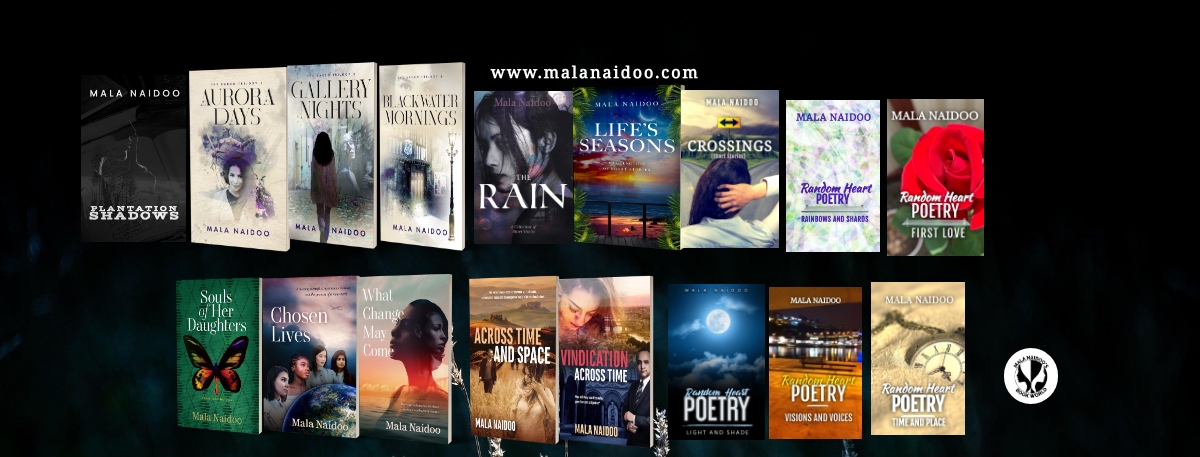
Many of my fictional characters have walked through such autumns. They carry inherited memories, fractured relationships, and the quiet burdens passed from one generation to the next, poignantly evident in Plantation Shadows. However, with every farewell lies the possibility of reconciliation. 

Winter is perhaps the most misunderstood storyteller of all. Its silence is often mistaken for emptiness, yet beneath frozen ground, roots continue their unseen work. Winter asks for patience, faith, and endurance. It invites reflection rather than action, reminding both writer and reader that healing is seldom immediate. Some wounds require stillness before they become scars; some stories require silence before they discover their truest ending

The seasons mirror our own spiritual journeys. Birth, love, loss, forgiveness, remembrance, and hope unfold according to rhythms older than civilisation itself. Whether we write historical fiction, family sagas, poetry, short-stories, or contemporary novels, we return again and again to these timeless cycles because they reflect something enduring about what it means to be human.


Life's Seasons

Today, however, the seasons speak with a different voice. Across the world, familiar rhythms are shifting. Rivers run dry where they once sustained generations. Storms arrive with unexpected fury. Winters shorten. Summers linger with exhausting intensity. Climate change has altered landscapes and our emotional relationship with nature. Contemporary writers are witnessing more than environmental change; they                                                               are recording the changing heartbeat of the world itself. 


Perhaps this gives literature an even greater responsibility.


Stories remind future generations not simply of how the seasons looked, but of how they felt. The fragrance of rain on parched earth, or the comforting hush of winter evenings in the glow of fireside embers. Fiction and poetry become acts of remembrance, preserving both the beauty of the natural world and the resilience of the human spirit.

Every story is ultimately about hope.

Not naïve optimism, but hope forged through suffering, a hope that survives exile, grief, separation, and disappointment. Winter never argues with spring. Autumn never resists its falling leaves. Nature accepts change because it trusts renewal. So too, human lives are called to mimic this acceptance of the change that arrives.  


Therefore all seasons shall be sweet to thee ~ Samuel Taylor Coleridge,Frost at Midnight’


As writers, we begin with scattered memories, forgotten photographs, inherited silences, and moments that refuse to leave us. We plant them carefully, trusting that in time they will bloom into stories offering comfort, challenge, or healing to someone we may never meet. If we listen closely, we discover the earth has been telling stories long before we picked up our pens—and long after our final words have been written, the seasons will continue the narrative, one blossom, one falling leaf, and one winter dawn at a time.


Please share your thoughts.

← Back

Thank you for your response. ✨

Writing Across the Human Divide

There is a quiet revolution encoded in every act of reading. When we open a book written by a stranger from a distant land, we are doing something radical; we are choosing, however briefly, to inhabit another life. Literature, at its most essential, has never respected the borders that politics and history have so carefully drawn. Stories seep through walls. They cross oceans. They arrive, unbidden and transformative, into the minds of people who had no idea they were waiting for them. 

The most compelling reason to write for a global reader is the invitation itself to write across cultural lines to unlock a door and hold it open, to say, come in, take your shoes off, sit down at this table. The reader who has never walked through a particular village, never tasted a particular grief, never watched the sun set over a specific horizon, is suddenly there. The writer offers not a postcard but a heartbeat.

Yet we live in a world that has, in many ways, travelled backwards. The outsider mentality: the reflexive suspicion of the unfamiliar  has reasserted itself across continents and generations. Against this retreat, literature mounts its quiet resistance in stories which reveal what fear obscures:  beneath the veil of culture, language, and custom, human beings are startlingly similar. We love imperfectly, grieve beyond measure and hope in spite of evidence. A mother’s worry in Africa and a mother’s worry in Australia are not separated by an ocean; they are the same, expressed through the context of the specific concern.


Perfection in Imperfection


Ideas and life lessons, too, have no borders. The wisdom earned through suffering in one corner of the world does not diminish in translation. If anything, it deepens. When a reader thousands of miles away recognises a truth in another’s experience, that recognition is a kind of homecoming in the proof that the lesson was never confined to one place.

The distance itself that carries value asserts that we are not alone. A reader may not recognise the landscape, may not share the customs, but in sitting with that difference, awareness stirs. An appreciation for where one stands, for what one has inherited, for why the world is wide and various and worth knowing.


In Our Angst and Joy We are One Under the Sky of Humanity


To write for the global reader is, ultimately, to believe in that shared sky. It is an act of faith that the story you carry belongs, in part, to someone you will never meet, and that they have been waiting for it.

Have you say.

← Back

Thank you for your response. ✨

A Compelling Sense of Place – Part 3

Writing a compelling sense of place means making the setting feel alive—not just where the story happens, but how it feels to be there in the moment during a significant event or situation, and why it matters. Here are some practical suggestions on ways to do it

  1. Engage more than sight

Strong settings use multiple senses.

  • Sound:distant traffic, buzzing insects, echoing halls
  • Smell:rain on a grassy patch after a hot day, old books, salt in the air
  • Touch:gritty sand, humid air sticking to skin, cold metal
  • Taste  (limit use) :dust in the mouth, bitterness of smoke

Example:

The fan creaked and groaned as if knowing it faced a losing battle against the summer heat.

  1. Filter the place through the character

The setting should reflect who is experiencing it. Two characters in the same place will notice different things.

Consider:

  • What would this character care about here?
  • What makes them edgy, angry, or nostalgic?

Example:

The summer heat made Moira faint, the infernal sun created a cremation site in their backyard. Her cousin, energetic and unaware of the rivers of sweat dripping off him, kicked the ball around the yard multiple times.


  1. Choose specific, concrete details

Make a place believable. Avoid generic words like nicebusy, or beautiful.

Food carts hissed with steam while cyclists threaded through stalled taxis, bells ringing in sharp bursts.

Rather than, ‘it was a busy street.’

  1. Let setting interact with action

Weave the story into what’s happening.

Example:

He shoved the door open, and warm bar air spilled onto the cold sidewalk, carrying laughter and the smell of fried onions.

  1. Use setting to support mood and theme

The place should reinforce the emotional tone of the scene.

  • Tension → narrow spaces, harsh light, noise
  • Calm → open spaces, steady rhythms, soft textures, natural romantic landscapes
  • Isolation → emptiness, distance, silence, derelict buildings

Example:

The field stretched empty in every direction, the sky so wide it made her feel smaller with every step.

  1. Don’t over describe

A few strong details are more powerful than a full inventory.

Rule of thumb:

  • 1–3 vivid details per paragraph is usually enough
  • Let the reader’s imagination do the rest
  1. Make place matter to the story

Ask yourself:

  • Would this scene work just as well somewhere else?
    If yes, the setting might not be pulling its weight.

Ways to make it matter:

  • The place creates obstacles
  • The place holds history or memories
  • The place mirrors change in the character


Subscribe, share and add ideas to help aspiring writers.

← Back

Thank you for your response. ✨

Complex Characters Who Feel Real – Part 2

Readers don’t fall in love with plots—they fall in love with people. That’s why complex characters are the lifeblood of compelling fiction. They’re the ones who linger in our minds, the ones we cheer for, cry over, or angrily debate with friends.

But what makes a character complex? And how do we write someone who feels less like a cardboard cutout and more like a fully formed human being?


 Give Characters True to Life Contradictions

Humans are walking contradictions. We want love but push people away. We crave success but sabotage ourselves. We believe in honesty but harbour secrets  (Plantation Shadowswhat is Milly’s secret?). These contradictions make characters interesting in their imperfections. Characters must grow from hardship, struggles, loss, etc to become the best versions of themselves. Readers need to identify with real life situations to connect with characters who echo aspects of their own lives.

Consider the following when crafting a complex characer

  • What do they think they want vs. what do they need?
  • What are their competing internal desires?
  • Where does their behaviour conflict with their beliefs, morals, or values?


Create a Backstory on Key Points that Advance the Character’s complexity

Build their history for yourself so you understand:

  • What shaped their worldview
  • Why they react emotionally the way they do
  • What they fear, avoid, or chase

Be selective about what is revealed in the backstory, offer teasers to your reader instead of telling it all. (Plantation Shadows)


Give The Complex Character Agency-Don’t Describe their Personality

Actions speak louder than a long list of adjectives.

Show the reader the inner persona through:

  • Their choices
  • The risks they take
  • What they refuse to do—even when pressured

The character does not have to be aggressive, A passive character can be intriguing if their passivity is a choice, not a default.

Flaws can Hurt the Complex Character and Others

Give characters real, consequential flaws. Flaws are the engine of character-driven storytelling.

Ask:

  • What is their most harmful belief about themselves or the world?
  • How does this flaw sabotage their goals?
  • How does it hurt the people around them?

Flaws that create conflict are flaws that matter— they are signposts to something deeper/larger.


Let The Complex Character Grow, Regress, or Transform

Complex characters are restless. They might outwardly hide their intentions. Slow feed how  they react to events, change their perspectives, and sometimes take a back step before a point of growth.

Explore:

  • Positive arcs(cynical → hopeful)
  • Negative arcs(idealistic → corrupted)
  • Flat arcs(unchanged internally but influential to others)

The character’s internal evolution when shaped by their experiences makes them believable and endearing because the reader has been drawn into their inner world.


Make Relationships Challenge The Character

A character’s interactions with others reveals more about them than any internal monologue.

Mull over:

  • Who pushes their buttons?
  • Who brings out the softness they try to hide?
  • Who forces them to confront truths they’d avoid alone?

Dynamic relationships create dynamic characters.


Mystery, Ambiguity, and Private Thoughts

You don’t have to reveal everything about a character immediately. People hold secrets—from others and from themselves. Let readers uncover the layers gradually. (Plantation Shadows – who holds a generational secret?)

A character is compelling when some of the interpretation is left to the reader.


Empathy

Complex characters when discovered, come alive through empathy. When a character is crafted as a person with their own desires, wounds, contradictions, and agency, the story deepens naturally. Allow them to surprise you, frustrate you, and challenge your drafting of their lives.

Look at the world around you, it abounds in complexities, and contradictions that carry the potential for growth, transformation, or regression—that makes characters human.

Make your complex character, live.

 Share ideas to grow  aspiring writers’ skills.

← Back

Thank you for your response. ✨

The First Page Drawcard – Part 1

Novel or short-story, poetry or playscript— they begin with a blank page and courage to believe that you have something worthy to share.

The burning question on a first attempt at writing a story is—how do you begin?

The opening of your novel is your invitation to the reader. It holds a promise of what’s to come. When given deep thought, and crafted well, it can capture attention, set tone, and ignite curiosity before the reader even turns the page.

What are the ways to start your novel with confidence and creativity?

Hold Your Reader’s Attention Immediately

The first paragraph is your moment to grab attention. Make the reader want to know more.

A strong opening line can create intrigue, emotion, or atmosphere in just a few words. Think of George Orwell’s Nineteen Eighty-Four:

It was a bright cold day in April, and the clocks were striking thirteen.

Curiosity is sparked by the suggestion of something impossible in the tone of abnormality in this world.

One of the ways to create an effective opening to a novel is to ask: What feeling do I want my reader to have within the first few sentences? Then work with whatever ignites your imagination, craft an image,  immerse yourself in the opening lines and write whatever comes to mind. Remember, it all begins with one word after another after another as all great novels begin.

Conflict or Curiosity

Curiosity is peaked when the reader wants the answer to a question. Inner conflict can be emotional, moral, or even unspoken, or external — it does not have to be a shoot-out on an urban street, it could be an observation of a situation, or an overheard conversation.

Draw the reader in on what’s at stake—invest in the readers emotions, make them care. Ask yourself/your muse, what does your protagonist want? What threatens that desire? A small hint of tension can pull readers in.


Who’s telling the Story? Make Your Character’s Voice Shine

The best openings don’t just show what’s happening — they reveal who’s telling the story.

A distinctive voice can turn an ordinary moment into something unforgettable. Consider Holden Caulfield’s sardonic tone in The Catcher in the Rye, or Elizabeth Bennet’s sharp wit in Pride and Prejudice. Their personalities come alive instantly.

If your reader connects with your character’s voice, they will be hooked even though nothing much has happened yet.

Ground the Reader in Setting and Mood

Make your reader feel where they are. Invite readers into your world with just enough description to draw them into the landscape you create.

A few vivid, specific details can convey an effective atmosphere. In To Kill a Mockingbird, Harper Lee uses the sleepy, sun-soaked town of Maycomb to foreshadow the slow, simmering tension of her story.

Ponder on: What your setting says about the mood or theme of your novel?

Start Where the Story Truly Begins

Begin the story at the moment of change in your character’s life— when something new, strange, or difficult begins. Hold back on a lot of background before the plot really begins.

Make a Promise to Your Reader

Your reader should have a clear sense of what kind of story they’re reading. Genre matters: Is it a love story? A thriller? A literary exploration of identity?

Sustain tone, pace, and style as they send signals about what to expect. If your opening is dark and brooding, readers won’t expect a lighthearted comedy — and vice versa.

Your first pages are a sort of contract with your reader, promising a certain kind of experience.

Note: The First Draft’s Beginning Isn’t Final

The opening lines in your first draft probably won’t be the one your readers see, or you might just strike that brilliant note in your first attempt.

Sometimes the perfect opening scene is hiding somewhere in the second or third chapters.

Get words down. You can refine later as writers do, as you must do — perfection begins with imperfection—it gets better as you walk the way, one step at a time.

Pitfalls You Might Want to Avoid

  • Starting with the weather (unless it directly ties to character /motif/theme in your story)
  • Dream sequences that confuse more than they intrigue.
  • Info-dumps — long paragraphs of backstory before the readers are vested in the characters.
  • Too many names at once, which can overwhelm your reader.

Use the KIS method (Keep it Simple) by aiming for clarity, connection, and curiosity.

Here are a Few Prompts to Jump-Start Your Opening

  • Start in the middle of an argument.
  • Open with something ordinary described as if it’s terrifying.
  • Begin at the exact moment your protagonist makes a life-changing decision
  • Begin with a lie your main character tells.

An idea triggered from one of the above prompts could grow into your perfect first scene.


 The Only Wrong Way Is Never Starting

Every writer faces the same fear at the beginning—that imposter syndrome feeling that what they write won’t be good enough. Remember: you can’t improve a blank page.

Start somewhere. Trust that your story will reveal its best beginning once you’ve written your way into it.

Now, take a deep breath, open your journal or laptop and begin your novel.

 Your story deserves to be told — and only you can tell it with authenticity.


← Back

Thank you for your response. ✨


Author Spotlight: Mel Goven

As creatives, news about a debut author from the land of one’s birth is received with great joy. The creative landscape is a connected, supportive space that celebrates newcomers to the publishing fold.


Meet Mel Goven, South African debut author of the crime novel, Unfinished, launched in July, 2022 on Amazon. Please join me in welcoming Mel Goven to the blog this month.


Get to know South African Author : Mel Goven


1. Biography : Mel Goven

Mel Goven

I hail from Johannesburg and have quite a demanding day job as a teacher in a primary school.

Unfinished is my first novel although I have written many short stories which have gained a place in short story competitions in local magazines and writing groups.

My short story, Scorned, a crime mystery,  was placed 3rd in Woman and Home, in 2014. Love Knots, another short story, was shortlisted in the annual short story competition run by The Writer’s Group. One of my favourite short stories, Lucky, featured on a few writing blogs and had quite a successful run in 2016. All these stories can be read on my blog site.

I have also published newspaper feature articles and opinion pieces during my stint as editor for the local newspapers: The Randburg Sun, Fourways Review and the Northcliff Melville Times.

My features were around education challenges in South Africa. Some of which were: Preparing for Future Career Opportunities, Effective use of Technology in the Classroom, Private versus Public Schools.

Having always been drawn to the romance genre, I imagined I would write romance novels, which I haven’t completely taken off the table yet. However, I found my voice in thrilling crime mysteries.

I have two more novels in the pipeline and have realised that with each new world I create, I am finding myself as a writer. I don’t like conforming to a specific trope and while I admire the writing styles of my favourite authors, I don’t think I am in the same league and so choose to write my way.

I have been blessed with four incredible children of whom I am super proud. In formally starting my writing career at this stage in my life, I hope to inspire them that dreams come true at any age, no matter what challenges and obstacles arise.


2.When did your passion for writing emerge?

I love reading. I believe you must be an avid reader to be a good writer. When I was a child, I would beg my parents to take me to the library.

I visited many libraries in the area I grew up in: from the little mobile libraries that would go around the community on Tuesdays and Thursdays; to the community libraries that were finally built when the demand increased, and then to the Durban City Hall library when I was old enough to travel to the city on my own.

I started writing after I read Anne of Green Gables. I felt such a deep connection to the main character, Anne. Although she was a lifetime removed from my world in terms of the era, race, and circumstances, she felt what I felt; messed up like I did; was the odd duckling — just like me.Anyway, the community library did not have the sequel to Anne of Green Gables and so I decided to continue the story in my imagination. Eventually, I wrote it at the back of a Maths book (I did not like Maths very much). That was how I began writing.


Every time I finished reading a book, and if I felt that I wanted more from it, I would continue the story to bring it to a satisfactory conclusion.


3. What inspired you to write your debut novel, Unfinished?


In 2012, I became fascinated by a story I heard from a patient in a doctor’s surgery.  The patient had undergone a heart transplant a few months before and she had been excited to meet the family of her donor.

I found myself researching it and was surprised to find that some heart recipients experienced major personality changes which are sometimes connected to their donor. The idea of the heart, which we consider the seat and symbol of emotion, sparked a story and this epic drama unfolded.

Unfinished is set in Hout Bay, Cape Town, because the first human heart transplant occurred successfully at the nearby Groote Schuur Hospital. But, it is more than just a story about a heart transplant. It revivifies an unsolved murder committed almost 40-years before the story begins; those affected by that crime and how their lives have interwoven until a heart transplant finally exposes the truth. I wanted my characters to come to life on the page, and each one needed to have a voice, so I opted to write in each main character’s POV.


4. Who are your favourite authors?

I have so many. I have great respect for the classics, so Jane Austen, Thomas Hardy, Emily Bronte, L.M. Alcott, Charles Dickens, Sir Arthur Conan Doyle and of course, L.M. Montgomery.

Contemporary authors: I would say, Khaled Hosseini, Kazuo Ishiguro and Eleanor Catton. But there are so many others. I have never restricted my reading to specific genres. I read all, except perhaps horror. Although I did spend a few sleepless nights reading Stephen King’s, The Dream Catcher.

I suppose I could say I have favourite books rather than authors. At present I am enjoying Barbara Kingsolver’s, The Lacuna. And, A Madness of Sunshine, by New Zealand author, Nalini Singh, and The Winter Garden by Kristen Hannah.

Oh, dear! There are so many more books I still have on my to-be-read list. My guilty pleasure is that I also enjoy a Harlequin romance novel now and again.


5. What advice would you offer to aspiring writers?

Write about what you experience. Write that story you wished could have had a different ending. Write about your dreams. Whatever takes seed in your imagination, write about it.


Grab your copy of Unfinished at these Amazon Book Links

  Paperback

 Kindle edition


Join Mel Goven on social media:

Facebook

Instagram


I extend my gratitude to Mel Goven for sharing her author journey and wonderful advice to aspiring authors. Unfinished has certainly grabbed my attention!


Happy Reading, Happy Writing.


Please sign up,  like, share, and comment blow.


← Back

Thank you for your response. ✨

Discerning Choices

Is there ever too much in a writing life?

A full-time writer lives and breathes, creating fresh stories, poetry, and essays. Nothing is ever too much for the creative.

When starting out as a writer, passion draws one to all things writing, from social media, literary associations, events both live and online and a plethora of books on how to write and publish. FOMO consumes the early years, but on the flip side, it can erode creative time.


Over time, whittle down to those activities that create the time and space for the creative process together with growing an author brand and business. There is much to gain from trying different groups and associations to test what fits your values and the type of writer you hope to be.


Be unique, select memberships wisely


Don’t strive to be someone else. Readers appreciate authenticity.

While exploring the creative cyber space, books, groups, and associations, you realise, over time, what adds value to your work.

It is vital to look for integrity when seeking to find where you belong as an artist in what can be an overwhelming space if trying to fit in with more than you can humanly manage.


Passion and FOMO drive the need to be a part of all and more


Give priority to the innate reason for choosing a creative life. This will guide your understanding of where to invest your time and growth. Running your own creative business is a mammoth task before investment in virtual assistants.

In the initial stages of a creative life, creatives might manage a day job and fit in a creative life after hours, besides managing rest and domesticity.

To ensure you give adequate creative time to your work, divvy up time to at least two associations that echo your values. An authentic organisation such as ALLi guarantees professional development, keeps you informed of current writing and publishing trends. Podcasts and FB live monthly advice sharing, and a Self-PubCon offer advice not to be missed. A directory of vetted services available to ALLi members is where you will find cover designers, editors, and many other services you require as a creative in publishing.

Depending on where you live in the world, you might hook up with a local association and join a Facebook Group or two for the quality of the experience. It is easy to slip down the rabbit-hole chasing after what appears bigger and better. Over time, this will steal valuable time from your ultimate purpose: to write and write more.

Sharing across author platforms is a great way to promote your work to different readers while helping promote the work of writers you enjoy and admire to your supporters. This garners support from grateful creatives who return the respect by promoting your work.

The creative space is generous and supportive. Find your authentic niche and belong to grow your creative works.

Please share the platforms you enjoy in the comment box below to help fellow aspiring writers make discerning creative choices.


Happy Writing, Happy Learning!


← Back

Thank you for your response. ✨

Fiction and Reality

Pen, a fictional story and aspects of the scribe’s life, spills onto the page between fiction and reality. Angst and joy collide in the unfurling of the emotive content of the story. Emotional hooks in a story invite readers to open their own wounds and happiness for a well-penned story.


In my novels and short story collections, dogs feature as necessary in human lives. A lifelong love of dogs finds their way into the lives of significant characters I create.

In the Sequel set Across Time and Space, and Vindication Across Time the wonderful Ted is the adored pet of human rights lawyer, Michael Morissey, and aspiring writer Meryl Moorecroft. Michael advises and befriends schoolteacher Marcia Ntuli, caught in workplace professional racism. Ted is the first to understand the growing romantic involvement between Michael and Marcia. His sensitivity to Marcia makes him an endearing ‘character.’


Fiction is the lie through which we tell the truth. ~Albert Camus


Read Now


In Souls of Her Daughters, Patience, a social worker has two dogs, Ajax, and Sprite. She adopted them while her sister Grace was overseas at a medical conference. Patience witnesses her sister’s battle with her past demons and hoped Ajax and Sprite might offer her healing and joy. We may read this novel as a stand-alone novel or as a trilogy.


Read Now


They were abandoned in an old building on the south side of town. I could not take one and leave the other. They are high maintenance in the love department but adorable to come home to.


Life’s Seasons, a short-story collection, includes a valiant dog as title story – Toby. This story was first published in the short-story collection, The Rain, where Toby, a brave dog, living on his owner’s family farm, is confronted by a treacherous storm. Instinct guides Toby when the safety of his beloved human family is threatened. Toby’s heroic, selfless act unwinds minute-by-minute to melt hearts.


Read Now

He gripped the harness between his teeth, prostrating to give the children a lift, to allow them to be pulled up with ease.


The Bardo Trilogy has Woza and Khaya, the loyal companions to the mysterious doyenne Tempest, on her mission to offer safety to women and children who are victims of crime.


Fiction reveals truth that reality obscures ~ Ralph Waldo Emerson


Read Now

Living in isolation was difficult, but her parrot, Caramba, a keen white watcher of the skies and her two Rottweilers, Khaya and Woza, filled her lonely hours.

The act of including dogs in each of these novels and short stories is a subconscious inclusion drawn from experience.

Pets are companions who combat loneliness, fulfil a caring need, aid healing from grief and bring joy during life’s challenging times. Both fiction and reality meld to create balance to live in unison with the universe.

Now there’s nothing like one’s writing companion puppy snuggled at one’s feet as words and new worlds rise and fall on the page.


Happy Reading. Happy Writing.


Please share, like and comment below:


← Back

Thank you for your response. ✨


Experience and Writing

Does life experience matter for writing a book?

There are two answers to this question (In my book, anyway).

Experience matters in writing to represent an authentic voice, if the story/plot pertains to a particular generation/profession/life situation etc – authenticity will draw the reader into the story. A sense of place if core to the tale, and references a real place rather than a fictional setting, the experience of having visited a place, such as a town, beach, farm, a particular building etc, will add lustre to the place described. This makes the reader feel they inhabit the  fictional setting.

If life experience, in the numerical sense, is absent, the young aspiring writer will achieve as much as his or her experienced counterparts if the novice writer reads widely and writes extensively. It is universally understood that to write well, one must read widely and often. What one reads is important to add believability to a time, place, or character beyond the true-life experience of the young writer.

Both actual life experience and vicarious life experience hold value in the depth and authenticity in the stories writers create. The experience gained during and through the composing process enhances light, shade, depth, and adds colour to the prose.


Writing is not life, but I think that sometimes it can be a way back to life. ~ Stephen King, On Writing: A Memoir of the Craft.


Seasoned and aspiring generations of writers have much to gain from each other. Writing groups offer a wealth of opportunity to sharpen the ability to write through the voice of any age or place, or past life experience. Wisdom is not age/number bound, neither is the capacity to learn a new way to meet the market of readers ready to devour new releases that offer meaningful connections.


The value of experience is not in seeing much, but in seeing wisely. William Osler.


Research, like reading, broadens the ‘life experience’ of a writer. Interviewing people who are of the generation, time, and place before that of the writer is valuable for crafting a character, place and society that is alive on the page.

Mind, manners, and morals of a time before one’s own is accessible, not only via digital means, although the digital connection helps the researching writer find a genuine contact who might willingly be interviewed. To honour the sharing of memories of a time past is often rewarded by a mention in the author’s acknowledgement of sources consulted. Writers take great delight in doing this.

Similarly, when writing crime or detective fiction, visiting police stations, attending court cases, interviewing police officers, or shadowing an officer/detective on the beat is a hands-on way to gaining their work life experience.


The writer’s map has many points of entry… it comes down to individual choice ~Mala Naidoo


On another note, the broader necessary experience as a writer, the how, why, and the business of being a writer are accessible through Facebook groups, writing organisations, attending webinars, and signing up for a masterclass, as is reading a recommended book on how to write and manage a writing business. From a range of noteworthy groups, books, or organisations, the aspiring/new writer embraces and shapes what is needed to craft a unique voice/work of art.


Experience can’t be taught. Anonymous.


Please like,  share and comment to help a fellow creative.


← Back

Thank you for your response. ✨

Author Spotlight: Keshni Washington


It is with great joy today that I travel on the blog from Sydney to Washington to feature the inspirational Keshni Washington who I met through an introduction from a respected and trusted mutual acquaintance. I have had the privilege of attending a virtual screening of ‘Immigrant Story Telling Night’ with Keshni Washington and speakers on the night who shared their honest, authentic, lived experiences as immigrants.


Regardless of where we reside in the world, the connection is palpable. 


Author – Keshni Washington

 My ten questions introduce Keshni’s life and work in Washington DC as a writer and compassionate person, living, working, and contributing to DC society with a strong connection to her South African roots.


1.What is your most vivid memory of South Africa?

I miss those perfect hot dry Joburg summer evenings, the smoke of a braai (bbq) with friends and the clear skies and stars. Along with this memory, I also miss the taste of Koo baked beans and South African mayo potato salad.


2. Did you move to Washington for work? 

Yes, I was recruited from South Africa to work for an international non-profit that is based in Washington DC. I had never been to the USA before coming through for the interviews. I worked there for 8 years but have been trying my hand at being an entrepreneur for the past year.


3. When did you realize you wanted to be a writer?

I can remember composing the opening to my first book when I was 11 on the walk to and from school in Chatsworth, Durban. But I was soon discouraged and advised to do something more financially rewarding that would secure my future – I grew up in an apartheid segregated neighborhood and so being able to support yourself and others financially was a natural priority. I put away the dream until decades later in life. Coming back to it about 5 years ago, reaffirmed the feeling inside me, that this is what I was meant to do, and I know I will be telling stories for the rest of my life. I have been learning and honing my skills and now have two draft novels.


4. Tell us about your ‘Signal Fire Series’ podcast and what motivated you to do it. 

I wanted to fuel my own fires of inspiration by talking to some of the people that inspire me about their journeys and glean some of their wisdom. I realized quickly that these conversations could do the same for others out there, whatever their passion. Since I have deep roots in South Africa, I decided to host conversations with both Americans and people from my first home. It has been an expansive experience, in which I have found a new admiration for every single person’s journey, whether they pursue their passion in their spare time or full time. It’s my offering, and I hope the person who needs it will find their connection and inspiration.


5. Please share your recent publishing success and writing motivation. 

Published in Yellow Arrow Literary Journal

I have recently had short pieces/essays published in American literary journals: Yellow Arrow Literary Journal, Mer Vox Quarterly and Pen-in-Hand Literary Journal. I have also been fortunate to attend two writing workshop intensives – VONA (Voices of Our Nations Arts Foundation) with author Daniel Jose Older and Tin House Writing Workshop with author   Alaya  Dawn Johnson.


Keshni Washington’s favorite writing spaces where a cup of South African Rooibos tea is served at the Jamaican Tea Shop in DC.


6. What genre do you enjoying reading the most? 

This is hard to narrow down as I read just about everything. When I was young, I was obsessed with science fiction. When I got older, I gravitated to literary fiction and poetry. Over the past year, I have been reading a lot of YA as my latest novel is a YA novel, which has been a ton of fun.


7. Tell us about Tin House, and the experience you have gained/are gaining.

Tin House is an American publisher of award-winning books of literary fictionnonfiction, and poetry; home to a renowned workshop and seminar series; and partner of a critically acclaimed podcast, Tin House champions writing that is artful, dynamic, and original.

The writing workshop consists of a series of small classes of no more than eight writers per class, so spots are limited. I got to work with the amazing Alaya Dawn Johnson. As part of the selection process, I submitted the first three chapters of my book, and these chapters were critiqued during the workshop by both my classmates and my workshop leader. All my classmates were critiqued this way. It was an invaluable opportunity for feedback and discussion. I had one-on-one meetings with Alaya and a literary agent who gave me feedback on my query letter. There were many amazing craft lectures by the faculty, generative exercises, and discussions about the publishing industry. We had the opportunity to do a reading from our work and mingled with other amazing writers attending and teaching at the workshop. It was an intense but invaluable experience.


8. When did KAMA DC start and what is your role at KAMA DC? 

I first found Kama DC when I signed up to participate in their Immigrant Story-Telling Night. (where immigrants share a five-minute story from their experience on the theme of the night.) I have since stayed with Kama DC as a volunteer – part of the Storytelling team. Kama DC is a nonprofit in the DC area, run by volunteers, whose mission is to build community through immigrant-led experiences, providing a platform for immigrants to teach classes, share stories and their skills and passions to foster awareness, understanding and community. I also inaugurated and now run the @immigrantsOftheDMV Instagram feed, which is similar to Humans of New York in that we invite immigrants on the DC, Maryland, and Virginia area to do a takeover – hold the handle and share a bit about their story, home country, and experiences in the USA. It is a wonderful group of people and I am immensely proud to be a part of this mission.


9. What has been most inspirational about your semester of Creative Writing at GW? 

During this semester we get to learn from published author Cutter Wood. It is focused on creative non-fiction aka essays, and how to write our true stories. As my self-study has been focused on fiction and novel writing for many years it’s wonderful to develop this different writer muscle. It is a small class of 13 people. We write a new piece every week, so I have to dig around in my memories and experiences and create something on a schedule. And the best part is sharing in class and getting to grow through the experiences and creations of the wonderful writers in my class.


10. If there is one piece of advice that you would share with young aspiring writers, what would it be?

To just start. Just write. Whether you think it’s imperfect or feel you are not ready. Just write. Put your fingers to the keyboard, or your pen to paper today, start journaling today. You are not too young nor too old. Just write. You will get better by doing, I guarantee this. But you must start, the world needs your stories.


With gratitude and best wishes to the inspirational Keshni Washington  for sharing her creative journey, life and work in Washington DC.


Connect with Keshni here:

Website

The Signal First Series Podcast

Instagram


Please like, share, and comment in the message box below.

← Back

Thank you for your response. ✨

Creating in a Challenging World

We have read it and heard it repeated everywhere we look and listen.

Change is — has been — will impact all facets of life. The current global change that has claimed 2020 has challenged the ‘do I dare?’ mindset of the creative. The muse is a sensitive soul. She feels the angst as deeply as the joy — inspiration is derived and mined from this seat — gold mined!


Health crisis, economic crisis, the uncertainty of life, the fear of not so much the outdoors but whether we can trust that everybody is doing the right thing.

For how long must we entertain fear as it enslaves us by forfeiting joy?

The creative forges on to leave the carbon footprint of these challenging times.


Dare and dare again and the muse shall heed the call.


The creative day, if allowed to slide, is a difficult one to recover but is possible with the determination of, ‘I will dare.’

TS Eliot’s poem, The Lovesong of J Alfred Prufrock. conveys the uncertainty of modern times where ‘normal’ becomes unusual. Images of desolation pervade his poem:

Like a patient etherized upon a table/Let us go, through certain half-deserted streets,/The muttering retreats

This echoes the current emotional and scientific uncertainty we face.

The yellow fog that rubs its back upon the window-panes,
The yellow smoke that rubs its muzzle on the window-panes


Eliot’s raw emotions capture the universal angst of his time where rapid economic and technological advancement changed his perceptions of life. And the yellow fog of uncertainty seeps into 2020 rising, falling …

The natural outcome is to be perplexed but navigation to the new normal through introspection is vital.

The pen is the mighty memory of our time, of all times, and writing must go on as must art and music and all creative pursuits.

In the making as creatives, writers, artists, we share a universal experience in that it is normal to be afraid, and it is brave to dare by creating new worlds that either mirror the present or transport us to worlds we dream of. In dreaming we bring those hopeful worlds into the conscious mind of the reader/audience who in turn subconsciously works towards making that dreamed, hopeful world, a new reality.


The writer’s pen will never dry or fade — words speak into the future from the past bringing meaning and understanding that this too shall pass.

The human condition is live with the possibility for new stories to be told, poems to be written, songs to be sung and paintings to be created to articulate and quell all fear.

Do I dare, and do I dare, — oh yes, we must, to make this life the best life we have had the courage to dream into our reality!


Today step forward — leave the fences and backyards of your mind and speak of your fears, insecurity, and uncertainty through artistic expression.


Take a chance. Live your passion.


This is a time for you to be YOU in all that you do without the fear of judgement.


Happy writing. Happy creating. Happy daring to channel your way forward for a life free of angst with the promise of joy.


What’s your creative plan?


← Back

Thank you for your response. ✨

Writing For Success

In my first post on the prolific and inspirational Trinidadian author and poet Brenda Mohammed, we got a glimpse into her writing journey.  Brenda has written twenty-five publications — her passion and dedication to literature is phenomenal.

Today we chat to Brenda Mohammed to catch up on her rapidly growing and expanding writing life and the scoop on her latest writing venture!


Tell us a little bit about yourself?

I am a former Bank Manager of a leading bank in Trinidad and Tobago. Later in life, I moved into the Insurance field and excelled there also. I always loved dealing with finance, and never dreamed that I would fall in love with Literature.


When did you start writing?

Actually, I was always a very good writer in my school days and won the top English Language prize when I graduated from High school at sixteen years of age.

When I joined the bank my superiors at the bank were always impressed with my ability to learn quickly, my efficiency in every department I was assigned, and also my writing skills.

When I was promoted to the job of Assistant Manager Credit I had to prepare detailed financial proposals for the Manager’s signature to be sent to the bank’s Head Office for approval. The Manager rarely changed a word, and the Bank’s Head Office always approved the proposals without any questions.

The Banking term for that was “clean sanctions,” something other Managers wished they could achieve. Later on, when I was appointed as Manager I continued with that skill and moved on to Senior Managerial positions. Yet, writing books never crossed my mind and I moved into Insurance where I also excelled, qualifying for membership in the Million Dollar Round Table, The Premier Association for Financial Professionals, {the name pertains to sales achieved and not earnings}, until I was struck by cancer and told by my doctor in Trinidad that she could do nothing for me.

To make a long story short, I survived and wrote the book, I am Cancer Free, which became a bestseller, and gave me the encouragement to write twenty-four more books.


You wrote twenty-five books. Can you tell us the genre of those books?

I write both fiction and non-fiction. The genres include Memoirs, Romance, Mystery, Poetry, Children, Science Fiction and Self Help.


Tell us something about your multi-award-winning book Zeeka Chronicles.


Zeeka Chronicles is about a vengeful man who misuses science in the year 2036 to create havoc in a small exotic island named Gosh. He is angry for two reasons. After his former lover jilted him, he married another on the rebound. His wife contracted the zika virus when she was pregnant. His child was born deformed as a result, and she died. He blamed the hospital for her death and his deformed child. This vengeful man kidnapped the son of his former lover and the story evolves thereafter.

The story is set in the year 2036 when there is great advancement in medical and information technology. It is a high-tech world.

Skillful robots are used as home helpers, and police use high tech weaponry, electric cars, and smartphones. The hospitals are well equipped with state of the art equipment and doctors and scientists are making significant breakthroughs and inventing cures for patients with critical illnesses.

Yet, in this high-tech world, the minds of some human beings remain evil.

Can Mankind ever achieve a sinless state? Will human beings forever continue to foster greed, malice, anger, jealousy, and the desire to control and take revenge?

I wrote this book to highlight the fact that material things can never improve the minds of some individuals.

Today, in spite of all the new and advanced developments, crime has increased to unstoppable levels. What will change humanity?

The benefits to readers are the underlying lessons to be learnt from the content, especially in light of the situation the world is experiencing today with COVID 19.


Who are the primary readers of your books?

My books are for both mature audiences and young adults and the children books are, of course for children.


What are you working on now?

I am working on the third story in a Mystery series – Barry Holmes Mysteries

What happened to Mary Loo has elements of romance, mystery and suspense. It will be a short story and should be ready for publishing by the end of May.

The book cover was designed by Mary L Schmidt.


Can you leave us with a valuable quote on Writing?

Writing is a mysterious journey of thoughts that can unravel the strangest imaginary plots.

Writing for me was exploring a new milestone.


What are your social accounts if people want to connect with you?

I am on Linked In, Twitter, Instagram, Pinterest, and Facebook, where I have nine author pages for each genre in which I write, and a personal page.

They are – Poetry to Enlighten, Zeeka Stories, Banker turns Writer, Romance Stories, Children’s Corner, Barry Holmes Mysteries, Brenda’s Video trailers, Fascinating Memoirs and Brenda’s Publications.

I am also available as the Founder of How to Write for Success Literary Forum.


Brenda Mohammed a former Bank Manager from Trinidad is a multi-award-winning author of 25 books, and Founder of the Literary Forums How to Write for Success, Poems for Suicide Prevention, Library of How to Write for Success, and Poems against Domestic Violence. Her award-winning book HOW TO WRITE FOR SUCCESS is popular amongst writers and University students.


She recently published three best-selling Anthologies – A Spark of Hope Volumes I and II, co-authored by 49 and 64 authors respectively, and Break the Silence: An Anthology against Domestic Violence by 87 authors. All three topped the charts on Amazon as Bestsellers No 1.

In November 2018 Brenda received two awards from Readers Favorite International at an award ceremony at the Regency Hotel in Miami for two of her books, ZEEKA CHRONICLES and I AM CANCER FREE.

She was inducted into the Indie Author’s Wall of Fame in January 2020.

Brenda was also honoured on 22nd February 2020 by the Peru Government for Excellence in Literature, and in August 2019 by the Seychelles Government for her Literary skills. 


You can connect with Brenda Mohammed through the links above.

I wish Brenda everything of the very best in her writing success.

Please like, share and comment.


← Back

Thank you for your response. ✨

Writer’s Connect: Spotlight: Author Vash Karuppa

Today I turn the spotlight on South African Author Vash Karuppa whose debut novel DESTINY FOR LOVE ARRANGED is a favourite among readers in South Africa and abroad. Her novel captures the cultural significance of life, and the command and necessity of love in a voice that connects the reader to place and culture and the understanding that the heart is not entirely self-directed.


 Synopsis: Destiny for Love Arranged:

 Destiny for Love Arranged is a contemporary, gripping and angsty, second chance Indian romance that reveals the love of family and friendship bonds during trying times. All protagonists are of South African Indian origin.

The story revolves around Aariyan Ranjan, a highly successful CEO of a Hotel Empire and Varini Iyengar, an Oncologist, both are forced into a temporary marriage of convenience to help them resolve personal dilemmas.


Not because it had anything to do with his heart he thought stoically…, but because it suited his purposes…


While Aariyan is determined to treat their marriage as he would any other business deal, love rarely listens to logic, and what follows is anything but business. On the other hand, Varini soon finds herself gravitating toward and rejoicing in the love she thought lost forever with a hidden hope that their marriage of convenience will end in a union of everlasting love. The story is embedded with cultural anecdotes familiar to any family of Indian origin. It takes their family, friends and a life-threatening situation to show them the love they lost is worth fighting for.


In short, this is a story about family, friendship, and starting over, as Aariyan and Varini embark on a journey toward a second chance at love. You will get to share in their moments as they discover that vulnerability can be their strength and the most perplexing problems can be overcome with the support and resourcefulness of a loving family and faithful friends. This is Book 1 of a trilogy.


About the Author 


Vash is a South African author of Indian origin who has been a bookaholic from about the age of five. Her addiction for books grows exponentially daily, so after spending years concentrating on her role as a corporate executive and a short stint as an entrepreneur, she decided to unleash her number one desire i.e. a passion for writing. Whilst books of most genres interest her, it was romance that captured her soul. Her writing portrays the lives and drama of ordinary people who readers can easily relate to. The crux of her stories celebrates the power of true love coupled with the timeless bonds that exist between family and friends while capturing the true essence of diverse cultures.

Vash Karuppa is a member of the Romance Writers Organisation of South Africa (ROSA)


What inspired you to write Destiny for Love Arranged?

For many years I have read articles around the call for diverse romance novels that incorporate multi-cultural aspects into a traditional romance plot. In addition, I’m a hopeless romantic myself and always had a plot in my head around a story that integrates family and friendship bonds (which I have been blessed to have throughout my life) together with a typical romance story.

When I eventually decided to put pen to paper, it all just naturally came together, giving birth to Destiny for Love Arranged. Finally, I am aware there aren’t many novels written which share intricacies of the South Indian culture and I was determined to write about it. Looking at the feedback received thus far from readers, it was well-received.


Have you always wanted to be a writer? How long did it take you to write your novel?

Being a passionate romantic and voracious bookaholic, reading was a drug to which I had an instant addiction, one that only grew with time. While books in all genres interest me, it was romance that I was drawn to. From as early as my pre-teen years, I loved the ‘happily ever after (HEA)’ syndrome hence my love with any book in the romance genre, and later as a teenager with a dream of writing my own HEA story.

Writing a novel has always been part of my bucket list, so, after spending years concentrating on my role as a corporate executive, I eventually unleashed my number one desire and passion for writing with Destiny for Love Arranged

I didn’t really plan on publishing my work though, because I started writing for my own fulfilment. However, when a few of my friends read the script, they encouraged me to consider publication and so it happened….

The hardest part of completing the story was not knowing how to stop. I had so much more to tell but owing to publishing rules on limited word count and reader expectation of the length of books I had to cut out a lot from the original script.


What’s your typical writing day like?

Owing to a “day job”, I tend to confine my writing to nights for at least 2 hours a day in the week and whatever time I can hijack on the weekend.

My best writing is done in a quiet space in my little apartment directly next to a window where I can have the warmth of the sun and sounds of chirping birds to keep me company while writing.


Who is your greatest source of inspiration?

My 92-year-old maternal grandfather has undoubtedly been the inspiration behind my love for writing. He taught me how to read and then introduced me to the word of writing through the books he wrote and is still writing might I add.


What are your future writing plans?

Books 2 and 3 of the Keshavam Industries trilogy is almost complete and will be released between December 2019 and February 2020.

I have a new series planned for the rest of 2020.

Destiny for Love Arranged is on Amazon for your reading pleasure.

Connect with Vash Karuppa on:


Facebook

Instagram

Twitter

Goodreads


Happy Reading! Happy Writing! Happy Publishing!


← Back

Thank you for your response. ✨

What’s In a Name?

Have you ever stopped to ask people you meet along the corridors of life, ‘what does your name mean?’ Or ‘Are you named after a family member?’

Have you ever entertained thoughts of changing your name because it hindered you in some way or are you the proud bearer of your name?

***

So what’s in a name? 

A thinking, vibrant being

A giving, caring individual

A hard-working, self-sacrificing soul

A woman, a mother, a wife, a daughter

A man, a father, a husband, a son

A loving grandparent

An innocent child, given a name with love and pride

Identity

A name might have meaning behind it based on family history, heritage or culture.


Who are we to judge the person, behind a name, the name we’ve never heard before?

Such is the individual’s dilemma that some face, that we face,  regardless whether the name is ethnic or western in origin.


 What is judged in a name that has no western origin?

* English proficiency in speaking and writing

* Concerns regarding professionalism

* Does the person have an accent?

* Does the name bearer understand and apply the rigours of social etiquette in the place and company they find themselves in?

* Is the person intelligent?

* Does the person understand the law of their chosen homeland?

* Does the person read intellectual and philosophical texts?

* Is the person educated?

*Is the person one to be feared or mistrusted?

*Where was the person educated?

* Where does the person live?

* What’s that postcode again?

What voice does the ethnic name bearer want to be heard?

I am me.

Get to know me.

Talk to me.

Try to understand me.

I would like to get to know you and understand you.

I live in a home with civilised values.

I might have the same goals you have.

I have a history.

I respect your history.

Please don’t judge me before you know me.

I don’t judge you, I seek to understand.

I am an ethnic individual, by whose definition I might ask?

I really don’t want another moniker.

My name means rosary/meditation beads/garland of flowers.

Hello.

What’s your name?


What does your name mean? How does it define you as you see yourself and your worth, which we all have, to share in this world?


This makes me feel that I came into this world to write my nam upon the face of life with big letters.~ Khalil Gibran (1883-1931) Lebanese-American Artist, poet and writer


A name pronounced is the recognition of the individual to whom it belongs. He who can pronounce my name aright, he can call me, and is entitled to my love and service ~ Henry David Thoreau (1817-1862) American naturalist, poet and philosopher.


Be yourself, everyone else is already taken ~Oscar Wilde (1854-1900) Irish playwright, essayist, and poet


Celebrate diversity, celebrate the cultural origins of names. Value for the individual should come from what one upholds or defends to enhance the human condition. 

Was there a time in your life when you wanted to change your name to extend the opportunities that might have been available to you if your name had no particular ethnic or western origin?

Please comment in the box below, a history shared opens the pathway to understanding, tolerance and acceptance for a world we can boldly, safely and respectfully traverse.

← Back

Thank you for your response. ✨


Is Commitment on Your Agenda?

Across Time and Space explores commitment in relationships in romance, friendship and family relationships. Whether or not it leads to the commitment of, ‘I do’ – commitment is a primal need in relationships for one to feel valued. The protagonist in Across Time and Space has been in a relationship for a length of time, a comfortable, complacency envelopes the relationship creating restlessness that becomes the catalyst for unimagined challenges.

This begs the question, does commitment mean unstinting devotion and loyalty akin to ‘til death do us part?’ The answers are vast and varied depending on the values one has embraced or formed.

Being raised in a time and place which instilled that a promise of commitment meant fulfilment of that promise on a nominated, ceremonial day which comes with its own merits and flaws. This might be considered ‘old world’ or fit for ‘Cinderella and her Prince Charming’, yet the expectation is that couples will unite or commit in a way they deem appropriate to both of them. Yes, the operative word is both – not ‘one’ making a decision, on a whim, that life’s path has beckoned a change for ‘one’ without consideration for how this might impact on the other half of both. Such is the life of the protagonist in Across Time and Space and her partner – good people in their own right who buckle under the fear of commitment, fear for the loss that might be incurred in all that has yet to be achieved in life.

This leads me to why should commitment be feared as the end to individuality and relinquishing of one’s dreams? Commitment should encompass all spheres of one’s life in relationships: singular and joint dreams, commitment to professional ideals and commitment to going off on a whim if its one’s choice to do so by acknowledging that both need to be aware of such changes. Meryl, in  Across Time and Space will clarify the choices she makes to catch the star of her destiny that she feared might never be realised in her lifetime.

Commitment can have its dark and dangerous side when passion overrides reason. This brings to mind Catherine and Heathcliffe in Emily Bronte’s Wuthering Heights where both are inextricably and destructively hemmed to each other. Stepping outside literature as we turn on our televisions to the reality of the evening news or an online article on domestic violence which results from unhealthy commitment which is power and control. Supposed commitment, commitment without reason creates a dark, terrible and often tragic situation.

Commitment in family relationships be it as mother, father, grandparent, carer or extended family member should be based on trust, approval, open communication and support from love shared  to promote good mental health.

Love, respect and freedom of choices are a right that should not be debated, it’s a basic human right – a human right that should acknowledge commitment to respectful consideration through communication  before heading off alone into the sunset.

Commitment to values  includes commitment to the values of place, the place we call home – the country- the city- the street- our backyards. It is often those who cannot commit on a personal level who cannot commit to democracy, justice and a fair go.

Reason should always caution passion, dreams should be lived for peace and joy to reign for both halves in any relationship and for all in our choice of place that we call home.

What’s your take on commitment to all things in life?  I would love to know your thoughts.

Please Like, Share and Comment

← Back

Thank you for your response. ✨

error: Content is protected !!