Why does crime fascinate the reader or the viewer? From a gripping novel to a suspenseful film, both mediums are loaded with intrigue, blood, gore, missing persons, and dead bodies, and they certainly hold our attention for more.
Pushing boundaries is the adventurous inclination invited by human fascination, as is vying for the person we want to set free from crime.
Crime writing, like reading crime novels and viewing crime films, is an emotional investment for the adrenaline rush we crave. Words on a page must do the creative hard work that diegetic or non-diegetic music elicits to keep us on edge, before, during and after the crime has been committed.
Descriptive language, sharp, short sentences, sensory imagery and specific punctuation, create and elevate the mood that befits a crucial scene in a novel. The intrigue must be deep enough for the reader to push on, chapter after chapter, well into the night, or wee hours.
Crime fiction often draws inspiration from actual crime, which allows for greater reader appeal. Research is vital to achieving a realistic, entertaining selling point.
Attending a criminal court hearing is a valuable catalyst for storylines to kick off. Make a friend in your local police station and shadow the police person to walk in their shoes for a few days. What better way to get inside the aftermath of the crime?
Visit a prison, and if allowed, ask to interview a prisoner. Getting inside the minds of criminals fuels the creative urge for the realistic crafting of your MC.
Research profiles of victims of crime and seek a psychologist or psychiatrist to gain a greater depth of understanding of why the victim might have been targeted.
Visiting crime sites long after the investigation and conviction enrich the landscapes in a crime fiction story.
Live research is valuable for the unique imaginative triggers they invite. Equally, reading crime novels of note is vital to the crime writer.
Crime documentaries are accessible anytime if physically going to a prison or crime site is not an option.
Don’t go too far. Grab the daily newspaper, and a new crime of the day or week holds our attention as we seek more on the investigation.
Unending thirst for crime novels and films continues to expand, weaving through different genres and is an inroad to writing for aspiring creatives.
As writers, we engage the reader through the senses. Paintings are layered with colour depicting a sense of place, mood, and so too a story must be layered with emotions and perhaps physical reactions attached to the power of effectively crafted descriptors/imagery, etc.
Make the reader laugh or cry, see, feel, smell and touch by creating carefully written sentences that feed from the writer’s well of life experiences. Engaging the senses draws the reader into the world of the ‘painted’ narrative. We are alive with possibility when we sense life around us.
Take a walk through the sense of smell
What smell makes you warm and fuzzy, and what repulses you? Think about the smell — the odour or aroma. Write them in two columns. Experiment with adjectives that describe the olfactory sensation and attach places to where these might be experienced.
A warm fuzzy feeling could be the smell of apple pie baking in the oven on a cold, rainy afternoon. The aroma must trigger a memory that is built into the sensation the smell invites. Is it a weekend at a grandmother’s home or your favourite bakery/coffee shop? Make the reader drool. The toasty, crusty aroma of pastry baking and the sugary cinnamon apple pie filling infusedin the air must elicit the desire to taste what the power of language offers as a visceral experience.
Appeal to the reader’s instinct before the intellect
What about a repulsive smell? Passing a compost heap during a morning walk. Gagging on the putrefying stench of potatoes oozing on a compost pile, or holding your nose when you pass an overused, uncleaned urinal as you exit a carpark to get to work. Write your gut reactions to return to later to refine the descriptors for maximum effect. Then ask yourself, will my reader feel my warm fuzziness or repulsion? Will there be an emotional or physical reaction? The best way to test this is to try it on an unsuspecting reader, a family member perhaps. You might hear, ‘Yum!’ or, ‘how disgusting!’ Either way, you have infiltrated the reader’s sense of smell!
Work on sound, sight, touch and taste similarly. Write the sound, type of touch and taste experienced. Build up a storehouse, your own reference guide of words/sentence paintings to make your reader ‘experience’ the event or situation you are creating.
Show through the narrator’s experience
Scenes in a story are a canvas of colours, objects and placement that create a sensory experience for the reader. Who describes the scene is important to ensure the reader enters the headspace of the writer, or favourite or hated character doing the narration. This allows the reader to ‘feel’ the mood or ‘inhabit’ the sense of place or experience described.
Crystal spikes shimmered on the lake’s surface like fine shards of ice dancing off a sculptor’s chisel…
Scenes must be ‘seen’ in the mind’s eye to connect with the landscape/mood/event.
Touch captures emotions -pick up a soft, cuddly jumper, perhaps of a child who has passed, feel the flood of bitter-sweet memories. The depth of the engagement depends on who is holding the jumper to create a significant experience for the reader.
Taste can be a joy or a disaster. A bite of the apple pie above should be a joy, but a hidden habanero in a favourite dish described through symbols of heat or explosiveness might achieve the desired flaming reaction in the reader.
Use the senses to prompt an emotional/physical response. Work with what moves you the writer to ensure the same effect on the reader.
Happy planning, happy writing.
Please like, share and comment below to help a fellow aspiring writer.
A good story, like good food, is an unforgettable experience.
In the creation of fictional worlds, the protagonist comes to life through his or her foibles, eccentricities, habits, relationships, hobbies, voice, mannerisms etc. While sensory details include the sounds, we hear and the images we see, through the words on the page, the degustation in a fictional novel brings the reader to the table, heightening the sensual effect in a shared meal with characters.
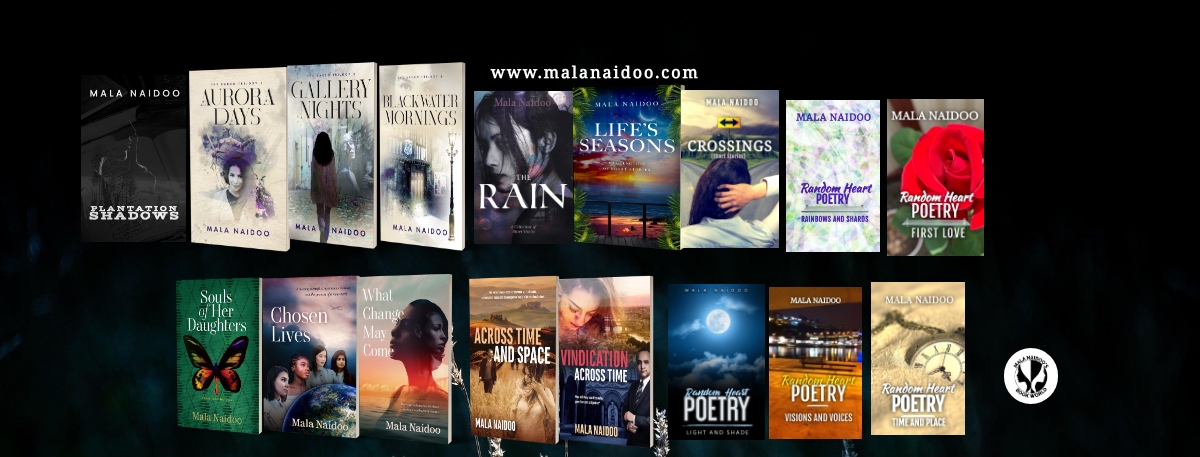
In my debut novel, Across Time and Space, the aging Ben loves kippers and poached eggs for breakfast. In the sequel, Vindication AcrossTime, while breakfast is important, especially when Ben and Meryl overhear a conversation in a tiny restaurant, on the dark history of the mysterious Professor Andrei Malakov – it’s the journey through South Africa’s gustatory delights that bring drooling joy as barbecued corn on the cob – braaied mielies, to locals, on the breathtaking beaches of the Cape, chilli pineapple in, Sweet, salty, hot and pungent collided, tantalising Michael’s tastebuds. And then who can forget the delectable Kaapse snoek! In contrast, back in Florence, Meryl consumes endless cups of coffee as the trial drains her emotional and physical strength. Her favourite chicken pasta and prawn linguini meals are left untouched as her mind swims with horrific thoughts on where her life was heading.
In the trilogy, Souls of Her Daughters, Chosen Lives, and the third book, out this April, What Change May Come, Thai Delight, a fictional place, is Patience’s favourite restaurant, but both sisters, Grace and Patience find great joy and comfort in cooking and eating their mother’s signature chicken curry – their memory of her is alive in love and food. Grilled salmon, thoughtfully prepared for an elderly neighbour is pushed aside as she perspires through, and relishes Grace’s fish curry, saying, You have your mother’s touch with the delicate spicing, what a scrumptious meal... There are wonderful Mediterranean breakfasts, turmeric lattes and cardamom chai for a full international array of gustatory heaven!
I need chillies to warm my soul’ ~ Patience says in Souls of Her Daughters
From the spicy to the crisp – ham and cheese croissants, in the April release of What Change May Come, complements the racy change and quick food that others bring to Grace and Patience.
Food and fiction are a formidable combination, setting the mood of the moment, letting the reader into a part of the character’s life that we all enjoy – eating as a necessity, or social activity, regardless of what we eat, or where we eat it.
Food will always feature in my fictional tales as comfort food, memory food, and soulful food.
Voice is the defining feature of any book we read. It is unique to the author and is often what draws readers to pick up a particular book, by a particular author.
Turning to influencers is a significant aspect of the writer’s professional development, but mimicking the voice of another, as in tone, values, the nuance of language, etc, minimises the authenticity and value that a unique voice offers. Just as our personalities differ, so too does voice – it has character, personality, and it becomes the signature of the writer/speaker/narrator.
Readers find comfort, delight, and excitement in the voice they read, in being entertained or informed, or perhaps both. The rush to ‘be like others,’ comes with the risk of losing purpose or creating a voice that is inconsistent with the message. Voice is a significant part of connecting with readers. It communicates values and visions drawn from life experience, culture, lifestyle, education, angst, joy, and more, as part of early, and ongoing socialisation. We are after all, beautifully unique.
The writer’s voice is delivered through narration, characterisation, description etc. In characterisation, the writer’s voice is distinct, based either on personal experience, research conducted, and observations of human patterns of behaviour and communicating. Tension or suspense through voice is also drawn from the writer’s observed, or experienced fears, to capture the moment with accuracy and evocative creative design. This should move the excitement/thrill to the next level, for the reader. Emotional aspects of a novel are effective in holding the reader’s attention when it comes through from an authentic/believable/unadorned voice.
We often say, ‘seeing’ is believing, but, ‘feeling’ is living the moment in a book – it might well be remembered long after the book has been put down. Now, Shakespeare’s Othello craved, ‘ocular’ proof, of his wife’s alleged infidelity, yet if he cautioned his doubting mind by embracing his deep love for her, he might have lived his happily ever after. Well, one can surmise and hope, it’s to the writer’s credit when readers are overjoyed or disappointed when the character/s either meet up to or deviate from their expectations.
The accolade is huge when readers say, I could hear your voice while reading.
Voice in graceful narration is as important as the ‘voices’ that diverse characters are given in stories. Narration, description, and dialogue are the pillars of a novel with plot guiding the platform through the author’s voice as the vehicle that intersects with the reader’s experience.
Listen to an excerpt from Morgan Freeman’s narration in The Shawshank Redemption, based on the novella written by Stephen King- reading a story, or excerpt out aloud after it has been written or during the process of writing is of tremendous value to shift and polish how meaning is created through voice. The flow, tone, and authenticity of voice become transparent when reading aloud. Record an excerpt and play it back to catch if ‘voice’ is represented as imagined during the writing phase.
Honesty or truth should ring through the writer’s voice to establish a valued connection to the reader, creating an expectation that makes the reader continue to turn the page. Voice can be frivolous, serious, angry, calm etc. depending on the type of tale being told. Hence consistency of voice, dependent on the genre/scene/story etc. is imperative to hold the reader’s attention. It makes the reader return for more. A relationship is formed between the reader and ‘voice’ for a fulfilling engagement with the book.
Whose voice is it anyway?
The writer’s unique voice does not have to be written in Jane Austen’s, Charles Dickens,’ or any favourite writer’s style, it is about reaching readers with an authentic voice regardless of the niche appeal the story might have. A writer’s voice is the ‘heard’ presence of the writer.
Listen here to Pat Schneider, author, on how nuances of voice emerge.
More food for thought:
“For last year’s words belong to last year’s language And next year’s words await another voice.” ~T.S. Eliot
“Your writing voice is the deepest possible reflection of who you are. The job of your voice is not to seduce or flatter or make well-shaped sentences. In your voice, your readers should be able to hear the contents of your mind, your heart, your soul.” ~ Meg Rosoff
“My aim is to put down on paper what I see and what I feel in the best and simplest way.” ~ Ernest Hemingway
Happy reading and writing in your unique voice!
Please share your ideas on the significance of ‘voice’ in stories in the comment box below.
Librarians are Writers’ Greatest Allies in their Ability to Influence the Joy of Reading
It gives me great pleasure, today, to introduce you to Fiona Sharman who has kindly shared her passion for her favourite books. One of Fiona’s favourite quotes is from ‘Pride and Prejudice’, when Mr. Bennet says, ‘for what do we live but to make sport for our neighbours, and laugh at them in turn?’
Fiona Sharman
Fiona works as a Teacher-Librarian at an all-girls’ school in Sydney but her friends think this is a cover for her slight obsession with reading and the beauty of well-crafted language. She came to librarianship by way of a background spent teaching English and History. Fiona is a passionate educator who loves working with and supporting young women but horse riding, sailing, traveling and generally seeking new adventures are what she enjoys when she’s not at work. Actually, books frequently accompany her on these adventures (except the horse riding) and her memories of great reads are interwoven with memories of great travel experiences – Lucky Jim (Vietnam), The Blind Assassin (India), The Fishing Fleet (sailing in Burma)… you get the idea. The historian in her is committed to non-fiction especially biography, the nature-lover is devoted to landscape memoirs, the feminist loves strong female protagonists, and the English teacher appreciates beautiful prose in whatever form it may come.
Here are ten of her all-time favourite reads and why she loves them.
1. Jane Eyre by Charlotte Bronte
The original, timeless, strong female protagonist. Bronte’s use of narrative voice captivates the reader from the first page, be they 14 or 40 years of age. Anyone who has ever felt like an outsider can relate to Jane and will champion her independent spirit.
2.The Blind Assassin by Margaret Atwood
I LOVE this book. Atwood is a genius but it’s also the time period, characters, split narrative, suspense and tightly controlled plot-line that won me over hook, line, and sinker.
3. The Shepherd’s Life by James Rebanks
This is so much more than a memoir account of a Lake District farmer’s life. Rebanks captures the history and beauty of the Lake District, the relationship between those who live on the fells and their environment, and contemporary conservation issues. Beyond this, Rebanks celebrates the richness of cultural traditions and humanity’s deep connection to the cycles of the natural world. He positions readers to ponder the value of informal education and knowledge in relation to more formal education systems. Pheww…
4. A Fine Balance by Rohinton Mistry
I once read a review of this book where the reviewer exclaimed that they ‘felt sorry for anyone who hasn’t read this book’. I am not sure I can top that. Without spoiling the story, the title is a nod to the invisible line between hope and despair and it is a deeply humane story. It’s beautifully controlled narrative is set against the backdrop of the ‘Emergency Act’ of Indira Gandhi in 1970s India. Personally, I genuinely enjoy and have studied Indian history (which clearly helps) but this is a stunning book without needing to know its political context.
5. The Human Stain by Phillip Roth
A compelling story set against the background of the Clinton-Lewinsky scandal of the 1990s. While Roth’s characters are clearly flawed, it is his deeper commentary on the prejudices of the broader society that are exposed and questioned in this book. The title is also fabulous as it works on so many levels, literal and metaphorical, throughout the story. A very thought-provoking read about individuals and the societies that determine their fate.
6. The Painted Veil by Somerset Maugham
When people ask me what I mean by ‘beautiful prose’ I usually say “Somerset Maugham”. I ADORE this man’s ability to capture in a few words or lines an entire era, its values, prejudices or (merely) the essence of human experience. I love that Maugham created female characters (like Kitty) who expose the injustices of patriarchy in real but subtle ways. I read this book (not all of it) curled up in the gorgeously excessive Victorian style Hopetoun Tea Rooms in Melbourne’s Block Arcade. The staff was so lovely that I was able to keep my table for lunch through until afternoon tea (this place usually has a queue outside all day every day). It was a total sensory indulgence – between the food, the décor and this exquisite novel. Bliss.
7. Six Degrees of Separation by Paul Guare
This play is profound in its simplicity. Inspired by true events it uses a dual-sided Kandinsky painting to expose the superficiality of an extremely affluent family in New York. Metaphorically, I’ve come across a number of ( the main character) Ouisa’s in my life but she is the most aptly drawn example that I’ve seen on the page. Constantly over-dramatising her own existence whilst simultaneously diminishing the real suffering of others, Guare uses Ouisa to show readers the starkness of the socio-economic divide and the misplacement of Western materialistic values.
8. Vile Bodies by Evelyn Waugh
No ‘best’ list of mine could be complete without acknowledging Evelyn Waugh. His satirical style is a delight as he captures the excesses of the 1920s and the Bright Young Things. Irreverent and fun.
9. The Last Painting of Sara de Vos by Dominic Smith
This contemporary novel asks the moral question of whether mistakes made early in life should be paid for later, regardless of how much the individual has striven to make amends for their misjudgement. Set against the world of art, Smith’s narrative cleverly links Renaissance Europe to 1960s New York to contemporary Sydney. An engaging and suspenseful read.
10. Burial Rites by Hannah Kent
I wanted to give a ‘shout out’ to this very talented Australian author. It is not so much the subject matter that draws you in, rather it is Kent’s keen ability to evoke a foreign time, place and cultural context in such a way that the reader truly loses themselves in the story. I liked that this work was inspired by true events and that it so cleverly builds suspense and drama, right until the final chapter.
I wish you many happy hours of reading and encourage you to take a pick from Fiona’s generous sharing of her favourite books.
Please leave a comment in the message box below to start the conversation on your favourite books or add your thoughts on Fiona Sharman’s book selection.
A post read recently suggested writing from a knowledge base and not from imaginative creations that might be insensitive if writing about mental illness, physical disabilities, emotional disorders etc. While I agree with being sensitive by not causing injury to others, art should mimic and extend reality if understanding and connections are to be formed.
The question is – does one have to proceed with caution when creating a character with mental illness or a physical disability in a novel?
The depiction becomes insensitive when it supports stereotypes, insults, separates and denigrates actions and situations the character is placed in. To create a character who overcomes a difficulty by honing other powerful skills or having amazing support from family and community to achieve goals is indeed not insensitive but rather supportive of what a cohesive humanity is – certainly a message for raising the lot of the human condition.
The foremost purpose of writing, fiction, in particular, is to entertain the reader more than to inform. However, if the writer is able to strike a balance between entertain and inform, the reader is likely to gain valuable understanding from such a piece of writing. If written without dictating what is right and wrong then sensitivity should prevail and the writer is more likely to connect with the consciousness of the reader which might motivate the reader to read more books by the same writer.
When entertainment and purposeful information are included in a work of fiction, a level of research is necessary to sustain the story to its logical, authentic conclusion. If the storyteller/writer has first-hand experience of events, social issues, illness, particular ways of thinking and behaving then research is not the prerequisite as it would be for a nonfiction book that covers specialised areas such as crime, history, science, psychology, culture, economics etc.
Research will not go amiss in fiction writing, it should add colour and depth to the story plot and character representations. When creating characters with a medical condition, research around the condition or perhaps speaking to a medical specialist on how the condition manifests will add authenticity to the story. How much research should one engage in is dependent on how significant that character is to the overarching story or plot. Striking a seamless balance between the story and research is essential to avoid having the story appear like an ‘unofficial’ handbook or textbook. Shaping characters in true to life situations are more likely to lead to an enjoyable reading experience. For the writer to create authenticity in a story, it is necessary that the purpose of writing is to entertain first and then inform on matters that pertain to character and plot.
The writer has to give voice first to what he or she is passionate about. If one is to expose the harsh reality of particular situations prevalent in society, then that which makes the reader uncomfortable is equally necessary. We bandy around that we need to be ‘moved’ for change to occur – to be ‘moved’ is either happily or unhappily so, with joy or sadness. If we are to be catalysts for thought change through writing fiction or nonfiction books, it should come with some thought-provoking messages – George Orwell’s Nineteen Eighty-Four might leave readers either grateful that they have control of the decisions they make in life or it might result in a re-examination of whether they are indeed free.
Fiction and nonfiction books are of equal value to the reader when they create thought change or thought searching connections.
What do you think? Should sensitivity be at the heart of all our writing? Should the writer entertain, inform and shock the reader?
I would love to hear your thoughts. Please comment below.
Stories that make us ‘experience’ a moment within a scene comes from the creation of suspense when characters or events invite expectation from the reader, stimulating the desire to read on. Often several revised versions of a suspenseful moment might be necessary to achieve the desired effect to make the moment memorable for the reader, creating unease or anticipation. Feeling, seeing, perceiving and dreading imminent danger could be achieved through highly charged descriptive language and use of sensory imagery, which, when effectively done leads the reader to walk in the skin of the protagonist, seeing, feeling and breathing through the character’s eyes.
A voice recording of the suspenseful scene allows the writer to assess whether the desired effect – the light and shade have been achieved. This might lead to a reconsideration of how to enliven suspense in a scene. The first draft of such a scene most often requires several tweaks before the effect is achieved. The joy in crafting your stories is that you are in control, as the writer, to entertain the reader.
Listening to haunting or suspenseful music helps to centre the imagination in the creation of tension, suspense and anticipation.
Try your hand at writing a brief scene that builds suspense.
Here is an example of a suspenseful moment:
‘The wind howled down the craggy cliff dotted with rocks like crooked fingers in erect, forbidding stance. Within minutes dark clouds drew a veil over sunlight — day turned to night as she cowered under the overhang of a swaying rock. Flapping batwings in frenzied flight sent a cold shudder coursing through her.’ (MN)
Here is a snappier version of the moment- which example do you prefer?
‘The wind chilled the marrow of her being, her refuge beneath a dangling rock threatened — dark clouds curtained daylight as mounting flapping bat wings made their deafening panicked flight.’
What would you add, take away or recreate in such a moment where the protagonist is challenged, losing his or her grip on the situation?
Pop your visualisations/ideas of this moment in the comment box. I would love to read your versions of this moment or your own ideas. (MN)
This excerpt from an overview of Stephen King’s ‘Salem’s Lot’ has chilled many a reader at the thought of what lurked between the pages of this riveting book:
The town knew darkness…and the awful, heavy silence of terrifying images grotesquely dancing in and out of the shadows…
But no one living in Salem’s Lot dared talk about the high, sweet, evil laughter of …
Here are two brief excerpts from my novel, ‘Across Time and Space’
1). She knocked at the door.
It opened with the force of a heavy gust of wind. Meryl jumped away gasping. Framed in the light of the candelabra, Ana looked chalky-pale against her black head of hair left hanging about her shoulders…
2)….she awoke for the second time that night aware that she was not alone in this vast house beside the olive grove. …the silhouettes of two figures bending over loomed on the wall…
Try writing a suspenseful moment, use a piece of haunting music to beckon your muse forth!


 Why does crime fascinate the reader or the viewer? From a gripping novel to a suspenseful film, both mediums are loaded with intrigue, blood, gore, missing persons, and dead bodies, and they certainly hold our attention for more.


You must be logged in to post a comment.