An interesting question recently from a reader prompted this post on whether the names of my characters were people I knew. As a writer I could say, yes, I do know my characters between the pages of my books, and fiction mirrors life as the angst, joy and foibles of individuals.
Meanings behind names have always intrigued me.
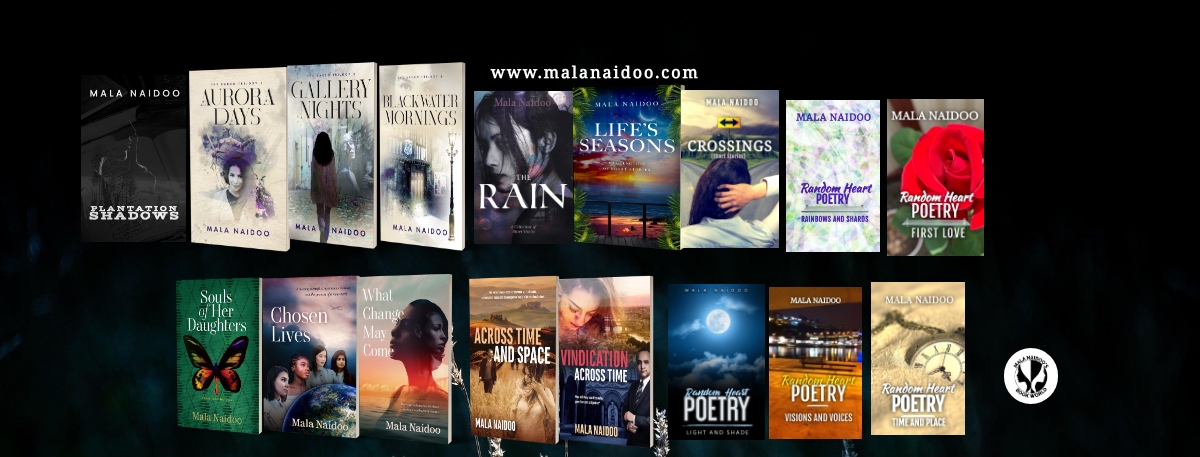
I choose names for some characters that befit their personalities and behaviour or represent the opposite of what they are. In Souls of Her Daughters, Grace and Patience are indomitable women in the face of the catastrophes that befall them. Grace’s mother, Varuna, has her name taken from the Sanskrit equivalent that attests to her strength as one who embraces all, hence she is the embodiment of the god of water and the celestial ocean surrounding the world. Her inner strength and capacity in how she copes with the murder of her devoted, humble husband, and subsequent chastisement and ostracisation by her extended family does not alter her essential goodness. Grace, Varuna’s biological daughter, and Patience, her adopted daughter endure horrific persecution, of a cultural and tribal nature – Varuna will stop at nothing to ensure her family is reunited, while she continues being a person for others in her neighbourhood.
In the sequel to Souls of Her Daughters, Chosen Livessees the introduction of new characters, who are named in a similar vein, sometimes with demographic relevance, or drawn from Greek mythology – Xandria, defender of humankind, much the same as Alexis – helper or defender. Zuri, a Swahili derivative, means inspirational, beautiful, truth-seeker, and more. The head of the mission in Chosen Lives, an underground movement for a new world of women leaders, is named Masuyo, which means to profit or benefit the world. A mission recruit, running a school for women in India is Akanya, meaning peace and humility which she exemplifies in her interactions with others.
On the other hand, the character, Felicity, family friend and colleague to Patience, is far from what her name suggests, given her difficult childhood – her razor-sharp mind is admirable. The Arabic name, Azmil, means light, given to a young man who lost both his parents at the hands of rebel forces in Pakistan. The work he does, at the Well Study Centre, makes him the light to many orphaned young women. The snatched memory of his mother fosters his commitment to young women in his community.
The character, Audra, has a childhood of neglect by affluent parents, her name as explained in her testimony, is a celebration of the beauty of Audrey Hepburn. As she says, ‘to my Ramon, I was Audra.’
A multi-cultural cast of characters representing diversity in harmony
The third part of this trilogy, being written, will follow through with similar thought for new characters that emerge. Each of the three novels is a standalone read, too.
In my debut novel, Across Time and Space, and the sequel Vindication Across Time, Keres Bathory is a name drawn from a combination of Greek mythology and a historical character – a combination of one who disturbs the universe.
On her quest for her writing holy grail, what will Meryl sacrifice?
Aspects of a character’s behaviour might be drawn from observation which is married with imagination to serve the role they play in novels.
What’s your fascination with names in stories or the people you meet?
So many voices, so many stories in a country as diverse as Australia, each sharing a connection to people and place.
Today on the blog we have Rhonda Forrest, a high school teacher, from beautiful, sunny Queensland. Rhonda began writing under the pen name ‘Lea Davey’. Her first two novels, Silkworm Secrets and The Shack by the Bay were published under the pen name, Lea Davey, however her latest novel, Two Heartbeats, published October 2018 has been published under her real name, Rhonda Forrest. Having always lived in Queensland, the vast Australian Outback and the pristine Whitsundays feature strongly in her stories. Rhonda Forrest shares her story and tells us more about her writing journey.
Meet the Author
Rhonda Forrest/Lea Davey
Biography – I was born in Brisbane and grew up in Rochedale, which at the time was a rural farming area. It was a fabulous place to grow up and as kids, we spent our time playing in the bush, riding horses and living in a community where everyone knew each other. I married at the age of 21 and my husband and I moved to acreage at Bannockburn where we lived for thirty years. Along with a menagerie of animals it was here that we brought up our three daughters and made life-long friends with many of our neighbours. At the age of 40, after a multitude of different jobs and running my own business, I decided to study. After 4 years of full-time study, I graduated as a high school teacher of History and English. Recently we have moved to Tamborine Mountain and live between the mountain and a 100-year-old cottage with a rambling garden up in the Whitsundays. Both places are quiet and idyllic places to live and write.
Writing Journey – As a child, I loved reading and was surrounded by books. My mother who is 90, still to this day reads every day and as a teenager, she always handed me her books after she had finished them. Nothing was off-limits and I vividly remember being enthralled by books written by Harold Robbins, James Michener, Wilbur Smith and Jackie Collins. I used to always think that one day I would write a book, however, it wasn’t until about five years ago that I had time to seriously think about pursuing my writing. Long hours spent out on a tinnie in the middle of the ocean fishing, allowed plenty of time for daydreaming and the story of, The Shack by the Bay began rolling around in my head. Once I started writing the words flowed easily and I knew that I had found a new passion in my life – writing!
Genre – All of my books are different. The Shack by the Bay is contemporary historical fiction, Silkworm Secrets is contemporary fiction and Two Heartbeats is Romance. My favourite genre is historical fiction although I also love to read true-life stories.
Motivation – If you want to do something you should just have a go at it. I don’t think I ever considered failing, actually I don’t think about the end result that much, I just go for it. Really you have nothing to lose and once I start writing it’s hard to stop until the story is finished. The editing and parts that come after the actual writing for me are the hardest parts and I would love just to be able to write and to have someone else do the rest for me. But when this is not possible I stay motivated, buoyed along by the lovely reviews and comments I get from readers. With writing, it is not about the money that you make (because that is limited) but rather the motivation that comes from readers who love your books. One of the most exciting things is to look on the Brisbane library website and see that all 5 copies of your book are being borrowed!
Influencers – Probably the biggest influence for me in relation to my writing was the Australian author Coleen McCulloch. It was after I read her book, The Thorn Birds, in 1977, that I decided I would write a book. It took 40 years to have time to do that, but eventually, it happened.
Favourite Books – Just recently I read Boy Swallows Universe which is set in Brisbane so lots of familiar places and just a fabulous entertaining read. My Instagram page has a countdown of my top 50 books and these range from Mao’s Last Dancer to All the Light We Cannot See as well as, The Old Man and the Sea and Australian classics, The Cattle King and My Place. I have so many favourite books, but I do love historical fiction. The Garden of Evening Mists, A Good Muslim Boy and The Space Between Us are also some of my favourites.
If you want to do something you should just have a go at it
Favourite part of the Australian Landscape That’s a difficult question as there are so many parts I love. I have travelled throughout Australia and it is often the coastlines that take my breath away. Crashing waves on rugged cliffs in South Australia, white sandy beaches with turquoise waters in Western Australia, red boulders with soaring waves in Tassie and of course the familiar pristine waters of the Whitsundays, rich with turtles, whales and dolphins. Equally beautiful though is the scrubby bush with the sun searing down on it and soaring gum trees, the bark dappled and ghostly against our vivid blue sky. We really do live in the most beautiful country and I always appreciate the beauty that surrounds me, be it the rolling hills around Tamborine Mountain, the thick rainforests just down the road from my house or the hazy valley views from the lookouts up here on the mountain. I love it all and much of that love of the landscape comes through in my books.
Book Covers – Designing book covers has been a journey in itself. The cover for The Shack by the Bay comes from part of a photo that I took of a shack down in Tasmania while Silkworm Secrets cover was a painting a friend did for me. For Two Heartbeats I engaged the help of a graphic artist, Ethel Beckett, also from Brisbane, who did a fabulous job giving me exactly what I wanted.
The Shack by the Bay (Lea Davey) An isolated fishing shack on a beautiful bay in the Whitsundays provides Luke with a retreat where he can find peace and solitude. However, the discovery of family war relics and a developing relationship with the beautiful Lily connects family histories and reveals a story that threatens to destroy his chance at real happiness. Will the wartime secrets prove to be the breaking point for a beautiful romance? Or can two families put the deeds of the past behind them? Romantic and purely Australian, The Shack by the Bay captures the pristine beauty of the Whitsundays and the wartime memories of older Australians while introducing an eclectic blend of friends and family. Silkworm Secrets (Lea Davey) Ruby and Bobby are best friends who spend their spare time together in a tree house where they retreat from the adult world and share their secrets. To Ruby’s dismay, Bobby’s family life is far different from her own and when he is forced to leave home at a young age it seems that the two may never see each other again. But after many years the events of the past resurface, and as an adult, Ruby is unexpectedly faced with the gravity of their secrets and the seeking of justice. A court case forces her to search for Bobby who has not been seen since he left home as a child. Will she find him amidst the vastness of the Australian outback and if she does, will he want to return to what he has spent his entire life running away from. This is a story about the secrets that children keep, the strength that comes from a childhood friendship and a special family love that overcomes the hardships of the past.
Two Heartbeats (Rhonda Forrest) When Jess heads west for a fresh start in a small mining town, the dusty outback is a far cry from her former life in the city. Despite having no knowledge of country life, she finds herself loving the isolation and local people. All she has to do is keep her head down and work hard to create a better life for herself and Johnno, the only person she has ever truly cared about. The caring warmth of a new circle of friends allows Jess to feel that maybe, for once, her life is heading in the right direction. However, problems arise when her temper and stubborn nature collide with her new boss, Daniel, who is suspicious of her background story. Has Jess been honest, or is there a hidden secret to justify his distrust of her? Set amidst the rugged outback of Australia, with a cast of eclectic characters, Two Heartbeats is a story of friendship, resilience and the hope that ultimately loving relationships may triumph over obstacles defined by the past.
With gratitude to Rhonda for sharing her writing journey, and books with us today. Please add your thoughts in the box below:
Voice is the defining feature of any book we read. It is unique to the author and is often what draws readers to pick up a particular book, by a particular author.
Turning to influencers is a significant aspect of the writer’s professional development, but mimicking the voice of another, as in tone, values, the nuance of language, etc, minimises the authenticity and value that a unique voice offers. Just as our personalities differ, so too does voice – it has character, personality, and it becomes the signature of the writer/speaker/narrator.
Readers find comfort, delight, and excitement in the voice they read, in being entertained or informed, or perhaps both. The rush to ‘be like others,’ comes with the risk of losing purpose or creating a voice that is inconsistent with the message. Voice is a significant part of connecting with readers. It communicates values and visions drawn from life experience, culture, lifestyle, education, angst, joy, and more, as part of early, and ongoing socialisation. We are after all, beautifully unique.
The writer’s voice is delivered through narration, characterisation, description etc. In characterisation, the writer’s voice is distinct, based either on personal experience, research conducted, and observations of human patterns of behaviour and communicating. Tension or suspense through voice is also drawn from the writer’s observed, or experienced fears, to capture the moment with accuracy and evocative creative design. This should move the excitement/thrill to the next level, for the reader. Emotional aspects of a novel are effective in holding the reader’s attention when it comes through from an authentic/believable/unadorned voice.
We often say, ‘seeing’ is believing, but, ‘feeling’ is living the moment in a book – it might well be remembered long after the book has been put down. Now, Shakespeare’s Othello craved, ‘ocular’ proof, of his wife’s alleged infidelity, yet if he cautioned his doubting mind by embracing his deep love for her, he might have lived his happily ever after. Well, one can surmise and hope, it’s to the writer’s credit when readers are overjoyed or disappointed when the character/s either meet up to or deviate from their expectations.
The accolade is huge when readers say, I could hear your voice while reading.
Voice in graceful narration is as important as the ‘voices’ that diverse characters are given in stories. Narration, description, and dialogue are the pillars of a novel with plot guiding the platform through the author’s voice as the vehicle that intersects with the reader’s experience.
Listen to an excerpt from Morgan Freeman’s narration in The Shawshank Redemption, based on the novella written by Stephen King- reading a story, or excerpt out aloud after it has been written or during the process of writing is of tremendous value to shift and polish how meaning is created through voice. The flow, tone, and authenticity of voice become transparent when reading aloud. Record an excerpt and play it back to catch if ‘voice’ is represented as imagined during the writing phase.
Honesty or truth should ring through the writer’s voice to establish a valued connection to the reader, creating an expectation that makes the reader continue to turn the page. Voice can be frivolous, serious, angry, calm etc. depending on the type of tale being told. Hence consistency of voice, dependent on the genre/scene/story etc. is imperative to hold the reader’s attention. It makes the reader return for more. A relationship is formed between the reader and ‘voice’ for a fulfilling engagement with the book.
Whose voice is it anyway?
The writer’s unique voice does not have to be written in Jane Austen’s, Charles Dickens,’ or any favourite writer’s style, it is about reaching readers with an authentic voice regardless of the niche appeal the story might have. A writer’s voice is the ‘heard’ presence of the writer.
Listen here to Pat Schneider, author, on how nuances of voice emerge.
More food for thought:
“For last year’s words belong to last year’s language And next year’s words await another voice.” ~T.S. Eliot
“Your writing voice is the deepest possible reflection of who you are. The job of your voice is not to seduce or flatter or make well-shaped sentences. In your voice, your readers should be able to hear the contents of your mind, your heart, your soul.” ~ Meg Rosoff
“My aim is to put down on paper what I see and what I feel in the best and simplest way.” ~ Ernest Hemingway
Happy reading and writing in your unique voice!
Please share your ideas on the significance of ‘voice’ in stories in the comment box below.
There are numerous defining aspects to what makes a character in a novel or short story, an outlier.
This is shaped by societal and cultural values, or more directly by prejudice. Size, race, ‘foreign’ origins are just some elements that create the outlier fence. This deepens when layers of social and professional barriers are erected making the outlier, who ascribes to individual ways of expression, an ‘outsider’ rather than a unique contributor to society.
Regardless of the category/label attached to the outlier, it’s divisive, destructive, and a living death for the character experiencing the hell of being (mis) treated as such.
The outlier syndrome is growing in society, slouching back to outdated values, and emerging new forms of prejudice in how individuals treat each other. Literature should mirror life in all its ugliness, hopes and dreams. While we read to lose ourselves in the pages of a good book, what is the experience worth if it does not linger with the ills evident in society, and the hope that we have the capacity to be change agents? Writing purely on the prejudice of life without the yardstick or suggestion on how this ‘disease’ can be overcome, would be remiss on my part, in particular, in any story I tell. Writers are change makers by opening our minds and voices to what needs rectifying. This is the beauty and at times the daunting reality of being a writer.
Hardship is a fact of life for the majority of the worlds’ population. This is not defined by financial issues alone. My novels capture these issues from death, parting relationships, loneliness, cultural pressures, past psychological and physical traumas, and more. In each situation, an individual or character is an outlier by choice or societal prejudice.
Literature offers that connection to the outlier’s suffering and hope for redemption and redefinition. Reading is imperative, words linger and dwell deep in the readers’ psyche as a visual and emotional connection to the situations and events the outlier might experience.
Souls of her Daughters reveals that the outlier syndrome affects all regardless of professional or social position. Dr Grace Sharvin struggles with her secret, making her an outlier in her family- in her need to conceal her pain from her mother and sister. Her sister, Patience, is an outlier through interracial adoption in apartheid South Africa, forcing her to acknowledge her birth culture. Across Time and Space and the sequel Vindication Across Time unveil both Meryl Moorecroft and Marcia Ntlui as outliers in personal, cultural and professional contexts. Michael Morrissey, a human rights lawyer, becomes the outsider in his relationship with Meryl when the course of their lives change. Housekeeper, Ana Kuznetsov and Boris Malakov are outliers in their complicated families. Global landscapes invite the notion that the situations characters undergo are not isolated – shaping the universality of human angst and joy.
The Rain, a Collection of Short Stories presents this notion in the human capacity for good and evil.
Drama, crime and abduction bring high entertainment value to the reader, but beneath the layers lie the human face and soul of the outlier. The character should be carefully crafted to invite empathy or repulsion by stripping away layers that shroud the essence of human angst and joy.
The continuation of ‘Souls of Her Daughters,’ in the next saga, Chosen Lives, grows in representing the outlier theme with glimmers of a futuristic world where perfection resides in imperfection.
One Voice, Many Worlds
Let’s continue to create stories that leave a lingering message.
Please add your thoughts in the message box below:
Do writers plan to write a sequel? Why are sequels so popular?
Sometimes they are planned and sometimes they grow from the first book for a host of reasons.
We live in an age where we are desirous of connections for the long haul, we want more as we book our Netflix favourite series into our private calendar time-slots; we crave more when we connect or are moved by a story and its people.
We desire more of what we enjoy, what we look forward to. Connections with people and places make us reluctant to leave. The story is anticipated as an after work or relaxing weekend read. It’s locked in and beware the unsolicited ringing of the telephone or doorbell! Solitude is non-negotiable!
For the writer, unfinished matters in the first book lead to the second book which unveils new situations and hidden aspects of characters and situations, sometimes shocking or expected and satisfying.
Picking up reader feedback from the first book while the sequel is being written is significant in ensuring that favourite characters are not destroyed or killed off too early, reader and writer satisfaction is imperative.
In the writing of my debut novel Across Time and Space, the sequel began to emerge by the end of the penultimate chapter, there was more my characters had to say, there was more that had to be revealed. The intrigue of the first tale created expectations that needed further exploration. Relationships needed to grow.
Truth and deception were left skulking in the shadows at the olive grove in Viareggio in Across Time and Space and these ghosts came calling for more.
This made me restless to dive into the sequel, some cautioned ‘not so soon,’ others begged ‘when will it be ready?’ The process became an organic growth –an obsession to take the story to where it was leading me. Hence the birth of the sequel, Vindication Across Time.
What will be lost, what will be gained when the dark forces of human nature obscure truth and justice?
Will this become an Across Time series?
The question we are left with is, ‘what are we keeping hidden from view in the hope of leading or appearing to lead a happy and by anyone’s definition, a ‘normal’ life?’
Coming to terms with our ghosts as something of the past rather than defining our present worlds is significant in Vindication Across Time.
Whose ghosts will be exhumed in this tale of love, loss, hope, and patience?
Have you read, Across Time and Space?
What are your thoughts on book sequels and television series, what do you anticipate in Vindication Across Time?
Please leave your comments in the message box below.
Do you remember the things you did during your childhood that defines what you do as an adult?
I remember being passionate about drama, performance and the pleasure it elicited. When I say being passionate about plays, I mean reading them with great zeal.
Growing up in apartheid South Africa on the ‘wrong’ side of the colour line meant that going to the theatre was not an option. Additionally, television had not been introduced into the country. I make reference to this in an earlier post, To Kill a Mockingbird Moment Realised, here.
I remember going to the library, standing in a long queue to add my name on the waiting list for a particular playscript I was eager to read.
One such play that is vividly remembered is Toad of Toad Hall written by A.A Milne as the dramatisation of Kenneth Graham’s, The Wind in the Willows.
Toad of Toad Hall- A.A. Milne
Growing up under the horrendous apartheid regime in South Africa makes the adult me smile at this choice. As much as the child enjoyed Rat’s, Badger’s, Mole’s and Toad’s car and caravan adventures, the deeper issues were lost in the euphoria of ‘putting this on stage’ in the apartment building of my childhood.
Actors were sourced from eager children who were hungry for entertainment during the school break. Parents were at work and no laws protected downtown children from being left at home alone with an occasional check in from an elderly neighbour- this was all an aspiring eight-year-old producer needed!
Parts were allocated and lines rehearsed over two days. Pitch, tone, movement and a haphazard choreography were based on the whim of the eight-year-old producer who ensured she donned a hat and a scarf for a theatrical edge that was akin to those seen in magazines and the Sunday newspaper.
What a time was had by all! An intermission was in place and red Kool-Aid duly served as the drink of choice in plastic wine glasses to an innocent audience ranging in years from five to ten. Mothers’ costume jewellery, ‘plastic pearls’ and hats with feathers were placed askew on little heads for attendance at this momentous production in the dining-room of my parent’s apartment.
Innocent children made their debut into the world of theatre, revelling in being transported to a magical world away from the tedium and boredom that sets in after playing all the games children could come up with during a six-week long school break.
Fast-forward decades later, in another country of choice, the itch takes hold, not as a theatrical producer, but one who has started to pen fictional tales of life and its challenges, thus Across Time and Space is born.
Across Time and Space- Mala Naidoo
Such, such were the joys of childhood.
What do you remember of your childhood that lingers fondly as a defining moment? Share your thoughts below.
Librarians are Writers’ Greatest Allies in their Ability to Influence the Joy of Reading
It gives me great pleasure, today, to introduce you to Fiona Sharman who has kindly shared her passion for her favourite books. One of Fiona’s favourite quotes is from ‘Pride and Prejudice’, when Mr. Bennet says, ‘for what do we live but to make sport for our neighbours, and laugh at them in turn?’
Fiona Sharman
Fiona works as a Teacher-Librarian at an all-girls’ school in Sydney but her friends think this is a cover for her slight obsession with reading and the beauty of well-crafted language. She came to librarianship by way of a background spent teaching English and History. Fiona is a passionate educator who loves working with and supporting young women but horse riding, sailing, traveling and generally seeking new adventures are what she enjoys when she’s not at work. Actually, books frequently accompany her on these adventures (except the horse riding) and her memories of great reads are interwoven with memories of great travel experiences – Lucky Jim (Vietnam), The Blind Assassin (India), The Fishing Fleet (sailing in Burma)… you get the idea. The historian in her is committed to non-fiction especially biography, the nature-lover is devoted to landscape memoirs, the feminist loves strong female protagonists, and the English teacher appreciates beautiful prose in whatever form it may come.
Here are ten of her all-time favourite reads and why she loves them.
1. Jane Eyre by Charlotte Bronte
The original, timeless, strong female protagonist. Bronte’s use of narrative voice captivates the reader from the first page, be they 14 or 40 years of age. Anyone who has ever felt like an outsider can relate to Jane and will champion her independent spirit.
2.The Blind Assassin by Margaret Atwood
I LOVE this book. Atwood is a genius but it’s also the time period, characters, split narrative, suspense and tightly controlled plot-line that won me over hook, line, and sinker.
3. The Shepherd’s Life by James Rebanks
This is so much more than a memoir account of a Lake District farmer’s life. Rebanks captures the history and beauty of the Lake District, the relationship between those who live on the fells and their environment, and contemporary conservation issues. Beyond this, Rebanks celebrates the richness of cultural traditions and humanity’s deep connection to the cycles of the natural world. He positions readers to ponder the value of informal education and knowledge in relation to more formal education systems. Pheww…
4. A Fine Balance by Rohinton Mistry
I once read a review of this book where the reviewer exclaimed that they ‘felt sorry for anyone who hasn’t read this book’. I am not sure I can top that. Without spoiling the story, the title is a nod to the invisible line between hope and despair and it is a deeply humane story. It’s beautifully controlled narrative is set against the backdrop of the ‘Emergency Act’ of Indira Gandhi in 1970s India. Personally, I genuinely enjoy and have studied Indian history (which clearly helps) but this is a stunning book without needing to know its political context.
5. The Human Stain by Phillip Roth
A compelling story set against the background of the Clinton-Lewinsky scandal of the 1990s. While Roth’s characters are clearly flawed, it is his deeper commentary on the prejudices of the broader society that are exposed and questioned in this book. The title is also fabulous as it works on so many levels, literal and metaphorical, throughout the story. A very thought-provoking read about individuals and the societies that determine their fate.
6. The Painted Veil by Somerset Maugham
When people ask me what I mean by ‘beautiful prose’ I usually say “Somerset Maugham”. I ADORE this man’s ability to capture in a few words or lines an entire era, its values, prejudices or (merely) the essence of human experience. I love that Maugham created female characters (like Kitty) who expose the injustices of patriarchy in real but subtle ways. I read this book (not all of it) curled up in the gorgeously excessive Victorian style Hopetoun Tea Rooms in Melbourne’s Block Arcade. The staff was so lovely that I was able to keep my table for lunch through until afternoon tea (this place usually has a queue outside all day every day). It was a total sensory indulgence – between the food, the décor and this exquisite novel. Bliss.
7. Six Degrees of Separation by Paul Guare
This play is profound in its simplicity. Inspired by true events it uses a dual-sided Kandinsky painting to expose the superficiality of an extremely affluent family in New York. Metaphorically, I’ve come across a number of ( the main character) Ouisa’s in my life but she is the most aptly drawn example that I’ve seen on the page. Constantly over-dramatising her own existence whilst simultaneously diminishing the real suffering of others, Guare uses Ouisa to show readers the starkness of the socio-economic divide and the misplacement of Western materialistic values.
8. Vile Bodies by Evelyn Waugh
No ‘best’ list of mine could be complete without acknowledging Evelyn Waugh. His satirical style is a delight as he captures the excesses of the 1920s and the Bright Young Things. Irreverent and fun.
9. The Last Painting of Sara de Vos by Dominic Smith
This contemporary novel asks the moral question of whether mistakes made early in life should be paid for later, regardless of how much the individual has striven to make amends for their misjudgement. Set against the world of art, Smith’s narrative cleverly links Renaissance Europe to 1960s New York to contemporary Sydney. An engaging and suspenseful read.
10. Burial Rites by Hannah Kent
I wanted to give a ‘shout out’ to this very talented Australian author. It is not so much the subject matter that draws you in, rather it is Kent’s keen ability to evoke a foreign time, place and cultural context in such a way that the reader truly loses themselves in the story. I liked that this work was inspired by true events and that it so cleverly builds suspense and drama, right until the final chapter.
I wish you many happy hours of reading and encourage you to take a pick from Fiona’s generous sharing of her favourite books.
Please leave a comment in the message box below to start the conversation on your favourite books or add your thoughts on Fiona Sharman’s book selection.
After an evening at the amazing Headlong, Nottingham and Almeida Theatre production of 1984, the timeless warning of the danger of unchecked power and the futility of resistance invited thoughts about the state of society in other areas of power, control and fear.
The passive aggressive comment, the staring down to intimidate, the proclamations of intellectual superiority, cultural, religious or racial bias uttered from a monocultural, bigoted point of view instils fear in the targeted individual, reverberating with the mental torture Orwell’s character, Winston Smith undergoes.
Sleepless nights, dreaded days, endless bouts of nausea, skulking in the shadows away from penetrating eyes, questions about questions.
The long day’s journey into another sleepless night becomes relentless. Guilt, self-questioning and a whittling away of self-confidence reeks of the fascism of workplace politics.
Competitiveness of the narcissistic ladder climbing co-worker or the sadistic joy in pulling others down is yet another corrosive dimension of inhumanity.
Systemic torment dims the light of the once vibrant, optimistic individual, the light is interrupted as dark days take over. Winston Smith tried to hang onto the waning light in Nineteen Eighty-Four.
With every knock…
The eroded self-confidence and panic attacks sends the tormented individual hurtling into a bottomless pit of mental anguish …
Each act of power and control, topples the victim blow-by-blow…
BUT
While the message is bleak, while it might not seem possible, there is a light at the end of the long, dark tunnel, the light of strength.
Fear is thy strength when compassion and love grow from the depths of pain. In fear, there resides hope.
Hope is the light — fiction and poetry hold the power to transform fear to courage as all struggles pass, they exist in the now—the page turns as truth lifts its head to the sun.
George Orwell predicted a future that has become a reality today, not only within the realm of politics and governance but also serves as a cautionary note to take a closer look in the mirror to decide if our souls are indeed supportive or destructive of each other.
A dark message sheds light on what should be rectified to save ourselves and the ‘unborn’, the next generation, from even darker inhumane acts.
What will you do today to uplift someone from the quagmire of human cruelty?
A post read recently suggested writing from a knowledge base and not from imaginative creations that might be insensitive if writing about mental illness, physical disabilities, emotional disorders etc. While I agree with being sensitive by not causing injury to others, art should mimic and extend reality if understanding and connections are to be formed.
The question is – does one have to proceed with caution when creating a character with mental illness or a physical disability in a novel?
The depiction becomes insensitive when it supports stereotypes, insults, separates and denigrates actions and situations the character is placed in. To create a character who overcomes a difficulty by honing other powerful skills or having amazing support from family and community to achieve goals is indeed not insensitive but rather supportive of what a cohesive humanity is – certainly a message for raising the lot of the human condition.
The foremost purpose of writing, fiction, in particular, is to entertain the reader more than to inform. However, if the writer is able to strike a balance between entertain and inform, the reader is likely to gain valuable understanding from such a piece of writing. If written without dictating what is right and wrong then sensitivity should prevail and the writer is more likely to connect with the consciousness of the reader which might motivate the reader to read more books by the same writer.
When entertainment and purposeful information are included in a work of fiction, a level of research is necessary to sustain the story to its logical, authentic conclusion. If the storyteller/writer has first-hand experience of events, social issues, illness, particular ways of thinking and behaving then research is not the prerequisite as it would be for a nonfiction book that covers specialised areas such as crime, history, science, psychology, culture, economics etc.
Research will not go amiss in fiction writing, it should add colour and depth to the story plot and character representations. When creating characters with a medical condition, research around the condition or perhaps speaking to a medical specialist on how the condition manifests will add authenticity to the story. How much research should one engage in is dependent on how significant that character is to the overarching story or plot. Striking a seamless balance between the story and research is essential to avoid having the story appear like an ‘unofficial’ handbook or textbook. Shaping characters in true to life situations are more likely to lead to an enjoyable reading experience. For the writer to create authenticity in a story, it is necessary that the purpose of writing is to entertain first and then inform on matters that pertain to character and plot.
The writer has to give voice first to what he or she is passionate about. If one is to expose the harsh reality of particular situations prevalent in society, then that which makes the reader uncomfortable is equally necessary. We bandy around that we need to be ‘moved’ for change to occur – to be ‘moved’ is either happily or unhappily so, with joy or sadness. If we are to be catalysts for thought change through writing fiction or nonfiction books, it should come with some thought-provoking messages – George Orwell’s Nineteen Eighty-Four might leave readers either grateful that they have control of the decisions they make in life or it might result in a re-examination of whether they are indeed free.
Fiction and nonfiction books are of equal value to the reader when they create thought change or thought searching connections.
What do you think? Should sensitivity be at the heart of all our writing? Should the writer entertain, inform and shock the reader?
I would love to hear your thoughts. Please comment below.
The most memorable characters in literature are often those who remain indelible for their villainous acts, making them timeless scoundrels of literature!
Shakespeare has shaped villainous characters that resonate through time. In creating a dark and dangerous character, turn to some of his notable characters to consider why you loathe them enough to remember their ruthless antics with lucidity.
Are you writing a thriller?
How far will you go? How evil will your characters be? What atrocities will they commit? Will they be politicians? Leaders of some institution, a religious organisation perhaps. Is there a peculiarity other than the evil nature of this character? What positions of power do they occupy or are they aspiring to claim power? Who will they prey on – successful people, kind individuals or the weak and vulnerable? What do they want from life? Will they learn a lesson? Will they become kind and compassionate – perhaps by some ingenious stroke of luck, fate?
Remember Iago?
‘The Moor is of a free and open nature.’
Artful manipulator, toying with the insecurities of Othello, the magnificent military man in a white world, loved by the beautiful Desdemona, his prized possession – Iago’s manipulation leads to a brutal and bloody end. The characterisation of Iago is powerfully portrayed to make the audience despise him.
And what about the evil sisters and the wicked and dissatisfied bastard?
Goneril and Regan in King Lear are the evil sisters, corrupt daughters of the king who manipulate the need in their father when he divides his kingdom based on how much his daughters love him.
‘Sir, I love you more than words can wield the matter; Dearer than eyesight, space…’
Edmund, the illegitimate son of Gloucester, half-brother of Edgar is out to be acknowledged, to claim that which he was denied. He, too, manipulates Gloucester, in his bitterness against the world, to turn his father against his son Edgar, his half-brother.
‘A credulous father and a brother noble,…
‘My father compounded with my mother under the Dragon’s tail, and my nativity was under Ursa major, so that follows, I am rough and lecherous,’
Two fathers so terribly wronged by their children. Look at daily media reports on domestic violence, incest, and murder at the hands of family members.
And then the desire for the crown and the position of first Lady? Lady Macbeth and Macbeth, not to mention the conniving witches – ruthless and bloody endings in the quest for power and position.
Lady Macbeth’s power of persuasion is evident in her manipulation of her husband,
‘That I may pour my spirits in thine ear’
Local politics? International politics? Domestic politics? Timeless indeed!
A friend turning on a friend- is this the ‘fault in our stars’ or peer pressure? Really? Julius Caesar – Brutus, noble friend to Caesar is at first two-thirds sold by the conspirators and then they have him all.
‘I kiss thy hand, but not in flattery, Caesar.’
He, too, plants a knife-wielding blow, mortally wounding his once respected friend.
Shakespeare created characters that are timeless representations of human foibles and the plight of the human condition.
In creating your villainous characters, think about what loathsome qualities will make them timeless, the bard certainly got it right. And there are many more examples, what about Hamlet? Mother and uncle behaving badly!
Here’s a memorable line on villainous, scoundrels from The Tempest. Ariel quotes Ferdinand to Prospero,
‘Hell is empty and all the devils are here!’
Who are the notorious scoundrels in literature that are memorable for you?
Add your comment below, subscribe for email notifications for future postings.
Stories that make us ‘experience’ a moment within a scene comes from the creation of suspense when characters or events invite expectation from the reader, stimulating the desire to read on. Often several revised versions of a suspenseful moment might be necessary to achieve the desired effect to make the moment memorable for the reader, creating unease or anticipation. Feeling, seeing, perceiving and dreading imminent danger could be achieved through highly charged descriptive language and use of sensory imagery, which, when effectively done leads the reader to walk in the skin of the protagonist, seeing, feeling and breathing through the character’s eyes.
A voice recording of the suspenseful scene allows the writer to assess whether the desired effect – the light and shade have been achieved. This might lead to a reconsideration of how to enliven suspense in a scene. The first draft of such a scene most often requires several tweaks before the effect is achieved. The joy in crafting your stories is that you are in control, as the writer, to entertain the reader.
Listening to haunting or suspenseful music helps to centre the imagination in the creation of tension, suspense and anticipation.
Try your hand at writing a brief scene that builds suspense.
Here is an example of a suspenseful moment:
‘The wind howled down the craggy cliff dotted with rocks like crooked fingers in erect, forbidding stance. Within minutes dark clouds drew a veil over sunlight — day turned to night as she cowered under the overhang of a swaying rock. Flapping batwings in frenzied flight sent a cold shudder coursing through her.’ (MN)
Here is a snappier version of the moment- which example do you prefer?
‘The wind chilled the marrow of her being, her refuge beneath a dangling rock threatened — dark clouds curtained daylight as mounting flapping bat wings made their deafening panicked flight.’
What would you add, take away or recreate in such a moment where the protagonist is challenged, losing his or her grip on the situation?
Pop your visualisations/ideas of this moment in the comment box. I would love to read your versions of this moment or your own ideas. (MN)
This excerpt from an overview of Stephen King’s ‘Salem’s Lot’ has chilled many a reader at the thought of what lurked between the pages of this riveting book:
The town knew darkness…and the awful, heavy silence of terrifying images grotesquely dancing in and out of the shadows…
But no one living in Salem’s Lot dared talk about the high, sweet, evil laughter of …
Here are two brief excerpts from my novel, ‘Across Time and Space’
1). She knocked at the door.
It opened with the force of a heavy gust of wind. Meryl jumped away gasping. Framed in the light of the candelabra, Ana looked chalky-pale against her black head of hair left hanging about her shoulders…
2)….she awoke for the second time that night aware that she was not alone in this vast house beside the olive grove. …the silhouettes of two figures bending over loomed on the wall…
Try writing a suspenseful moment, use a piece of haunting music to beckon your muse forth!
Across Time and Space explores commitment in relationships in romance, friendship and family relationships. Whether or not it leads to the commitment of, ‘I do’ – commitment is a primal need in relationships for one to feel valued. The protagonist in Across Time and Space has been in a relationship for a length of time, a comfortable, complacency envelopes the relationship creating restlessness that becomes the catalyst for unimagined challenges.
This begs the question, does commitment mean unstinting devotion and loyalty akin to ‘til death do us part?’ The answers are vast and varied depending on the values one has embraced or formed.
Being raised in a time and place which instilled that a promise of commitment meant fulfilment of that promise on a nominated, ceremonial day which comes with its own merits and flaws. This might be considered ‘old world’ or fit for ‘Cinderella and her Prince Charming’, yet the expectation is that couples will unite or commit in a way they deem appropriate to both of them. Yes, the operative word is both – not ‘one’ making a decision, on a whim, that life’s path has beckoned a change for ‘one’ without consideration for how this might impact on the other half of both. Such is the life of the protagonist in Across Time and Space and her partner – good people in their own right who buckle under the fear of commitment, fear for the loss that might be incurred in all that has yet to be achieved in life.
This leads me to why should commitment be feared as the end to individuality and relinquishing of one’s dreams? Commitment should encompass all spheres of one’s life in relationships: singular and joint dreams, commitment to professional ideals and commitment to going off on a whim if its one’s choice to do so by acknowledging that both need to be aware of such changes. Meryl, in Across Time and Space will clarify the choices she makes to catch the star of her destiny that she feared might never be realised in her lifetime.
Commitment can have its dark and dangerous side when passion overrides reason. This brings to mind Catherine and Heathcliffe in Emily Bronte’s Wuthering Heights where both are inextricably and destructively hemmed to each other. Stepping outside literature as we turn on our televisions to the reality of the evening news or an online article on domestic violence which results from unhealthy commitment which is power and control. Supposed commitment, commitment without reason creates a dark, terrible and often tragic situation.
Commitment in family relationships be it as mother, father, grandparent, carer or extended family member should be based on trust, approval, open communication and support from love shared to promote good mental health.
Love, respect and freedom of choices are a right that should not be debated, it’s a basic human right – a human right that should acknowledge commitment to respectful consideration through communication before heading off alone into the sunset.
Commitment to values includes commitment to the values of place, the place we call home – the country- the city- the street- our backyards. It is often those who cannot commit on a personal level who cannot commit to democracy, justice and a fair go.
Reason should always caution passion, dreams should be lived for peace and joy to reign for both halves in any relationship and for all in our choice of place that we call home.
What’s your take on commitment to all things in life? I would love to know your thoughts.
The oasis of literature we have been reading since time immemorial inspires us to continue reading, be it a writer of choice, genre or writer’s style that draws us into the writer’s world, forming connections to events, people and places. Inspiration gained leads the reader’s quest to search for meaning in novels, plays and poems. When discovered, a universal consciousness emerges to tell us we are indeed not alone or different.
Writing makes a difference when given thoughtful and respectful consideration
The writing urge and process emanate from a place that resides deep in the soul of the writer. It could be a major world event or a passing incident that triggers an emotional connection, thus fueling the passionate purpose to create understanding which fosters human connectedness. This motivates tireless hours of writing. A message, when written from the heart has the potential to inspire and reverberate across time and space.
Voices and visions of human atrocities never die, they visit as the muse that beckons the creation of stories, plays and poems on suffering, fear, loss, hope, and above all, renewal.
Literature, through the writer’s lens, has the power to provide profound life lessons while entertaining the reader.
Writing with passion in the voices and visions from different contexts suggest that we are indeed connected, regardless of our geographical location or ethnicity. A universal consciousness provides clarity, anytime, anywhere, to anyone, on the necessity to improve the human condition.
The written word should unify rather than divide.
Happy Reading, Happy Writing
Please share your thoughts in the comment box below:
It was a good week reading and hearing the voices that speak up and out about acknowledging women in literature and in every professional, political and social sphere. The momentous global Women’s Marches this year are indicative that times have indeed changed, however, silence or ‘Feminism Lite’ as warned by Chimamanda Ngozi Adichie, subvert the right of a woman to proudly be herself, to be seen and heard for what she believes is good for her.
Women Helping Women
Ironically the media on this day, 10 March 2017, has reported, much to the chagrin in many quarters of society, that stay at home mums, are draining the country of much-needed skills. This understating of the role stay at home mums play in raising children, raising the next generation to be upstanding citizens and contributors to the world of tomorrow is questioned and frowned upon as not making a valuable contribution to society and hindering the economy?
This says that the War of Women against such opinions, studies and other such claims is an ongoing battle. Margaret Atwood’s states that The Handmaid’s Tale is more relevant than ever and Jude Kelly, theatre director and producer enlightens in a TedWomen talk on ‘Why Women should tell stories of humanity’.
***
My Tribute to YOU
YOU are amazing in all you juggle in your day
YOU are amazing in the boundless energy and strength you demonstrate
YOU are amazing for your selfless dedication to your profession, family, friends, community
YOU endure each day with no complaints with an ever-ready smile for others
YOU are the rock when things fall apart
YOU are kind, generous and loving
YOU are SPECIAL – NOBODY can take that away.
***
I leave you with two powerful messages from MEN on the significance of YOU
THE HAND THAT ROCKS THE CRADLE IS THE HAND THAT RULES THE WORLD.
BLESSINGS on the hand of women! Angels guard its strength and grace. In the palace, cottage, hovel, Oh, no matter where the place; Would that never storms assailed it, Rainbows ever gently curled, For the hand that rocks the cradle Is the hand that rules the world.
Infancy’s the tender fountain, Power may with beauty flow, Mother’s first to guide the streamlets, From them, souls unresting grow— Grow on for the good or evil, Sunshine streamed or evil hurled, For the hand that rocks the cradle Is the hand that rules the world.
Woman, how divine your mission, Here upon our natal sod; Keep—oh, keep the young heart open Always to the breath of God! All true trophies of the ages Are from mother-love impearled, For the hand that rocks the cradle Is the hand that rules the world.
Blessings on the hand of women! Fathers, sons, and daughters cry, And the sacred song is mingled With the worship in the sky— Mingles where no tempest darkens, Rainbows evermore are hurled; For the hand that rocks the cradle Is the hand that rules the world
-William Ross Wallace (1819-1881)
As long as outmoded ways of thinking prevent women from making a meaningful contribution to society, progress will be slow. As long as the nation refuses to acknowledge the equal role of more than half of itself, it is doomed to failure.



You must be logged in to post a comment.