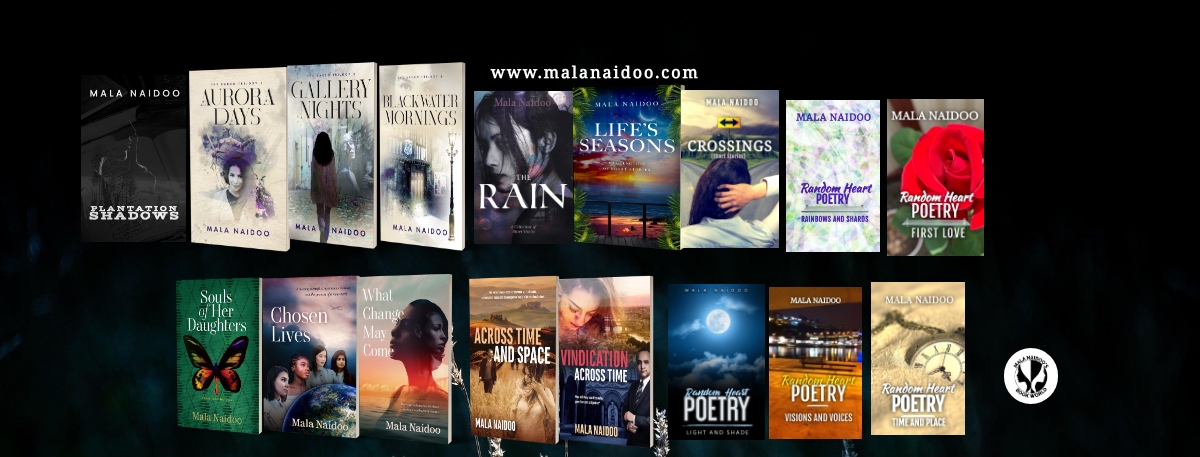
Creating in a Challenging World

We have read it and heard it repeated everywhere we look and listen.

Change is — has been — will impact all facets of life. The current global change that has claimed 2020 has challenged the ‘do I dare?’ mindset of the creative. The muse is a sensitive soul. She feels the angst as deeply as the joy — inspiration is derived and mined from this seat — gold mined!


Health crisis, economic crisis, the uncertainty of life, the fear of not so much the outdoors but whether we can trust that everybody is doing the right thing.

For how long must we entertain fear as it enslaves us by forfeiting joy?

The creative forges on to leave the carbon footprint of these challenging times.


Dare and dare again and the muse shall heed the call.


The creative day, if allowed to slide, is a difficult one to recover but is possible with the determination of, ‘I will dare.’

TS Eliot’s poem, The Lovesong of J Alfred Prufrock. conveys the uncertainty of modern times where ‘normal’ becomes unusual. Images of desolation pervade his poem:

Like a patient etherized upon a table/Let us go, through certain half-deserted streets,/The muttering retreats

This echoes the current emotional and scientific uncertainty we face.

The yellow fog that rubs its back upon the window-panes,
The yellow smoke that rubs its muzzle on the window-panes


Eliot’s raw emotions capture the universal angst of his time where rapid economic and technological advancement changed his perceptions of life. And the yellow fog of uncertainty seeps into 2020 rising, falling …

The natural outcome is to be perplexed but navigation to the new normal through introspection is vital.

The pen is the mighty memory of our time, of all times, and writing must go on as must art and music and all creative pursuits.

In the making as creatives, writers, artists, we share a universal experience in that it is normal to be afraid, and it is brave to dare by creating new worlds that either mirror the present or transport us to worlds we dream of. In dreaming we bring those hopeful worlds into the conscious mind of the reader/audience who in turn subconsciously works towards making that dreamed, hopeful world, a new reality.


The writer’s pen will never dry or fade — words speak into the future from the past bringing meaning and understanding that this too shall pass.

The human condition is live with the possibility for new stories to be told, poems to be written, songs to be sung and paintings to be created to articulate and quell all fear.

Do I dare, and do I dare, — oh yes, we must, to make this life the best life we have had the courage to dream into our reality!


Today step forward — leave the fences and backyards of your mind and speak of your fears, insecurity, and uncertainty through artistic expression.


Take a chance. Live your passion.


This is a time for you to be YOU in all that you do without the fear of judgement.


Happy writing. Happy creating. Happy daring to channel your way forward for a life free of angst with the promise of joy.


What’s your creative plan?


← Back

Thank you for your response. ✨

Writing For Success

In my first post on the prolific and inspirational Trinidadian author and poet Brenda Mohammed, we got a glimpse into her writing journey.  Brenda has written twenty-five publications — her passion and dedication to literature is phenomenal.

Today we chat to Brenda Mohammed to catch up on her rapidly growing and expanding writing life and the scoop on her latest writing venture!


Tell us a little bit about yourself?

I am a former Bank Manager of a leading bank in Trinidad and Tobago. Later in life, I moved into the Insurance field and excelled there also. I always loved dealing with finance, and never dreamed that I would fall in love with Literature.


When did you start writing?

Actually, I was always a very good writer in my school days and won the top English Language prize when I graduated from High school at sixteen years of age.

When I joined the bank my superiors at the bank were always impressed with my ability to learn quickly, my efficiency in every department I was assigned, and also my writing skills.

When I was promoted to the job of Assistant Manager Credit I had to prepare detailed financial proposals for the Manager’s signature to be sent to the bank’s Head Office for approval. The Manager rarely changed a word, and the Bank’s Head Office always approved the proposals without any questions.

The Banking term for that was “clean sanctions,” something other Managers wished they could achieve. Later on, when I was appointed as Manager I continued with that skill and moved on to Senior Managerial positions. Yet, writing books never crossed my mind and I moved into Insurance where I also excelled, qualifying for membership in the Million Dollar Round Table, The Premier Association for Financial Professionals, {the name pertains to sales achieved and not earnings}, until I was struck by cancer and told by my doctor in Trinidad that she could do nothing for me.

To make a long story short, I survived and wrote the book, I am Cancer Free, which became a bestseller, and gave me the encouragement to write twenty-four more books.


You wrote twenty-five books. Can you tell us the genre of those books?

I write both fiction and non-fiction. The genres include Memoirs, Romance, Mystery, Poetry, Children, Science Fiction and Self Help.


Tell us something about your multi-award-winning book Zeeka Chronicles.


Zeeka Chronicles is about a vengeful man who misuses science in the year 2036 to create havoc in a small exotic island named Gosh. He is angry for two reasons. After his former lover jilted him, he married another on the rebound. His wife contracted the zika virus when she was pregnant. His child was born deformed as a result, and she died. He blamed the hospital for her death and his deformed child. This vengeful man kidnapped the son of his former lover and the story evolves thereafter.

The story is set in the year 2036 when there is great advancement in medical and information technology. It is a high-tech world.

Skillful robots are used as home helpers, and police use high tech weaponry, electric cars, and smartphones. The hospitals are well equipped with state of the art equipment and doctors and scientists are making significant breakthroughs and inventing cures for patients with critical illnesses.

Yet, in this high-tech world, the minds of some human beings remain evil.

Can Mankind ever achieve a sinless state? Will human beings forever continue to foster greed, malice, anger, jealousy, and the desire to control and take revenge?

I wrote this book to highlight the fact that material things can never improve the minds of some individuals.

Today, in spite of all the new and advanced developments, crime has increased to unstoppable levels. What will change humanity?

The benefits to readers are the underlying lessons to be learnt from the content, especially in light of the situation the world is experiencing today with COVID 19.


Who are the primary readers of your books?

My books are for both mature audiences and young adults and the children books are, of course for children.


What are you working on now?

I am working on the third story in a Mystery series – Barry Holmes Mysteries

What happened to Mary Loo has elements of romance, mystery and suspense. It will be a short story and should be ready for publishing by the end of May.

The book cover was designed by Mary L Schmidt.


Can you leave us with a valuable quote on Writing?

Writing is a mysterious journey of thoughts that can unravel the strangest imaginary plots.

Writing for me was exploring a new milestone.


What are your social accounts if people want to connect with you?

I am on Linked In, Twitter, Instagram, Pinterest, and Facebook, where I have nine author pages for each genre in which I write, and a personal page.

They are – Poetry to Enlighten, Zeeka Stories, Banker turns Writer, Romance Stories, Children’s Corner, Barry Holmes Mysteries, Brenda’s Video trailers, Fascinating Memoirs and Brenda’s Publications.

I am also available as the Founder of How to Write for Success Literary Forum.


Brenda Mohammed a former Bank Manager from Trinidad is a multi-award-winning author of 25 books, and Founder of the Literary Forums How to Write for Success, Poems for Suicide Prevention, Library of How to Write for Success, and Poems against Domestic Violence. Her award-winning book HOW TO WRITE FOR SUCCESS is popular amongst writers and University students.


She recently published three best-selling Anthologies – A Spark of Hope Volumes I and II, co-authored by 49 and 64 authors respectively, and Break the Silence: An Anthology against Domestic Violence by 87 authors. All three topped the charts on Amazon as Bestsellers No 1.

In November 2018 Brenda received two awards from Readers Favorite International at an award ceremony at the Regency Hotel in Miami for two of her books, ZEEKA CHRONICLES and I AM CANCER FREE.

She was inducted into the Indie Author’s Wall of Fame in January 2020.

Brenda was also honoured on 22nd February 2020 by the Peru Government for Excellence in Literature, and in August 2019 by the Seychelles Government for her Literary skills. 


You can connect with Brenda Mohammed through the links above.

I wish Brenda everything of the very best in her writing success.

Please like, share and comment.


← Back

Thank you for your response. ✨

Mothers Mirrored in Fiction

Mother’s Day this year has a different ring to the freedom of yesteryear.

The nation waited to hear if we would be allowed to visit our mothers on this special day of the year. Something we took for granted… our mothers would always be there to listen, comfort, cook an amazing meal, take care of grandchildren, advise on matters of the heart, and chastise bad behaviour.


Love the whole world as a mother loves her only child                      ~ Buddha


The hype leading to Mother’s Day has been a buzz from infancy.  2020 has been still but some retail stores have opened for a dash purchase of a gift and a card to celebrate our mothers to tell them we love them. We fervently add that we want our mothers to be safe and well during this global health crisis. Some among us ache to see our mothers, some have passed on,  and others are in social isolation — it has been two months of just telephone conversations and if possible, FaceTime, Zoom and Skype chats. The aching emptiness of the missed mama/nana hug is still not a possibility. A joyous expression of love is now a cause for global anxiety as we fear the unknown, the lethal. The comforting hug now a possible cause of harm.


Whenever you are in distress, just say to yourself:                                     ‘I have a mother’                                                                         ~The Holy Mother, Sarada Devi


Mothers occupy a universal, sacred place in our hearts. A mother’s unconditional love goes with her children from the cradle to the grave. Cultures revere mothers with a divinity deserving of profound respect and care. This value should undoubtedly be universal. The hearth of family and home is a mother.


Paradise lies at the feet of your mother                                               ~ Prophet Muhammad (PBUH)


In paying tribute to all mothers today I also refer to the fictional mothers in, Souls of Her Daughters,  and two follow-up novels in the trilogy (each reads as a stand-alone novel too) Chosen Lives, and, What Change May Come.


This slideshow requires JavaScript.


Mothers Varuna and Elsie present as the yin-yang of motherhood. Mama Varuna is Grace’s bold and strong mother who has weathered hardship with loss and societal criticism. Patience’s mother, Mama Elsie is a mild-mannered mother who faces racism and hardship in apartheid South Africa. Both mothers raise their daughters as one family united in their cultural difference and struggles. The highs and lows of the lives of mothers and daughters captured in the daily lives of Grace and Patience are what makes Mother’s Day a constant expression of love.

To all mothers, and future mothers, you are the pillars of family and society and should be celebrated daily.


She opens her mouth with wisdom, and the teaching of kindness is on her tongue.’ ~ Proverbs 31:26


Share your thoughts in the comments.


Stay safe and well as restrictions ease in New South Wales and around the world.


Happy reading, happy writing.


← Back

Thank you for your response. ✨

Women Who Inspire


Often the women around us, those we interact with, those who do not ask for acknowledgement and serve their life’s calling with unstinting passion, must be noted to celebrate them and say thank you for who they are and what they have shared and continue to share.


Today amid the chaos in the world, from social isolation to global issues that divide nations,  let us not forget the women who leave a timeless legacy of fortitude, forbearance, and selfless service to humankind. 


Quietening the mind away from the noise of life has heightened my appreciation for the women who inspire and have inspired many lives. As a writer of thriller fiction, historical fiction and contemporary women’s fiction, it is befitting that I pay homage to the women who have impacted my world.

From the justice department and corporate world, health care, writing and publishing. Here are three women I salute today.


Kalyani Pillay (Entrepreneur) (1962-2026)

Former CEO, of SABRIC, (South African Banking Risk Information Centre) Kalyani Pillay resides in Sandton, South Africa. Kalyani has inspired many in her passion for instituting protocols for the elimination of bank fraud. A job that entailed being a globetrotter spreading innovative ideas on how to protect ourselves from financial scams, and as an advisor to large corporations, particularly banks. Kalyani Pillay has been head-hunted for presentations at international conferences in her relentless fight against fraud. She has worked as a lawyer, State Attorney for Gauteng, and Special Advisor to the Head of the National Prosecuting Authority in South Africa before she joined the ranks of SABRIC as CEO. Her resilience, dedication, optimism, and integrity are qualities that inspire for as long as I can remember.

Here is Kalyani Pillay’s inspiring interview with, Dudu Msomi on her show, ‘WisdomPersonified’ to illustrate the passion, courage, determination, and humility of a woman of note.


Queenie Naidoo (Health Care Professional) – (1936-2024) 

Retired South African nurse, residing in Australia, Queenie Naidoo, in her eighties today, is passionate about healing as she ever was. She served the poor and destitute, the ill and dying with devotion. She was fondly known to many as, ‘Sister Queenie.’ She garnered the support of local doctors in the town of Pietermaritzburg, South Africa, to donate medication which she dispensed at the free medical community clinic she steadfastly ran, for many years, on Sunday mornings, to serve those who were unable to access medical treatment. Her home was a haven to the ill, depressed, and ailing hearts. Her sense of humour and maternal warmth drew many to her. Her lifetime commitment to healing and supporting the physical and mental health of her patients resonates today with the selfless and potentially dangerous work of health care professionals during this global pandemic we currently face. Added to Queenie Naidoo’s inspirational credit is her creative talent in having produced a theatrical performance, God the Last Refuge, staged at the King Street Theatre in Newtown, Sydney, in 2014 as part of the Vedanta Society of NSW, initiative. Queenie has inspired me from the cradle as my loving, caring, mother and continues to do so to this day. 


Forbearance is a great virtue; there is no other like it

                        ~Holy Mother, Sri Sarada Devi


Brenda Mohammed (Author/Poet)

Trinidadian author and Founder of the How to Write for Success Group, a rapidly growing literary group. Brenda Mohammed promotes rising stars in literature, and assists in expanding the repertoire of existing, established authors with selfless commitment through collaborative writing of anthologies in the prevention of suicide and against domestic abuse. She is a noteworthy multi-award-winning novelist and poet. As a former banker and seasoned traveller she exudes a resilient spirit as a cancer survivor, depicted in her memoir I am Cancer Free, and one who has the Midas touch in creating bestsellers. These attributes make Brenda Mohammed an inspirational woman as my peer and mentor in the role I occupied as an administrator in the HTWFS group. Brenda’s book How to Write for Success offers nuggets of wisdom on writing and publishing, serving as a handbook for writers of any genre. Her warmth and generous nature in promoting the love for reading in children is evident in her contributions and interactions with schools in Trinidad. Brenda Mohammed is highly respected and valued by her administrators and followers in the How to Write for Success group.


It isn’t where you came from. It’s where you’re going that counts.

~Ella Fitzgerald


We never stop learning and growing with each passing day, hence inspirational individuals are the heartbeat of the societies we inhabit.


I have handpicked three inspirational women, there are countless more who inspire us every day. Please share the valued lives and messages of inspirational women in your world in the comment box below.


← Back

Thank you for your response. ✨

Maintaining a Healthy Muse


Life is topsy-turvy. The news makes us morose.

But creativity must go on.

So how do we keep the momentum going when all else has fallen apart?


This time shall pass


To avoid dwelling on the negative statistics of the world’s mortality rate, look for reading matter that will stimulate your soul to breathe as the mind’s eye turns inward. This will generate refreshing conversations. Too much has been coming at us in recent weeks, but we have the imaginative capacity to redirect this towards positivity.


Movies will come and go, but a novel or poem lingers. Change your routine. Begin your day doing some inspirational reading. Download free eBooks. Load your Kindles, iBooks, Kobo readers with words that enhance creative thinking.


Roll up the newspaper, shut off the television


We need to be informed — limit this to once a day because overkill might devour your muse. Turn to poetry, short stories, novels and inspirational music. Teach the creative muse to move beyond the immediate.


Limit the online interactions.


Lend a helping hand to a fellow creative. Encourage the reading and writing of new content — unrelated to the current context. Bring the wonder of nature back into our lives, even if it’s from an armchair perspective — watch a documentary — mentally travel to another realm


Free yourself from fear


Here are some hand-picked inspirational suggestions to awaken and maintain a healthy muse. This is a brief list to get the creative juices flowing, to inject an abundant dose of ideas, if you are feeling the slump with each passing day. There are many more you might have already read and perhaps a re-read is another way to lift the lid to ignite the imagination.


Poetry:

The Daffodils – William Wordsworth
First Hush – Orna Ross
Frost at Midnight – Samuel Taylor Coleridge
Still I Rise – Maya Angelou
A Spark of Hope Vol 1 &11 – Brenda Mohammed and HTWFS


Fiction and Non-Fiction:

The Alchemist – Paulo Coelho
The Catcher in the Rye– J.D. Salinger
Beloved – Toni Morrison
A Thousand Splendid Suns– Khalid Hosseini
Swami and Friends– R.K. Narayan
Half of a Yellow Sun– Chimamanda Ngozi Adichie


We are not alone, reach out, touch a life or mind and enjoy the benefit of the enhanced energy this brings.


Stay safe and well.


Read or write something today.


How do you keep your creative juices flowing when things fall apart?


← Back

Thank you for your response. ✨

Publishing During a Global Crisis

Every corner of the world has been hit by Covid19 — life for millions has come to a grinding halt. Businesses have shut down left, right and centre. Bookstores have closed their doors. Libraries are no longer a sanctuary as silent voices are in lockdown.


The question tossed around is: do we go ahead with the launch of a new book?

My heart says yes but my mind says, should I? Then a voice whispers an answer: yes, launch it online, reach people who need to move out of the mental space of the current crisis we all face. We need the sanctity of books. Bookshops continue to take orders online if a digital book is not a preference.


In the face of a global crisis, publishing is vital now more than ever before — it says we are here, later it will speak confirming that we were here, and this is what we did. It is akin to writing historical fiction. The Great Books of the world brought us knowledge of people, cultures, religions, events, aspirations, challenges and celebrations from eras long before our current existence. Without those esteemed scribes, the artists of the past, we would be as ignorant of the world as the occupants in Plato’s cave.


Literature is the light into now, the glow of the past and spotlight into our dreams of the future. Books imprint memory


Writers have the acute ability to sense mood and observe human behaviour down to minuscule details. So, why wait? It is time to pick up the pen of prose or poetry. Each will speak of this time and of our dreams and visions. Leave the messages that say we are indeed one.


In our angst and joy, we are ONE under the sky of humanity


Forthcoming Title This April


To ignite compassion, we must walk in the shoes of angst, or suffering, to extend love and care to others because we know it—we feel it. Stories elicit compassion and bring meaning more particularly as we sit in self-isolation to protect our loved ones and communities.


Writing and publishing must go on, as must, soft digital launches of news titles and relaunching of backlists. Lower prices, offer free titles, reach the masses by bringing meaning to the lives of those living in fear of what the next news bulletin or press conference will announce. Our uncertainty unites us in our desire for a renewed tomorrow. We inhabit the same house under a global sky.

Now we speak with the same human voice in our sans streets, sans parks, sans beaches… but we should never be reduced to fearing each other.

Keep literature flowing for generations to comeit is within our control, thanks to the digital platforms that serve us.


Keep Writing, Keep Reading.

Stay Safe.


This time too shall  pass. Keeping hope alive through poetry and stories.


← Back

Thank you for your response. ✨

From Prose to Poetry


Poetry excites, calms, awakens, regenerates


As a thriller fiction writer, poetry has been a significant aspect of my recreational reading and inspiration for my writing. Poets of the Romantic era notably Shelley, Keats, Wordsworth and Coleridge are among my selection of favourites as has been Yeats, Sylvia Plath and Emily Dickinson. African poets Mongane Wally Serote and Chinua Achebe, to name a few. All held my attention both as a student and educator. More recently, I turn to the inspiration of Orna Ross, an Irish poet and author. I relish reading poems from a global range of acclaimed published and aspiring poets in the rapidly growing group, How to Write for Success. This attests to the thirst for new voices to be heard and fundamentally the need for poetry in an era of uncertainty where we need to be reminded of beauty and wonder.

In a post titled Poetry Educates Prose I highlighted the benefits of poetry reading and writing to enhance style and succinct writing in prose.


After writing poetry for an audience of one and gradually venturing out to my better half and immediate family circle and a few trusted friends, I took the plunge to put together a collection of my light and shade poems. It has taken a year to sift through, rewrite and refresh and refresh once again, and no doubt that process will continue as skills develop along the way. A collection titled Random Heart Poetry: Light and Shade is the window to my soul


The moon has a significant impact on creativity, and culturally the celebration of auspicious events are determined by the aspect of the moon as per the lunar calendar. Some of my Instagram posts will reveal my fascination with the moon whenever she is in my realm.  The cover of Random Heart Poetry captures the essence of Light and Shade through the full moon, representative of the light we seek. The poetry collection reflects upon culture, identity, gender, race, migration, relationships and the wonder of nature.

 Random Heart Poetry: Light and Shade is available at Amazon and instore at a few select retailers.


Poetry is the unadorned human face reverberating with timeless truths ~Mala Naidoo


When power corrupts, poetry cleanses ~ John F Kennedy


Happy Writing, Happy Reading!

Share your love of poetry in the message box below.

← Back

Thank you for your response. ✨

Creative Space

Psychological boundaries are either self-constructed or built by others. Whoever is doing the construction of the wall is of no relevance — both will hinder creative energy.

We need people around us as creatives just not their negative energies that overwhelm and stifle.


Vulnerability is the birthplace of innovation, creation and change ~ Brene Brown.


Creatives are sensitive souls, dreamers in tune with what the naked eye might not see. This opens the mind and soul to all aspects of the universe and in so doing leaves the creative vulnerable.

Choose your associations. This is crucial to creative energy. People who understand the creative, appreciate the need for space to commune with the muse, nature and the imagination.

Positive vibrations come from such associations that sustain and enhance a creative life. People who understand solitude and the creative need to slip off the radar for a brief period are associates to nurture and stay connected to.


In seeking creative space distancing the self from negativity is crucial to avoiding that which mars the creative process


What to watch…

  • those who tell you what you should be creating
  • those that question what you write or why you write
  • those who are not writers but freely offer writing advice
  • those who imagine a character or situation reflects their lives. It’s good if they do — that’s being a good writer to be able to craft lives/stories that people feel connected to — the ultimate writing goal is to reach the reader.
  • those who scour your books and comment that your book is a reflection of your own life by ignoring that you’re writing fiction and have not got down to writing a memoir yet.


Creative energy is more critical than learning ~ Albert Einstein


Who should we hang onto?

  • those who can’t wait to read your next book
  • those who let you know what they loved about your writing and let you know what thoughts your book has left them with
  • those who allow you to be you — gentle, idiosyncratic or wild.
  • those who spread the word about your books


Choose your friends and associates with care — those who appreciate the creative in you, and if it’s a small number — that’s all you need for abundant positivity to flow


Choosing your tribe is vital to preserving creative flow and production.


Engage in activities that enhance the creative within. Turn to meditation, singing, writing or reading poetry, reading the books you have on the nightstand calling out to you, read something different, a different genre. Take a walk on the beach or in a park or forest — do whatever makes your heart sing!


We undertake certain spiritual exercises to achieve alignment with the creative universe ~ Julia Cameron


Be your wildest or quietest authentic self and gravitate to those people who appreciate you for whoever you are, wherever you are in your creative life.


~Dare to be different~


Share your thoughts on your quest for creative space.


Happy Writing. Happy Creating. Happy Connecting!


← Back

Thank you for your response. ✨

Fiction Changemakers

If stories were never told — history would not exist — change would not occur.

So much that is fictional is drawn from reality.

The horrors that have occurred historically and afresh each day (as the daily news never fails to report) become the fictional realities writers create in imagined worlds. The fiction writer’s world is in tune with current and past societal occurrences. The subconscious mind sifts and imprints that which has emotive associations. From this collaboration of mind and emotions, the writer begins with a particular premise — then something magical happens — the pen takes on a life of its own.

Plotter or panster merge when that magic happens. Hey, presto! Fiction and reality commingle!

For this reason, mindful writing is imperative. It helps guide your book to a niche or a wider audience with a message melded to the entertainment a good book affords.


Every good story has a lesson to teach, an angst or joy to share


Where does the act of creative mindfulness emanate from?


The soul of the writer, his or her angst and joy sensitize the writer to the struggles people undergo — be it a socio-economic matter such as Charles Dickens’ novels  exposed on England’s elitism, and Jane Austen’s portraits of gender and social class. These are just two remarkable writers selected from a host of others of the day.


Today fictional writers create worlds around ‘me too,’ racism and power struggles. Power struggles and injustice are timeless from Fritz Lang’s 1927 German expressionist film Metropolis based on the 1925 novel by Thea von Harbouto, Orwell’s dystopian novel, Nineteen Eighty-Four and my current reading of American Dirt by Jeanine Cummins, referred to as a ‘high-octane’ story, are a few in the countless number of books that connect readers through discomfit to what it means to struggle and survive.


Political thrillers expose mismanagement, and immorality while entertaining readers with suspense, the drama of high stakes, etc.


If fiction mirrors reality it becomes a record for posterity like all good books. A ‘good book’ depends on which end of the moral spectrum both reader and writer share. If a book angers and soothes, keeps the reader on the edge of their seat by creating desired expectations for the protagonist — it’s a great story penned.


Fiction should make us uncomfortable enough to question where we went wrong, and how can we rectify it


Nothing is political in writing if it showcases reality. The word ‘political’ from my apartheid history conjures thoughts of being labelled as being on the wrong side of the law. Yet a political thriller exposes heinous human behaviour in organizations that we trust to uphold justice.


Fiction is reality dressed up as the world on the pages of a good book, one that dares expose the foibles of troubled societies


Discomfit, guilt and thought


Let’s continue to create fictional realities by rocking the boat of complacency in assuring that the history of the past and history in the making generate discomfort — discomfit elicits thought and one can only hope that positive action will follow to change catastrophes that are within the human scope and rectify atrocious human behaviour.


My stories cut to the bone on forgotten voices who deserve to be heard.


Here’s to more fictional stories for all our better tomorrows.


Happy Australian long weekend. Happy pleasurable reading hours.


← Back

Thank you for your response. ✨

Fine Art or Brutal Chop

As I work through cleaning up my latest manuscript, a first in series, I am weeding out those darling crutch words, scene shifts, and other hidden gems (I thought they were gems until I read them with an unemotional,  critical eye) to clear the wood for the trees to have a better view of where my characters are and what they’re getting up to. If I don’t have a clear, error free, sense of my story, how will the editor? Worse still what would the reader do?


It’s not easy after several self-edits to handover your baby for professional scrutiny. There’s no getting away from it, self-editing is turning the eye inward without a tear, first the incision then as you pass judgement, the brutal chop of your precious, crafted words, emotions, descriptions, settings, characters, and whatever else might need adjusting in your created world.


very, really, rather, quite, in fact… do you need them?


So, how many steps are there during the self-editing phase? (These are the steps I follow which varies from writer to writer)

  • First, line by line, chapter by chapter, on the computer screen change the double word use, missing words, etc.
  • The second step is to correct timelines if there are errors. 
  • During the third phase, put the manuscript through editing software such as Grammarly, and Pro-Writing Aid —  excellent to pick up flaws the naked eye missed —  spelling (American or British?), grammar, repetitions, and general style especially when that sneaky passive voice creeps in.
  • The fourth step is reading your manuscript out aloud and recording the story for playback editing. Rhythm, the cadence, and sense become distinct during this process which directs you back to the screen to fix those snags.
  • The fifth phase is print a hard copy of the manuscript and rip though it with the colours of the rainbow to show you what is working, and what needs  another chop or perhaps another trim. 
  • The sixth phase is formatting an eBook in Scrivener to read through in a different form — anything that slipped through the self-editing cracks screams out, in a new form, for rectification.

Now the manuscript is ready for the professional edit although I might enlist a trusted, closely held,  proof-reader to check through once before the professional submission. Then proofreaders step in for the final check.


During the process of self-editing do not rely solely on your gut experience  in making changes. Consult those in the industry that you admire, read or use as a role-model .  An editing guidebook, and a thesaurus is a must have on any good writer’s desk. 


When working with an editor, it should be a negotiation on necessary changes, but be prepared that there could be changes suggested that might not sit too well with you,  but for the success of the book,  within reason, you should take the suggestions on board.


What is the editing timeframe?

There are many ways to do this , some say spend three months drafting, three months editing. However, some write a book a month —  at best I could get through two to three in a year as a part-time writer. Remember, the professional editor could ask for a month to check your manuscript.

 I generally veer to three months writing, three months editing, but sometimes life makes its call on time and energy so that varies year to year, book by book.


What are your self-editing tips? Let us know how you do it your way.


 Collaborate + Consider + Cooperate + Change = an excellent MS ready to go. 


Best wishes with writing, editing, and publishing.


← Back

Thank you for your response. ✨


From Sydney to Seychelles

Today we travel across the Indian Ocean to meet Magie Faure-Vidot. Magie is a French-language poet from beautiful Seychelles. She has published work in English and Seychelles Creole. She is the Chief Editor/Director of the Publication SIPAY and is an inspirational supporter of rising poets and writers. She is tireless in her dedication to upholding international close connections between writers of all genres and forms.

Recently she has travelled to India for the World Thinkers’ and Writer’s Peace Meet attending two international events in December 2019 in Vijayawada and Kolkata.


Meet the Poet

Magie Faure-Vidot was born in Victoria. She is a member of the Institut Académique de Paris and the Académie Internationale de Lutèce. She has won numerous prizes over the course of her career, including the Coupe de la Ville de Paris, a Lyre d’honneur, and six silver and numerous bronze medals in various international literary competitions, and she has represented her home country at many international poetry festivals and other initiatives. Her work has been discussed in critical studies of Seychellois literature. She has also achieved some fame as an oral performer.

After living for some time in Lebanon, England, Italy, and France, Faure-Vidot returned to Seychelles. There she co-founded and continues to codirect, both the online literary review Vents Alizés and the online publishing house Edisyon Losean Endyen, both of which she runs in conjunction with Hungarian poet Károly Sándor Pallai. Her work is regularly published in Seychelles Nation and The People, and she is the Chief Editor/Director of  SIPAY,  the only Seychellois international literary magazine. Her poems were published in the international poetry anthology Amaravati Poetic Prism in India. In 2017, she received the prestigious Seychelles Arts Award in literature for her outstanding literary work and achievements. She writes for Spirit of Nature where she features amongst the 60 poets published in 2019.Opa Anthology of Poetry.

She is a member of the World Nations Writers Union Kazakhstan. She is the Regional Director – East Africa and Central Asia and on the Administration Council of  MS.

Additional information on Magie Faure-Vidot is available on Wikipedia.


Getting to know  Magie


 When did your love for poetry begin?

The love for literature began when I was a kid. My parents worked on a vast agricultural property and had many animals. I loved them so much that I used to tell them small stories. We lived close to the beach and I had my private beach where I used to enjoy the sea, the birds, coconut trees, swimming with small fish, and playing with crabs. Being a loner, I had to keep myself busy. The sea carried me to faraway imaginary places. And I would always be asking my parents to buy me pencils and exercise-books.


 What do you enjoy the most about living in Seychelles?

The island life, friendliness of the inhabitants, no snow but the sand.


The View From Magie Faure-Vidot’s  Home in the Beautiful Island of Seychelles  ~ A Creative  Haven


Tell us about the International Literary Journal, SIPAY. When did it begin? What is its aim?

SIPAY saw birth in 2008 but registered in June 2009. At first, the aim was to promote the  French language at 60% and 40% shared between our two other national languages, English and Creole. But now it has taken another turn. It is affiliated to Motivational Strips, and  Spanish has been added to the three languages. SIPAY is now an International Literary Magazine and opportunities are given to various writers all over the globe. SIPAY is a non-political, non-religious magazine. SIPAY is distributed to the Ministry of Education for all the schools, Ministry of Culture, Creole Institute, the National Library, the National Journal (NISA), and some private individuals. One copy is posted to all contributors at no charge. SIPAY is a non-profit making publication. Money generated from the sale is reinvested in the next edition.


Describe your typical writing day.

I write when the urge tickles me. First, however, I take care of my home, family and animals  – three dogs, and I feed some fifty birds every day. I then take to writing, attending to posts in  MS, Lasosyasyon Lar san Frontyer, Congo Ecrit etc.


What are your future goals for literature both within Seychelles and internationally? 

I’m planning my 7th book, assisting the Lasosyasyon Lar San Frontyer as a Chief Consultant and Congo Ecrit. I  attended two international events in December 2019 in Vijayawada and Kolkata.


***

I extend my gratitude to Magie Faure-Vidot for sharing her illustrious writing journey. You can connect with Magie Faure-Vidot for more information on her recent literary travels and works:

Email

Website

Facebook


Please leave your thoughts in the box below:

← Back

Thank you for your response. ✨

Writer’s Connect: Spotlight: Author Vash Karuppa

Today I turn the spotlight on South African Author Vash Karuppa whose debut novel DESTINY FOR LOVE ARRANGED is a favourite among readers in South Africa and abroad. Her novel captures the cultural significance of life, and the command and necessity of love in a voice that connects the reader to place and culture and the understanding that the heart is not entirely self-directed.


 Synopsis: Destiny for Love Arranged:

 Destiny for Love Arranged is a contemporary, gripping and angsty, second chance Indian romance that reveals the love of family and friendship bonds during trying times. All protagonists are of South African Indian origin.

The story revolves around Aariyan Ranjan, a highly successful CEO of a Hotel Empire and Varini Iyengar, an Oncologist, both are forced into a temporary marriage of convenience to help them resolve personal dilemmas.


Not because it had anything to do with his heart he thought stoically…, but because it suited his purposes…


While Aariyan is determined to treat their marriage as he would any other business deal, love rarely listens to logic, and what follows is anything but business. On the other hand, Varini soon finds herself gravitating toward and rejoicing in the love she thought lost forever with a hidden hope that their marriage of convenience will end in a union of everlasting love. The story is embedded with cultural anecdotes familiar to any family of Indian origin. It takes their family, friends and a life-threatening situation to show them the love they lost is worth fighting for.


In short, this is a story about family, friendship, and starting over, as Aariyan and Varini embark on a journey toward a second chance at love. You will get to share in their moments as they discover that vulnerability can be their strength and the most perplexing problems can be overcome with the support and resourcefulness of a loving family and faithful friends. This is Book 1 of a trilogy.


About the Author 


Vash is a South African author of Indian origin who has been a bookaholic from about the age of five. Her addiction for books grows exponentially daily, so after spending years concentrating on her role as a corporate executive and a short stint as an entrepreneur, she decided to unleash her number one desire i.e. a passion for writing. Whilst books of most genres interest her, it was romance that captured her soul. Her writing portrays the lives and drama of ordinary people who readers can easily relate to. The crux of her stories celebrates the power of true love coupled with the timeless bonds that exist between family and friends while capturing the true essence of diverse cultures.

Vash Karuppa is a member of the Romance Writers Organisation of South Africa (ROSA)


What inspired you to write Destiny for Love Arranged?

For many years I have read articles around the call for diverse romance novels that incorporate multi-cultural aspects into a traditional romance plot. In addition, I’m a hopeless romantic myself and always had a plot in my head around a story that integrates family and friendship bonds (which I have been blessed to have throughout my life) together with a typical romance story.

When I eventually decided to put pen to paper, it all just naturally came together, giving birth to Destiny for Love Arranged. Finally, I am aware there aren’t many novels written which share intricacies of the South Indian culture and I was determined to write about it. Looking at the feedback received thus far from readers, it was well-received.


Have you always wanted to be a writer? How long did it take you to write your novel?

Being a passionate romantic and voracious bookaholic, reading was a drug to which I had an instant addiction, one that only grew with time. While books in all genres interest me, it was romance that I was drawn to. From as early as my pre-teen years, I loved the ‘happily ever after (HEA)’ syndrome hence my love with any book in the romance genre, and later as a teenager with a dream of writing my own HEA story.

Writing a novel has always been part of my bucket list, so, after spending years concentrating on my role as a corporate executive, I eventually unleashed my number one desire and passion for writing with Destiny for Love Arranged

I didn’t really plan on publishing my work though, because I started writing for my own fulfilment. However, when a few of my friends read the script, they encouraged me to consider publication and so it happened….

The hardest part of completing the story was not knowing how to stop. I had so much more to tell but owing to publishing rules on limited word count and reader expectation of the length of books I had to cut out a lot from the original script.


What’s your typical writing day like?

Owing to a “day job”, I tend to confine my writing to nights for at least 2 hours a day in the week and whatever time I can hijack on the weekend.

My best writing is done in a quiet space in my little apartment directly next to a window where I can have the warmth of the sun and sounds of chirping birds to keep me company while writing.


Who is your greatest source of inspiration?

My 92-year-old maternal grandfather has undoubtedly been the inspiration behind my love for writing. He taught me how to read and then introduced me to the word of writing through the books he wrote and is still writing might I add.


What are your future writing plans?

Books 2 and 3 of the Keshavam Industries trilogy is almost complete and will be released between December 2019 and February 2020.

I have a new series planned for the rest of 2020.

Destiny for Love Arranged is on Amazon for your reading pleasure.

Connect with Vash Karuppa on:


Facebook

Instagram

Twitter

Goodreads


Happy Reading! Happy Writing! Happy Publishing!


← Back

Thank you for your response. ✨

Proficiency and Professionalism

Author professionalism is not negotiable in a world where access to all we say, do and create is out in the world with a click.

It costs nothing to be supportive of aspiring authors and accept that there are oceans of experienced, seasoned authors out there who act as mentors and are deserving of respect and acknowledgement. Blog about the work others do put yourself out there to be blogged about and while you find your way to being noticed as a writer, notice others in a personable, professional manner.

The publishing landscape is rich and diverse with an ever-growing space for all. Collaboration is vital as learning is never exhausted. As a teacher, this lesson was all too clear with constant syllabus changes or when students challenged an idea and a new wave of thought was born. Like classrooms without borders, learning is a two-way process, and so too is the writing, and publishing world.


Pride and ego waste creative energy—aiming towards excellence is a humble, hardworking process. No one person is gifted in the craft without commitment and extensive effort in being worthy to be viewed as a mentor/master of the craft.


Being proficient is ensuring great covers clothe your labour of creative love, and that they appeal to the genre and audiences’ interest. Having your work edited is an important step in the writing process to rise to professional standards in the industry. (although creativity is not an industry for me—a labour of love for sure!) Publishing services come with a price tag if it’s quality that matters. With quality, the stamp of professionalism is assured.


Never compromise your values…


Professionalism as an author like any walk of life is also about expressing thanks and appreciation without the ‘I’m the artist’ big-headed attitude. Collectively a professional outlook makes success a possibility. Professionalism can be challenged when confronted by unethical practices in the publishing ecosystem but as always it’s best to walk away, let it be, there are plenty more avenues out there to pursue, that might well be a better fit for you. Like any job, if the fit is not good, move on to greener pastures, or create your own. As a writer, you steer the vessel on the path you choose to take.


Alliance of Independent Authors /


Authors are among some of the most exploited people if unaware of the pitfalls. The way to armour yourself is to sign up for authentic associations, register for webinars and Facebook live sessions, attend conferences, network, to educate yourself in knowing that the allure of being published comes with ethical responsibility. Read, research and find your way with the confidence that you are proficient and professional.


Writing is a solitary process but being an author is a collaborative role. Aspiring writers, you are not alone. Pick who you follow, to wisely ensure you are protecting your craft and practice.


Happy Writing/Creating and Publishing.

← Back

Thank you for your response. ✨

Word Rhythm – some time… somehow


People ask, ‘so how does one complete a novel?’ The simple response is, ‘write every day.’

Fifty words on a page are better than a blank page.

Consistency is key and if for whatever reason writing is impossible on a day, double up the output in the next writing session. Perhaps not all in one go, divide the writing time to two sessions if possible, on a given day that fits in with what is already on your plate.


Carpe Diem!

Writing more is by showing up, at a regular time, bottom on the seat, minimal distractions or no distractions at all. Commit to a solid ninety-minutes, then change the activity, but if the juice is still flowing go back for another session.

Blocks of time, free of distractions is essential to see a creative project to completion.


Ways in which to maximise creative time is to have a notepad/journal at the ready wherever you are. I have A5 journals in my handbag, workbag and pencils stashed in every pocket. Sitting in the doctor’s or dentist’s waiting room, or with colour in your hair at the hairdresser, or as I do, while sitting in the car at the car wash, scribble a few lines to keep the momentum of your story going. Watching soap suds gyrate in a splash of colour stirs the imagination! Back at your desk, if that’s where you prefer to write, draw those mini journal creative thoughts into your WIP manuscript.

Having word count goals helps to hold one accountable. My target is to finish a chapter at each writing session,  if possible, or to leave a trigger sentence for the next writing session, to pick up the pace, action and momentum.

Caught in a roadblock? Pull out a notepad and write, if you can’t take your eyes off the road, audio record your verbal musings — now traffic cops, I dare to say, have not come up with traffic fines for the some time… somehow writer at a standstill in a roadblock, NOT in moving traffic, I must add – that is a massive NO-NO! Anything that will hinder the imagination is a blaring siren and flashing lights… although a fictional high-speed chase adds adrenaline to a thriller… let me add that… to my…

Like we need our zzzz’s,  we need our number of words down on the page each day.

Some like holding themselves accountable through a writing group and others prefer to create their own deadlines. Either way, commitment matters to take your draft from a manuscript to an actual book.


Courage is the commitment to begin without any guarantee of success ~ Wolfgang Von Goethe


Some have a few writing days set aside in the week and commit like it’s a job they go to for five or six hours a day. If these are the only days available, the habit is cultivated and creative productivity soars on those days.
Roads trips, as long as you’re not doing the driving, is another great way to nab some writing hours, the imagination will be stimulated as you travel through various locations.

My next some time… somehow is to jump on a train and go to the furthest end of the line and back while writing. I am a desk-bound writer so this is an adventure that might or might not yield a new result. Let’s hope nobody throws me off the train for wearing heavily shaded sunglasses, a cap and seen to be furtively writing some secretive lines, perhaps on the comings and goings on each platform?

Get on that train, write at the car wash, whatever you do, do create space for your book!

Happy Writing, Happy Musing!

Carpe Diem!

Please share your some time… somehow to help others maximise writing outcomes.

← Back

Thank you for your response. ✨

Food and Fiction

A good story, like good food, is an unforgettable experience.

In the creation of fictional worlds, the protagonist comes to life through his or her foibles, eccentricities, habits, relationships, hobbies, voice, mannerisms etc. While sensory details include the sounds, we hear and the images we see, through the words on the page, the degustation in a fictional novel brings the reader to the table, heightening the sensual effect in a shared meal with characters.

In my debut novel, Across Time and Space, the aging Ben loves kippers and poached eggs for breakfast. In the sequel, Vindication Across Time, while breakfast is important, especially when Ben and Meryl overhear a conversation in a tiny restaurant, on the dark history of the mysterious Professor Andrei Malakov – it’s the journey through South Africa’s gustatory delights that bring drooling joy as barbecued corn on the cob – braaied mielies, to locals, on the breathtaking beaches of the Cape, chilli pineapple in, Sweet, salty, hot and pungent collided, tantalising Michael’s tastebuds. And then who can forget the delectable Kaapse snoek! In contrast, back in Florence, Meryl consumes endless cups of coffee as the trial drains her emotional and physical strength. Her favourite chicken pasta and prawn linguini meals are left untouched as her mind swims with horrific thoughts on where her life was heading.

In the trilogy, Souls of Her Daughters, Chosen Lives, and the third book, out this April, What Change May Come, Thai Delight, a fictional place, is Patience’s favourite restaurant, but both sisters, Grace and Patience find great joy and comfort in cooking and eating their mother’s signature chicken curry – their memory of her is alive in love and food. Grilled salmon, thoughtfully prepared for an elderly neighbour is pushed aside as she perspires through, and relishes Grace’s fish curry, saying, You have your mother’s touch with the delicate spicing, what a scrumptious meal... There are wonderful Mediterranean breakfasts, turmeric lattes and cardamom chai for a full international array of gustatory heaven!


I need chillies to warm my soul’ ~ Patience says in Souls of Her Daughters


From the spicy to the crisp – ham and cheese croissants, in the April release of What Change May Come, complements the racy change and quick food that others bring to Grace and Patience.


Food and fiction are a formidable combination, setting the mood of the moment, letting the reader into a part of the character’s life that we all enjoy – eating as a necessity, or social activity, regardless of what we eat, or where we eat it.

Food will always feature in my fictional tales as comfort food, memory food, and soulful food.


Cheers to more, tasty, thrilling tales!

Share your thoughts in the comment box below.


← Back

Thank you for your response. ✨

Fiction: The Art of Conversation

We enjoy a good yarn, some more than others. The reticent and the chatter-box are encountered as part of our daily social interactions. How much is enough or too much in the stories we create?


Dialogue works:

 To move the story forward
 To give information
 Contribute to characterisation
 Gives the character their ‘own’ voice, makes the character seem real or ‘alive’
 Creates a basis for understanding the thoughts and values of the character
 Shapes understanding for some of the actions a character engages in
 Aids understanding of the relationships between and among characters


 Consider When Constructing Dialogue:

 How much to include: It depends on the role the character plays- is it a significant or minor role in relation to the plot
 Is the conversation a distraction or diversion for a particular reason?
 Intersperse dialogue, pace it with some narration by describing the character’s mood or emotions through their actions- clearing the throat or twirling a strand of hair, tapping on the table, humming a particular note, etc- this connects the reader to the emotional state of the character
 Consider carefully whether you should use dialect in your speech- will it confuse your reader or will it create a connection to your reader- this must be based on your familiarity with your audience.
 Avoid unnecessary or stilted dialogue, this fills white space and will bore the reader eg :

– ‘What’s the time Jill?’
-‘Ten o’ clock Jack.’
-‘What time should we leave?’
-‘I don’t know, maybe 11 or 12, what time do you think is best?’


An awkward conversation in Jane Austen’s Sense and Sensibility.  This draws us in, the voyeur craves more- tease in subtle politeness if you must, at first, then reveal all.

Then there is the embarrassing conversation moment:  Eliza Doolittle’s ‘The new small talk.’


 Make it realistic- people do not socially speak to each other in one continuous block (beware the chatter-box! They do exist!) there should be some stops and starts, fillers and shifts depending on where your characters are conversing with each other- Is it in a coffee shop? On the telephone? In a doctor’s waiting room? On the bus or train? – Fillers and distractions could be drawn from what is happening in the coffee shop, on the bus or train etc. Additionally, the formal or informal tone of the conversation depends on who the character is speaking to.
 The relationship between characters in conversation is significant to guide how comfortable or strained the conversation might be.
 Do not include endless pages of dialogue – your characters must interact with the environment to avoid them becoming ‘talking heads’ or disembodied from the setting.
 Use the five senses to pace your dialogue- what does the character see, smell, taste, touch or hear.
 Example: ‘I was worried that Jill would be upset with the plans and called several times but she did not pick up.’ Her voice trailed off with the whisper of trouble in the air.
This might engage the reader to pay careful attention to this subtle warning.

 From Dead Poet’s Society: ‘But poetry, beauty, romance, love… these are what we stay alive for.’ – a favourite line!


Happy Reading! Happy Writing!


I write from real life. I am an unrepentant eavesdropper and collector of stories. I record bits of overheard dialogue. ~ Chimamanda Ngozi Adichie, author of ‘Americanah’

Add your thoughts in the comment box below:

← Back

Thank you for your response. ✨

The Valentine in YOU!

The creative well is endless if you’re in it for the long haul. Writing eBooks, print books, creating audio books, working with editors, cover designers, and marketing your books – no publisher will do the marketing for you!  An abundance of creative energy soon leads to mental exhaustion a type of brain drain that can potentially dry the creative well.  Act on helping your creative self to sustain energy and wellness for the long haul.


Love and care for YOUR creative self keeps the muse in your orbit.


Some Tips for Love and Self-Care for YOUR Creative Self


To keep the creative juice flowing you must show the artist in you, some love.


How do we do this?
Replenish the source of your well by carving space in YOUR day:

Meditate  in your day preferably in the morning before you begin writing for perhaps half an hour, or in shorter bursts throughout the day

Listen to soothing calming, theta sounds when you take a break between planning or writing scenes

Take a walk outdoors – if you can take a walk on the beach, or in a park, this will be great to listen to the sounds of nature with the double benefit of  rest and awakening the senses

Sing no matter how out of you might be or strum a guitar if you have one around – the therapeutic value is giving yourself some love

You’ve gotta dance like there’s nobody watching… ~ William W Purkey


Read something inspirational before you sleep – a poem or a prayer

Write when your energy is at an optimum level, if it’s the morning for you, then market your brand/books in the afternoon

Talk to an optimistic person, perhaps one who loves your work, then reach out – positive energy ignites creativity


Feel nature

These are but a few ways to keep that well pumping out the creative energy that brings your fabulous work of art into the world. Begin with one thing at a time to ease exhaustion – creativity is fresh, passionate, and lively, so be sure to get in enough zzz’s. The number of hours will depend on your personal make-up, work-day etc. Anything less than 6 hours is risking exhaustion during your creative hours.


As I Lay Dreaming


Beautiful sounds feed LOVE FOR THE CREATIVE YOU:


I hope you have an amazing Valentine’s Day!

Happy Writing, Happy Creative Love!

Please share your thoughts in the box below.


← Back

Thank you for your response. ✨

Editing Tips

The End! A joyous moment in finishing a novel after many months or years of getting up at the crack of dawn or staying up late into the night, writing the story that has burned within, but, it is only finished after the professional edit.

A product in hand created from the imagination in a fictional story is a proud moment. Now the editing process looms. No book ever goes out into the world without this step or rather several takes of this step.


I’ll share a few pointers that might be what you’re looking for, or perhaps you have another way of approaching the first round of editing.


Let the manuscript sit for a week before you look at it. Some say leave it for a longer period, perhaps six weeks before revisiting the composition with new eyes.  Whatever works for you, ensure you have somewhat removed yourself from the emotional hooks of the work – this break allows the gaps, errors and omissions to come to light.


Print out the draft and run through the hard copy with several sharpened pencils, an eraser, and highlighter while correcting or adding in notes for a reconsideration of scenes etc. Scanning through a few chapters a day, when most energetic and lucid, perhaps over a two-week period, is an initial step towards removing redundancies, adding in omissions and checking spelling and other inconsistencies that arose during the feverish days of writing.


The second step is to read the draft out loud and record the reading. This highlights the flow or lack of it in dialogue and the unfolding of the story arc.  This is followed by revisiting what needs to be rectified on pace, plot and character. Often at this stage, while characters might be developed, plot holes might be discovered.

After this is cleaned up, I usually format the draft as an Ebook and copy it to Kindle or iBooks and read it again on my device. Things that were missed in the last round of checks,  pop in this new format and so the next round of corrections begin. This takes two rounds of  Ebook checks. Reading chapters backwards has the benefit of noting errors that slip past the eye, as the mind sees and reads what is not there when following the sequence and ‘sense’ of the story.


Then a proof-reader is engaged for what the emotionally-hooked eye might have missed during the abovementioned process. All this occurs before the professional edit –  a positive step towards getting advanced feedback on what could be improved upon to make the story sing. Ultimately, it’s up to the writer in what is accepted or rejected as plot, pace or character change.


Let the manuscript rest before revisiting it with ‘new eyes’ 


Some suggested pointers on key areas to work through during the self-editing of a manuscript.

Astound the Reader

Think about what intrigue is set up. How will the reader be surprised by an event or situation?  Will there be a sudden revelation that the reader did not anticipate? The trick is to keep the reader turning every page in expectation of the next scene. Astounding the reader improves with each book written. The imagination is like a muscle, once taken to uncharted waters, it grows and develops. How is this achieved?  ‘Read, read, read,’ the works of other successful writers,  or be curious by turning to non-fiction books on the craft of writing. Become a life-long student of the craft.

Cut-out excess

In this fast-paced existence we lead, being superfluous kills the reader’s interest. In composing the first draft, write as much as possible – get all the ideas down in whatever fashion they emerge but be prepared to cull a lot during the editing phase.

Become a surgeon or a skilled chef of words, cutting away the disease or layers of fat that serve no purpose other than to make the story sluggish. This is referred to as ‘killing your darlings’  – the crutch words that we depend on are the unconscious gremlins that creep in.

Try not to include a back-story or contextual details that serve no purpose to the story – this is info-dumping that fills white space on the page to no effect in engaging the reader. Here, reading the manuscript out loud assists with discerning where the info-dump might be sitting with unnecessary details that steal from creating a more in-depth representation of an idea/character. Don’t give it all away too soon.

Make the Prose Sing

Style – choice of language and the general flow of the narration is an ongoing development of the writer’s craft that is enhanced with every piece written. The reader wants to see, feel, and be moved by the story. The use of metaphors, symbolism, imagery etc – bring music to the language of the story. This is what it means to ‘show, don’t tell.’

Additionally, look at how chapters end, are they leaving the reader with something that makes it difficult to put the book down? Keep it subtle and suggestive leaving the reader craving for more.

‘… emotional rawness in unadorned simplicity’ is indicative that the prose is appreciated for the meaning created, as is, ‘another engaging and addictive tale…’ Read your work as a reader, to feel, find, enjoy and connect to the story,  then go back to the drawing board if something is not ‘singing,’ to polish the prose for a timeless read.


Create Characters with Emotional Depth

‘No tears in the writer,

No tears in the reader,

No surprise for the writer,

No surprise for the reader.

~ Robert Frost


If a writer does not feel it, how will the reader feel it? Invite the reader into the character’s head- what do they think, feel,  see, and believe?  How do they demonstrate this through their words, deeds and actions? Reading a review that states,  ‘…brought tears to my eyes…’ is an indication that emotional triggers achieved the desired effect.  Hearing a reader say, ‘I want a character like that in my life…’ signifies that a character has the effective emotional depth to elicit such a reader response. Reader reactions in, ‘… the characters had depth and charm…’ reveals a connection with the reader.

Creating believable characters with everyday concerns allows the reader to step into a character’s life to experience their foibles, vulnerabilities, strengths and challenges.


What are your thoughts on editing the first draft before the professional edit?


Please add your comments in the box below to share your views.

Happy Writing, Careful Editing, Enjoyable Reading!


← Back

Thank you for your response. ✨


Voices From Trinidad To Australia

As the New Year settles in, I’m following through on my creative intentions for 2019, to reach out, to connect in a global publishing landscape to learn and share ideas.

Through this shared landscape, I met and was inspired by prolific, Trinidadian author, Brenda Mohammed. She is the author of twenty-one publications, including the non-fiction book, How to Write For Success, a valuable advice book on achieving your personal best as a writer.

Brenda is also an award-winning author of Zeeka Chronicles, a Young Adult Thriller, and I am Cancer Free , a memoir, in the category Health and Fitness.
As a cancer survivor, banker, and writer, Brenda heads the rapidly growing How to Write for Success Group on Facebook for new and aspiring writers.


Getting To Know Brenda Mohammed

Biography:

Trinidadian Brenda Mohammed is a renowned, multi-genre, award-winning author and poet who has written twenty-one books to date.
She is a former Bank Manager of a leading International Bank in Trinidad and Tobago, and holds a Diploma in Banking from the Institute of Bankers in London.
When she branched off into Insurance she obtained a Diploma in Life Underwriting from the American College, USA.


Achievements

In November 2018 she received two book awards from Readers Favourite International, at an Awards Ceremony at the Regency Hotel in Miami. The awards were for I am Cancer Free in the category Health and Fitness, and Zeeka Chronicles, in the category Young Adult Thriller.

Brenda is the Founder of the group How to Write for Success.


From the Author

Becoming an author was not on my agenda.

My plans changed drastically when in 2005 I was faced with a life-changing situation. Diagnosed with cancer and living to tell my story inspired me to help others afflicted with the disease to cope. I documented my heart-wrenching experience of being diagnosed with ovarian cancer and my long and painful journey to overcoming the death sentence. In time, the essays transitioned into a book, I am Cancer Free: A Memoir, that tells my true story as a cancer survivor.

The book was published on June 3rd, 2013, and was available on digital stores worldwide. It had been read by so many people that it won the McGrath House Indie Book Awards 2016 in the non-fiction category. It also earned a five-star review and five-star seal in February 2017 from Readers’ Favorite and won an award in the Readers’ Favorite International Book Awards 2018 in the Health and Fitness category.

Encouraged by the rave reviews, I went on to write six fascinating memoirs, a five-book science fiction series, two children’s books, four books of short stories, one self-help book, How to Write for Success, two crime fiction books, and one book of poetry.

The science-fiction futuristic thriller series Zeeka Chronicles: Revenge of Zeeka also won an award for Best Science Fiction in September 2017 from Metamorph Publishing Summer Indie Book Awards, a five-star rating and five-star seal from Readers’ Favourite, the gold award in the category of science fiction in Emagazine Readers’ Choice Awards 2018 and placed in the top ten in the Author Academy Awards. It also won the Young Adult Thriller category in the Readers’ Favourite International Book Awards 2018.

Of my other books, My Life as a Banker was awarded for Best Bio/Memoir in Metamorph Publishing Summer Indie Awards 2016 and Your Time is Now, which contains a section of inspirational poems, received the IHIBRP 5 Star Recommended Read Award Badge.


Motivation

Words from my brother David V. Khan before he died:

‘Your book makes very pleasant reading, and your literary expression is superb and easy to follow. You have excellent talent, and you should follow up on a leisurely basis with perhaps publishing a book of short stories. With fiction, you will have a greater opportunity to use your imagination and your undoubted descriptive ability.
You used the word “fantasize” to create a situation. This is an outstanding quality, which you should continue to use because it is imagination, which disposes of everything, coming from within you. It creates beauty, justice, and happiness, which are everything in this world.’

It creates beauty, justice, and happiness, which are everything in this world.


Influencers

My Father, Dr Andrew M. Khan [ Deceased] – A great Educator in Trinidad and Tobago.
My Brother, Justice Addison M. Khan [Deceased] – Former President of the Industrial Court in Trinidad and Tobago. He wrote several law books which are being used in schools and Universities. He won a National Award from the Government of Trinidad and Tobago for meritorious service.
My Brother, David V. Khan [ Deceased]– Acting Comptroller of Customs and Excise in Trinidad and Tobago. He loved Literature and encouraged me to write.
My Husband Rashiff Mohammed, a former Bank Manager and Executive in a car firm – Although he has only read one book I wrote on my father’s memoirs, he has been very supportive of all my careers – Banking, Insurance, and Writing. He was my rock when Cancer struck.


Favourite books

  • The Power of Positive Thinking by Norman Vincent Peale
  • Unlimited Power by Anthony Robbins


Where to Next?

Wherever my writing takes me.

How to Write for Success has valuable nuggets of truth for new and aspiring authors.


Follow Brenda on her  Amazon Universal Link and check out all 21 of her books.

Brenda is selfless in inspiring, aspiring, and new authors in that anything is possible with commitment and humility in accepting that as writers, we too, are a work in progress.

I offer my gratitude to Brenda Mohammed for sharing her amazing journey as a prolific multi-genre, multi-award-winning author.

Please start the conversation today by adding your thoughts in the comment box below on sharing, supporting and learning from a global community of writers.

Happy Reading! Happy Writing!

← Back

Thank you for your response. ✨

Writing Life: Looking Back

Time and technology have propelled us through 2018 at the speed of light. While the end is nigh, it’s nostalgic as memorable, or a year quickly fading and forgotten.


A nostalgic or forgotten year? What’s your choice?


It has been an incredible year on the writing and publishing front with changes appearing at every corner. While embracing change is the way forward, it has been challenging keeping pace with the rapidity of change in the publishing landscape.
Keeping informed and grounded is paramount to keep creative energy buoyant and abundant. Associations with professional writing bodies, tuning in to the wise and wonderful is essential.

After three publications this year:

Souls of Her Daughters – March 2018
The Rain – A Collection of Short Stories – July 2018
Chosen Lives – October 2018

the year certainly sped by in a haze of complete joy and heady energy.

The Rain, A Collection of Short Stories,  an unplanned visitation that appeared between resting a novel draft before editing, took hold with an unstoppable fire, in the middle of the Australian winter, warming my heart and heating my hands, for a July 2018 publication.


The joy of writing is soulful, delightful and inspiring and brings to mind the memory of the amazing Aretha Franklin’s timeless, universal words breaking the wall to being voiceless, to find the necessary space through writing/music/painting that is unshackled by difference when it ignites, consumes, connects, offers hope, and entertains – surely that is the meaning of life!


It has been a year of connecting with writers near and far, the lovely Queensland author, Rhonda Forrest in the post, Australian Voices, and reading her novel, The Shack By the Bay, that invites the reader into the stunning North Queensland setting. Meeting online, award-winning, inspirational, Trinidadian author, Brenda Mohammed, author of How To Write For Success, a non-fiction book, and the famed fictional Zeeka Chronicles, and many more.

Valuable inspiration is drawn from  ALLi’s Director and Founder, Orna Ross, poet and author, on the creative process and the creative business mindset, essential for authors/artists. Joanna Penn’s The Creative Penn podcast provides up to date inspiration and information on publishing trends, and Mark Dawson’s SPF podcasts and courses are valuable resources for all writers.  Online inspiration is abundantly available from well-informed,  forerunners who selflessly share their experience in supporting aspiring and new authors.

Receiving readers’ comments on what they enjoyed or how they connected to your books is the sheer joy of knowing it has moved someone. It’s the validation needed to go on. Equally, it’s accepting that one learns something new every day, to improve, to become the best at what we do.

Looking back is undoubtedly encouraging the way forward to 2019, to reach out, share, connect and create.


Moving ahead, onwards and upwards is what matters the most,  by networking  in a shared global, writing community.


May the new year usher in abundant creative energy and books galore!

Happy NEW YEAR!


Happy writing, Happy reading.

Share your thoughts in the message box below to start a New Year conversation on your writing and reading aims for 2019.

← Back

Thank you for your response. ✨

error: Content is protected !!