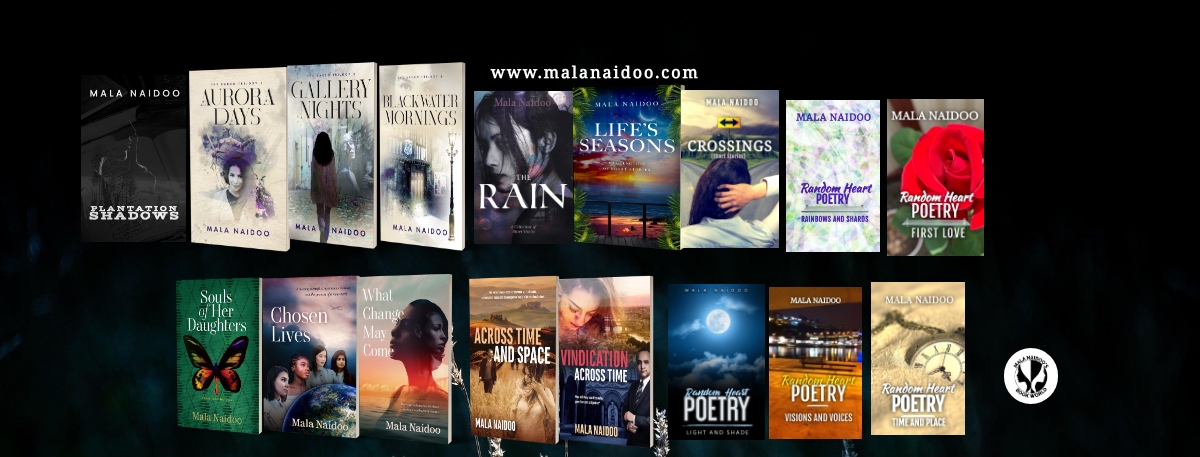
Apartheid to Post-Apartheid Narratives

What it means to write in the long shadow of a system that ended, but never fully left.

I grew up in a world where identity was assigned before it was understood.

Apartheid taught us, from childhood, that a person could be categorised, separated and judged according to the colour of their skin. It entered the ordinary rhythms of life, in where one could live, where one could go, which schools one could attend, whom one could know, and which futures seemed possible. Yet for a child, political systems are not initially understood as political systems. They are experienced as the boundaries of everyday life.


Behind every imposed identity there is an individual life teeming with hopes, contradictions, vulnerabilities, humour and dreams.


Looking back, I realise that those formative years taught me that history is not something that exists only in textbooks. History lives inside people. It enters families through stories, silences and memories. It shapes the way parents protect their children, the way grandparents remember another time, and the way a child learns to read what is said, and what is deliberately left unsaid.


South Africa’s transition in 1994 gave writers a new country to describe, but not a blank page. Apartheid had shaped language, land, family, and memory so thoroughly that no post-apartheid author could simply start fresh. Writing after apartheid has meant writing through it; inheriting its unfinished business even while trying to imagine something beyond it.


Much of the internationally known writing from the apartheid years followed a recognisable shape from oppression, resistance, and moral reckoning. Post-apartheid authors have had to decide whether to continue that tradition or break from it. Many chose to break from it, turning toward stories that apartheid-era literature had less room for, more particular to my fiction is where personal and family history fall both inside and outside the frame of political struggle.

To write as a post-apartheid author is to hold two things at once, freedom from a system that dictated so much of what could be said, and responsibility for describing what came after it honestly. The best of this writing doesn’t treat 1994 as an ending, but rather as the start of a much longer, more ambiguous story, one that is still being written.


My early years taught me to notice the spaces between people, the invisible boundaries, the things that remain unsaid, and the resilience beneath apparent ordinariness. The relationship between memory and identity remains complicated.

Most importantly, what remains is that stories matter because people matter.

Shed Light on Narrtives that Matter


Identity is layered. We inherit histories we did not choose, yet those histories become part of the way we see the world. We inherit languages, traditions, beliefs, family stories and memories of places. We also inherit the wounds and silences of previous generations. 


But inheritance does not have to mean repetition.


To tell a story is to say, I saw this. I remember this. This life mattered.

And perhaps that is what my formative years under apartheid ultimately taught me, not simply how to remember, but why remembering carries a responsibility.

The past cannot be changed. But the stories we choose to tell about it can determine how it is understood by those who come after us.

That is one of the reasons I write.


Is there a narrative that you should write?

← Back

Thank you for your response. ✨

Fiction and Fundamental Humanity

We live in an age awash with words yet starved of understanding. Never have stories travelled so swiftly, nor people felt so profoundly unseen. Algorithms know our preferences before we do; screens mediate our encounters; attention has become a commodity. Amid this noise, fiction has a singular calling, not only to entertain or persuade, but to return us to ourselves. Its deepest task is to speak to that enduring place where love and grief, fear and hope, memory and longing have always resided.

In an increasingly fast-paced world, content is consumed and forgotten. But literature asks us to linger. The novels that remain etched in memory, survive because they uncover truths that outlast the moment. They remind us that every generation inherits the same fragile heart.


…literature asks us to linger…


As language becomes infinitely reproducible, authentic writing becomes more precious. No machine can replicate the weight of a sentence earned through lived experience, quiet observation, and moral imagination. The true value of fiction lies not in its efficiency but in its humanity.

Stories become universal by embracing the particular where a small town, a rocking chair, a single remembered kitchen table conversation, carry the potential to reveal more about our shared condition than sweeping declarations about humanity. It is through the unmistakable lives of particular people that readers recognise themselves. The local is forever mapped, speaking beyond the walls of time, and the intimate becomes infinite.

Such fiction understands that goodness may coexist with failure, courage with fear, tenderness with regret. Human beings are rarely consistent, and fiction falters whenever it pretends otherwise.

To write in this way requires a discipline of attention that allows silence its own eloquence and grief its own rhythm. To attend deeply to another’s inner life is a spiritual and ethical act. It declares that every ordinary existence cradles a universe worthy of witness. In a world inclined to measure people by visibility, usefulness or influence, such attention becomes a quiet form of grace.


To attend deeply to another’s inner life is a spiritual, and ethical act…a quiet form of grace


Fiction enlarges us. Long before science explained empathy, novelists understood that to inhabit another consciousness is to loosen the boundaries of our own. Every story invites us to become, however briefly, someone else; the child bewildered by loss, the ageing parent carrying invisible sorrow, the stranger whose choices we might once have condemned. Each imagined life broadens our capacity for compassion in the real one.

Our age, dominated by extraordinary technological change, cannot undo the essential human need in longing to belong, we continue to grieve those we love, we yearn to forgive and to be forgiven. Civilisations change; the human heart endures.

The finest stories remind us that while the world forever changes its language, the soul continues to speak through the timeless  diction of love, loss, hope, and wonder.


No machine can replicate the weight of a sentence earned through lived experience, quiet observation, and moral imagination


Create authentic stories, allow your unique voice to be heard across time.

Please share your thoughts.

← Back

Thank you for your response. ✨

Whose Voice is it?

Voice is the defining feature of any book we read. It is unique to the author and is often what draws readers to pick up a particular book, by a particular author.

Turning to influencers is a significant aspect of the writer’s professional development, but mimicking the voice of another, as in tone, values, the nuance of language, etc, minimises the authenticity and value that a unique voice offers. Just as our personalities differ, so too does voice –  it has character, personality, and it becomes the signature of the writer/speaker/narrator.

Readers find comfort, delight, and excitement in the voice they read, in being entertained or informed, or perhaps both. The rush to ‘be like others,’ comes with the risk of losing purpose or creating a voice that is inconsistent with the message. Voice is a significant part of connecting with readers. It communicates values and visions drawn from life experience, culture, lifestyle, education, angst, joy, and more, as part of early, and ongoing socialisation. We are after all, beautifully unique.

The writer’s voice is delivered through narration, characterisation, description etc. In characterisation, the writer’s voice is distinct, based either on personal experience, research conducted, and observations of human patterns of behaviour and communicating. Tension or suspense through voice is also drawn from the writer’s observed, or experienced fears, to capture the moment with accuracy and evocative creative design. This should move the excitement/thrill to the next level, for the reader. Emotional aspects of a novel are effective in holding the reader’s attention when it comes through from an authentic/believable/unadorned voice.

We often say, ‘seeing’ is believing, but, ‘feeling’ is living the moment in a book – it might well be remembered long after the book has been put down. Now, Shakespeare’s Othello craved, ‘ocular’ proof, of his wife’s alleged infidelity, yet if he cautioned his doubting mind by embracing his deep love for her, he might have lived his happily ever after. Well, one can surmise and hope, it’s to the writer’s credit when readers are overjoyed or disappointed when the character/s either meet up to or deviate from their expectations.


The accolade is huge when readers say, I could hear your voice while reading.


 One Voice, Many Voices 


Voice in graceful narration is as important as the ‘voices’ that diverse characters are given in stories. Narration, description, and dialogue are the pillars of a novel with plot guiding the platform through the author’s voice as the vehicle that intersects with the reader’s experience.

Listen to an excerpt from  Morgan Freeman’s narration in The Shawshank Redemption, based on the novella written by Stephen King- reading a story, or excerpt out aloud after it has been written or during the process of writing is of tremendous value to shift and polish how meaning is created through voice. The flow, tone, and authenticity of voice become transparent when reading aloud. Record an excerpt and play it back to catch if ‘voice’ is represented as imagined during the writing phase.

Honesty or truth should ring through the writer’s voice to establish a valued connection to the reader, creating an expectation that makes the reader continue to turn the page. Voice can be frivolous, serious, angry, calm etc. depending on the type of tale being told. Hence consistency of voice, dependent on the genre/scene/story etc. is imperative to hold the reader’s attention. It makes the reader return for more. A relationship is formed between the reader and ‘voice’ for a fulfilling engagement with the book.


Whose voice is it anyway?


The writer’s unique voice does not have to be written in Jane Austen’s, Charles Dickens,’  or any favourite writer’s style, it is about reaching readers with an authentic voice regardless of the niche appeal the story might have. A writer’s voice is the ‘heard’ presence of the writer. 

Listen here to Pat Schneider, author, on how nuances of voice emerge.


More food for thought:

“For last year’s words belong to last year’s language
And next year’s words await another voice.”
~ T.S. Eliot

“Your writing voice is the deepest possible reflection of who you are. The job of your voice is not to seduce or flatter or make well-shaped sentences. In your voice, your readers should be able to hear the contents of your mind, your heart, your soul.” ~ Meg Rosoff

“My aim is to put down on paper what I see and what I feel in the best and simplest way.” ~ Ernest Hemingway


Happy reading and writing in your unique voice!


Please  share your ideas on the significance of ‘voice’ in stories in the comment box below.

← Back

Thank you for your response. ✨

error: Content is protected !!