7 Practical Suggestions on Creating a Compelling Sense of Place – Part 3

Writing a compelling sense of place means making the setting feel alive—not just where the story happens, but how it feels to be there in the moment during a significant event or situation, and why it matters. Here are some practical suggestions on ways to do it

  1. Engage more than sight

Strong settings use multiple senses.

  • Sound:distant traffic, buzzing insects, echoing halls
  • Smell:rain on a grassy patch after a hot day, old books, salt in the air
  • Touch:gritty sand, humid air sticking to skin, cold metal
  • Taste  (limit use) :dust in the mouth, bitterness of smoke

Example:

The fan creaked and groaned as if knowing it faced a losing battle against the summer heat.

  1. Filter the place through the character

The setting should reflect who is experiencing it. Two characters in the same place will notice different things.

Consider:

  • What would thischaracter care about here?
  • What makes them edgy, angry, or nostalgic?

Example:

The summer heat made Moira faint, the infernal sun created a cremation site in their backyard. Her cousin, energetic and unaware of the rivers of sweat dripping off him, kicked the ball around the yard multiple times.


  1. Choose specific, concrete details

Make a place believable. Avoid generic words like nicebusy, or beautiful.

Food carts hissed with steam while cyclists threaded through stalled taxis, bells ringing in sharp bursts.

Rather than, ‘it was a busy street.’

  1. Let setting interact with action

Weave the story into what’s happening.

Example:

He shoved the door open, and warm bar air spilled onto the cold sidewalk, carrying laughter and the smell of fried onions.

  1. Use setting to support mood and theme

The place should reinforce the emotional tone of the scene.

  • Tension → narrow spaces, harsh light, noise
  • Calm → open spaces, steady rhythms, soft textures, natural romantic landscapes
  • Isolation → emptiness, distance, silence, derelict buildings

Example:

The field stretched empty in every direction, the sky so wide it made her feel smaller with every step.

  1. Don’t over describe

A few strong details are more powerful than a full inventory.

Rule of thumb:

  • 1–3 vivid details per paragraph is usually enough
  • Let the reader’s imagination do the rest
  1. Make place matter to the story

Ask yourself:

  • Would this scene work just as well somewhere else?
    If yes, the setting might not be pulling its weight.

Ways to make it matter:

  • The place creates obstacles
  • The place holds history or memories
  • The place mirrors change in the character


Subscribe, share and add ideas to help aspiring writers.

← Back

Thank you for your response. ✨

Create Complex Characters as People Who Feel Real – Part 2

Readers don’t fall in love with plots—they fall in love with people. That’s why complex characters are the lifeblood of compelling fiction. They’re the ones who linger in our minds, the ones we cheer for, cry over, or angrily debate with friends.

But what makes a character complex? And how do we write someone who feels less like a cardboard cutout and more like a fully formed human being?


 Give Characters True to Life Contradictions

Humans are walking contradictions. We want love but push people away. We crave success but sabotage ourselves. We believe in honesty but harbour secrets  (Plantation Shadowswhat is Milly’s secret?). These contradictions make characters interesting in their imperfections. Characters must grow from hardship, struggles, loss, etc to become the best versions of themselves. Readers need to identify with real life situations to connect with characters who echo aspects of their own lives.

Consider the following when crafting a complex characer

  • What do they think they want vs. what do they need?
  • What are their competing internal desires?
  • Where does their behaviour conflict with their beliefs, morals, or values?


Create a Backstory on Key Points that Advance the Character’s complexity

Build their history for yourself so you understand:

  • What shaped their worldview
  • Why they react emotionally the way they do
  • What they fear, avoid, or chase

Be selective about what is revealed in the backstory, offer teasers to your reader instead of telling it all. (Plantation Shadows)


Give The Complex Character Agency-Don’t Describe their Personality

Actions speak louder than a long list of adjectives.

Show the reader the inner persona through:

  • Their choices
  • The risks they take
  • What they refuse to do—even when pressured

The character does not have to be aggressive, A passive character can be intriguing if their passivity is a choice, not a default.

Flaws can Hurt the Complex Character and Others

Give characters real, consequential flaws. Flaws are the engine of character-driven storytelling.

Ask:

  • What is their most harmful belief about themselves or the world?
  • How does this flaw sabotage their goals?
  • How does it hurt the people around them?

Flaws that create conflict are flaws that matter— they are signposts to something deeper/larger.


Let The Complex Character Grow, Regress, or Transform

Complex characters are restless. They might outwardly hide their intentions. Slow feed how  they react to events, change their perspectives, and sometimes take a back step before a point of growth.

Explore:

  • Positive arcs(cynical → hopeful)
  • Negative arcs(idealistic → corrupted)
  • Flat arcs(unchanged internally but influential to others)

The character’s internal evolution when shaped by their experiences makes them believable and endearing because the reader has been drawn into their inner world.


Make Relationships Challenge The Character

A character’s interactions with others reveals more about them than any internal monologue.

Mull over:

  • Who pushes their buttons?
  • Who brings out the softness they try to hide?
  • Who forces them to confront truths they’d avoid alone?

Dynamic relationships create dynamic characters.


Mystery, Ambiguity, and Private Thoughts

You don’t have to reveal everything about a character immediately. People hold secrets—from others and from themselves. Let readers uncover the layers gradually. (Plantation Shadows – who holds a generational secret?)

A character is compelling when some of the interpretation is left to the reader.


Empathy

Complex characters when discovered, come alive through empathy. When a character is crafted as a person with their own desires, wounds, contradictions, and agency, the story deepens naturally. Allow them to surprise you, frustrate you, and challenge your drafting of their lives.

Look at the world around you, it abounds in complexities, and contradictions that carry the potential for growth, transformation, or regression—that makes characters human.

Make your complex character, live.

 Share ideas to grow  aspiring writers’ skills.

← Back

Thank you for your response. ✨

Make the First Page Your Drawcard – Part 1

Novel or short-story, poetry or playscript— they begin with a blank page and courage to believe that you have something worthy to share.

The burning question on a first attempt at writing a story is—how do you begin?

The opening of your novel is your invitation to the reader. It holds a promise of what’s to come. When given deep thought, and crafted well, it can capture attention, set tone, and ignite curiosity before the reader even turns the page.

What are the ways to start your novel with confidence and creativity?

Hold Your Reader’s Attention Immediately

The first paragraph is your moment to grab attention. Make the reader want to know more.

A strong opening line can create intrigue, emotion, or atmosphere in just a few words. Think of George Orwell’s Nineteen Eighty-Four:

It was a bright cold day in April, and the clocks were striking thirteen.

Curiosity is sparked by the suggestion of something impossible in the tone of abnormality in this world.

One of the ways to create an effective opening to a novel is to ask: What feeling do I want my reader to have within the first few sentences? Then work with whatever ignites your imagination, craft an image,  immerse yourself in the opening lines and write whatever comes to mind. Remember, it all begins with one word after another after another as all great novels begin.

Conflict or Curiosity

Curiosity is peaked when the reader wants the answer to a question. Inner conflict can be emotional, moral, or even unspoken, or external — it does not have to be a shoot-out on an urban street, it could be an observation of a situation, or an overheard conversation.

Draw the reader in on what’s at stake—invest in the readers emotions, make them care. Ask yourself/your muse, what does your protagonist want? What threatens that desire? A small hint of tension can pull readers in.


Who’s telling the Story? Make Your Character’s Voice Shine

The best openings don’t just show what’s happening — they reveal who’s telling the story.

A distinctive voice can turn an ordinary moment into something unforgettable. Consider Holden Caulfield’s sardonic tone in The Catcher in the Rye, or Elizabeth Bennet’s sharp wit in Pride and Prejudice. Their personalities come alive instantly.

If your reader connects with your character’s voice, they will be hooked even though nothing much has happened yet.

Ground the Reader in Setting and Mood

Make your reader feel where they are. Invite readers into your world with just enough description to draw them into the landscape you create.

A few vivid, specific details can convey an effective atmosphere. In To Kill a Mockingbird, Harper Lee uses the sleepy, sun-soaked town of Maycomb to foreshadow the slow, simmering tension of her story.

Ponder on: What your setting says about the mood or theme of your novel?

Start Where the Story Truly Begins

Begin the story at the moment of change in your character’s life— when something new, strange, or difficult begins. Hold back on a lot of background before the plot really begins.

Make a Promise to Your Reader

Your reader should have a clear sense of what kind of story they’re reading. Genre matters: Is it a love story? A thriller? A literary exploration of identity?

Sustain tone, pace, and style as they send signals about what to expect. If your opening is dark and brooding, readers won’t expect a lighthearted comedy — and vice versa.

Your first pages are a sort of contract with your reader, promising a certain kind of experience.

Note: The First Draft’s Beginning Isn’t Final

The opening lines in your first draft probably won’t be the one your readers see, or you might just strike that brilliant note in your first attempt.

Sometimes the perfect opening scene is hiding somewhere in the second or third chapters.

Get words down. You can refine later as writers do, as you must do — perfection begins with imperfection—it gets better as you walk the way, one step at a time.

Pitfalls You Might Want to Avoid

  • Starting with the weather (unless it directly ties to character /motif/theme in your story)
  • Dream sequences that confuse more than they intrigue.
  • Info-dumps — long paragraphs of backstory before the readers are vested in the characters.
  • Too many names at once, which can overwhelm your reader.

Use the KIS method (Keep it Simple) by aiming for clarity, connection, and curiosity.

Here are a Few Prompts to Jump-Start Your Opening

  • Start in the middle of an argument.
  • Open with something ordinary described as if it’s terrifying.
  • Begin at the exact moment your protagonist makes a life-changing decision
  • Begin with a lie your main character tells.

An idea triggered from one of the above prompts could grow into your perfect first scene.


 The Only Wrong Way Is Never Starting

Every writer faces the same fear at the beginning—that imposter syndrome feeling that what they write won’t be good enough. Remember: you can’t improve a blank page.

Start somewhere. Trust that your story will reveal its best beginning once you’ve written your way into it.

Now, take a deep breath, open your journal or laptop and begin your novel.

 Your story deserves to be told — and only you can tell it with authenticity.


← Back

Thank you for your response. ✨


The Inner Child – The Artist

Have you ever wondered why some of your most brilliant ideas come not when you’re trying hard, but when you’re simply daydreaming, or letting your mind wander? That spark—that unfiltered, unashamed burst of originality—comes from a source we often forget: the inner child.

In a world that prizes productivity and perfection, the inner child can seem frivolous or even inconvenient. But for the artist—for anyone who seeks to create—this part of us holds the key to boundless imagination, raw emotion, and fearless experimentation.

The Fearless Inner Child

The inner child is the part of our psyche that retains the wonder, vulnerability, joy, and spontaneity of childhood. It’s not just nostalgia or memory; it’s an active presence within us that remembers how it felt to draw without worrying whether it was “good,” to sing loudly without caring who was listening, or to invent imaginary worlds without limits.

When we reconnect with our inner child, we tap into a part of ourselves that’s naturally curious, intuitive, and brave. This is the energy art demands.


The Creative Inner Child

  • Does not fear failure
    The inner child isn’t worried about reviews, likes, book launches, or gallery shows. It, sings out of tune, draws stick figures, and writes stories with angels and dragons harmoniously coexisting. The creative inner child creates to see what happens, to imagine a world into existence, on a page, canvas, as a musical score or song.
  • Lives in the now
    True creativity flows from being present, playing in the now, experimenting without expectation.
  • Sees magic everywhere
    A puddle becomes a sea. A walk to the park is an adventure. Reframing the ordinary into the extraordinary is at the heart of artistic vision.
  • Feels deeply
    Emotions are unshackled. The inner child loves fiercely cries loudly, laughs uncontrollably. The inner child basks in the light and colours of life’s prism to create art that resonates.


Ways to Reconnect with Your Inner Artist-Child

  • Play

Do something creative just for the fun of it. Paint with your non-dominant hand. Dance like a maniac. Make up nonsense poems. The goal is not quality—it’s freedom.

  • Journal Wonder

Every day, write down three things that amazed or delighted you. An ancestral face in a cloud, a child’s or elder’s honest or wise question. Work on seeing the world with fresh eyes.

  • Revisit Childhood Joys

Think back to what you loved as a five or ten year old.  Was it playing hide-and-seek? Was it peeling an orange while sitting in the sun in your backyard? Recalling childhood activities carries the magic to rekindle your most authentic creative energy.

  • ‘Perfection in Imperfection’

Perfectionism silences the inner child. Shut out criticism and grow curiosity. Bury the inner critic that whispers, ‘I could have done this better,’ by focusing on, ‘Let me celebrate the multiple possibilities this holds.’


The Artist is a Forever Child

Great art doesn’t come from the intellect alone. It comes from the melding of experience and innocence, discipline and play. As Picasso once said, “Every child is an artist. The problem is how to remain an artist once we grow up.”

Invite your inner child to the table and observe how the magic unfolds.


← Back

Thank you for your response. ✨

Research and Fiction

Historical fiction either reveres, subverts, or shames the past through citing actual places, creating imagined characters and perhaps recreating a historical figure.


Historical fiction is the unequal blending of the real and the imaginary


Time is fluid in historical fiction, moving between the past and present depending on how the plot unfolds. Is it a character in the present time speaking, recalling a time past, or is the character narrating an experience having lived in a past era?


The cautionary reminder is in ensuring the imaginative aspect of the story is respectful of the truths of the time, while preserving the overarching fictional plot/characterisation and quality of the writing. Culture, values, and social issues researched lend an authentic historical flavour to the fiction crafted. Transporting the reader to a time past enhances the storytelling without rewriting a history textbook.


Find that sweet spot between what is fact and fiction to elevate the fiction on culture, values, and social mores.


Including actual historical figures is the writer’s choice in relation to whether they will be a speaking character in the fictional tale, or a few cursory references would suffice.

Research should not overpower fiction. History has been written and read many times over—add the imagined juice for an entertaining read that prompts speculation on whether the fictional aspects could have possibly occurred.

Memorable characters, a believable setting, an intriguing plot, and a dash of history is a good measure for a satisfying read.

Ultimately, knowing who the intended audience is for a particular work of fiction is just as important as the message it creates.

Honour the history researched to enhance the setting and add lustre to the fictional plot without repeating what has already been documented. Recreate rather than rewrite. The risk of overly recounting a history is losing the fiction to non-fiction. The decision ultimately rests with the author. Readers of fiction will be the primary audience.

In honouring the history, notions of sensitivity to time, place, and people should be observed. However, shaming a dark history is the fictional storyteller’s prerogative.

There are no clearly defined genre parameters when the power of the story is honoured in its ability to move and entertain which is paramount in fiction.


The truth that all historical writing, even the most honest, is unconsciously subjective, since every age is bound, despite itself, to make the dead perform whatever tricks it finds necessary for its own peace of mind. Carl Becker, American historian (1873-1945)


If you are neutral in situations of injustice, you have chosen the side of the oppressor. If an elephant has its foot on the tail of a mouse and you say that you are neutral, the mouse will not appreciate your neutrality. Bishop Desmond Tutu.


History is the study of all the world’s crime. Voltaire, French writer, and philosopher (1694-1778)


Fiction is the truth inside the lie. Stephen King


Truth is stranger than fiction, but it is because Fiction is obliged to stick to possibilities: Truth isn’t. Mark Twain.


Please share your thoughts in the comment box below.

← Back

Thank you for your response. ✨


Trust the Process

When you begin writing a story that has whispered for a period, and then hauls you in—you have no idea how far you will go, or how many stories you will create in your lifetime. The process must be trusted and aided by dedicating time and space to allow the story to emerge. 

Anything and everything is possible when you trust the calling first, then the process.


You may begin with a plan, an outline, and flesh out characters, but soon the story magically grows with you the writer, as the vessel, guided by a force you cannot quite describe. Some call it a ‘voice’ others call it a compulsion, or their divine muse that lays out the game plan drawn from the seed of imagination. The writer as a scribe leaves each writing session either exhilarated or surprised that a character has chosen to embolden their voice. 

Once this arises, all thinking dwells on the place and society you are creating. The heart’s longing cannot be denied. The brain might test resilience, and negative emotions might slip in, depending on who is invited into your inner circle. Those external voices of doom and gloom, which might be your own if you allow it, kill inspiration. Shut them all out—regardless of who they are or what they have to say. It is YOUR story. Own it. Let the editors and ARC readers speak later in the publication process. Writing your raw story is your lone venture.


The heart’s longing cannot be denied.


You are never truly alone. Your main character will step up to lead you by the hand, and your secondary characters will vie for your attention, urging you to consider their point of view. 

When many voices clamber for recognition, step back and surrender to a higher consciousness. Meditate for guidance on the next step. Clarity allows the selection of a voice that will be meaningful for readers now and years down the track. 
Once the writer’s imagination and emotions blend with skilful writing, a great story is born. 


The process is magical once you have plunged into the waters of creativity! 


As Ray Bradbury said in, Zen in the Art of Writing, ‘…but one thing always remains the same: the fever, the ardour, the delight. Because I wanted to, I did.’

Allow the process to unfold, and above all, trust it. One idea at a time, one story at a time builds your body of work. 

Happy writing, happy publishing, and happy reading.

Please share your thoughts in the comment box below to help a fellow aspiring writer.


← Back

Thank you for your response. ✨


Creative Equanimity


After a frenzied holiday season with the comings and goings and the excessiveness of all things gustatory, it takes a few days, or longer, if there’s a dalliance that thwarts getting back in flow. Restoring equanimity invites the sweet melody of the creative muse again. This requires diligent commitment.


Slow it down to get back behind the creative wheel


When one’s attention veers in directions that divert from the words on a page, it is easy to remain in that mode beyond the holidays. If one does not challenge or coerce oneself to empower a creative mood, there is the risk of it not returning.

Equanimity is the balance, the serenity of mind that ceases all noisy thinking to allow voices from unfinished stories or new stories seeking creative attention to emerge.


Moments of equanimity increase with practice


Morning flow practice, or at any time of the day, invites the creative zone. Added to flow practice is what Orna Ross, Irish poet, author, and founder of The Alliance of Independent Authors, coined as F.R.E. E (Fast, Raw, Exact, Easy) writing, and Julia Cameron, American teacher, author, artist, poet, playwright, novelist, filmmaker, best known for her book, The Artist’s Way, as Morning pages. This is the cathartic clearing of mind clutter by unleashing baggage that has infiltrated mind space.

Handwrite whatever arrives for the deliberate act of decluttering. This makes perfect sense when we toss noisy, disruptive thoughts to allow spaciousness for creative energy to flow. To restore equanimity, flow practice, and F.R.E. E writing, or Morning Pages are necessary to kick start the creative process.


Start slow, in bite-size time allocations, fifteen to thirty minutes at a time. Take a walk outdoors or play soothing music, sounds of nature, or cool jazz as I choose, to get back to the writing session as soon as possible.

Avoid reacting to situations that trigger negative emotions and let the self slide into a mode of quiet acceptance to heighten creative energy. Being still, open, and present in one’s immediate environment has the benefit of opening the door to creative space. Light a candle, or incense stick, open a door for a breeze to waft in and allow whatever comes to mind without resisting or judging its arrival.


Everything in life requires practice and commitment…


Find your daily routine. It is a ritual. It takes time and effort. Surround yourself with that which brings inner calm, including the people you invite into your space, and watch creative magic unfold.

May 2023 be the year in which the vastness of your creative potential arises and remains afloat.


Happy Reading, Happy Creating.


Please like, share and include your thoughts


← Back

Thank you for your response. ✨

Romance Across Genres

The days of writing rigidly to a particular genre, crime fiction, detective fiction, sci-fi, horror, historical fiction, thriller fiction, and romance have slipped, crept, and rolled across the genre borders.


Romance has the potential to capture the coldest of hearts.


The basic elements of the genre remain. Mystery and suspense with a soft touch of romance add to the allure of the tale. Romance as a genre in its pure form has limitless power to create relationships that stretch and bend the imagination as far as it will go.


While romance engages the emotional side of the reader, it does not overwhelm the crime/detective/historical/sci-fi, which occupies the greater space of the genre.


The love story element in any story adds the desirous human connection.


Age is no deterrent to romance. It’s not restricted to young love such as that of Romeo and Juliet. Including older characters in the angst and joy of their romantic interludes creates an inclusive perception of love. It increases the appeal of the overarching genre at work.


The happily ever after isn’t always true. Fiction is a mirror of life. Testing the strength or commitment of a relationship between crime/detective fiction heightens its entertainment value. Romance, while not central to the story outside the romance genre, might add a satisfying element against the crime/detective fiction at work.


Love is just a word until someone comes along and gives it meaning   ~Paulo Coelho

Wonderfully true — it is indeed our charismatic or struggling fictional characters who love, or are in love, that linger to remind us why love given and received should never be extracted from the soul.


There is no charm equal to tenderness of heart ~Jane Austen.

Magical! The reader is drawn to the story regardless of the genre.


I would like to be the air that inhabits you for a moment only. I would like to be that unnoticed and that necessary ~ Margaret Atwood.

Brilliant! This stirs ideas on how this would unfold in a crime fiction tale!

The gist of these well-known lines deepens the human connection in any genre.


Happy Reading. Happy Writing.


Please like, share, comment and hold on to a tender heart. We need it in both fiction and life.

← Back

Thank you for your response. ✨

Paving the Crime Fiction Way

Why does crime fascinate the reader or the viewer? From a gripping novel to a suspenseful film, both mediums are loaded with intrigue, blood, gore, missing persons, and dead bodies, and they certainly hold our attention for more. 

Pushing boundaries is the adventurous inclination invited by human fascination, as is vying for the person we want to set free from crime. 

Crime writing, like reading crime novels and viewing crime films, is an emotional investment for the adrenaline rush we crave. Words on a page must do the creative hard work that diegetic or non-diegetic music elicits to keep us on edge, before, during and after the crime has been committed. 

Descriptive language, sharp, short sentences, sensory imagery and specific punctuation, create and elevate the mood that befits a crucial scene in a novel. The intrigue must be deep enough for the reader to push on, chapter after chapter, well into the night, or wee hours. 

Crime fiction often draws inspiration from actual crime, which allows for greater reader appeal. Research is vital to achieving a realistic, entertaining selling point. 

Attending a criminal court hearing is a valuable catalyst for storylines to kick off. Make a friend in your local police station and shadow the police person to walk in their shoes for a few days. What better way to get inside the aftermath of the crime? 

Visit a prison, and if allowed, ask to interview a prisoner. Getting inside the minds of criminals fuels the creative urge for the realistic crafting of your MC. 

Research profiles of victims of crime and seek a psychologist or psychiatrist to gain a greater depth of understanding of why the victim might have been targeted. 

Visiting crime sites long after the investigation and conviction enrich the landscapes in a crime fiction story. 

Live research is valuable for the unique imaginative triggers they invite. Equally, reading crime novels of note is vital to the crime writer. 

Crime documentaries are accessible anytime if physically going to a prison or crime site is not an option.  

Don’t go too far. Grab the daily newspaper, and a new crime of the day or week holds our attention as we seek more on the investigation. 

Unending thirst for crime novels and films continues to expand, weaving through different genres and is an inroad to writing for aspiring creatives.  

Writing the right crime pays. 

What are your favourite crime novels and films? 

Please like, share, and comment in the box below. 

← Back

Thank you for your response. ✨

Creative Life : Discerning Choices


Is there ever too much in a writing life?

A full-time writer lives and breathes, creating fresh stories, poetry, and essays. Nothing is ever too much for the creative.

When starting out as a writer, passion draws one to all things writing, from social media, literary associations, events both live and online and a plethora of books on how to write and publish. FOMO consumes the early years, but on the flip side, it can erode creative time.


Over time, whittle down to those activities that create the time and space for the creative process together with growing an author brand and business. There is much to gain from trying different groups and associations to test what fits your values and the type of writer you hope to be.


Be unique, select memberships wisely


Don’t strive to be someone else. Readers appreciate authenticity.

While exploring the creative cyber space, books, groups, and associations, you realise, over time, what adds value to your work.

It is vital to look for integrity when seeking to find where you belong as an artist in what can be an overwhelming space if trying to fit in with more than you can humanly manage.


Passion and FOMO drive the need to be a part of all and more


Give priority to the innate reason for choosing a creative life. This will guide your understanding of where to invest your time and growth. Running your own creative business is a mammoth task before investment in virtual assistants.

In the initial stages of a creative life, creatives might manage a day job and fit in a creative life after hours, besides managing rest and domesticity.

To ensure you give adequate creative time to your work, divvy up time to at least two associations that echo your values. An authentic organisation such as ALLi guarantees professional development, keeps you informed of current writing and publishing trends. Podcasts and FB live monthly advice sharing, and a Self-PubCon offer advice not to be missed. A directory of vetted services available to ALLi members is where you will find cover designers, editors, and many other services you require as a creative in publishing.

Depending on where you live in the world, you might hook up with a local association and join a Facebook Group or two for the quality of the experience. It is easy to slip down the rabbit-hole chasing after what appears bigger and better. Over time, this will steal valuable time from your ultimate purpose: to write and write more.

Sharing across author platforms is a great way to promote your work to different readers while helping promote the work of writers you enjoy and admire to your supporters. This garners support from grateful creatives who return the respect by promoting your work.

The creative space is generous and supportive. Find your authentic niche and belong to grow your creative works.

Please share the platforms you enjoy in the comment box below to help fellow aspiring writers make discerning creative choices.


Happy Writing, Happy Learning!


← Back

Thank you for your response. ✨

Fiction and Reality

Pen, a fictional story and aspects of the scribe’s life, spills onto the page between fiction and reality. Angst and joy collide in the unfurling of the emotive content of the story. The emotional hooks in a story invite readers to open their own wounds and happiness for a well-penned story.


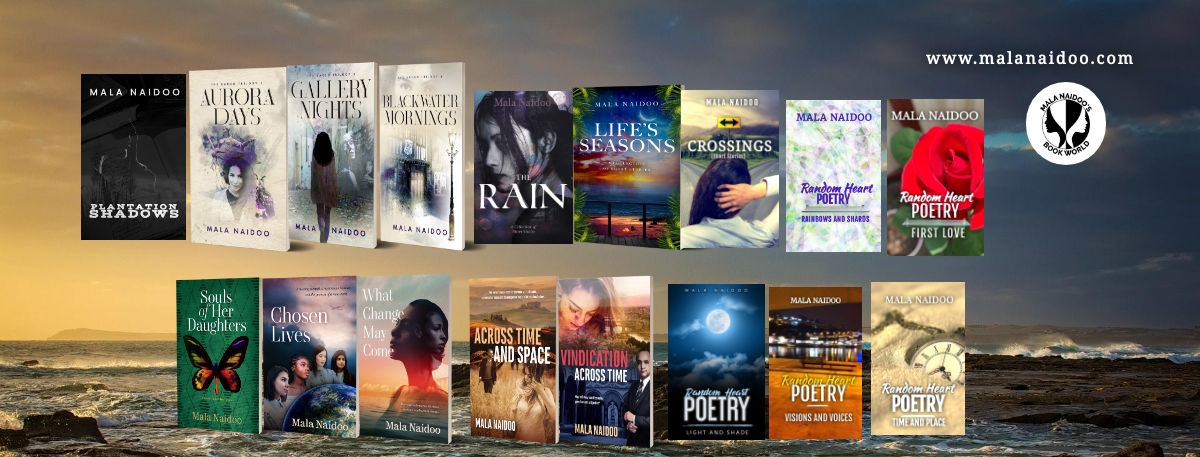
In my novels and short story collections, dogs feature as necessary in human lives. A lifelong love of dogs finds their way into the lives of significant characters I create.

In the Sequel set Across Time and Space, and Vindication Across Time the wonderful Ted is the adored pet of human rights lawyer, Michael Morissey, and aspiring writer Meryl Moorecroft. Michael advises and befriends schoolteacher Marcia Ntuli, caught in workplace professional racism. Ted is the first to understand the growing romantic involvement between Michael and Marcia. His sensitivity to Marcia makes him even more adorable.


Fiction is the lie through which we tell the truth. ~Albert Camus


Read Now


Two hours later they emerged from Michael’s bedroom, laughing at Ted’s quizzical peaked ears and worried frown.


In Souls of Her Daughters, Patience, a social worker has two dogs, Ajax, and Sprite. She adopted them while her sister Grace was overseas at a medical conference. Patience witnesses her sister’s battle with her past demons and hoped Ajax and Sprite might offer her healing and joy. We may read this novel as a stand-alone novel or as a trilogy.


Read Now


They were abandoned in an old building on the south side of town. I could not take one and leave the other. They are high maintenance in the love department but adorable to come home to.


Life’s Seasons, a short-story collection, includes a valiant dog as title story – Toby. This story was first published in the short-story collection, The Rain, where Toby, a brave dog, living on his owner’s family farm is confronted by a treacherous storm. Instinct guides Toby when the safety of his beloved human family is threatened. Toby’s heroic, selfless act unwinds minute-by-minute to melt hearts.


Read Now

He gripped the harness between his teeth, prostrating to give the children a lift, to allow them to be pulled up with ease.


The Bardo Trilogy has Woza and Khaya, the loyal companions to the mysterious doyenne Tempest, on her mission to offer safety to women and children who are victims of crime.


Fiction reveals truth that reality obscures ~ Ralph Waldo Emerson


Read Now

Living in isolation was difficult, but her parrot, Caramba, a keen white watcher of the skies and her two Rottweilers, Khaya and Woza, filled her lonely hours.

The act of including dogs in each of these novels and short stories is a subconscious inclusion drawn from experience.

Pets are companions who combat loneliness, fulfil a caring need, aid healing from grief and bring joy during life’s challenging times. Both fiction and reality meld to create balance to live in unison with the universe.

Now there’s nothing like one’s writing companion puppy snuggled at one’s feet as words and new worlds rise and fall on the page.


Happy Reading. Happy Writing.


Please share, like and comment below:


← Back

Thank you for your response. ✨


Experience and Writing

Does life experience matter for writing a book?

There are two answers to this question (In my book, anyway).

Experience matters in writing to represent an authentic voice, if the story/plot pertains to a particular generation/profession/life situation etc – authenticity will draw the reader into the story. A sense of place if core to the tale, and references a real place rather than a fictional setting, the experience of having visited a place, such as a town, beach, farm, a particular building etc, will add lustre to the place described. This makes the reader feel they inhabit the  fictional setting.

If life experience, in the numerical sense, is absent, the young aspiring writer will achieve as much as his or her experienced counterparts if the novice writer reads widely and writes extensively. It is universally understood that to write well, one must read widely and often. What one reads is important to add believability to a time, place, or character beyond the true-life experience of the young writer.

Both actual life experience and vicarious life experience hold value in the depth and authenticity in the stories writers create. The experience gained during and through the composing process enhances light, shade, depth, and adds colour to the prose.


Writing is not life, but I think that sometimes it can be a way back to life. ~ Stephen King, On Writing: A Memoir of the Craft.


Seasoned and aspiring generations of writers have much to gain from each other. Writing groups offer a wealth of opportunity to sharpen the ability to write through the voice of any age or place, or past life experience. Wisdom is not age/number bound, neither is the capacity to learn a new way to meet the market of readers ready to devour new releases that offer meaningful connections.


The value of experience is not in seeing much, but in seeing wisely. William Osler.


Research, like reading, broadens the ‘life experience’ of a writer. Interviewing people who are of the generation, time, and place before that of the writer is valuable for crafting a character, place and society that is alive on the page.

Mind, manners, and morals of a time before one’s own is accessible, not only via digital means, although the digital connection helps the researching writer find a genuine contact who might willingly be interviewed. To honour the sharing of memories of a time past is often rewarded by a mention in the author’s acknowledgement of sources consulted. Writers take great delight in doing this.

Similarly, when writing crime or detective fiction, visiting police stations, attending court cases, interviewing police officers, or shadowing an officer/detective on the beat is a hands-on way to gaining their work life experience.


The writer’s map has many points of entry… it comes down to individual choice ~Mala Naidoo


On another note, the broader necessary experience as a writer, the how, why, and the business of being a writer are accessible through Facebook groups, writing organisations, attending webinars, and signing up for a masterclass, as is reading a recommended book on how to write and manage a writing business. From a range of noteworthy groups, books, or organisations, the aspiring/new writer embraces and shapes what is needed to craft a unique voice/work of art.


Experience can’t be taught. Anonymous.


Please like,  share and comment to help a fellow creative.


← Back

Thank you for your response. ✨

Creative Time and Space

You work full time but have a raging desire to write that book buried deep inside you.


If there’s a book that you want to read, but it hasn’t been written yet, then you must write it.’ ~ Toni Morrison


How can I make it happen?

Time and space are necessary, negotiation with your after work, home tribe is mandatory — your loved ones under the same roof need to know the rules of the ring-fence around your creative time. Tell them, the adults and children alike, that this is your scared time after dinner, and family time. It will be a stretch on your energy levels, it will erode your sleep time… but if you seriously want to, not hope to achieve your hidden dream, then lost sleep is a small sacrifice.

The space is as sacred as the time and needs a physical barrier around it to avoid little ones from tottering in to play.


Say you choose nine-thirty to eleven thirty each night, stick to it unless there is something serious that requires your attention. A no-phones-space or noise cancelling headset is all the additional equipment you need to lock in the time and space for your burst of creativity each day.


Let me live, love, and say it well in good sentences ~ Sylvia Plath


Quality, rather than quantity, counts during this spiritual time to achieve what you have set out to do. Adherence to this time space includes weekends. Be prepared for a dent in your social life. Exceptions  are granted for extra special occasions—birthdays, wedding anniversaries, graduation night, etc. These are outside the prohibited norm, and you might have a special occasion not included here. Limit these to those dearest to you. Dwindling social circles are inevitable if your social tribe doesn’t appreciate what you’re doing.


That’s all it takes, but regularity, commitment and determination are the way forward to having your book in hand. And what an exhilarating moment that is!


A word after a word after a word is power ~ Margaret Atwood


As progress happens, negotiate a reduced day job working hours with your manager as you create more time and space for your creativity to flourish.

The writer also needs time and space to read, read, read, all the poetry, craft books, and novels one can fit into a busy day to enhance the craft of writing. Shorten an office lunch break, stroll outdoors and add to the daily scribblings.

And there’s connecting with creative peers for inspiration. It could be a master class or a writer’s association. This tribe is essential to avoid total isolation and to validate your passion.

Soon you will spend more time in your creative space and limited time on your day job.

Go tell that story you have harboured for so long. The world is waiting!


You never have to change anything you got up in the middle of the night to write! ~ Saul Bellow


Happy writing as you create the time and space for holy writing hours!

Please add your thoughts, and inspiration in the comment box below.

← Back

Thank you for your response. ✨

The Way We Were

The creative question asked is, where are we now? What have we done?

As we slow pedal to year-end, as opposed to manically motoring towards the shenanigans of the period, it’s time to reflect.

Lessons from lockdowns include pondering the way we were.


When freedom is aborted by the rapid onslaught of an unseen enemy, the subsequent mandated exodus from office spaces, a retreating from global, is a new way.

Home is the place to work, play, and rest. If graced with wide open spaces and human company, the retreat might be bearable.


The creative advantage is possible when the shutters are down, streets are emptied, and parks and beaches are deserted.


The creative muse tunes into stillness—if the eye and mind turn more deeply inward, away from the repetitive media message that induced fear and guilt every morning at 11.


When emotions are raw, thoughts tumble out in reaction to the siege on the way we were. Social interactions are prohibited and replaced by a hermit lifestyle, or heaven forbid, succumbing to the doom of extinction.


Global and national disasters, past and present—world wars, financial crises, bushfires, floods, earthquakes, tsunamis, hurricanes, and pandemics, shake up the world to stir the creative soul.

The documenting of histories during global upheavals through fiction and poetry, painting, or musical compositions captures the heartfelt angst of the moment. Creative works emerge from such a time to reverberate into the future. This has the potential to educate and strengthen the action of future generations.


We can never rewrite history’s truth.


Fiction and poetry fearlessly tell the naked truth. Stories created now, in any medium, hold the key to spreading awareness overtime on the traits, pitfalls, and reactions to disasters.


 truth and despair – the creative gateway


Capturing today through visual images is vital. A history through words, however, is the ageless wisdom of the soul of our current human condition—life as we feel it, and breathe it in the now.


As we roll up the year, not a long way off socially and politically to where we were back on day one of 2021, let us reflect.


Reflect on the stories we should tell of this time. A time when the world faced a common threat, an enemy that morphs and attacks just when we hope we might return to the way we were.


Time moves forward, and the past is only a backward, behind-the-shoulder lingering glance at how we were.


Change is grain for an undulating creative harvest…


The way to make sense of the world is to read a good book or write one on the story of the world as you live it. There will never be enough stories told of a torrid era.


As you shed the skin of 2021, brace yourself with hope.  Arm yourself with a good book, and share love, truth, and joy.


Go forth today in cheer, the world’s voices shake and threaten doom, but you, my friend, keep the spring in your step, the light in your heart and a smile upon your lips

  ~life~


Stay safe this season.


Please share, like and comment in the box below.

← Back

Thank you for your response. ✨


Creativity and Grief


Creativity feeds off emotions both positive and negative. Words give vent to the language of the heart.

Grief after the passing of a deeply loved one, sucks the wind from the sails of creativity, for a while… Fighting it is futile, emotions are in a tangle when death is unexpectedly sudden.

Fit one day, gone the next. The mind is thrown into chaos as exhaustion sets in, slowing down the clock to a sonorous ticking of every minute, every hour.


Be gentle with yourself when grief  blocks the creative edge.


Isolation and solitude are necessary to process the deeply felt loss. Within there is the need to comfort the nearest and dearest around one going through the same process.

But in those still, grieving, reflective moments, hours, days, and many weeks, creativity takes on a new face — creative expression on loss and grief. Picking up a pen and journal offers the promise of comfort when there is no inclination to turn on the laptop. Poetry emerges in the healing as words tumble out in emotional self-expression, mourning the deep-seated loss.


Words comfort and clear the brambles of the heart.


Seeking solace in meditation while grieving might, at times, seem impossible when the conscious mind buckles, contorts in pain. The way out is through writing, giving vent to grief and anger and all the unanswered whys


Memory beckons, draws one in to seek solace in understanding the heart’s tears.


Soon, day by day, time allows the soul to accept, to find a new way, to adapt, to be, by letting go of the familiar patterns of one’s life. As humans we are adaptable to change, if one allows the mind to remain healthy by turning to warm memories, and articulating emotions — pain eases, and limits sinking into the dark depths of despair.

Grief is the single most difficult challenge of life (as I see it) in coming to terms with the gentle, deep cadence of a voice one will never hear again, a face never seen again in the flesh – the Guiding Light of one’s angst no longer there to soothe troubles or share joy.


Time is a long-standing ally to a grieving soul.


Acceptance is not an easy path to tread when the void is palpable…huge… but healing will come with time as memories resurface in those moments when a birthday card or photograph falls out a book, or pops up on a phone or Facebook Memories to remind one of the love shared. Loss is never overcome, but heart-warming moments return when least expected in unexpected places, to catch a breath in quiet recall to ignite a smile.


Creativity hooks emotions — grief the impasse as the eye turns inward to gather new creative pace and space.


If you have lost a loved one, take heart, your muse never flees in the hours of need, but draws renewed vigour from your newest angel, ready to guide your creative light.


a month too soon

let him rise in peace

as he lived his life

sharing love and joy with those

who honoured his stature

a compassionate giving soul

taken gently in the early morn

rising swiftly into the arms of Divine Grace

(RIP Beloved Father of Mine)


I hope you find comfort and reassurance that grief borne needs time, so be gentle with your creative self by keeping the mind healthy to protect your heart for the wondrous, comforting glow of memory and renewed imagination…


Stay safe.


Please share, like and comment.

← Back

Thank you for your response. ✨

Story-Telling… greater the art of ending


Writing is fun, art, a visceral experience.


A story crafted from bone to flesh takes many months, or years of vested time where emotional attachment is difficult to relinquish.

There comes a time in every delightful story where the writer cedes the pen (for a while before the editing clean-up).


Knowing where to start is as important as knowing when to stop.


Writing sequels, trilogies and series is a long-term relationship between the writer and manuscript. Characters become real when they consume sleeping and waking thoughts. A character wanting a bigger space on the pages of a story holds the writer to ransom.

Endings must be free of padding or info-dumping that feed the writer’s attachment to the tale, people or place, serving no express purpose to the story. Readers will thank the writer for avoiding the stuffing.

The original plan for the story veers off when a character wanting to be acknowledged calls out the loudest. Such a character is allowed a voice that directs the action on a different path. This is a natural part of the process, but rogue characters must be reeled in and put under a microscope to assess their primary role—is the character essential to the plot, does the character add an exciting plot twist or are they unnecessary?   

A benevolent muse is the one to thank for all that arrive to prod the writer. If the voice/story/scene are ignored, they find a way into somebody else’s story. Lady Muse is a perpetual huntress.


Heed the call we must!


Writing is joyful, hard work. It takes committed diligence to keep going until the story is over. It will only ever be over when the writer is convinced it is time to stop. Soliciting advice from a trusted other, The Reader, is a good way to ensure that it is indeed the right point to type in ‘The End’.


Well-written stories will entertain audiences long after the writer’s time has passed.


When it feels right to end it — do it! If it is deemed not right later down the editing track — change it or add in a few subtle changes. To ignore that gnawing feeling that something is not right, but not worth the trouble to rectify it, is a mistake that comes back to haunt the writer.


Great is the art of beginning, but greater the art of ending  ~ Henry Wadsworth Longfellow, American poet, educator, linguist.


Structure in a story is important, but the creative does not adhere to structure alone at the sacrifice of something unique that has the potential to hold the reader’s attention.


Should the ending resolve all issues?

 Are all life’s issues resolved?


Fiction entertains but should mirror life to connect with readers on the universality of our fundamental humanity.


Walking in the shoes of the reader is a good way to access whether a story crafted over a length of time, the writer’s blood on the page, has value for the reader.


A story begins with action or change, and everything follows on from there, and it may end with change, the character’s growth or downfall, but ultimately it must guarantee reader satisfaction. If not, then a sequel or epilogue might do the trick, or leave it open to interpretation, but keep the element of surprise.


Tie up loose ends without deliberating over them


Would you write the ending first? This might be a sure-fire way to lead the scenes throughout the process of the first draft.


Please share the endings of some of your favourite books in the comment box below.


Happy Reading and Writing!


Stay Safe!

← Back

Thank you for your response. ✨


Patience and Perseverance


As creatives, we are flexible in what we do if we are steering the vessel.


A sense of place and time is important to the creative, but in the unpredictability of current times, adapting to everything that comes our way is daunting.

Patience is the ultimate virtue in a creative life. Nothing happens overnight, now more than ever, with all that blew in with 2020.


It is the slow burn that needs a tender mind, hand and heart


Amidst waiting for the right time, there is the desire for the energy of the muse to enlighten the artist on how much, when, and what will be written/created. This wait is underpinned by the bend and twist of the tide of change that tests adaptability.

Shifting an established creative routine generates a splurge of musings when the noise and demands of new daily expectations receive attention.

A daily meeting with oneself in morning reflections on what is and is not working facilitates the coming to terms with how to create a new routine.


Reflection is the art of patience that sharpens the creative pen.


The writing muse happily visits if the mind is willing.

Patience takes hard work; it sits on the back of perseverance — one without the other is a no go.

To cultivate the art of patience, look at reactions/behaviours to situations outside of creativity, learn from it and readjust the behaviour. While patience is a virtue, it is also a personal inner medic, keeping creative work in check by allowing the body and mind to process situations without elevating stress levels.

Finding what calms and settles the creative is the best way to grow in being patient rather than becoming a patient.

The writing world is competitive enough without adding layers of undue stress — the art of writing is profoundly therapeutic.

After writing a scene or chapter, the sense of exhilaration that follows such achievement is remarkable. Journal these moments to refresh a reflective morning that needs a reminder about why we do what we do.

To be a writer, requires barrel-loads of patience in how to nurture a story from seed to flower, chip back words and scenes, polish to refine the story and then publish.

Patience, perseverance, and adaptability are the keys to creating more stories and poems as is refining before a book/product hits retail shelves.

Step back, let time and place do the work, relax overthinking and communication to create valuable space to refine the manuscript. This aspect of the creative zone has the potential for success, abundant success if that is the desire.


Be gentle and patient with yourself, persevere with your creative goals and adapt to the ever-changing demands of a writing and publishing life.

Go well in all your endeavours.


Share, like and comment on what works for you as a creative sailing through the winds of change.


← Back

Thank you for your response. ✨

Creative Mindset: Flex and Extend


Routine is necessary to accomplish a finished product. The creative benefits from a routine that maximises goals and intentions.

Rote, however,  harms creative growth when curiosity is denied in favour of robotic daily ‘doing’ that limits the capacity and capabilities of the mind. Rote erodes enjoyment, takes the fun out of creativity if allowed to fester in mindlessness.


Once we relinquish the act of questioning, debating, and learning alternative ways, the creative quest goes down the rabbit-hole


Open to what others are doing successfully in their creative pursuits. Debate with the self, first, to test how to improve our creative patterns and when we observe or flex to alternative methods, before embracing them, then we are on the route to extending the creative mind.

What we read is as significant as what we write. As a fiction writer, it is essential for me to move beyond restricting myself to only reading fiction.

Get out of the box – mind the bog


It is imperative that we read judiciously selected, respected successful forerunners of the craft of fiction—past and present—for inspiration on the ways in which we can flex the mind. Engaging with the information gathered is the actual flexing—then question what does not sit well.  Argue why this is so, look for alternatives to the arguments that have surfaced. Never ignore your internal unrest without asking why and how. Why am I unsettled by this? How should I address why I feel this way? We learn to flex and extend our skills from observing first and then listening to what is around us. The inner well is deep, but testing the waters from the ocean of talent available deepens and brightens the path ahead.

The choice to extend ourselves is within our grasp to refresh or radicalise how we create. Flex to invite minor changes, analyse what is working for you, and incrementally extend to achieve more.

Like muscles that face a new physical challenge which is overcome by gradual flexing and extending, achieved through the art/act of trying—not rote, but being open to challenging the self, so too, the creative mind grows.


Photo Credit: My Life Through a Lens (Unsplash)


Creative and Critical

As creatives, we ought to be critical thinking beings—not cynical but critical. Herein is the source for debate to generate fresh waves of thinking and doing.

Watching a documentary, for example, on an unfamiliar topic that holds some interest is beneficial for starting the mindset extension with exposure to new knowledge. This opens inner and external debates that arise from the observation phase to grow the knowledge base and experience on the subject/topic. 

Extend listening skills to enhance creative growth without visual distractions by listening to podcasts that present new knowledge to stimulate thinking without the bias of the visual effect. The brain rain received generates novel ways of thinking or questioning how we can reinvent old patterns.


Never stop asking why, how or what can I gain from this?


As fiction writers, we should seek to understand the values that differ from our own to invite creative ideas to emerge from this openness to what lies outside of our inner workings.

I ground my novels in, in our angst and joy we are one under the sky of humanity.’ Inclusivity is my pre-wired emotional mindset because I have lived my formative years under South Africa’s apartheid regime’s divisive rule.


Suggested Reading

Try reading all or extracts from the following non-fiction books to open new vistas of understanding, or to deepen your understanding of human relations, justice, and politics, if this is of interest.

Essays – George Orwell

The Source of Self-Regard– Toni Morrison

The End of Imagination – Arundhati Roy

Caste – The lies that Divide Us – Isabel Wilkinson


Pick up, or do something different—something you have never read or done before and observe, reflect and note by writing what it stirs within. Get past the initial discomfort then decide if you want to extend what you do and how you do it.


When we flex the mind in a new direction, there’s discomfort at first, when extended, it fuels passion and ignites creativity


How do you flex and extend the mind in your creative pursuits?


Please like, share and comment.


← Back

Thank you for your response. ✨

Creative Mojo

Being a people-pleaser often impedes the writing deadline.
Some perceive writing as not a regular day, serious job, and expectations are that the writer is always available, because the writer is self-employed, locked in the head of imagination that does not,(by choice of some), demand a fixed workspace.


Write as a free-flowing creative. Be the  rigid business manager


If we do not rectify this thinking, impositions on the writer’s free time could seriously hinder writing progress to the point of murdering the writing mojo.


Know when to say No


The writing mojo is temperamental and disappears if there’s no plan, the time and process wind up bending to the noise and demands that soon override it.


Being flexible is paramount to the creative


If the writing mojo is showing signs of being at risk — set down a plan and stick to it as far as possible. Achieve at least 80% of your daily or weekly goals with consistency to make a writing life productive.


A writing life incorporates many facets and significant among them is audience/reader engagement. To flourish in this career, and a career it is, if given every opportunity of serious intention, then it becomes that sweet spot of primary income or multiple streams of writing income – a way of life.


Turn off the phone – block the internet


Creating blocks of time to have regular hours that are not sidelined by the daily demands of life happens if there is a set plan.

Here are a few pointers to keep the writing mojo  on an upswing.

• create a routine and stick to it as you would any day job
• set the clock – have several /number of words per session/chapter a day goals
• take your working day coffee and lunch breaks – remember ONE coffee break in the morning and ONE in the afternoon.
• choose your most creative part of the day to get your words on the page.
• leave your phone in another room, muted to avoid its cradle cry.
• get some exercise – a walk outdoors for half an hour should get the mojo back on track
• track monthly, weekly and daily productivity.
• note potential distractions and cut them out.
• the space you write in must be free of distractions – • no internet – no television – no phone.
• have water and a healthy snack close by
• learn to say: writing is my work life.
• begin your day with a writing reflection, FREE Writing (Free, Raw, Exact and Easy) as Orna Ross, Founder of The Alliance of Independent Authors, teaches or writing morning pages as Julia Cameron advises in, The Artist’s Way – clear the cobwebs to open the creative path to your writing day.


Now, what is holding you back? 
Get to it with a further nudge from these inspirational lines:


If I waited for perfection, I would never write a word – Margaret Atwood

Without great solitude, no serious work is possible – Picasso

Like an ability or muscle, hearing your inner wisdom is strengthened by doing it – Robbie Gass


Inspiration may be a form of super consciousness, or perhaps of subconsciousness — I wouldn’t know. But I am sure it is the antithesis of self-consciousness – Aaron Copeland


Happy Writing, Happy Reading!

Best wishes.


Share your thoughts and ideas on how to avoid distractions in your creative day. Please like and share.


← Back

Thank you for your response. ✨

Creating in a Challenging World

We have read it and heard it repeated everywhere we look and listen.

Change is — has been — will impact all facets of life. The current global change that has claimed 2020 has challenged the ‘do I dare?’ mindset of the creative. The muse is a sensitive soul. She feels the angst as deeply as the joy — inspiration is derived and mined from this seat — gold mined!


Health crisis, economic crisis, the uncertainty of life, the fear of not so much the outdoors but whether we can trust that everybody is doing the right thing.

For how long must we entertain fear as it enslaves us by forfeiting joy?

The creative forges on to leave the carbon footprint of these challenging times.


Dare and dare again and the muse shall heed the call.


The creative day, if allowed to slide, is a difficult one to recover but is possible with the determination of, ‘I will dare.’

TS Eliot’s poem, The Lovesong of J Alfred Prufrock. conveys the uncertainty of modern times where ‘normal’ becomes unusual. Images of desolation pervade his poem:

Like a patient etherized upon a table/Let us go, through certain half-deserted streets,/The muttering retreats

This echoes the current emotional and scientific uncertainty we face.

The yellow fog that rubs its back upon the window-panes,
The yellow smoke that rubs its muzzle on the window-panes


Eliot’s raw emotions capture the universal angst of his time where rapid economic and technological advancement changed his perceptions of life. And the yellow fog of uncertainty seeps into 2020 rising, falling …

The natural outcome is to be perplexed but navigation to the new normal through introspection is vital.

The pen is the mighty memory of our time, of all times, and writing must go on as must art and music and all creative pursuits.

In the making as creatives, writers, artists, we share a universal experience in that it is normal to be afraid, and it is brave to dare by creating new worlds that either mirror the present or transport us to worlds we dream of. In dreaming we bring those hopeful worlds into the conscious mind of the reader/audience who in turn subconsciously works towards making that dreamed, hopeful world, a new reality.


The writer’s pen will never dry or fade — words speak into the future from the past bringing meaning and understanding that this too shall pass.

The human condition is live with the possibility for new stories to be told, poems to be written, songs to be sung and paintings to be created to articulate and quell all fear.

Do I dare, and do I dare, — oh yes, we must, to make this life the best life we have had the courage to dream into our reality!


Today step forward — leave the fences and backyards of your mind and speak of your fears, insecurity, and uncertainty through artistic expression.


Take a chance. Live your passion.


This is a time for you to be YOU in all that you do without the fear of judgement.


Happy writing. Happy creating. Happy daring to channel your way forward for a life free of angst with the promise of joy.


What’s your creative plan?


← Back

Thank you for your response. ✨

error: Content is protected !!