Writing a compelling sense of place means making the setting feel alive—not just where the story happens, but how it feels to be there in the moment during a significant event or situation, and why it matters. Here are some practical suggestions on ways to do it
Smell:rain on a grassy patch after a hot day, old books, salt in the air
Touch:gritty sand, humid air sticking to skin, cold metal
Taste (limit use) :dust in the mouth, bitterness of smoke
Example:
The fan creaked and groaned as if knowing it faced a losing battle against the summer heat.
Filter the place through the character
The setting should reflect who is experiencing it. Two characters in the same place will notice different things.
Consider:
What would thischaracter care about here?
What makes them edgy, angry, or nostalgic?
Example:
The summer heat made Moira faint, the infernal sun created a cremation site in their backyard. Her cousin, energetic and unaware of the rivers of sweat dripping off him, kicked the ball around the yard multiple times.
Choose specific, concrete details
Make a place believable. Avoid generic words like nice, busy, or beautiful.
Food carts hissed with steam while cyclists threaded through stalled taxis, bells ringing in sharp bursts.
Rather than, ‘it was a busy street.’
Let setting interact with action
Weave the story into what’s happening.
Example:
He shoved the door open, and warm bar air spilled onto the cold sidewalk, carrying laughter and the smell of fried onions.
Use setting to support mood and theme
The place should reinforce the emotional tone of the scene.
Readers don’t fall in love with plots—they fall in love with people. That’s why complex characters are the lifeblood of compelling fiction. They’re the ones who linger in our minds, the ones we cheer for, cry over, or angrily debate with friends.
But what makes a character complex? And how do we write someone who feels less like a cardboard cutout and more like a fully formed human being?
Give Characters True to Life Contradictions
Humans are walking contradictions. We want love but push people away. We crave success but sabotage ourselves. We believe in honesty but harbour secrets (Plantation Shadows –what is Milly’s secret?). These contradictions make characters interesting in their imperfections. Characters must grow from hardship, struggles, loss, etc to become the best versions of themselves. Readers need to identify with real life situations to connect with characters who echo aspects of their own lives.
Consider the following when crafting a complex characer
What do they think they want vs. what do they need?
What are their competing internal desires?
Where does their behaviour conflict with their beliefs, morals, or values?
Create a Backstory on Key Points that Advance the Character’s complexity
Build their history for yourself so you understand:
What shaped their worldview
Why they react emotionally the way they do
What they fear, avoid, or chase
Be selective about what is revealed in the backstory, offer teasers to your reader instead of telling it all. (Plantation Shadows)
Give The Complex Character Agency-Don’t Describe their Personality
Actions speak louder than a long list of adjectives.
Show the reader the inner persona through:
Their choices
The risks they take
What they refuse to do—even when pressured
The character does not have to be aggressive, A passive character can be intriguing if their passivity is a choice, not a default.
Flaws can Hurt the Complex Character and Others
Give characters real, consequential flaws. Flaws are the engine of character-driven storytelling.
Ask:
What is their most harmful belief about themselves or the world?
How does this flaw sabotage their goals?
How does it hurt the people around them?
Flaws that create conflict are flaws that matter— they are signposts to something deeper/larger.
Let The Complex Character Grow, Regress, or Transform
Complex characters are restless. They might outwardly hide their intentions. Slow feed how they react to events, change their perspectives, and sometimes take a back step before a point of growth.
Explore:
Positive arcs(cynical → hopeful)
Negative arcs(idealistic → corrupted)
Flat arcs(unchanged internally but influential to others)
The character’s internal evolution when shaped by their experiences makes them believable and endearing because the reader has been drawn into their inner world.
Make Relationships Challenge The Character
A character’s interactions with others reveals more about them than any internal monologue.
Mull over:
Who pushes their buttons?
Who brings out the softness they try to hide?
Who forces them to confront truths they’d avoid alone?
Dynamic relationships create dynamic characters.
Mystery, Ambiguity, and Private Thoughts
You don’t have to reveal everything about a character immediately. People hold secrets—from others and from themselves. Let readers uncover the layers gradually. (Plantation Shadows – who holds a generational secret?)
A character is compelling when some of the interpretation is left to the reader.
Empathy
Complex characters when discovered, come alive through empathy. When a character is crafted as a person with their own desires, wounds, contradictions, and agency, the story deepens naturally. Allow them to surprise you, frustrate you, and challenge your drafting of their lives.
Look at the world around you, it abounds in complexities, and contradictions that carry the potential for growth, transformation, or regression—that makes characters human.
Novel or short-story, poetry or playscript— they begin with a blank page and courage to believe that you have something worthy to share.
The burning question on a first attempt at writing a story is—how do youbegin?
The opening of your novel is your invitation to the reader. It holds a promise of what’s to come. When given deep thought, and crafted well, it can capture attention, set tone, and ignite curiosity before the reader even turns the page.
What are the ways to start your novel with confidence and creativity?
Hold Your Reader’s Attention Immediately
The first paragraph is your moment to grab attention. Make the reader want to know more.
A strong opening line can create intrigue, emotion, or atmosphere in just a few words. Think of George Orwell’s Nineteen Eighty-Four:
It was a bright cold day in April, and the clocks were striking thirteen.
Curiosity is sparked by the suggestion of something impossible in the tone of abnormality in this world.
One of the ways to create an effective opening to a novel is to ask: What feeling do I want my reader to have within the first few sentences? Then work with whatever ignites your imagination, craft an image, immerse yourself in the opening lines and write whatever comes to mind. Remember, it all begins with one word after another after another as all great novels begin.
Conflict or Curiosity
Curiosity is peaked when the reader wants the answer to a question. Inner conflict can be emotional, moral, or even unspoken, or external — it does not have to be a shoot-out on an urban street, it could be an observation of a situation, or an overheard conversation.
Draw the reader in on what’s at stake—invest in the readers emotions, make them care. Ask yourself/your muse, what does your protagonist want?What threatens that desire? A small hint of tension can pull readers in.
Who’s telling the Story? Make Your Character’s Voice Shine
The best openings don’t just show what’s happening — they reveal who’s telling the story.
A distinctive voice can turn an ordinary moment into something unforgettable. Consider Holden Caulfield’s sardonic tone in The Catcher in the Rye, or Elizabeth Bennet’s sharp wit in Pride and Prejudice. Their personalities come alive instantly.
If your reader connects with your character’s voice, they will be hooked even though nothing much has happened yet.
Ground the Reader in Setting and Mood
Make your reader feel where they are. Invite readers into your world with just enough description to draw them into the landscape you create.
A few vivid, specific details can convey an effective atmosphere. In To Kill a Mockingbird, Harper Lee uses the sleepy, sun-soaked town of Maycomb to foreshadow the slow, simmering tension of her story.
Ponder on: What your setting says about the mood or theme of your novel?
Start Where the Story Truly Begins
Begin the story at the moment of change in your character’s life— when something new, strange, or difficult begins. Hold back on a lot of background before the plot really begins.
Make a Promise to Your Reader
Your reader should have a clear sense of what kind of story they’re reading. Genre matters: Is it a love story? A thriller? A literary exploration of identity?
Sustain tone, pace, and style as they send signals about what to expect. If your opening is dark and brooding, readers won’t expect a lighthearted comedy — and vice versa.
Your first pages are a sort of contract with your reader, promising a certain kind of experience.
Note: The First Draft’s Beginning Isn’t Final
The opening lines in your first draft probably won’t be the one your readers see, or you might just strike that brilliant note in your first attempt.
Sometimes the perfect opening scene is hiding somewhere in the second or third chapters.
Get words down. You can refine later as writers do, as you must do — perfection begins with imperfection—it gets better as you walk the way, one step at a time.
Pitfalls You Might Want to Avoid
Starting with the weather (unless it directly ties to character /motif/theme in your story)
Dream sequences that confuse more than they intrigue.
Info-dumps — long paragraphs of backstory before the readers are vested in the characters.
Too many names at once, which can overwhelm your reader.
Use the KIS method (Keep it Simple) by aiming for clarity, connection, and curiosity.
Here are a Few Prompts to Jump-Start Your Opening
Start in the middle of an argument.
Open with something ordinary described as if it’s terrifying.
Begin at the exact moment your protagonist makes a life-changing decision
Begin with a lie your main character tells.
An idea triggered from one of the above prompts could grow into your perfect first scene.
The Only Wrong Way Is Never Starting
Every writer faces the same fear at the beginning—that imposter syndrome feeling that what they write won’t be good enough. Remember: you can’t improve a blank page.
Start somewhere. Trust that your story will reveal its best beginning once you’ve written your way into it.
Now, take a deep breath, open your journal or laptop and begin your novel.
Your story deserves to be told — and only you can tell it with authenticity.
Have you ever wondered why some of your most brilliant ideas come not when you’re trying hard, but when you’re simply daydreaming, or letting your mind wander? That spark—that unfiltered, unashamed burst of originality—comes from a source we often forget: the inner child.
In a world that prizes productivity and perfection, the inner child can seem frivolous or even inconvenient. But for the artist—for anyone who seeks to create—this part of us holds the key to boundless imagination, raw emotion, and fearless experimentation.
The Fearless Inner Child
The inner child is the part of our psyche that retains the wonder, vulnerability, joy, and spontaneity of childhood. It’s not just nostalgia or memory; it’s an active presence within us that remembers how it felt to draw without worrying whether it was “good,” to sing loudly without caring who was listening, or to invent imaginary worlds without limits.
When we reconnect with our inner child, we tap into a part of ourselves that’s naturally curious, intuitive, and brave. This is the energy art demands.
The Creative Inner Child
Does not fear failure The inner child isn’t worried about reviews, likes, book launches, or gallery shows. It, sings out of tune, draws stick figures, and writes stories with angels and dragons harmoniously coexisting. The creative inner child creates to see what happens, to imagine a world into existence, on a page, canvas, as a musical score or song.
Lives in the now True creativity flows from being present, playing in the now, experimenting without expectation.
Sees magic everywhere A puddle becomes a sea. A walk to the park is an adventure. Reframing the ordinary into the extraordinary is at the heart of artistic vision.
Feels deeply Emotions are unshackled. The inner child loves fiercely cries loudly, laughs uncontrollably. The inner child basks in the light and colours of life’s prism to create art that resonates.
Ways to Reconnect with Your Inner Artist-Child
Play
Do something creative just for the fun of it. Paint with your non-dominant hand. Dance like a maniac. Make up nonsense poems. The goal is not quality—it’s freedom.
Journal Wonder
Every day, write down three things that amazed or delighted you. An ancestral face in a cloud, a child’s or elder’s honest or wise question. Work on seeing the world with fresh eyes.
Revisit Childhood Joys
Think back to what you loved as a five or ten year old. Was it playing hide-and-seek? Was it peeling an orange while sitting in the sun in your backyard? Recalling childhood activities carries the magic to rekindle your most authentic creative energy.
‘Perfection in Imperfection’
Perfectionism silences the inner child. Shut out criticism and grow curiosity. Bury the inner critic that whispers, ‘I could have done this better,’ by focusing on, ‘Let me celebrate the multiple possibilities this holds.’
The Artist is a Forever Child
Great art doesn’t come from the intellect alone. It comes from the melding of experience and innocence, discipline and play. As Picasso once said, “Every child is an artist. The problem is how to remain an artist once we grow up.”
Invite your inner child to the table and observe how the magic unfolds.
As emotional beings, the creative has a deep well of available resources to draw from in storytelling, writing poetry, and creating artwork.
The continual dipping and diving into emotional resources while working on a project drains energy for the capacity to be fully immersed while competing with life’s cacophony. The stretching of energy resources generated from deep creative work are challenged by personal situations that demand a share of the energy pumped into creativity.
Death, divorce, illness, moving house, or reframing work life, are but a few of life’s situations that test human stamina.
What is the way forward when passion projects and life’s necessities demand attention?
The first would be to step back from the writing desk, or the canvas to consciously acknowledge change such as loss or medical impediments, and the compelling need to pack up the Ute and head off into the wilderness. Creatives write these situations into characters’ lives. The lived reality poses a different scenario. Just as characters require strength to overcome the imagined challenge, creatives need renewed energy to move forward.
A hiatus while weathering life’s challenges, recharges one for what lies ahead, replenishes creativity by momentarily allowing grief, illness, etc; to hold space, or frees time to toss out unnecessary materialistic aspects of life to invite the fresh, and embrace the new.
Nurturing the creative within allows one to go on with what makes the heart sing
Creative nurturing, heals, elicits joy and and ignites the imagination with a nudge from a benevolent muse eager to fan the fires of creativity. Grab the nudge, save it in the in-tray for when the time is right.
How long should this hiatus be?
As long as it is necessary to refuel the tank for the gigantic leap ahead.
Nurturing the creative within benefits from gentle physical activity: A walk in a park, beach, a weekend getaway, meditation, meeting old friends, helping at a soup kitchen, volunteering at the RSPCA, or randomly doing something such as taking in a morning movie for one—a few examples of how one could nurture the creative within.
Never let doubters make one feel that being a creative on a break is a cardinal sin. While it might seem to be so to those who secretly hate their day jobs, the creative alone knows how to manage the emotional energy required to create timeless works of art.
Take a creative break when the need arises, not when one of life’s demands needs fixing. Then, watch productivity soar.
A source of inspiration:
“I saw that my image was changing or fading. One of the reasons for taking a break from clubs was to be missed—not forgotten.” ~Sammy Davis
And…one more piece of motivation worth listening to:
Hakuna Matata!
Like, share, or comment below on how you create space to nurture the inner creative.
Conflict casts a shadow on truth telling, giving rise to versions of the truth over time .
Plantation Shadows unravels the truth through competing perspectives or on point revelations captured for posterity to convince the reader on a particular point of view.
The crafting of characters influences how the reader receives fictional truths. The proven trustworthy character holds the stronger sway in truth. Often, the social standing of a character influences following the ‘esteemed’ character, which might, unfortunately, lead the reader down the rabbit hole to a multiplicity of mistruths.
Who should the reader trust, the doctor, gardener, or domestic staff? Truth is not devoid of emotional strains, and memory creates versions of the truth depending on who demands it, narrates it, and receives it.
Plantation Shadows unearths the inner and outer conflict spanning three generations in a family drowning in secrets. The women living in a patriarchal community on the canefields of Natal, South Africa, take the forefront in narrating the truths that unfold one perspective at a time. The only male perspective has no blood ties to the conflicted family he serves. Edgar is the all-knowing eyes and ears between the two plantation houses, embroiled in secrets withheld in the living years. What ancestral truths will the grave yield?
There was internal strife that I was privy to, but I kept my head down and my ears open… Part Three, Edgar, ‘Plantation Shadows’
In unraveling the truth in a land buckling under colonial domination and rising resistance, is the twisted patriarchal mindset genuflecting to colonial expectations by preventing women from being heard. It is not until the fourth generation breaks the cycle of control, by assuming the courage and conviction to address and accept the long-held secret of an imploding family, hope rises.
Creating fictional women as untainted characters in a controlled society is to deny their right to break with convention in choosing the path they desire. Plantation Shadows is a closely held sisterhood of hidden truths among grandmothers, mothers and daughters.
Truth is a double-edged sword—it names and shames but creates understanding and gradual acceptance. Are generations of secrecy ever allowed to rest in peace?
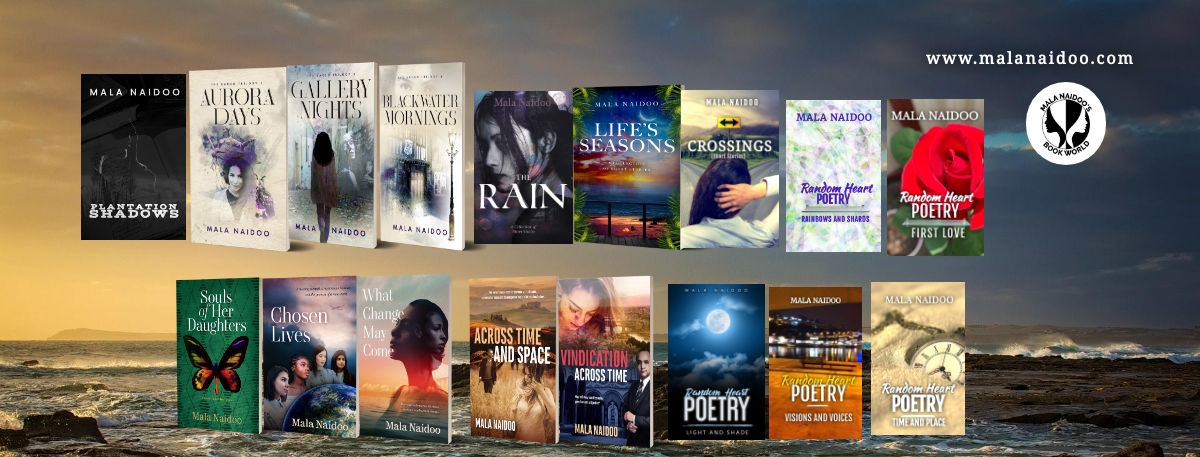
Read Plantation Shadows, to feel and understand the secret hearts of the aging Milly and her dead mother.
Secrets diminish with death – Part 3, Edgar, ‘Plantation Shadows’
Historical fiction either reveres, subverts, or shames the past through citing actual places, creating imagined characters and perhaps recreating a historical figure.
Historical fiction is the unequal blending of the real and the imaginary
Time is fluid in historical fiction, moving between the past and present depending on how the plot unfolds. Is it a character in the present time speaking, recalling a time past, or is the character narrating an experience having lived in a past era?
The cautionary reminder is in ensuring the imaginative aspect of the story is respectful of the truths of the time, while preserving the overarching fictional plot/characterisation and quality of the writing. Culture, values, and social issues researched lend an authentic historical flavour to the fiction crafted. Transporting the reader to a time past enhances the storytelling without rewriting a history textbook.
Find that sweet spot between what is fact and fiction to elevate the fiction on culture, values, and social mores.
Including actual historical figures is the writer’s choice in relation to whether they will be a speaking character in the fictional tale, or a few cursory references would suffice.
Research should not overpower fiction. History has been written and read many times over—add the imagined juice for an entertaining read that prompts speculation on whether the fictional aspects could have possibly occurred.
Memorable characters, a believable setting, an intriguing plot, and a dash of history is a good measure for a satisfying read.
Ultimately, knowing who the intended audience is for a particular work of fiction is just as important as the message it creates.
Honour the history researched to enhance the setting and add lustre to the fictional plot without repeating what has already been documented. Recreate rather than rewrite. The risk of overly recounting a history is losing the fiction to non-fiction. The decision ultimately rests with the author. Readers of fiction will be the primary audience.
In honouring the history, notions of sensitivity to time, place, and people should be observed. However, shaming a dark history is the fictional storyteller’s prerogative.
There are no clearly defined genre parameters when the power of the story is honoured in its ability to move and entertain which is paramount in fiction.
The truth that all historical writing, even the most honest, is unconsciously subjective, since every age is bound, despite itself, to make the dead perform whatever tricks it finds necessary for its own peace of mind. Carl Becker, American historian (1873-1945)
If you are neutral in situations of injustice, you have chosen the side of the oppressor. If an elephant has its foot on the tail of a mouse and you say that you are neutral, the mouse will not appreciate your neutrality. BishopDesmond Tutu.
History is the study of all the world’s crime.Voltaire, French writer, and philosopher (1694-1778)
Fiction is the truth inside the lie. Stephen King
Truth is stranger than fiction, but it is because Fiction is obliged to stick to possibilities: Truth isn’t. Mark Twain.
Please share your thoughts in the comment box below.
Whether we accept it, remain neutral, or deny it, it’s already present.
When it comes to creativity, how do you balance AI and the human touch?
Ernest Hemingway said, There’s nothing to writing. All you do is sit down at the typewriter and bleed. If this is so, why is AI necessary when the writing process is humanely natural?
For centuries, storytelling has been a cultural tradition in every corner of the world. Who is the best at sharing their personal experiences through storytelling?
Is it possible for AI to display raw emotions?
Some argue that it’s authentic, while others contend that it’s programmed and thus not genuine.
The subjectivity of creativity begs the question: can it be programmed?
The dilemma is that some humans conceal truths and wear masks to create a fake identity. The theme of appearance vs reality in Shakespeare’s plays exposes how easily humans can be deceived.Will AI be yet another mask for machine-generated creativity? Who receives credit for the positive reception of AI-generated work? Another door to truth and ethics is unlocked.
Be curious and informed before leaping.
Artists create. They can express themselves through art in a multitude of ways — painting, writing, music, fashion, architecture, machinery, transportation, and beyond.
Charles Dickens, Jane Austen, Leonardo da Vinci, Picasso, Mozart, and other masters of their crafts possessed scintillating minds and remarkable imaginations before AI.
How does AI affect the human brain and heart when it takes over our inherent rights to uniqueness, growth, and creativity? When AI ‘generates’ creativity, do artists’ voices and works lose their uniqueness that only the human touch can produce?
The books and authors that writers admire inspire them. Their mentors, past and present, guide them in honing their skills and style to create unique storylines. Imagination and voice make up a writer’s unique human fingerprint. It captures the reader’s attention. Have we reached a technological level where AI can imitate a writer’s style and imagination?
Imagination is the beginning of creation. You imagine what you desire, you will what you imagine, and at last, you create what you will. – George Bernard Shaw
AI is a part of our daily lives, but we often overlook it. Bots have butted into our lives before we had a name for them. Just whisper ‘Ok Google,’ or ‘Alexa’ and they are ready to provide us with the answers we seek. Does this make the human mind lazy if we don’t physically do the research?
The uniqueness of a writer’s voice lies in the manner in which they tell the story. AI can mimic the tone and intonation of the human voice, but can it replicate the character and personality of the human soul to articulate life experiences?
Creativity is seeing what others see and thinking what no one else ever thought. – Albert Einstein.
As an artist, you live your passion, share your talents and skills, and develop with every piece of art created.
The ways and reasons for entering this brave new world of creativity are widely debated.
The worst enemy to creativity is self-doubt — Sylvia Plath
Be curious and cautious to guide your choices in a rapidly evolving creative sphere.
When you begin writing a story that has whispered for a period, and then hauls you in—you have no idea how far you will go, or how many stories you will create in your lifetime. The process must be trusted and aided by dedicating time and space to allow the story to emerge.
Anything and everything is possible when you trust the calling first, then the process.
You may begin with a plan, an outline, and flesh out characters, but soon the story magically grows with you the writer, as the vessel, guided by a force you cannot quite describe. Some call it a ‘voice’ others call it a compulsion, or their divine muse that lays out the game plan drawn from the seed of imagination. The writer as a scribe leaves each writing session either exhilarated or surprised that a character has chosen to embolden their voice.
Once this arises, all thinking dwells on the place and society you are creating. The heart’s longing cannot be denied. The brain might test resilience, and negative emotions might slip in, depending on who is invited into your inner circle. Those external voices of doom and gloom, which might be your own if you allow it, kill inspiration. Shut them all out—regardless of who they are or what they have to say. It is YOUR story. Own it. Let the editors and ARC readers speak later in the publication process. Writing your raw story is your lone venture.
The heart’s longing cannot be denied.
You are never truly alone. Your main character will step up to lead you by the hand, and your secondary characters will vie for your attention, urging you to consider their point of view.
When many voices clamber for recognition, step back and surrender to a higher consciousness. Meditate for guidance on the next step. Clarity allows the selection of a voice that will be meaningful for readers now and years down the track. Once the writer’s imagination and emotions blend with skilful writing, a great story is born.
The process is magical once you have plunged into the waters of creativity!
As Ray Bradbury said in, Zen in the Art of Writing, ‘…but one thing always remains the same: the fever, the ardour, the delight. Because I wanted to, I did.’
Allow the process to unfold, and above all, trust it. One idea at a time, one story at a time builds your body of work.
Happy writing, happy publishing, and happy reading.
Please share your thoughts in the comment box below to help a fellow aspiring writer.
After a frenzied holiday season with the comings and goings and the excessiveness of all things gustatory, it takes a few days, or longer, if there’s a dalliance that thwarts getting back in flow. Restoring equanimity invites the sweet melody of the creative muse again. This requires diligent commitment.
Slow it down to get back behind the creative wheel
When one’s attention veers in directions that divert from the words on a page, it is easy to remain in that mode beyond the holidays. If one does not challenge or coerce oneself to empower a creative mood, there is the risk of it not returning.
Equanimity is the balance, the serenity of mind that ceases all noisy thinking to allow voices from unfinished stories or new stories seeking creative attention to emerge.
Moments of equanimity increase with practice
Morning flow practice, or at any time of the day, invites the creative zone. Added to flow practice is what Orna Ross, Irish poet, author, and founder of The Alliance of Independent Authors, coined as F.R.E. E (Fast, Raw, Exact, Easy) writing, and Julia Cameron, American teacher, author, artist, poet, playwright, novelist, filmmaker, best known for her book, The Artist’s Way, as Morning pages. This is the cathartic clearing of mind clutter by unleashing baggage that has infiltrated mind space.
Handwrite whatever arrives for the deliberate act of decluttering. This makes perfect sense when we toss noisy, disruptive thoughts to allow spaciousness for creative energy to flow. To restore equanimity, flow practice, and F.R.E. E writing, or Morning Pages are necessary to kick start the creative process.
Start slow, in bite-size time allocations, fifteen to thirty minutes at a time. Take a walk outdoors or play soothing music, sounds of nature, or cool jazz as I choose, to get back to the writing session as soon as possible.
Avoid reacting to situations that trigger negative emotions and let the self slide into a mode of quiet acceptance to heighten creative energy. Being still, open, and present in one’s immediate environment has the benefit of opening the door to creative space. Light a candle, or incense stick, open a door for a breeze to waft in and allow whatever comes to mind without resisting or judging its arrival.
Everything in life requires practice and commitment…
Find your daily routine. It is a ritual. It takes time and effort. Surround yourself with that which brings inner calm, including the people you invite into your space, and watch creative magic unfold.
May 2023 be the year in which the vastness of your creative potential arises and remains afloat.
The days of writing rigidly to a particular genre, crime fiction, detective fiction, sci-fi, horror, historical fiction, thriller fiction, and romance have slipped, crept, and rolled across the genre borders.
Romance has the potential to capture the coldest of hearts.
The basic elements of the genre remain. Mystery and suspense with a soft touch of romance add to the allure of the tale. Romance as a genre in its pure form has limitless power to create relationships that stretch and bend the imagination as far as it will go.
While romance engages the emotional side of the reader, it does not overwhelm the crime/detective/historical/sci-fi, which occupies the greater space of the genre.
The love story element in any story adds the desirous human connection.
Age is no deterrent to romance. It’s not restricted to young love such as that of Romeo and Juliet. Including older characters in the angst and joy of their romantic interludes creates an inclusive perception of love. It increases the appeal of the overarching genre at work.
The happily ever after isn’t always true. Fiction is a mirror of life. Testing the strength or commitment of a relationship between crime/detective fiction heightens its entertainment value. Romance, while not central to the story outside the romance genre, might add a satisfying element against the crime/detective fiction at work.
Love is just a word until someone comes along and gives it meaning ~Paulo Coelho
Wonderfully true — it is indeed our charismatic or struggling fictional characters who love, or are in love, that linger to remind us why love given and received should never be extracted from the soul.
There is no charm equal to tenderness of heart ~Jane Austen.
Magical! The reader is drawn to the story regardless of the genre.
I would like to be the air that inhabits you for a moment only. I would like to be that unnoticed and that necessary ~ Margaret Atwood.
Brilliant! This stirs ideas on how this would unfold in a crime fiction tale!
The gist of these well-known lines deepens the human connection in any genre.
Happy Reading. Happy Writing.
Please like, share, comment and hold on to a tender heart. We need it in both fiction and life.
Why does crime fascinate the reader or the viewer? From a gripping novel to a suspenseful film, both mediums are loaded with intrigue, blood, gore, missing persons, and dead bodies, and they certainly hold our attention for more.
Pushing boundaries is the adventurous inclination invited by human fascination, as is vying for the person we want to set free from crime.
Crime writing, like reading crime novels and viewing crime films, is an emotional investment for the adrenaline rush we crave. Words on a page must do the creative hard work that diegetic or non-diegetic music elicits to keep us on edge, before, during and after the crime has been committed.
Descriptive language, sharp, short sentences, sensory imagery and specific punctuation, create and elevate the mood that befits a crucial scene in a novel. The intrigue must be deep enough for the reader to push on, chapter after chapter, well into the night, or wee hours.
Crime fiction often draws inspiration from actual crime, which allows for greater reader appeal. Research is vital to achieving a realistic, entertaining selling point.
Attending a criminal court hearing is a valuable catalyst for storylines to kick off. Make a friend in your local police station and shadow the police person to walk in their shoes for a few days. What better way to get inside the aftermath of the crime?
Visit a prison, and if allowed, ask to interview a prisoner. Getting inside the minds of criminals fuels the creative urge for the realistic crafting of your MC.
Research profiles of victims of crime and seek a psychologist or psychiatrist to gain a greater depth of understanding of why the victim might have been targeted.
Visiting crime sites long after the investigation and conviction enrich the landscapes in a crime fiction story.
Live research is valuable for the unique imaginative triggers they invite. Equally, reading crime novels of note is vital to the crime writer.
Crime documentaries are accessible anytime if physically going to a prison or crime site is not an option.
Don’t go too far. Grab the daily newspaper, and a new crime of the day or week holds our attention as we seek more on the investigation.
Unending thirst for crime novels and films continues to expand, weaving through different genres and is an inroad to writing for aspiring creatives.
As creatives, news about a debut author from the land of one’s birth is received with great joy. The creative landscape is a connected, supportive space that celebrates newcomers to the publishing fold.
Meet Mel Goven, South African debut author of the crime novel, Unfinished, launched in July, 2022 on Amazon. Please join me in welcoming Mel Goven to the blog this month.
Get to know South African Author : Mel Goven
1.Biography : Mel Goven
Mel Goven
I hail from Johannesburg and have quite a demanding day job as a teacher in a primary school.
Unfinished is my first novel although I have written many short stories which have gained a place in short story competitions in local magazines and writing groups.
My short story, Scorned, a crime mystery, was placed 3rd in Woman and Home, in 2014. Love Knots, another short story, was shortlisted in the annual short story competition run by The Writer’s Group. One of my favourite short stories, Lucky, featured on a few writing blogs and had quite a successful run in 2016. All these stories can be read on my blog site.
I have also published newspaper feature articles and opinion pieces during my stint as editor for the local newspapers: The Randburg Sun,Fourways Review and the Northcliff Melville Times.
My features were around education challenges in South Africa. Some of which were: Preparing for Future Career Opportunities, Effective use of Technology in the Classroom, Private versus Public Schools.
Having always been drawn to the romance genre, I imagined I would write romance novels, which I haven’t completely taken off the table yet. However, I found my voice in thrilling crime mysteries.
I have two more novels in the pipeline and have realised that with each new world I create, I am finding myself as a writer. I don’t like conforming to a specific trope and while I admire the writing styles of my favourite authors, I don’t think I am in the same league and so choose to write my way.
I have been blessed with four incredible children of whom I am super proud. In formally starting my writing career at this stage in my life, I hope to inspire them that dreams come true at any age, no matter what challenges and obstacles arise.
2.When did your passion for writing emerge?
I love reading. I believe you must be an avid reader to be a good writer. When I was a child, I would beg my parents to take me to the library.
I visited many libraries in the area I grew up in: from the little mobile libraries that would go around the community on Tuesdays and Thursdays; to the community libraries that were finally built when the demand increased, and then to the Durban City Hall library when I was old enough to travel to the city on my own.
I started writing after I read Anne of Green Gables. I felt such a deep connection to the main character, Anne. Although she was a lifetime removed from my world in terms of the era, race, and circumstances, she felt what I felt; messed up like I did; was the odd duckling — just like me.Anyway, the community library did not have the sequel to Anne of Green Gables and so I decided to continue the story in my imagination. Eventually, I wrote it at the back of a Maths book (I did not like Maths very much). That was how I began writing.
Every time I finished reading a book, and if I felt that I wanted more from it, I would continue the story to bring it to a satisfactory conclusion.
3. What inspired you to write your debut novel, Unfinished?
In 2012, I became fascinated by a story I heard from a patient in a doctor’s surgery. The patient had undergone a heart transplant a few months before and she had been excited to meet the family of her donor.
I found myself researching it and was surprised to find that some heart recipients experienced major personality changes which are sometimes connected to their donor. The idea of the heart, which we consider the seat and symbol of emotion, sparked a story and this epic drama unfolded.
Unfinished is set in Hout Bay, Cape Town, because the first human heart transplant occurred successfully at the nearby Groote Schuur Hospital. But, it is more than just a story about a heart transplant. It revivifies an unsolved murder committed almost 40-years before the story begins; those affected by that crime and how their lives have interwoven until a heart transplant finally exposes the truth. I wanted my characters to come to life on the page, and each one needed to have a voice, so I opted to write in each main character’s POV.
4. Who are your favourite authors?
I have so many. I have great respect for the classics, so Jane Austen, Thomas Hardy, Emily Bronte, L.M. Alcott, Charles Dickens, Sir Arthur Conan Doyle and of course, L.M. Montgomery.
Contemporary authors: I would say, Khaled Hosseini, Kazuo Ishiguro and Eleanor Catton. But there are so many others. I have never restricted my reading to specific genres. I read all, except perhaps horror. Although I did spend a few sleepless nights reading Stephen King’s, The Dream Catcher.
I suppose I could say I have favourite books rather than authors. At present I am enjoying Barbara Kingsolver’s, The Lacuna. And, A Madness of Sunshine, by New Zealand author, Nalini Singh, and The Winter Garden by Kristen Hannah.
Oh, dear! There are so many more books I still have on my to-be-read list. My guilty pleasure is that I also enjoy a Harlequin romance novel now and again.
5. What advice would you offer to aspiring writers?
Write about what you experience. Write that story you wished could have had a different ending. Write about your dreams. Whatever takes seed in your imagination, write about it.
Grab your copy of Unfinished at these Amazon Book Links
I extend my gratitude to Mel Goven for sharing her author journey and wonderful advice to aspiring authors. Unfinished has certainly grabbed my attention!
A full-time writer lives and breathes, creating fresh stories, poetry, and essays. Nothing is ever too much for the creative.
When starting out as a writer, passion draws one to all things writing, from social media, literary associations, events both live and online and a plethora of books on how to write and publish. FOMO consumes the early years, but on the flip side, it can erode creative time.
Over time, whittle down to those activities that create the time and space for the creative process together with growing an author brand and business. There is much to gain from trying different groups and associations to test what fits your values and the type of writer you hope to be.
Be unique, select memberships wisely
Don’t strive to be someone else. Readers appreciate authenticity.
While exploring the creative cyber space, books, groups, and associations, you realise, over time, what adds value to your work.
It is vital to look for integrity when seeking to find where you belong as an artist in what can be an overwhelming space if trying to fit in with more than you can humanly manage.
Passion and FOMO drive the need to be a part of all and more
Give priority to the innate reason for choosing a creative life. This will guide your understanding of where to invest your time and growth. Running your own creative business is a mammoth task before investment in virtual assistants.
In the initial stages of a creative life, creatives might manage a day job and fit in a creative life after hours, besides managing rest and domesticity.
To ensure you give adequate creative time to your work, divvy up time to at least two associations that echo your values. An authentic organisation such as ALLi guarantees professional development, keeps you informed of current writing and publishing trends. Podcasts and FB live monthly advice sharing, and a Self-PubCon offer advice not to be missed. A directory of vetted services available to ALLi members is where you will find cover designers, editors, and many other services you require as a creative in publishing.
Depending on where you live in the world, you might hook up with a local association and join a Facebook Group or two for the quality of the experience. It is easy to slip down the rabbit-hole chasing after what appears bigger and better. Over time, this will steal valuable time from your ultimate purpose: to write and write more.
Sharing across author platforms is a great way to promote your work to different readers while helping promote the work of writers you enjoy and admire to your supporters. This garners support from grateful creatives who return the respect by promoting your work.
The creative space is generous and supportive. Find your authentic niche and belong to grow your creative works.
Please share the platforms you enjoy in the comment box below to help fellow aspiring writers make discerning creative choices.
Pen, a fictional story and aspects of the scribe’s life, spills onto the page between fiction and reality. Angst and joy collide in the unfurling of the emotive content of the story. The emotional hooks in a story invite readers to open their own wounds and happiness for a well-penned story.
In my novels and short story collections, dogs feature as necessary in human lives. A lifelong love of dogs finds their way into the lives of significant characters I create.
In the Sequel set Across Time and Space, and Vindication Across Time the wonderful Ted is the adored pet of human rights lawyer, Michael Morissey, and aspiring writer Meryl Moorecroft. Michael advises and befriends schoolteacher Marcia Ntuli, caught in workplace professional racism. Ted is the first to understand the growing romantic involvement between Michael and Marcia. His sensitivity to Marcia makes him even more adorable.
Fiction is the lie through which we tell the truth. ~Albert Camus
Two hours later they emerged from Michael’s bedroom, laughing at Ted’s quizzical peaked ears and worried frown.
In Souls of Her Daughters, Patience, a social worker has two dogs, Ajax, and Sprite. She adopted them while her sister Grace was overseas at a medical conference. Patience witnesses her sister’s battle with her past demons and hoped Ajax and Sprite might offer her healing and joy. We may read this novel as a stand-alone novel or as a trilogy.
They were abandoned in an old building on the south side of town. I could not take one and leave the other. They are high maintenance in the love department but adorable to come home to.
Life’s Seasons, a short-story collection, includes a valiant dog as title story – Toby. This story was first published in the short-story collection, The Rain, where Toby, a brave dog, living on his owner’s family farm is confronted by a treacherous storm. Instinct guides Toby when the safety of his beloved human family is threatened. Toby’s heroic, selfless act unwinds minute-by-minute to melt hearts.
He gripped the harness between his teeth, prostrating to give the children a lift, to allow them to be pulled up with ease.
The Bardo Trilogy has Woza and Khaya, the loyal companions to the mysterious doyenne Tempest, on her mission to offer safety to women and children who are victims of crime.
Fiction reveals truth that reality obscures ~ Ralph Waldo Emerson
Living in isolation was difficult, but her parrot, Caramba, a keen white watcher of the skies and her two Rottweilers, Khaya and Woza, filled her lonely hours.
The act of including dogs in each of these novels and short stories is a subconscious inclusion drawn from experience.
Pets are companions who combat loneliness, fulfil a caring need, aid healing from grief and bring joy during life’s challenging times. Both fiction and reality meld to create balance to live in unison with the universe.
Now there’s nothing like one’s writing companion puppy snuggled at one’s feet as words and new worlds rise and fall on the page.
There are two answers to this question (In my book, anyway).
Experience matters in writing to represent an authentic voice, if the story/plot pertains to a particular generation/profession/life situation etc – authenticity will draw the reader into the story. A sense of place if core to the tale, and references a real place rather than a fictional setting, the experience of having visited a place, such as a town, beach, farm, a particular building etc, will add lustre to the place described. This makes the reader feel they inhabit the fictional setting.
If life experience, in the numerical sense, is absent, the young aspiring writer will achieve as much as his or her experienced counterparts if the novice writer reads widely and writes extensively. It is universally understood that to write well, one must read widely and often. What one reads is important to add believability to a time, place, or character beyond the true-life experience of the young writer.
Both actual life experience and vicarious life experience hold value in the depth and authenticity in the stories writers create. The experience gained during and through the composing process enhances light, shade, depth, and adds colour to the prose.
Writing is not life, but I think that sometimes it can be a way back to life. ~ Stephen King, On Writing: A Memoir of the Craft.
Seasoned and aspiring generations of writers have much to gain from each other. Writing groups offer a wealth of opportunity to sharpen the ability to write through the voice of any age or place, or past life experience. Wisdom is not age/number bound, neither is the capacity to learn a new way to meet the market of readers ready to devour new releases that offer meaningful connections.
The value of experience is not in seeing much, but in seeing wisely. William Osler.
Research, like reading, broadens the ‘life experience’ of a writer. Interviewing people who are of the generation, time, and place before that of the writer is valuable for crafting a character, place and society that is alive on the page.
Mind, manners, and morals of a time before one’s own is accessible, not only via digital means, although the digital connection helps the researching writer find a genuine contact who might willingly be interviewed. To honour the sharing of memories of a time past is often rewarded by a mention in the author’s acknowledgement of sources consulted. Writers take great delight in doing this.
Similarly, when writing crime or detective fiction, visiting police stations, attending court cases, interviewing police officers, or shadowing an officer/detective on the beat is a hands-on way to gaining their work lifeexperience.
The writer’s map has many points of entry… it comes down to individual choice ~Mala Naidoo
On another note, the broader necessary experience as a writer, the how, why, and the business of being a writer are accessible through Facebook groups, writing organisations, attending webinars, and signing up for a masterclass, as is reading a recommended book on how to write and manage a writing business. From a range of noteworthy groups, books, or organisations, the aspiring/new writer embraces and shapes what is needed to craft a unique voice/work of art.
Experience can’t be taught. Anonymous.
Please like, share and comment to help a fellow creative.
As writers, we engage the reader through the senses. Paintings are layered with colour depicting a sense of place, mood, and so too a story must be layered with emotions and perhaps physical reactions attached to the power of effectively crafted descriptors/imagery, etc.
Make the reader laugh or cry, see, feel, smell and touch by creating carefully written sentences that feed from the writer’s well of life experiences. Engaging the senses draws the reader into the world of the ‘painted’ narrative. We are alive with possibility when we sense life around us.
Take a walk through the sense of smell
What smell makes you warm and fuzzy, and what repulses you? Think about the smell — the odour or aroma. Write them in two columns. Experiment with adjectives that describe the olfactory sensation and attach places to where these might be experienced.
A warm fuzzy feeling could be the smell of apple pie baking in the oven on a cold, rainy afternoon. The aroma must trigger a memory that is built into the sensation the smell invites. Is it a weekend at a grandmother’s home or your favourite bakery/coffee shop? Make the reader drool. The toasty, crusty aroma of pastry baking and the sugary cinnamon apple pie filling infusedin the air must elicit the desire to taste what the power of language offers as a visceral experience.
Appeal to the reader’s instinct before the intellect
What about a repulsive smell? Passing a compost heap during a morning walk. Gagging on the putrefying stench of potatoes oozing on a compost pile, or holding your nose when you pass an overused, uncleaned urinal as you exit a carpark to get to work. Write your gut reactions to return to later to refine the descriptors for maximum effect. Then ask yourself, will my reader feel my warm fuzziness or repulsion? Will there be an emotional or physical reaction? The best way to test this is to try it on an unsuspecting reader, a family member perhaps. You might hear, ‘Yum!’ or, ‘how disgusting!’ Either way, you have infiltrated the reader’s sense of smell!
Work on sound, sight, touch and taste similarly. Write the sound, type of touch and taste experienced. Build up a storehouse, your own reference guide of words/sentence paintings to make your reader ‘experience’ the event or situation you are creating.
Show through the narrator’s experience
Scenes in a story are a canvas of colours, objects and placement that create a sensory experience for the reader. Who describes the scene is important to ensure the reader enters the headspace of the writer, or favourite or hated character doing the narration. This allows the reader to ‘feel’ the mood or ‘inhabit’ the sense of place or experience described.
Crystal spikes shimmered on the lake’s surface like fine shards of ice dancing off a sculptor’s chisel…
Scenes must be ‘seen’ in the mind’s eye to connect with the landscape/mood/event.
Touch captures emotions -pick up a soft, cuddly jumper, perhaps of a child who has passed, feel the flood of bitter-sweet memories. The depth of the engagement depends on who is holding the jumper to create a significant experience for the reader.
Taste can be a joy or a disaster. A bite of the apple pie above should be a joy, but a hidden habanero in a favourite dish described through symbols of heat or explosiveness might achieve the desired flaming reaction in the reader.
Use the senses to prompt an emotional/physical response. Work with what moves you the writer to ensure the same effect on the reader.
Happy planning, happy writing.
Please like, share and comment below to help a fellow aspiring writer.
You work full time but have a raging desire to write that book buried deep inside you.
If there’s a book that you want to read, but it hasn’t been written yet, then you must write it.’ ~ Toni Morrison
How can I make it happen?
Time and space are necessary, negotiation with your after work, home tribe is mandatory — your loved ones under the same roof need to know the rules of the ring-fence around your creative time. Tell them, the adults and children alike, that this is your scared time after dinner, and family time. It will be a stretch on your energy levels, it will erode your sleep time… but if you seriously want to, not hope to achieve your hidden dream, then lost sleep is a small sacrifice.
The space is as sacred as the time and needs a physical barrier around it to avoid little ones from tottering in to play.
Say you choose nine-thirty to eleven thirty each night, stick to it unless there is something serious that requires your attention. A no-phones-space or noise cancelling headset is all the additional equipment you need to lock in the time and space for your burst of creativity each day.
Let me live, love, and say it well in good sentences ~ Sylvia Plath
Quality, rather than quantity, counts during this spiritual time to achieve what you have set out to do. Adherence to this time space includes weekends. Be prepared for a dent in your social life. Exceptions are granted for extra special occasions—birthdays, wedding anniversaries, graduation night, etc. These are outside the prohibited norm, and you might have a special occasion not included here. Limit these to those dearest to you. Dwindling social circles are inevitable if your social tribe doesn’t appreciate what you’re doing.
That’s all it takes, but regularity, commitment and determination are the way forward to having your book in hand. And what an exhilarating moment that is!
A word after a word after a word is power ~ Margaret Atwood
As progress happens, negotiate a reduced day job working hours with your manager as you create more time and space for your creativity to flourish.
The writer also needs time and space to read, read, read, all the poetry, craft books, and novels one can fit into a busy day to enhance the craft of writing. Shorten an office lunch break, stroll outdoors and add to the daily scribblings.
And there’s connecting with creative peers for inspiration. It could be a master class or a writer’s association. This tribe is essential to avoid total isolation and to validate your passion.
Soon you will spend more time in your creative space and limited time on your day job.
Go tell that story you have harboured for so long. The world is waiting!
You never have to change anything you got up in the middle of the night to write! ~ Saul Bellow
Happy writing as you create the time and space for holy writing hours!
Please add your thoughts, and inspiration in the comment box below.
Narrow down goals set for 2022 as we enter the Lunar New Year in the Year of the Tiger – courage, strength and wisdom offer the possibility to soar in new creative dimensions.
Creativity, like the birth of every new year goes on in whatever shape, form, time of week, or day it chooses to make its presence felt. A fresh look at how to reinvent creativity is alive with the advent of the Lunar New Year.
the noble and fearless creative
Competing with oneself is healthy competition in achieving one’s heart’s desires for a better version of last year’s self when the tiger’s strength and courage are called upon.
To endeavour (NB: a lifelong endeavour) to master the craft of writing is to read and learn from the writers/artists one admires as mentors, and whose works are enjoyed. Choose from a range of mentors to extend the reach by being open to the recommendations on the craft of creating. Read every book humanely possible to grow the craft in many and diverse ways.
To say a writer should write in one style or genre is limiting the capacity a writer possesses for experimentation, and possible success that comes with attempting a new way.
sitting in a long-term comfort zone is tedious, safe – this is not in the spirit of the brilliantly courageous tiger.
Challenging the self is a wise way to curate the best creative version of oneself.
dare to be different
No one way is ever the only way or best way – the best stems from daring to be authentic, to enrich how the creative works to harness new inventive powers buried within.
Here’s to courage and strength in the dawn of the Lunar New Year!
attribution: Pixabay
the dawn of the second month creeps in — January pants
in unfinished business carried over
days pass like the speed of light
chasing the tail of many months
as responsibilities mount
like the leaves of autumn winds
but imagination breathes new life
in spring dreams of possibilities
arriving on the gilded wings of time
twelve months to reinvent
turn the page on the book of life
the wind whispers then roars
‘we’ll get there — together’
Have a very happy, and adventurous Lunar New Year!
Creativity feeds off emotions both positive and negative. Words give vent to the language of the heart.
Grief after the passing of a deeply loved one, sucks the wind from the sails of creativity, for a while… Fighting it is futile, emotions are in a tangle when death is unexpectedly sudden.
Fit one day, gone the next. The mind is thrown into chaos as exhaustion sets in, slowing down the clock to a sonorous ticking of every minute, every hour.
Be gentle with yourself when grief blocks the creative edge.
Isolation and solitude are necessary to process the deeply felt loss. Within there is the need to comfort the nearest and dearest around one going through the same process.
But in those still, grieving, reflective moments, hours, days, and many weeks, creativity takes on a new face — creative expression on loss and grief. Picking up a pen and journal offers the promise of comfort when there is no inclination to turn on the laptop. Poetry emerges in the healing as words tumble out in emotional self-expression, mourning the deep-seated loss.
Words comfort and clear the brambles of the heart.
Seeking solace in meditation while grieving might, at times, seem impossible when the conscious mind buckles, contorts in pain. The way out is through writing, giving vent to grief and anger and all the unanswered whys…
Memory beckons, draws one in to seek solace in understanding the heart’s tears.
Soon, day by day, time allows the soul to accept, to find a new way, to adapt, to be, by letting go of the familiar patterns of one’s life. As humans we are adaptable to change, if one allows the mind to remain healthy by turning to warm memories, and articulating emotions — pain eases, and limits sinking into the dark depths of despair.
Grief is the single most difficult challenge of life (as I see it) in coming to terms with the gentle, deep cadence of a voice one will never hear again, a face never seen again in the flesh – the Guiding Light of one’s angst no longer there to soothe troubles or share joy.
Time is a long-standing ally to a grieving soul.
Acceptance is not an easy path to tread when the void is palpable…huge… but healing will come with time as memories resurface in those moments when a birthday card or photograph falls out a book, or pops up on a phone or Facebook Memories to remind one of the love shared. Loss is never overcome, but heart-warming moments return when least expected in unexpected places, to catch a breath in quiet recall to ignite a smile.
Creativity hooks emotions — grief the impasse as the eye turns inward to gather new creative pace and space.
If you have lost a loved one, take heart, your muse never flees in the hours of need, but draws renewed vigour from your newest angel, ready to guide your creative light.
a month too soon
let him rise in peace
as he lived his life
sharing love and joy with those
who honoured his stature
a compassionate giving soul
taken gently in the early morn
rising swiftly into the arms of Divine Grace
(RIP Beloved Father of Mine)
I hope you find comfort and reassurance that grief borne needs time, so be gentle with your creative self by keeping the mind healthy to protect your heart for the wondrous, comforting glow of memory and renewed imagination…



 Why does crime fascinate the reader or the viewer? From a gripping novel to a suspenseful film, both mediums are loaded with intrigue, blood, gore, missing persons, and dead bodies, and they certainly hold our attention for more.


You must be logged in to post a comment.