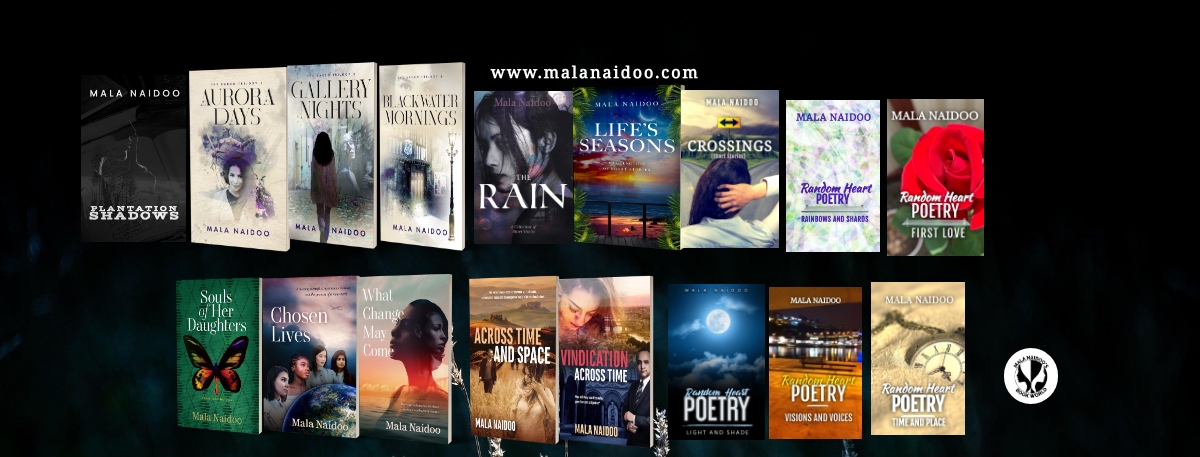
Writing Through Adversity

Writing has been well documented as having therapeutic value. Do you keep a personal diary, or a journal to record moments that are significant to you?  Would you write a memoir or autobiography? Have you tried poetry writing?


Fiction is an avenue that has therapeutic benefit when writing about angst through fiction or poetry. This has value in reaching readers who might face a similar situation. Receiving a reader’s comment on connecting with a character or situation makes writing move from the realm of fictional entertainment to enhancing life, creating a sense of belonging through the power of story/words that whisper,  ‘there are people who go through this, you are not alone, it’s not you…’


Human difficulties like our joys are universal and part of our shared humanity regardless of demography or any divisive label. We learn from each other, we share with each other — altruism is part of our human ‘feel good’ makeup. We feel good or secure in knowing that challenges are not unique. This is where fiction like a memoir/autobiography/biography and poetry has the ability to say, ‘I see you, I hear you, I feel your situation.’


‘In our angst and joy we are one under the sky of humanity’


Oftentimes something heard, something seen, or read triggers the imagination to create a story/poem — these seeds have their origin in human experience. Everything in life has imaginative storytelling potential. Historical fiction is a genre whereby much from history or literature is reimagined to suit a particular context adding timelessness to a story. 


Poems and stories, when turned inward, create… growth… healing… self-awareness


Shakespeare’s The Tempest reimagined by Margaret Atwood in her novel, Hag-Seed is an example.  Prospero becomes Felix a theatre director in a present-day context —  he is grieving the deaths of his wife and daughter and has been backstabbed by an aspirational colleague. His vulnerability is an evocative point of connection with the reader. Professional or workplace strife present timeless human dilemmas, but when tastefully explored as a novel’s premise or ideas, it has the potential to speak to many isolated, lonely individuals — there is no shame in being vulnerable. Shame sits on the shoulders of those who abuse vulnerability. The most endearing people, in reality, are those who have experienced hardship, financially, in grief or loss, abuse or ill-health — having walked in the shoes of many with struggles, wires empathy — as human experience should be if we hope to coexist in peace and harmony.

Fiction can remind us why it is essential to be true to who we are in our expressions of self and in our interactions with each other. 


In Souls of Her Daughters, Dr Grace Sharvin who heads a busy medical ER has unimaginable frailties but her strength is in her capacity to reach out to others while fighting her own demons. 


Life’s lessons come from the adversarial people met, and they become the basis upon which writers craft their villains. A little bit of this and a little bit of that blended in a cauldron and hey presto! The (im)perfect villain is born! The good people we meet shape perspectives on why adversarial individuals have no place in a shared world.

Timeless heart-warming and gut-wrenching stories on life’s challenges and celebrations.


Literature is a luxury, Fiction is a necessity — GK Chesterton


and

Albert Camus said,  Fiction is the lie through which we tell the truth.


Who can argue with such pearls of truth now? 


Life, literature, news of the day, and history portray human experiences that provide inroads to new fictional stories and evocative poetry that connect rather than divide by exposing, celebrating, loving, grieving and understanding what it really means to be human. We all, whether real or fictional are indeed not alone in adversity. 

Which novels and poems would you recommend to readers on overcoming adversity? Have you read A Spark of Hope?

← Back

Thank you for your response. ✨


Proficiency and Professionalism

Author professionalism is not negotiable in a world where access to all we say, do and create is out in the world with a click.

It costs nothing to be supportive of aspiring authors and accept that there are oceans of experienced, seasoned authors out there who act as mentors and are deserving of respect and acknowledgement. Blog about the work others do put yourself out there to be blogged about and while you find your way to being noticed as a writer, notice others in a personable, professional manner.

The publishing landscape is rich and diverse with an ever-growing space for all. Collaboration is vital as learning is never exhausted. As a teacher, this lesson was all too clear with constant syllabus changes or when students challenged an idea and a new wave of thought was born. Like classrooms without borders, learning is a two-way process, and so too is the writing, and publishing world.


Pride and ego waste creative energy—aiming towards excellence is a humble, hardworking process. No one person is gifted in the craft without commitment and extensive effort in being worthy to be viewed as a mentor/master of the craft.


Being proficient is ensuring great covers clothe your labour of creative love, and that they appeal to the genre and audiences’ interest. Having your work edited is an important step in the writing process to rise to professional standards in the industry. (although creativity is not an industry for me—a labour of love for sure!) Publishing services come with a price tag if it’s quality that matters. With quality, the stamp of professionalism is assured.


Never compromise your values…


Professionalism as an author like any walk of life is also about expressing thanks and appreciation without the ‘I’m the artist’ big-headed attitude. Collectively a professional outlook makes success a possibility. Professionalism can be challenged when confronted by unethical practices in the publishing ecosystem but as always it’s best to walk away, let it be, there are plenty more avenues out there to pursue, that might well be a better fit for you. Like any job, if the fit is not good, move on to greener pastures, or create your own. As a writer, you steer the vessel on the path you choose to take.


Alliance of Independent Authors /


Authors are among some of the most exploited people if unaware of the pitfalls. The way to armour yourself is to sign up for authentic associations, register for webinars and Facebook live sessions, attend conferences, network, to educate yourself in knowing that the allure of being published comes with ethical responsibility. Read, research and find your way with the confidence that you are proficient and professional.


Writing is a solitary process but being an author is a collaborative role. Aspiring writers, you are not alone. Pick who you follow, to wisely ensure you are protecting your craft and practice.


Happy Writing/Creating and Publishing.

← Back

Thank you for your response. ✨

Short Stories – Imagined or True Life?


As writers, it goes with the territory that autobiographical bits of ourselves will slip into our writing. A creative project, the creative process is emotion-driven, its passion on a page — bleeding…
My collection of short stories, out this week,  Life’s Seasons into the digital and print worlds is a diverse collection that emanates from my visions of life and some from a generous muse — or perhaps a subconscious memory on history or culture of different times and places.


Life's Seasons

Here’s a little teaser on some of the stories:

The book cover is drawn from a story set at a picturesque beach resort when an incident occurs to disturb the world of the observer. Final View is both dark and lighthearted through the voice of an aging mortician — her take on why she serves the way she does. Now, I don’t know any morticians, personally, but this story found me. Those Were the Days, is part autobiographical and part imagined on life as a university student. Ancient cultures fascinate me, hence in, Moving On, the life choice of young Anqui emerged to represent the clash of the old and the new. Crime fiction is a passion and a particularly enjoyable teaching experience so The Call of the Outback was born with Inspector Donovan out and about during his early retirement days when a crime finds him, not your typical crime fiction story, but my spin on how things find you where your passion lies.
Then a story about a writer in search of her muse, set on the ocean aboard a luxury cruise ship stems from my love of the ocean although the story is far from peaceful, akin to the symbolism of a turbulent ocean. And there’s more in Stilled Heart, a University Professor struggling with not knowing what happened to his family during an air raid, and meeting a young, hopeful writer who shares the same sense of loss. A secret from the past is revealed by Jacob, a messenger of dreams in Wandering The Earth. And there’s Mai in Adrift, hiding her past on how she arrived in a new country. The shame apartheid enforced in my world is a trigger for Mai’s tale.

Haruki Murakami’s view on the writing of short stories captures the essence of pouring the self into what we write.

My short stories are like soft shadows I have set out in the world, faint footprints I have left. I remember exactly where I set down each and every one of them, and how I felt when I did. Short stories are like guideposts to my heart...
― Haruki Murakami

Without a doubt, the voices and visions of a writer’s world seep into the stories we tell, dressed in different clothes, stretched through the imagination with colour, light and shade, and not forgetting what the muse wills, and so stories are born.

Launch day this week is 22/8/19 for the ebook and 29/8/19 for the Print editions in hardback and paperback. For more on each story you are invited to go these links for the full description:


Amazon (print and ebook)
Kobo
B&N
Apple Books

Loot South Africa (print)

Other Select Retail Stores


Happy Reading, Happy Writing.


← Back

Thank you for your response. ✨

Sign up at www.malanaidoo.com for more updates.

Word Rhythm – some time… somehow


People ask, ‘so how does one complete a novel?’ The simple response is, ‘write every day.’

Fifty words on a page are better than a blank page.

Consistency is key and if for whatever reason writing is impossible on a day, double up the output in the next writing session. Perhaps not all in one go, divide the writing time to two sessions if possible, on a given day that fits in with what is already on your plate.


Carpe Diem!

Writing more is by showing up, at a regular time, bottom on the seat, minimal distractions or no distractions at all. Commit to a solid ninety-minutes, then change the activity, but if the juice is still flowing go back for another session.

Blocks of time, free of distractions is essential to see a creative project to completion.


Ways in which to maximise creative time is to have a notepad/journal at the ready wherever you are. I have A5 journals in my handbag, workbag and pencils stashed in every pocket. Sitting in the doctor’s or dentist’s waiting room, or with colour in your hair at the hairdresser, or as I do, while sitting in the car at the car wash, scribble a few lines to keep the momentum of your story going. Watching soap suds gyrate in a splash of colour stirs the imagination! Back at your desk, if that’s where you prefer to write, draw those mini journal creative thoughts into your WIP manuscript.

Having word count goals helps to hold one accountable. My target is to finish a chapter at each writing session,  if possible, or to leave a trigger sentence for the next writing session, to pick up the pace, action and momentum.

Caught in a roadblock? Pull out a notepad and write, if you can’t take your eyes off the road, audio record your verbal musings — now traffic cops, I dare to say, have not come up with traffic fines for the some time… somehow writer at a standstill in a roadblock, NOT in moving traffic, I must add – that is a massive NO-NO! Anything that will hinder the imagination is a blaring siren and flashing lights… although a fictional high-speed chase adds adrenaline to a thriller… let me add that… to my…

Like we need our zzzz’s,  we need our number of words down on the page each day.

Some like holding themselves accountable through a writing group and others prefer to create their own deadlines. Either way, commitment matters to take your draft from a manuscript to an actual book.


Courage is the commitment to begin without any guarantee of success ~ Wolfgang Von Goethe


Some have a few writing days set aside in the week and commit like it’s a job they go to for five or six hours a day. If these are the only days available, the habit is cultivated and creative productivity soars on those days.
Roads trips, as long as you’re not doing the driving, is another great way to nab some writing hours, the imagination will be stimulated as you travel through various locations.

My next some time… somehow is to jump on a train and go to the furthest end of the line and back while writing. I am a desk-bound writer so this is an adventure that might or might not yield a new result. Let’s hope nobody throws me off the train for wearing heavily shaded sunglasses, a cap and seen to be furtively writing some secretive lines, perhaps on the comings and goings on each platform?

Get on that train, write at the car wash, whatever you do, do create space for your book!

Happy Writing, Happy Musing!

Carpe Diem!

Please share your some time… somehow to help others maximise writing outcomes.

← Back

Thank you for your response. ✨

Whenever Wherever

As writer’s, we have our unique quirks on what works for us and what is not good for our creative energy.

Time:

The alarm screams,  reluctant eyes peer at the bedside clock, it’s an icy Sydney winter morning – characters whisper, ‘let me out, I need some fun, you left me in a dark and terrible place, remember?’ You heed the call, it’s your passion, your people, your joy, your story, your everything!

When we write is as important as how we write. I am a crack of dawn writer, rising at 4 am and writing from around 5-6 am up to 8 am and if a generous muse should pop by later, I resume writing in the afternoon. The morning is the pattern, the afternoon depends on work, the muse and other commitments. Then there are writers, like F. Scott Fitzgerald who picked up the pen at midnight and worked through into the wee hours of the morning. Individual biorhythms determine optimum brain functionality.

Consistency is key, to allow the energy to find you, to invest the time if you have a passion for writing. With a busy teaching schedule, long gaps prevented timely completion of a project started. Lots of stories sat abandoned on hard drives and usbs.  Being able to pull back allows time for creative headspace and naturally hails the muse for assistance.

And there are writers who snatch a bit of time during a daily commute to work, or during a lunch break. The time is dedicated to achieving what the soul desires.


Place:

A sense of where we write is as important as, the bed we sleep in. Some like solitude away from the presence of others, that is my quirk, I need to be at my desk for deep writing.  Stephen King in On Writing says, ‘most of us do our best in a place of our own.’ Although ideas can emerge at any time, and in any place – carparks, doctor’s waiting room, at these times a handy notebook/journal stashed in a handbag with a pencil at the ready is a godsend.

Some can do intense writing in a crowded café with headphones in place – listening to white noise for a few hours of solid writing. Such public places would gladly have the writer in their space ordering endless cups of coffee and perhaps a slice or two of banana bread, or a friand or other sugary delight.

If writing in a home with lots of distractions – children needing attention, wanting to play, or visitors popping in, then a neat garden shed with all the creature comforts a writer would need is an option. A Writer’s Wendy Workhouse, (although writing hardly feels like work) a place to call your own, for needed headspace and entry allowed to ONE visitor, the divine muse!


Some may write with the television on in a room filled with activity because they have the wonderful ability to switch off and become an un-listening shape in the room. On a personal note, this is not conducive for creative energy in my world.  I can read and mark a paper in a crowded room, just not go deep into the writing process. I wrote a short story titled, Romantic Recreation where the aspiring writer had her writing desk in the garden shed because she needed to be close to nature, to hear the rain and perhaps feel it, in a space that had a corrugated roof inviting amplified sounds – birds strutting on the roof, a cat scuttling across, big drops of rain pelting down, or the deafening hammer of hailstones.


Equally the twitter of birds, flickering shafts of sunlight, the smell of earth and flora after a storm enlivens the senses if one is tucked away in a garden shed at the furthermost end of the backyard. Some writers rent a space to have privacy/seclusion to do their deep writing. Stephen King says the writing place should be humble, something I’ve followed through on his advice is to have a room with a door you can shut to make, ‘a serious commitment to write… to walk the walk as well as talk the talk.’ There are different views on whether the room should have a view or not – I like a window although some prefer facing a wall to minimise distractions. Jane Austen preferred writing at a window in the dining room.

Whatever the choice, tell the story, only you can tell, whenever and wherever.


A private writing space is a heavenly home away from home ~ MN


What’s your dream writing or reading space?


Happy writing, happy reading!


← Back

Thank you for your response. ✨


Tripartite Character Connection

Quick access and the desire to know more, allow novel/film/ trilogies and series to thrive.
Writing a trilogy is planned either before Book 1 is written or while the first book is being written, but in my case, it emerged as the first book ended. Films such as ‘Mission Impossible,’ ‘Pirates of the Caribbean,’Spider-Man,’— to name a few, and novels: ‘Century Trilogy Series’ by Ken Follet, ‘Border Trilogy by Cormac McCarthy,’ ‘African Trilogy’ by Chinua Achebe, and ‘Hunger Games’ by Suzanne Collins — and so many more… have stood the test of time.

Being more of a pantser is probably the reason why Book 2 emerged after Book 1 was completed, thereafter a plan was mapped for each book which morphed along the way as characters spoke about their lives/situations. What is originally envisioned does not really end up as expected —  this is my experience.   With Souls of Her Daughters, each book that follows may be read as a standalone book or in combination as a trilogy.


In writing Souls of her Daughters, Chosen Lives and What Change May Come  two arcs are included through the lives of sisters Grace and Patience, first as sisters, and then as professional women. Felicity Cassano, friend and associate to both sisters is the third arm in the tripartite connection.  There is also the suggestion that Andrew Lang, young, handsome intern at City Hospital could be the third connection — ultimately the reader will pick a favourite for a host of reasons — tragic childhood or unrequited love, the emotional hook shapes preference.

Trilogies allow the inclusion of a range of characters to enter and intersect with the main arcs. Book 2, Chosen Lives, sees the entry of Ming, Audra, Masuyo and Zuri. This adds intrigue and colour to the lives of each character in their growth and development through the three books. The beginnings of a love story in Book 1, develops in Book 2, faces challenges in Book 3 adding more drama and intrigue in the rocky life of Grace with her beau Keefe Daly. Patience’s social justice initiative in creating safe houses for women of abuse in Australia sees her traveling to different places and finding commonality of the human spirit in any geographic location. Multicultural representations feature in all my books as an expression of a world where difference is of no consequence, professionally and personally.


Additionally, characters that attract negative attention for their human flaws in Book 1 can transition in Book 2 or Book 3. Such is the situation with Felicity Cassano, the legal eagle with good intentions that go awry in her sharp-tongued impulsive criticism of Grace, a medical practitioner she believes is somewhat faint-hearted.


We are voyagers, discoverers of the not-known… we have no map ~ (from HD – Hilda Doolittle’s – Trilogy- Tribute to the Angels) 


Trilogies have value for both readers and writers — readers immerse themselves in the lives of fictional characters by finding limitless connections to their own worlds, and the writer relishes the depth of creative expression in fleshing out lives and situations that leave the reader wanting more.


What are your favourite trilogies? Drop a comment in the box below.


Happy Reading! Happy Creating!


← Back

Thank you for your response. ✨

Historical Memories Recalled

Historical fiction entertains and feeds memory. I remember teaching, Jackie French’s Hitler’s Daughter, and noted students’ curiosity on whether Hitler did indeed have a daughter. Research flourished and wonderful creative writing emerged.

Some of my favourite historical reads are, Charles Dickens, Tale of Two Cities with London and Paris during the French Revolution, Margaret Mitchell’s Gone With the Wind, a tale of the American South during the Civil War, Salman Rushdie’s, Midnight Children, a story of children born at the time of India’s independence from Britain.
The lists are endless and as diverse as the world we inhabit.
Currently, I’m reading Orna Ross’, Her Secret Rose (The Yeats-Gonne Trilogy 1) cited as a ‘delicate balance of fact and fiction…’ (bookbag UK)


Writing drawn from history emerges as an unconscious process in some of my books. The experience of apartheid atrocities comes through in Across Time and Space and Vindication Across Time and underpins leaving South Africa in Souls of Her Daughters. History might be more explicit in some and more subtle in others but it emerges from the deep well of the subconscious – the unforgotten seat of memory.
‘…sit down at a typewriter and bleed,’ as Ernest Hemingway aptly stated is where authentic stories emanate from – that space of creative intensity.

Today marks a significant day in South Africa’s history, country of my birth. June 16, 1976, was the Soweto Uprising that changed the socio-political landscape. It was a day when police fired at peaceful demonstrating students – the images of this brutality surged international revulsion. From this dark history, the most soulful artists emerged, creating music and poetry that stirs the soul to this day. The seat of struggle and suffering creates indelible timeless stories.

As a fiction writer and teacher, histories of the world find their way into some of my stories. The responsibility rests with the writer to present the accuracy of the histories chosen, not in a textbook rendition, but through selective and extensive research to create believable nuances of character, place and situations for palpable connections to the past.

The joy in reading historical fiction is in being transported to a time and place as an observer of significant moments, or better still, experiencing an era through brilliant writing.


What’s your favourite historical fiction?


Happy Reading, Happy Writing!


Share your thoughts on historical fiction in the comment box below.

← Back

Thank you for your response. ✨

Fiction: History, Culture, Truth

Every voice like every story has its place in the world. A niche audience might be readers of a particular history, people and culture of forgotten voices.
In an era that has in so many ways moved leaps and bounds forward, the opposite is true of human tolerance. Everywhere we dare to look, the capacity of the human spirit for evil outweighs the good around us, often overshadowing a multitude of voices and actions for common good.

Stories, fictional stories, even if thematically dark demonstrates the human capacity for change.
Fiction has had and continues to have the rite of passage to dismantle oppressive notions of the wicked side of human nature.


At the Sydney Writer’s Festival last week, the festival theme, ‘Lie To Me,’ resonated with memories, of the apartheid era where race and power/powerlessness named and played the game, and understanding of the impact of assimilation on the stolen generation.
An evening of storytelling affirmed the need to keep telling our societies’ truths to dispel the mistruths in the media, in politics and the use of social media as a tool to denigrate.

Forgetting past atrocities in no way heals the human condition. It’s a double-edged sword — remembering keeps the pain alive, but alive in recall that has the potential to thwart such heinous future acts. To quote Descartes, ‘I think therefore I am,’ is significant, but must be married to, ‘I feel therefore I am,’ and what better way than through a fictional story that ensures that the movement towards human value for all lives, does indeed matter.

Those who cannot remember the past are condemned to repeat it. ~ George Santayana

Cultural stories of forgotten people hold them in conscious thought, remembered as life lessons to pass on to the next generation. While such stories might have a micro niche audience because they tell of the far-flung corners of history, they must be told.

Lines from Vindication Across Time sees the character Marcia Ntuli telling Michael Morrissey, a human rights lawyer about her mother’s hardship as a single mother under the apartheid regime.

Mama Dolores…the police would barge into our home and drag her to the police station for questioning. They were rough with her, they broke things in the house… kicking her in the back, calling her an evil kaffir. It was horrible. ~ Vindication Across Time.

Michael walks in Marcia’s and Mama Dolores’s shoes to gain an understanding of what preceded democracy in a troubled land. His theoretical basis on what constitutes human rights has a ‘live’ life lesson in a recount of the terror Marcia’s mother endured at the hands of the district police. This, in turn, opens the depth of understanding on what might have been misreported in historically written and spoken accounts of this era. The voices of men/women struggling on the fringes of society are left forgotten if not told through story, to entertain and awaken compassion that a history forgotten is dangerous — it lurks in the dark corners of the mind ready to be unleashed in the terrors we experience today.

The storyteller has the power to dispel untruths by telling stories that make us uncomfortable, those stories that some publishers are reluctant to put out into the world, so why wait, when a world of empowerment, without gatekeepers, awaits the telling of unheard stories.

Go tell those stories today. Keep an underrepresented history alive, in the minds and hearts of a niche audience in engaging fictional stories -stories that tell of truths that have been swept under a forgotten, tattered rug.

Share your reading that has inspired a new wave of thinking in the comment box below.

Happy Reading, Happy Writing.

← Back

Thank you for your response. ✨

Food and Fiction

A good story, like good food, is an unforgettable experience.

In the creation of fictional worlds, the protagonist comes to life through his or her foibles, eccentricities, habits, relationships, hobbies, voice, mannerisms etc. While sensory details include the sounds, we hear and the images we see, through the words on the page, the degustation in a fictional novel brings the reader to the table, heightening the sensual effect in a shared meal with characters.

In my debut novel, Across Time and Space, the aging Ben loves kippers and poached eggs for breakfast. In the sequel, Vindication Across Time, while breakfast is important, especially when Ben and Meryl overhear a conversation in a tiny restaurant, on the dark history of the mysterious Professor Andrei Malakov – it’s the journey through South Africa’s gustatory delights that bring drooling joy as barbecued corn on the cob – braaied mielies, to locals, on the breathtaking beaches of the Cape, chilli pineapple in, Sweet, salty, hot and pungent collided, tantalising Michael’s tastebuds. And then who can forget the delectable Kaapse snoek! In contrast, back in Florence, Meryl consumes endless cups of coffee as the trial drains her emotional and physical strength. Her favourite chicken pasta and prawn linguini meals are left untouched as her mind swims with horrific thoughts on where her life was heading.

In the trilogy, Souls of Her Daughters, Chosen Lives, and the third book, out this April, What Change May Come, Thai Delight, a fictional place, is Patience’s favourite restaurant, but both sisters, Grace and Patience find great joy and comfort in cooking and eating their mother’s signature chicken curry – their memory of her is alive in love and food. Grilled salmon, thoughtfully prepared for an elderly neighbour is pushed aside as she perspires through, and relishes Grace’s fish curry, saying, You have your mother’s touch with the delicate spicing, what a scrumptious meal... There are wonderful Mediterranean breakfasts, turmeric lattes and cardamom chai for a full international array of gustatory heaven!


I need chillies to warm my soul’ ~ Patience says in Souls of Her Daughters


From the spicy to the crisp – ham and cheese croissants, in the April release of What Change May Come, complements the racy change and quick food that others bring to Grace and Patience.


Food and fiction are a formidable combination, setting the mood of the moment, letting the reader into a part of the character’s life that we all enjoy – eating as a necessity, or social activity, regardless of what we eat, or where we eat it.

Food will always feature in my fictional tales as comfort food, memory food, and soulful food.


Cheers to more, tasty, thrilling tales!

Share your thoughts in the comment box below.


← Back

Thank you for your response. ✨

Fiction: The Art of Conversation

We enjoy a good yarn, some more than others. The reticent and the chatter-box are encountered as part of our daily social interactions. How much is enough or too much in the stories we create?


Dialogue works:

 To move the story forward
 To give information
 Contribute to characterisation
 Gives the character their ‘own’ voice, makes the character seem real or ‘alive’
 Creates a basis for understanding the thoughts and values of the character
 Shapes understanding for some of the actions a character engages in
 Aids understanding of the relationships between and among characters


 Consider When Constructing Dialogue:

 How much to include: It depends on the role the character plays- is it a significant or minor role in relation to the plot
 Is the conversation a distraction or diversion for a particular reason?
 Intersperse dialogue, pace it with some narration by describing the character’s mood or emotions through their actions- clearing the throat or twirling a strand of hair, tapping on the table, humming a particular note, etc- this connects the reader to the emotional state of the character
 Consider carefully whether you should use dialect in your speech- will it confuse your reader or will it create a connection to your reader- this must be based on your familiarity with your audience.
 Avoid unnecessary or stilted dialogue, this fills white space and will bore the reader eg :

– ‘What’s the time Jill?’
-‘Ten o’ clock Jack.’
-‘What time should we leave?’
-‘I don’t know, maybe 11 or 12, what time do you think is best?’


An awkward conversation in Jane Austen’s Sense and Sensibility.  This draws us in, the voyeur craves more- tease in subtle politeness if you must, at first, then reveal all.

Then there is the embarrassing conversation moment:  Eliza Doolittle’s ‘The new small talk.’


 Make it realistic- people do not socially speak to each other in one continuous block (beware the chatter-box! They do exist!) there should be some stops and starts, fillers and shifts depending on where your characters are conversing with each other- Is it in a coffee shop? On the telephone? In a doctor’s waiting room? On the bus or train? – Fillers and distractions could be drawn from what is happening in the coffee shop, on the bus or train etc. Additionally, the formal or informal tone of the conversation depends on who the character is speaking to.
 The relationship between characters in conversation is significant to guide how comfortable or strained the conversation might be.
 Do not include endless pages of dialogue – your characters must interact with the environment to avoid them becoming ‘talking heads’ or disembodied from the setting.
 Use the five senses to pace your dialogue- what does the character see, smell, taste, touch or hear.
 Example: ‘I was worried that Jill would be upset with the plans and called several times but she did not pick up.’ Her voice trailed off with the whisper of trouble in the air.
This might engage the reader to pay careful attention to this subtle warning.

 From Dead Poet’s Society: ‘But poetry, beauty, romance, love… these are what we stay alive for.’ – a favourite line!


Happy Reading! Happy Writing!


I write from real life. I am an unrepentant eavesdropper and collector of stories. I record bits of overheard dialogue. ~ Chimamanda Ngozi Adichie, author of ‘Americanah’

Add your thoughts in the comment box below:

← Back

Thank you for your response. ✨

The Valentine in YOU!

The creative well is endless if you’re in it for the long haul. Writing eBooks, print books, creating audio books, working with editors, cover designers, and marketing your books – no publisher will do the marketing for you!  An abundance of creative energy soon leads to mental exhaustion a type of brain drain that can potentially dry the creative well.  Act on helping your creative self to sustain energy and wellness for the long haul.


Love and care for YOUR creative self keeps the muse in your orbit.


Some Tips for Love and Self-Care for YOUR Creative Self


To keep the creative juice flowing you must show the artist in you, some love.


How do we do this?
Replenish the source of your well by carving space in YOUR day:

Meditate  in your day preferably in the morning before you begin writing for perhaps half an hour, or in shorter bursts throughout the day

Listen to soothing calming, theta sounds when you take a break between planning or writing scenes

Take a walk outdoors – if you can take a walk on the beach, or in a park, this will be great to listen to the sounds of nature with the double benefit of  rest and awakening the senses

Sing no matter how out of you might be or strum a guitar if you have one around – the therapeutic value is giving yourself some love

You’ve gotta dance like there’s nobody watching… ~ William W Purkey


Read something inspirational before you sleep – a poem or a prayer

Write when your energy is at an optimum level, if it’s the morning for you, then market your brand/books in the afternoon

Talk to an optimistic person, perhaps one who loves your work, then reach out – positive energy ignites creativity


Feel nature

These are but a few ways to keep that well pumping out the creative energy that brings your fabulous work of art into the world. Begin with one thing at a time to ease exhaustion – creativity is fresh, passionate, and lively, so be sure to get in enough zzz’s. The number of hours will depend on your personal make-up, work-day etc. Anything less than 6 hours is risking exhaustion during your creative hours.


As I Lay Dreaming


Beautiful sounds feed LOVE FOR THE CREATIVE YOU:


I hope you have an amazing Valentine’s Day!

Happy Writing, Happy Creative Love!

Please share your thoughts in the box below.


← Back

Thank you for your response. ✨

Editing Tips

The End! A joyous moment in finishing a novel after many months or years of getting up at the crack of dawn or staying up late into the night, writing the story that has burned within, but, it is only finished after the professional edit.

A product in hand created from the imagination in a fictional story is a proud moment. Now the editing process looms. No book ever goes out into the world without this step or rather several takes of this step.


I’ll share a few pointers that might be what you’re looking for, or perhaps you have another way of approaching the first round of editing.


Let the manuscript sit for a week before you look at it. Some say leave it for a longer period, perhaps six weeks before revisiting the composition with new eyes.  Whatever works for you, ensure you have somewhat removed yourself from the emotional hooks of the work – this break allows the gaps, errors and omissions to come to light.


Print out the draft and run through the hard copy with several sharpened pencils, an eraser, and highlighter while correcting or adding in notes for a reconsideration of scenes etc. Scanning through a few chapters a day, when most energetic and lucid, perhaps over a two-week period, is an initial step towards removing redundancies, adding in omissions and checking spelling and other inconsistencies that arose during the feverish days of writing.


The second step is to read the draft out loud and record the reading. This highlights the flow or lack of it in dialogue and the unfolding of the story arc.  This is followed by revisiting what needs to be rectified on pace, plot and character. Often at this stage, while characters might be developed, plot holes might be discovered.

After this is cleaned up, I usually format the draft as an Ebook and copy it to Kindle or iBooks and read it again on my device. Things that were missed in the last round of checks,  pop in this new format and so the next round of corrections begin. This takes two rounds of  Ebook checks. Reading chapters backwards has the benefit of noting errors that slip past the eye, as the mind sees and reads what is not there when following the sequence and ‘sense’ of the story.


Then a proof-reader is engaged for what the emotionally-hooked eye might have missed during the abovementioned process. All this occurs before the professional edit –  a positive step towards getting advanced feedback on what could be improved upon to make the story sing. Ultimately, it’s up to the writer in what is accepted or rejected as plot, pace or character change.


Let the manuscript rest before revisiting it with ‘new eyes’ 


Some suggested pointers on key areas to work through during the self-editing of a manuscript.

Astound the Reader

Think about what intrigue is set up. How will the reader be surprised by an event or situation?  Will there be a sudden revelation that the reader did not anticipate? The trick is to keep the reader turning every page in expectation of the next scene. Astounding the reader improves with each book written. The imagination is like a muscle, once taken to uncharted waters, it grows and develops. How is this achieved?  ‘Read, read, read,’ the works of other successful writers,  or be curious by turning to non-fiction books on the craft of writing. Become a life-long student of the craft.

Cut-out excess

In this fast-paced existence we lead, being superfluous kills the reader’s interest. In composing the first draft, write as much as possible – get all the ideas down in whatever fashion they emerge but be prepared to cull a lot during the editing phase.

Become a surgeon or a skilled chef of words, cutting away the disease or layers of fat that serve no purpose other than to make the story sluggish. This is referred to as ‘killing your darlings’  – the crutch words that we depend on are the unconscious gremlins that creep in.

Try not to include a back-story or contextual details that serve no purpose to the story – this is info-dumping that fills white space on the page to no effect in engaging the reader. Here, reading the manuscript out loud assists with discerning where the info-dump might be sitting with unnecessary details that steal from creating a more in-depth representation of an idea/character. Don’t give it all away too soon.

Make the Prose Sing

Style – choice of language and the general flow of the narration is an ongoing development of the writer’s craft that is enhanced with every piece written. The reader wants to see, feel, and be moved by the story. The use of metaphors, symbolism, imagery etc – bring music to the language of the story. This is what it means to ‘show, don’t tell.’

Additionally, look at how chapters end, are they leaving the reader with something that makes it difficult to put the book down? Keep it subtle and suggestive leaving the reader craving for more.

‘… emotional rawness in unadorned simplicity’ is indicative that the prose is appreciated for the meaning created, as is, ‘another engaging and addictive tale…’ Read your work as a reader, to feel, find, enjoy and connect to the story,  then go back to the drawing board if something is not ‘singing,’ to polish the prose for a timeless read.


Create Characters with Emotional Depth

‘No tears in the writer,

No tears in the reader,

No surprise for the writer,

No surprise for the reader.

~ Robert Frost


If a writer does not feel it, how will the reader feel it? Invite the reader into the character’s head- what do they think, feel,  see, and believe?  How do they demonstrate this through their words, deeds and actions? Reading a review that states,  ‘…brought tears to my eyes…’ is an indication that emotional triggers achieved the desired effect.  Hearing a reader say, ‘I want a character like that in my life…’ signifies that a character has the effective emotional depth to elicit such a reader response. Reader reactions in, ‘… the characters had depth and charm…’ reveals a connection with the reader.

Creating believable characters with everyday concerns allows the reader to step into a character’s life to experience their foibles, vulnerabilities, strengths and challenges.


What are your thoughts on editing the first draft before the professional edit?


Please add your comments in the box below to share your views.

Happy Writing, Careful Editing, Enjoyable Reading!


← Back

Thank you for your response. ✨


Voices From Trinidad To Australia

As the New Year settles in, I’m following through on my creative intentions for 2019, to reach out, to connect in a global publishing landscape to learn and share ideas.

Through this shared landscape, I met and was inspired by prolific, Trinidadian author, Brenda Mohammed. She is the author of twenty-one publications, including the non-fiction book, How to Write For Success, a valuable advice book on achieving your personal best as a writer.

Brenda is also an award-winning author of Zeeka Chronicles, a Young Adult Thriller, and I am Cancer Free , a memoir, in the category Health and Fitness.
As a cancer survivor, banker, and writer, Brenda heads the rapidly growing How to Write for Success Group on Facebook for new and aspiring writers.


Getting To Know Brenda Mohammed

Biography:

Trinidadian Brenda Mohammed is a renowned, multi-genre, award-winning author and poet who has written twenty-one books to date.
She is a former Bank Manager of a leading International Bank in Trinidad and Tobago, and holds a Diploma in Banking from the Institute of Bankers in London.
When she branched off into Insurance she obtained a Diploma in Life Underwriting from the American College, USA.


Achievements

In November 2018 she received two book awards from Readers Favourite International, at an Awards Ceremony at the Regency Hotel in Miami. The awards were for I am Cancer Free in the category Health and Fitness, and Zeeka Chronicles, in the category Young Adult Thriller.

Brenda is the Founder of the group How to Write for Success.


From the Author

Becoming an author was not on my agenda.

My plans changed drastically when in 2005 I was faced with a life-changing situation. Diagnosed with cancer and living to tell my story inspired me to help others afflicted with the disease to cope. I documented my heart-wrenching experience of being diagnosed with ovarian cancer and my long and painful journey to overcoming the death sentence. In time, the essays transitioned into a book, I am Cancer Free: A Memoir, that tells my true story as a cancer survivor.

The book was published on June 3rd, 2013, and was available on digital stores worldwide. It had been read by so many people that it won the McGrath House Indie Book Awards 2016 in the non-fiction category. It also earned a five-star review and five-star seal in February 2017 from Readers’ Favorite and won an award in the Readers’ Favorite International Book Awards 2018 in the Health and Fitness category.

Encouraged by the rave reviews, I went on to write six fascinating memoirs, a five-book science fiction series, two children’s books, four books of short stories, one self-help book, How to Write for Success, two crime fiction books, and one book of poetry.

The science-fiction futuristic thriller series Zeeka Chronicles: Revenge of Zeeka also won an award for Best Science Fiction in September 2017 from Metamorph Publishing Summer Indie Book Awards, a five-star rating and five-star seal from Readers’ Favourite, the gold award in the category of science fiction in Emagazine Readers’ Choice Awards 2018 and placed in the top ten in the Author Academy Awards. It also won the Young Adult Thriller category in the Readers’ Favourite International Book Awards 2018.

Of my other books, My Life as a Banker was awarded for Best Bio/Memoir in Metamorph Publishing Summer Indie Awards 2016 and Your Time is Now, which contains a section of inspirational poems, received the IHIBRP 5 Star Recommended Read Award Badge.


Motivation

Words from my brother David V. Khan before he died:

‘Your book makes very pleasant reading, and your literary expression is superb and easy to follow. You have excellent talent, and you should follow up on a leisurely basis with perhaps publishing a book of short stories. With fiction, you will have a greater opportunity to use your imagination and your undoubted descriptive ability.
You used the word “fantasize” to create a situation. This is an outstanding quality, which you should continue to use because it is imagination, which disposes of everything, coming from within you. It creates beauty, justice, and happiness, which are everything in this world.’

It creates beauty, justice, and happiness, which are everything in this world.


Influencers

My Father, Dr Andrew M. Khan [ Deceased] – A great Educator in Trinidad and Tobago.
My Brother, Justice Addison M. Khan [Deceased] – Former President of the Industrial Court in Trinidad and Tobago. He wrote several law books which are being used in schools and Universities. He won a National Award from the Government of Trinidad and Tobago for meritorious service.
My Brother, David V. Khan [ Deceased]– Acting Comptroller of Customs and Excise in Trinidad and Tobago. He loved Literature and encouraged me to write.
My Husband Rashiff Mohammed, a former Bank Manager and Executive in a car firm – Although he has only read one book I wrote on my father’s memoirs, he has been very supportive of all my careers – Banking, Insurance, and Writing. He was my rock when Cancer struck.


Favourite books

  • The Power of Positive Thinking by Norman Vincent Peale
  • Unlimited Power by Anthony Robbins


Where to Next?

Wherever my writing takes me.

How to Write for Success has valuable nuggets of truth for new and aspiring authors.


Follow Brenda on her  Amazon Universal Link and check out all 21 of her books.

Brenda is selfless in inspiring, aspiring, and new authors in that anything is possible with commitment and humility in accepting that as writers, we too, are a work in progress.

I offer my gratitude to Brenda Mohammed for sharing her amazing journey as a prolific multi-genre, multi-award-winning author.

Please start the conversation today by adding your thoughts in the comment box below on sharing, supporting and learning from a global community of writers.

Happy Reading! Happy Writing!

← Back

Thank you for your response. ✨

Writing Life: Looking Back

Time and technology have propelled us through 2018 at the speed of light. While the end is nigh, it’s nostalgic as memorable, or a year quickly fading and forgotten.


A nostalgic or forgotten year? What’s your choice?


It has been an incredible year on the writing and publishing front with changes appearing at every corner. While embracing change is the way forward, it has been challenging keeping pace with the rapidity of change in the publishing landscape.
Keeping informed and grounded is paramount to keep creative energy buoyant and abundant. Associations with professional writing bodies, tuning in to the wise and wonderful is essential.

After three publications this year:

Souls of Her Daughters – March 2018
The Rain – A Collection of Short Stories – July 2018
Chosen Lives – October 2018

the year certainly sped by in a haze of complete joy and heady energy.

The Rain, A Collection of Short Stories,  an unplanned visitation that appeared between resting a novel draft before editing, took hold with an unstoppable fire, in the middle of the Australian winter, warming my heart and heating my hands, for a July 2018 publication.


The joy of writing is soulful, delightful and inspiring and brings to mind the memory of the amazing Aretha Franklin’s timeless, universal words breaking the wall to being voiceless, to find the necessary space through writing/music/painting that is unshackled by difference when it ignites, consumes, connects, offers hope, and entertains – surely that is the meaning of life!


It has been a year of connecting with writers near and far, the lovely Queensland author, Rhonda Forrest in the post, Australian Voices, and reading her novel, The Shack By the Bay, that invites the reader into the stunning North Queensland setting. Meeting online, award-winning, inspirational, Trinidadian author, Brenda Mohammed, author of How To Write For Success, a non-fiction book, and the famed fictional Zeeka Chronicles, and many more.

Valuable inspiration is drawn from  ALLi’s Director and Founder, Orna Ross, poet and author, on the creative process and the creative business mindset, essential for authors/artists. Joanna Penn’s The Creative Penn podcast provides up to date inspiration and information on publishing trends, and Mark Dawson’s SPF podcasts and courses are valuable resources for all writers.  Online inspiration is abundantly available from well-informed,  forerunners who selflessly share their experience in supporting aspiring and new authors.

Receiving readers’ comments on what they enjoyed or how they connected to your books is the sheer joy of knowing it has moved someone. It’s the validation needed to go on. Equally, it’s accepting that one learns something new every day, to improve, to become the best at what we do.

Looking back is undoubtedly encouraging the way forward to 2019, to reach out, share, connect and create.


Moving ahead, onwards and upwards is what matters the most,  by networking  in a shared global, writing community.


May the new year usher in abundant creative energy and books galore!

Happy NEW YEAR!


Happy writing, Happy reading.

Share your thoughts in the message box below to start a New Year conversation on your writing and reading aims for 2019.

← Back

Thank you for your response. ✨

How do you name them?

An interesting question recently from a reader prompted this post on whether the names of my characters were people I knew. As a writer I could say, yes, I do know my characters between the pages of my books, and fiction mirrors life as the angst, joy and foibles of individuals.


Meanings behind names have always intrigued me.


I  choose names for some characters that befit their personalities and behaviour or represent the opposite of what they are. In Souls of Her Daughters, Grace and Patience are indomitable women in the face of the catastrophes that befall them. Grace’s mother,  Varuna, has her name taken from the Sanskrit equivalent that attests to her strength as one who embraces all, hence she is the embodiment of the god of water and the celestial ocean surrounding the world.  Her inner strength and capacity in how she copes with the murder of her devoted, humble husband, and subsequent chastisement and ostracisation by her extended family does not alter her essential goodness. Grace, Varuna’s biological daughter, and Patience, her adopted daughter endure horrific persecution, of a cultural and tribal nature – Varuna will stop at nothing to ensure her family is reunited, while she continues being a person for others in her neighbourhood. 

In the sequel to Souls of Her Daughters, Chosen Lives sees the introduction of new characters, who are named in a similar vein, sometimes with demographic relevance, or drawn from Greek mythology – Xandria, defender of humankind, much the same as Alexis – helper or defender. Zuri, a Swahili derivative, means inspirational, beautiful, truth-seeker, and more. The head of the mission in  Chosen Lives, an underground movement for a new world of women leaders, is named Masuyo, which means to profit or benefit the world. A mission recruit, running a school for women in India is Akanya, meaning peace and humility which she exemplifies in her interactions with others. 

On the other hand, the character, Felicity, family friend and colleague to Patience, is far from what her name suggests, given her difficult childhood – her razor-sharp mind is admirable. The Arabic name, Azmil, means light, given to a young man who lost both his parents at the hands of rebel forces in Pakistan. The work he does, at the Well Study Centre,  makes him the light to many orphaned young women.  The snatched memory of his mother fosters his commitment to young women in his community.

The character, Audra, has a childhood of neglect by affluent parents, her name as explained in her testimony, is a celebration of the beauty of Audrey Hepburn. As she says, ‘to my Ramon,  I was Audra.’


A multi-cultural cast of characters representing diversity in harmony 


The third part of this trilogy, being written, will follow through with similar thought for new characters that emerge. Each of the three novels is a standalone read, too.


In my debut novel, Across Time and Space, and the sequel Vindication Across Time,  Keres Bathory is a name drawn from a combination of Greek mythology and a historical character – a combination of one who disturbs the universe.


Aspects of a character’s behaviour might be drawn from observation which is married with imagination to serve the role they play in novels.

What’s your fascination with names in stories or the people you meet?


Add your comment in the box below.


Happy reading, Happy writing!

← Back

Thank you for your response. ✨

Australian Voices

So many voices, so many stories in a country as diverse as Australia, each sharing a connection to people and place.

Today on the blog we have Rhonda Forrest, a high school teacher, from beautiful, sunny Queensland. Rhonda began writing under the pen name ‘Lea Davey’. Her first two novels, Silkworm Secrets and The Shack by the Bay were published under the pen name, Lea Davey, however her latest novel, Two Heartbeats, published October 2018 has been published under her real name, Rhonda Forrest. Having always lived in Queensland, the vast Australian Outback and the pristine Whitsundays feature strongly in her stories. Rhonda Forrest shares her story and tells us more about her writing journey.


Meet the Author 


Rhonda Forrest/Lea Davey


Biography – I was born in Brisbane and grew up in Rochedale, which at the time was a rural farming area. It was a fabulous place to grow up and as kids, we spent our time playing in the bush, riding horses and living in a community where everyone knew each other. I married at the age of 21 and my husband and I moved to acreage at Bannockburn where we lived for thirty years. Along with a menagerie of animals it was here that we brought up our three daughters and made life-long friends with many of our neighbours. At the age of 40, after a multitude of different jobs and running my own business, I decided to study. After 4 years of full-time study, I graduated as a high school teacher of History and English. Recently we have moved to Tamborine Mountain and live between the mountain and a 100-year-old cottage with a rambling garden up in the Whitsundays. Both places are quiet and idyllic places to live and write.


Writing Journey – As a child, I loved reading and was surrounded by books. My mother who is 90, still to this day reads every day and as a teenager, she always handed me her books after she had finished them. Nothing was off-limits and I vividly remember being enthralled by books written by Harold Robbins, James Michener, Wilbur Smith and Jackie Collins. I used to always think that one day I would write a book, however, it wasn’t until about five years ago that I had time to seriously think about pursuing my writing. Long hours spent out on a tinnie in the middle of the ocean fishing, allowed plenty of time for daydreaming and the story of, The Shack by the Bay began rolling around in my head. Once I started writing the words flowed easily and I knew that I had found a new passion in my life – writing!


Genre – All of my books are different. The Shack by the Bay is contemporary historical fiction, Silkworm Secrets is contemporary fiction and Two Heartbeats is Romance. My favourite genre is historical fiction although I also love to read true-life stories.


Motivation – If you want to do something you should just have a go at it. I don’t think I ever considered failing, actually I don’t think about the end result that much, I just go for it. Really you have nothing to lose and once I start writing it’s hard to stop until the story is finished. The editing and parts that come after the actual writing for me are the hardest parts and I would love just to be able to write and to have someone else do the rest for me. But when this is not possible I stay motivated, buoyed along by the lovely reviews and comments I get from readers. With writing, it is not about the money that you make (because that is limited) but rather the motivation that comes from readers who love your books. One of the most exciting things is to look on the Brisbane library website and see that all 5 copies of your book are being borrowed!


Influencers – Probably the biggest influence for me in relation to my writing was the Australian author Coleen McCulloch. It was after I read her book, The Thorn Birds, in 1977, that I decided I would write a book. It took 40 years to have time to do that, but eventually, it happened.


Favourite Books – Just recently I read Boy Swallows Universe which is set in Brisbane so lots of familiar places and just a fabulous entertaining read. My Instagram page has a countdown of my top 50 books and these range from Mao’s Last Dancer to All the Light We Cannot See as well as, The Old Man and the Sea and Australian classics, The Cattle King and My Place. I have so many favourite books, but I do love historical fiction. The Garden of Evening Mists, A Good Muslim Boy and The Space Between Us are also some of my favourites.


If you want to do something you should just have a go at it 


Favourite part of the Australian Landscape
That’s a difficult question as there are so many parts I love. I have travelled throughout Australia and it is often the coastlines that take my breath away. Crashing waves on rugged cliffs in South Australia, white sandy beaches with turquoise waters in Western Australia, red boulders with soaring waves in Tassie and of course the familiar pristine waters of the Whitsundays, rich with turtles, whales and dolphins. Equally beautiful though is the scrubby bush with the sun searing down on it and soaring gum trees, the bark dappled and ghostly against our vivid blue sky. We really do live in the most beautiful country and I always appreciate the beauty that surrounds me, be it the rolling hills around Tamborine Mountain, the thick rainforests just down the road from my house or the hazy valley views from the lookouts up here on the mountain. I love it all and much of that love of the landscape comes through in my books.


Book Covers – Designing book covers has been a journey in itself. The cover for The Shack by the Bay comes from part of a photo that I took of a shack down in Tasmania while Silkworm Secrets cover was a painting a friend did for me. For Two Heartbeats I engaged the help of a graphic artist, Ethel Beckett, also from Brisbane, who did a fabulous job giving me exactly what I wanted.


Rhonda Forrest’s/Lea Davey’s Books Are Available on Amazon
The Shack by the Bay (2016) – by Lea Davey
Silkworm Secrets (2017) – by Lea Davey
Two Heartbeats (2018) – by Rhonda Forrest


Book Descriptions

The Shack by the Bay (Lea Davey) An isolated fishing shack on a beautiful bay in the Whitsundays provides Luke with a retreat where he can find peace and solitude. However, the discovery of family war relics and a developing relationship with the beautiful Lily connects family histories and reveals a story that threatens to destroy his chance at real happiness.
Will the wartime secrets prove to be the breaking point for a beautiful romance? Or can two families put the deeds of the past behind them?
Romantic and purely Australian, The Shack by the Bay captures the pristine beauty of the Whitsundays and the wartime memories of older Australians while introducing an eclectic blend of friends and family.
Silkworm Secrets (Lea Davey) Ruby and Bobby are best friends who spend their spare time together in a tree house where they retreat from the adult world and share their secrets. To Ruby’s dismay, Bobby’s family life is far different from her own and when he is forced to leave home at a young age it seems that the two may never see each other again. But after many years the events of the past resurface, and as an adult, Ruby is unexpectedly faced with the gravity of their secrets and the seeking of justice. A court case forces her to search for Bobby who has not been seen since he left home as a child. Will she find him amidst the vastness of the Australian outback and if she does, will he want to return to what he has spent his entire life running away from.
This is a story about the secrets that children keep, the strength that comes from a childhood friendship and a special family love that overcomes the hardships of the past.


Two Heartbeats (Rhonda Forrest)
When Jess heads west for a fresh start in a small mining town, the dusty outback is a far cry from her former life in the city. Despite having no knowledge of country life, she finds herself loving the isolation and local people. All she has to do is keep her head down and work hard to create a better life for herself and Johnno, the only person she has ever truly cared about.
The caring warmth of a new circle of friends allows Jess to feel that maybe, for once, her life is heading in the right direction. However, problems arise when her temper and stubborn nature collide with her new boss, Daniel, who is suspicious of her background story. Has Jess been honest, or is there a hidden secret to justify his distrust of her?
Set amidst the rugged outback of Australia, with a cast of eclectic characters, Two Heartbeats is a story of friendship, resilience and the hope that ultimately loving relationships may triumph over obstacles defined by the past.

With gratitude to Rhonda for sharing her writing journey, and books with us today. Please add your thoughts in the box below:

Connect with Rhonda Forrest/Lea Davey here:

Instagram

Facebook

Email

Happy Writing, Happy Reading!


← Back

Thank you for your response. ✨


Are You Visible?


Starting out as a writer is daunting. The joy comes from creating ideas, one word at a time from sentence to paragraph, page, chapter, and finally a  book is born after months, or years of hard work… your heart on a page, your passion in words.


Where to from here?

Being published is not the final destination. The hard work is about to begin.You are a closed book if you stay in the shadows, expecting to have books fly off the shelves, or have a noble algorithm shoot your visibility through the internet roof.


On Marketing

Marketing your books brings writer visibility. How you do this depends on where, and to whom you offer invitations into your world of books.


Paying for advertising as a new writer can incur huge financial costs, without the certainty of sales. However, if you are prepared to stretch the budget then Facebook Ads, AMS Ads, Bookbub ads, etc might be the first point of reach to get the word out there to reader world. My listing of three ways to do this is not all you have available, there are a host of other services that you can turn to. Just check out their credentials first before you break the bank.


More Ways To Visibility

Another way to gain visibility is to join reputable writers’ organisations, writers’ groups, either genre focused or an advice network. Posts on Facebook, with a book cover and book description generates interest and brings attention to your space. Twitter, Instagram, and Pinterest spread your reach. These social media sites won’t put you out-of-pocket, as you build an audience. Author organisations require a yearly fee for membership, but it’s worth the spend with the writing advice, publishing updates, free publications, and support that comes with the membership package. Notably, ALLi offers an ethical service with an experienced body of advisors and authors who are successful entrepreneurs, managing multiple facets of the author creative and business world. 


Networking is a surefire way to gain visibility.


Creating an author network on-line or in your local area is effective in growing awareness around your writing life. Having an author Facebook page brings like-minded people into your fold. Promote each other’s books, and avail yourself to speak at book clubs, local libraries, schools etc. to present the face, passion, and expertise behind your words. Readers enjoy the connection with the author they are reading, or might begin reading, after hearing you speak at an event, no matter the size nor place. If you don’t enjoy public speaking or need assistance getting this off the ground, there are many online coaches to turn to, such as AmondaRose Igor (Speaking Success Strategist) on Facebook.

Other ways might  include teaming up with a local weekend event, a market, where you can share a table with a writer/s, or get your own table to sell and promote your author brand and books. Have a business card or a flyer at the ready to hand out.  Provide buy one get one half-price strategies. Offer special rates to educational institutions, and bulk-buying to independent booksellers to get yourself out there, to be noticed. Sometimes a small output of funds aids gaining recognition/visibility, and soon pays for itself. 

Whether traditionally or independently published, creating author visibility and promoting sales is solely the writers’ responsibility, unless you are lucky enough to have someone volunteer to do it all for you. 

Here are a few recommended podcasts to guide your marketing choices. 

Reach out and you will be noticed.

Go grab your space in the world of books, stand up and be counted, find your niche, invite your readers in.


Please leave a comment in the box below on your ideas on how to reach readers.


← Back

Thank you for your response. ✨

Whose Voice is it?

Voice is the defining feature of any book we read. It is unique to the author and is often what draws readers to pick up a particular book, by a particular author.


Turning to influencers is a significant aspect of the writer’s professional development, but mimicking the voice of another, as in tone, values, the nuance of language, etc, underscores the authenticity and value that a unique voice offers. Just as our personalities differ, so too does voice –  it has character, personality, and it becomes the signature of the writer/speaker/narrator.


Readers find comfort, delight, and excitement in the voice they read, in being entertained or informed, or perhaps both. The rush to ‘be like others,’ comes with the risk of losing purpose or creating a voice that is inconsistent with the message. Voice is a significant part of connecting with readers. It communicates values and visions drawn from life experience, culture, lifestyle, education, angst, joy, and more, as part of early, and ongoing socialisation. We are after all, beautifully unique.

The writer’s voice is delivered through narration, characterisation, description etc. In characterisation, the writer’s voice is distinct, based either on personal experience, research conducted, and observations of human patterns of behaviour and communicating. Tension or suspense through voice is also drawn from the writer’s observed, or experienced fears, to capture the moment with accuracy and evocative creative design. This should move the excitement/thrill to the next level, for the reader. Emotional aspects of a novel are effective in holding the reader’s attention when it comes through from an authentic/believable/unadorned voice.


We often say, ‘seeing’ is believing, but, ‘feeling’ is living the moment in a book – it might well be remembered long after the book has been put down. Now, Shakespeare’s Othello craved, ‘ocular’ proof, of his wife’s alleged infidelity, yet if he cautioned his doubting mind by embracing his deep love for her, he might have lived his happily ever after. Well, one can surmise and hope, it’s to the writer’s credit when readers are overjoyed or disappointed when the character/s either meet up to or deviate from their expectations.


The accolade is huge when readers say, I could hear your voice while reading.


 One Voice, Many Voices 


Voice in graceful narration is as important as the ‘voices’ that diverse characters are given in stories. Narration, description, and dialogue are the pillars of a novel with plot guiding the platform through the author’s voice as the vehicle that intersects with the reader’s experience.


Listen to an excerpt from  Morgan Freeman’s narration in The Shawshank Redemption, based on the novella written by Stephen King- reading a story, or excerpt out aloud after it has been written or during the process of writing is of tremendous value to shift and polish how meaning is created through voice. The flow, tone, and authenticity of voice become transparent when reading aloud. Record an excerpt and play it back to catch if ‘voice’ is represented as imagined during the writing phase.


Honesty or truth should ring through the writer’s voice to establish a valued connection to the reader, creating an expectation that makes the reader continue to turn the page. Voice can be frivolous, serious, angry, calm etc. depending on the type of tale being told. Hence consistency of voice, dependent on the genre/scene/story etc. is imperative to hold the reader’s attention. It makes the reader return for more. A relationship is formed between the reader and ‘voice’ for a fulfilling engagement with the book.


Whose voice is it anyway?


The writer’s unique voice does not have to be written in Jane Austen’s, Charles Dickens,’  or any favourite writer’s style, it is about reaching readers with an authentic voice regardless of the niche appeal the story might have. A writer’s voice is the ‘heard’ presence of the writer. 


Listen here to Pat Schneider, author, on how nuances of voice emerge.


More food for thought:


“For last year’s words belong to last year’s language
And next year’s words await another voice.”
~ T.S. Eliot


“Your writing voice is the deepest possible reflection of who you are. The job of your voice is not to seduce or flatter or make well-shaped sentences. In your voice, your readers should be able to hear the contents of your mind, your heart, your soul.” ~ Meg Rosoff


“My aim is to put down on paper what I see and what I feel in the best and simplest way.” ~ Ernest Hemingway


Happy reading and writing in your unique voice!


Please  share your ideas on the significance of ‘voice’ in stories in the comment box below.

← Back

Thank you for your response. ✨

On Characters – The Outlier

There are numerous defining aspects to what makes a character in a novel or short story, an outlier.

This is shaped by societal and cultural values, or more directly by prejudice. Size, race, ‘foreign’ origins are just some elements that create the outlier fence.
This deepens when layers of social and professional barriers are erected making the outlier, who ascribes to individual ways of expression, an ‘outsider’ rather than a unique contributor to society.

Regardless of the category/label attached to the outlier, it’s divisive, destructive,  and a living death for the character experiencing the hell of being (mis) treated as such.

The outlier syndrome is growing in society, slouching back to outdated values, and emerging new forms of prejudice in how individuals treat each other. Literature should mirror life in all its ugliness, hopes and dreams. While we read to lose ourselves in the pages of a good book, what is the experience worth if it does not linger with the ills evident in society, and the hope that we have the capacity to be change agents? Writing purely on the prejudice of life without  the yardstick or suggestion on how this ‘disease’ can be overcome, would be remiss on my part, in particular, in any story I tell. Writers are change makers by opening our minds and voices to what needs rectifying. This is the beauty and at times the daunting reality of being a writer.

Hardship is a fact of life for the majority of the worlds’ population. This is not defined by financial issues alone. My novels capture these issues from death, parting relationships, loneliness, cultural pressures, past psychological and physical traumas, and more.
In each situation, an individual or character is an outlier by choice or societal prejudice.

Literature offers that connection to the outlier’s suffering and hope for redemption and redefinition. Reading is imperative, words linger and dwell deep in the readers’ psyche as a visual and emotional connection to the situations and events the outlier might experience.

Souls of her Daughters reveals that the outlier syndrome affects all regardless of professional or social position. Dr Grace Sharvin struggles with her secret, making her an outlier in her family- in her need to conceal her pain from her mother and sister. Her sister, Patience, is an outlier through interracial adoption in apartheid South Africa, forcing her to acknowledge her birth culture. Across Time and Space and the sequel Vindication Across Time unveil both Meryl Moorecroft and Marcia Ntlui as outliers in personal, cultural and professional contexts. Michael Morrissey, a human rights lawyer, becomes the outsider in his relationship with Meryl when the course of their lives change. Housekeeper, Ana Kuznetsov and Boris Malakov are outliers in their complicated families.  Global landscapes invite the notion that the situations characters undergo are not isolated – shaping the universality of human angst and joy.

The Rain, a Collection of Short Stories presents this notion in the human capacity for good and evil.


Drama, crime and abduction bring high entertainment value to the reader, but beneath the layers lie the human face and soul of the outlier. The character should be carefully crafted to invite empathy or repulsion by stripping away layers that shroud the essence of human angst and joy.

The continuation of  ‘Souls of Her Daughters,’ in the next saga, Chosen Lives, grows in representing the outlier theme with glimmers of a futuristic world where perfection resides in imperfection.

One Voice, Many Worlds


Let’s continue to create stories that leave a lingering message.


Please add your thoughts in the message box below:

← Back

Thank you for your response. ✨

The First Draft

When a story takes hold, leaving you sleepless, daydreaming… the first words trickle in, you write them, and you can’t stop going back, creeping back to your laptop or journal to write a bit more. When the writing bug bites, it’s there to stay, calling you wherever you are.
There’s an excitement, a thrill, the adventure behind closed doors…  just you and your characters. With each line, you get to know more about them, then it’s almost as though the characters lead you into their stories.

The first draft is an exhilarating experience even if you have written a few books. You can’t stop thinking about it, you wake up at 3 a.m. with a jolt of inspiration, and if you don’t write it down, it’s gone… I have had a few lost… gone… but a 3 a.m. journal, a  gift from my daughter, is safely ensconced on my bedside table, close to my reading lamp,  capturing the late night unexpected bouts of inspiration that intrude upon restless sleep – not even a blaring alarm clock can do this on any good day!


Starting out

Starting out as a writer, I had two stories competing for attention. Thinking that this might be the one book I will write, I merged the stories, hooked them as plot and subplot. Across Time and Space pulled and tugged at intrigue, unexpected encounters, crime, romance and human rights issues.

Discovery

From that first draft of my first book to the first draft of my fourth book (locked in editing as we speak), my process has morphed along the way. While being between a plotter and pantser, I moved from laptop screen drafting to handwriting some chapters in a journal. 

This sped up the drafting time, I was writing by hand with speed, more naturally than the words that filled my little laptop screen as I tapped my way forward. I then started writing in my little journal, my second arm, traveling with me wherever I went. No backspacing, just scratch and keep going… forward… ideas gushed, building up at a faster pace.

The benefit

Having a chapter crafted by hand gave me so much more to work from and editing, stage 1 began as I typed up the manuscript. I noticed the difference from those chapters that went from head to screen from a basic ‘pantser plan’ to those chapters that were handwritten – less cleaning up and more ideas emerged and flourished to grow the plot.

As each handwritten chapter was completed, the digital chapter was typed no longer than a day later. The ideas are fresh, too much of life and its distractions have not happened in twenty-four hours or less, (fingers crossed) so there’s no fear that distractions will play havoc with the handwritten chapter, all that happens is a bit more spit and polish.

Am I converted?

I can’t quite be sure on that but I have stacked up on the journals that I feel comfortable writing in – the easily portable type, the ‘anywhere journal’ when inspiration strikes, even at 3 a.m.

How about you? Do you write from head to screen or are you a paper and pen person first?

Please share your thoughts in the message box below.

Happy Reading, Happy Writing.

Tell your remarkable story today to touch a life or many lives through storytelling.

← Back

Thank you for your response. ✨

error: Content is protected !!