2020 and Beyond – Voices in Literature


Diverse voices exist in literature but are under-represented in traditional publishing

The tragedy of George Floyd’s death in the United States has sparked a resurgence for the recognition of black writers. Read the rumble in the UK here on what the newly found Black Writer’s Guild has initiated.

It is shocking to note that black writers are offered a lower advance to that of their white contemporaries, and editors ask for white characters to be added to books. At some universities, students are asked to write for a maninstream audience denying  rich cultural voices that confirm that we are indeed, …one under the sky of humanity.

As an author of colour, in Australia, I faced the dilemma of whether I should create a neutral ‘non-black’ pen name to get publishing recognition. But my writing mission is, In our angst and joy, we are ONE under the sky of humanity, which does not support using a pen name and so authenticity prevailed.

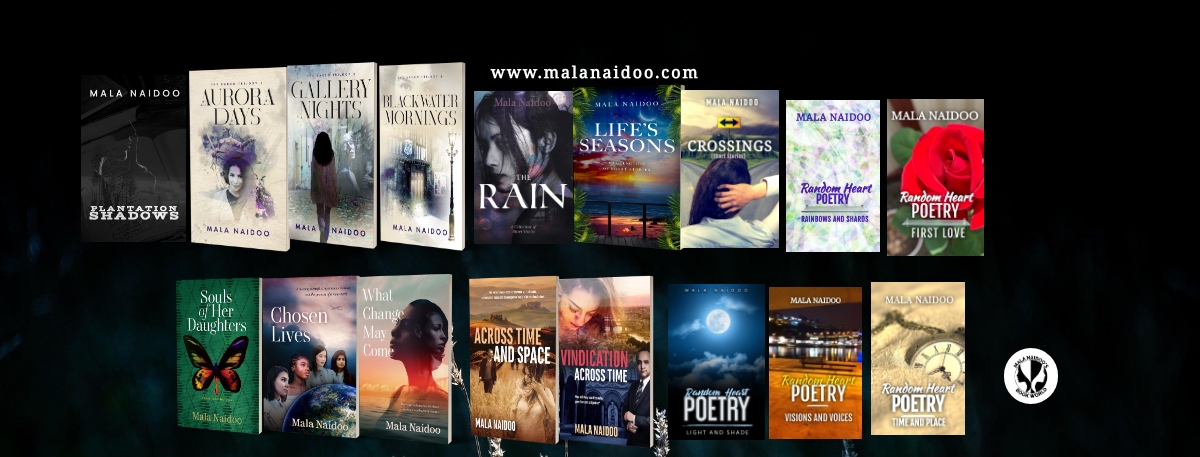
My apartheid past in South Africa had stolen the right to feel comfortable in my skin or to dare to speak out against racism. Hence my debut novel Across Time and Space and the sequel Vindication Across Time, present the bald face of racism as a universal disease through my eyes. My third novel, Souls of Her Daughters exposes injustice on multiple levels.


Fear makes one believe that a name that hints at race would be bypassed by publishers and readers. Listen to the words of author Michael La Ronn who articulates the issues black writer’s face in writing and publishing. Note what he says about gaslighting 


Racism – Inequality – Injustice – Prejudice – by any name must be caught and called in the books we read, movies we watch and conversations we have


The Zulu word Ubuntu refers to the human spirit as it should be:


  • I am because we are
  • humanity towards others
  • the belief in a universal bond of sharing that connects all humanity


In my writing of multicultural stories the spirit of Ubuntu prevails.


What will you be reading and watching in the renaissance of Black Lives Matter in literature?

The movies, In My Country poignantly depicts the Truth and Reconciliation Commission (TRC) in South Africa, and Rabbit-Proof Fence, a gut-wrenching  revelation on Australia’s Stolen Generation are reminders of human atrocities that should never be allowed to recur…

From  Uncle Tom’s Cabin and beyond, voices have raised the alarm but sadly the call to end racism fell on deaf ears. Now it must be made history, an unforgotten one to remind us that prejudice is heinous and should be obliterated from the stage of life. Diverse voices that are in the main ignored, share why the human condition needs a radical shake-up.


Feel the angst, walk a mile in the shoes of the racially downtrodden – only then will you know the corrosive impact of racism.


The wound of prejudice cuts deep to the soul leaving indelible scars.


But you pick your head up, as you do, to face another day no longer silent especially to subtle bias…


In the wake of the change in 2020 and beyond, walk a mile through these suggestions to know and feel that in our diversity the common factor is that we are emotional beings with the capacity to rectify prejudice by the stories we tell and read.


Here are ten suggestions where diverse voices rip out your heart to sensitise your soul.


  1. Long Walk to Freedom – Nelson Mandela
  2. . My Place -Sally Morgan
  3. Talking to My Country – Stan Grant
  4. To Kill a Mockingbird – Harper Lee
  5. The Underground Railroad – Colson Whitehead
  6. Between the World and Me – Ta-Nehisi Coates
  7. Cry the Beloved Country – Alan Paton
  8. The Power of One – Bryce Courtney
  9. The Bluest Eye – Toni Morrison
  10. Race Talk and the Conspiracy of Silence – Derald Wing Sue


May you write and read stories that share histories to sensitise our souls to dismantle racial bias.


← Back

Thank you for your response. ✨

May I tell you?

Growing up in apartheid South Africa as a non-white person, living under the Group Areas Act where you only saw people like you with the same coloured skin, living with the knowledge that your people had to be hidden from view — white view — left scarred for life and needing immense strength to shelve the hurt and pain in memory’s hinterland.


This divisive system invites shame — why am I not good enough? Why can’t I eat at that wonderful seaside restaurant? Why can’t I go to a school with its English countryside setting and Victorian buildings? Why am I afraid every time I see a police officer or paddy wagon? Why can’t I lift my eyes above the ground? What have I done to be born black?

Here is why…

Racism is hatred that unleashes a plethora of negativity both ways: Unchecked power that intensifies with acts of brutality that crucifies an already broken self-concept. Systemic injustice — physical, emotional, and psychological feeds the depraved hands of power. How does the victim deal with an enforced erosion of who they are?

Let me tell you…

There are only two ways: head down — mind their manners or take to the streets to protest. Stop! When power strikes up against protest it is obvious that human survival instinct kicks in and violence erupts. Nobody wants violence — justice is all the victim wants — a fair go — it starts out as a peaceful protest, and if left to do just that, no force is necessary. Let the voices crying out for change be heard or it speaks of intolerance to change.

Then somebody cries ‘looters!’

This is why this happens…

The downtrodden are as the words say it, the ‘have-nots’— denied, deprived, shamed, and blamed for all the ills of the land. Human instinct kicks in again and necessity guides reaction/behaviour. Before we cry ‘looting’ investigate what underpins it. Where there’s social inequity the ‘haves’ have ‘looted’ the country for a very long time taking more than they needed — perpetuating inequity.

History tells us that peaceful protests become violent when the hand of power strikes. Decades before Nelson Mandela sat at the helm of government in South Africa, the country was on the brink of civil war and the Sharpeville massacre of 1960 like the Soweto riots of 1976 started out as a call for justice but led to police taking up arms against protesting civilians who wanted their voices heard.

#BlackLivesMatter is a timeless cry for justice from the time of Rudyard Kipling who referred to the people of the African continent as ‘half-devil and half-child, ’ in his 1899 poem, White Man’s Burden.
Colonialism stole the right to justice — a fair go, for original inhabitants of the land. Assimilation — one way or no way denies culture, heritage and the right of recognition.
.

Remember those fallen at the hands of racial prejudice — countless — the loved ones of grieving families — too many still dying at the hands of what can be changed…if they are heard.


Listen to this Ted Talk by Amy Thunig: Disruption is not a dirty word that pulls no punches on racism endured by Indigenous Australians in a country I call home.

It’s 2020, and some in the misguided grip of power swim in the quagmire of the barbarism of racial prejudice — educated by book not humane moral code — sure-fire intellect — no emotional intelligence. Silence widens and deepens the stain of prejudice. Speaking out against racism does not always win friends and influence people, but the few who join black brothers and sisters in the fight for justice at the risk of losing their tribe — those are the gems that make #AllLivesMatter, for they will pull together to create liberty, equality and we all need fraternity.


What is your choice to be on #BlackLivesMatter?

Stay safe, speak up against injustice but as John Proctor cried in The Crucible – ‘Because it is my name! Because I cannot have another in my life! … leave me my name!’

What do you want to be remembered for?


← Back

Thank you for your response. ✨

Fertilising the Imagination

When access is denied, imagination provides fertile ground for creativity.

The absence of television in apartheid South Africa was strategic, to keep the masses ignorant regarding democracy and justice in a bid to thwart the emerging voices of resistance. Avid reading and listening to the radio for recreation offered many hours of joy in a world where outdoor games were limited in apartment blocks.


Born in South Africa  during the height of the apartheid era meant that I had a childhood devoid of a television set in the family lounge room. The only ‘moving pictures’ apart from the local cinema were those created in my imagination.


Radio held its own fascination with the popular weekly, Friday evening, crime fiction episodes of, Squad Cars. I listened intently, forming images in my mind about places and situations in each episode. My rite of reading passage into the world of crime depicted through voices and sounds grew each week. Crime/Detective/Adventure fiction in children’s books from the Famous Five series to Nancy Drew, The Hardy Boys and ultimately Agatha Christie’s and Edgar Allen Poe’s short stories were hunted down each week at the local library. Visions of snaking queues of children lining up, thirsty for their favourite book is imprinted in my memory. Such were the days…

After school radio programs for children were eagerly anticipated, excitement gained momentum with the chatter of voices speculating what  Noddy (by Enid Blyton) would be getting up to and whether Mr. Plod, the policeman’s kind and watchful eye over Toyland would save another day. Empathy for the skittles who did not seem to care whenever they were run over, filled my waking and sleeping hours. The imagination was ablaze with stories that wove into the stories of my mind’s eye. The imagination was fertilised with self-created images of places, characters, and events. An emotional investment of compassion for those who struggled or were mistreated and revulsion for those who harmed others was set in motion.

Listening and reading awakened the inner being as fodder for the imagination in the years ahead in the creation of my own stories – in the adult years, I turn back to my own voice recordings of my reactions to places I have visited, places that I have been moved by, to mulch and refresh an evocative sense of place through the voices and visions of my characters.

Audio books are a blessing, like reading is, to supercharge the imagination for a personal take on people, places, and events that ‘moving pictures,’ with all its commendable grandeur, might not quite fuel.

‘Logic will get you from A to B. Imagination will take you everywhere’- Albert Einstein

What do you think?

← Back

Thank you for your response. ✨


error: Content is protected !!