Tripartite Character Connection


Quick access and the desire to know more, allow novel/film/ trilogies and series to thrive.
Writing a trilogy is planned either before Book 1 is written or while the first book is being written, but in my case, it emerged as the first book ended. Films such as ‘Mission Impossible,’ ‘Pirates of the Caribbean,’Spider-Man,’— to name a few, and novels: ‘Century Trilogy Series’ by Ken Follet, ‘Border Trilogy by Cormac McCarthy,’ ‘African Trilogy’ by Chinua Achebe, and ‘Hunger Games’ by Suzanne Collins — and so many more… have stood the test of time.

Being more of a pantser is probably the reason why Book 2 emerged after Book 1 was completed, thereafter a plan was mapped for each book which morphed along the way as characters spoke about their lives/situations. What is originally envisioned does not really end up as expected —  this is my experience.   With Souls of Her Daughters, each book that follows may be read as a standalone book or in combination as a trilogy.


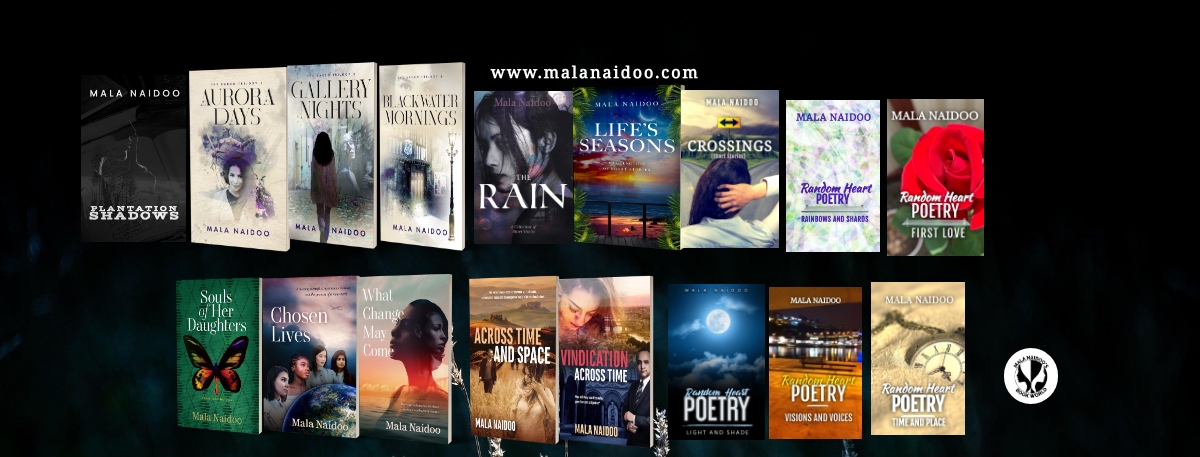
In writing Souls of her Daughters, Chosen Lives and What Change May Come  two arcs are included through the lives of sisters Grace and Patience, first as sisters, and then as professional women. Felicity Cassano, friend and associate to both sisters is the third arm in the tripartite connection.  There is also the suggestion that Andrew Lang, young, handsome intern at City Hospital could be the third connection — ultimately the reader will pick a favourite for a host of reasons — tragic childhood or unrequited love, the emotional hook shapes preference.

Trilogies allow the inclusion of a range of characters to enter and intersect with the main arcs. Book 2, Chosen Lives, sees the entry of Ming, Audra, Masuyo and Zuri. This adds intrigue and colour to the lives of each character in their growth and development through the three books. The beginnings of a love story in Book 1, develops in Book 2, faces challenges in Book 3 adding more drama and intrigue in the rocky life of Grace with her beau Keefe Daly. Patience’s social justice initiative in creating safe houses for women of abuse in Australia sees her traveling to different places and finding commonality of the human spirit in any geographic location. Multicultural representations feature in all my books as an expression of a world where difference is of no consequence, professionally and personally.


Additionally, characters that attract negative attention for their human flaws in Book 1 can transition in Book 2 or Book 3. Such is the situation with Felicity Cassano, the legal eagle with good intentions that go awry in her sharp-tongued impulsive criticism of Grace, a medical practitioner she believes is somewhat faint-hearted.


We are voyagers, discoverers of the not-known… we have no map ~ (from HD – Hilda Doolittle’s – Trilogy- Tribute to the Angels) 


Trilogies have value for both readers and writers — readers immerse themselves in the lives of fictional characters by finding limitless connections to their own worlds, and the writer relishes the depth of creative expression in fleshing out lives and situations that leave the reader wanting more.


What are your favourite trilogies? Drop a comment in the box below.


Happy Reading! Happy Creating!


← Back

Thank you for your response. ✨

Writing: Historical Memories Recalled


Historical fiction entertains and feeds memory. I remember teaching, Jackie French’s Hitler’s Daughter, and noted students’ curiosity on whether Hitler did indeed have a daughter. Research flourished and wonderful creative writing emerged.

Some of my favourite historical reads are, Charles Dickens, Tale of Two Cities with London and Paris during the French Revolution, Margaret Mitchell’s Gone With the Wind, a tale of the American South during the Civil War, Salman Rushdie’s, Midnight Children, a story of children born at the time of India’s independence from Britain.
The lists are endless and as diverse as the world we inhabit.
Currently, I’m reading Orna Ross’, Her Secret Rose (The Yeats-Gonne Trilogy 1) cited as a ‘delicate balance of fact and fiction…’ (bookbag UK)


Writing drawn from history emerges as an unconscious process in some of my books. The experience of apartheid atrocities comes through in Across Time and Space and Vindication Across Time and underpins leaving South Africa in Souls of Her Daughters. History might be more explicit in some and more subtle in others but it emerges from the deep well of the subconscious – the unforgotten seat of memory.
‘…sit down at a typewriter and bleed,’ as Ernest Hemingway aptly stated is where authentic stories emanate from – that space of creative intensity.

Today marks a significant day in South Africa’s history, country of my birth. June 16, 1976, was the Soweto Uprising that changed the socio-political landscape. It was a day when police fired at peaceful demonstrating students – the images of this brutality surged international revulsion. From this dark history, the most soulful artists emerged, creating music and poetry that stirs the soul to this day. The seat of struggle and suffering creates indelible timeless stories.

As a fiction writer and teacher, histories of the world find their way into some of my stories. The responsibility rests with the writer to present the accuracy of the histories chosen, not in a textbook rendition, but through selective and extensive research to create believable nuances of character, place and situations for palpable connections to the past.

The joy in reading historical fiction is in being transported to a time and place as an observer of significant moments, or better still, experiencing an era through brilliant writing.


What’s your favourite historical fiction?


Happy Reading, Happy Writing!


Share your thoughts on historical fiction in the comment box below.

← Back

Thank you for your response. ✨

Fiction: History, Culture, Truth

Every voice like every story has its place in the world. A niche audience might be readers of a particular history, people and culture of forgotten voices.
In an era that has in so many ways moved leaps and bounds forward, the opposite is true of human tolerance. Everywhere we dare to look, the capacity of the human spirit for evil outweighs the good around us, often overshadowing a multitude of voices and actions for common good.

Stories, fictional stories, even if thematically dark demonstrates the human capacity for change.
Fiction has had and continues to have the rite of passage to dismantle oppressive notions of the wicked side of human nature.


At the Sydney Writer’s Festival last week, the festival theme, ‘Lie To Me,’ resonated with memories, of the apartheid era where race and power/powerlessness named and played the game, and understanding of the impact of assimilation on the stolen generation.
An evening of storytelling affirmed the need to keep telling our societies’ truths to dispel the mistruths in the media, in politics and the use of social media as a tool to denigrate.

Forgetting past atrocities in no way heals the human condition. It’s a double-edged sword — remembering keeps the pain alive, but alive in recall that has the potential to thwart such heinous future acts. To quote Descartes, ‘I think therefore I am,’ is significant, but must be married to, ‘I feel therefore I am,’ and what better way than through a fictional story that ensures that the movement towards human value for all lives, does indeed matter.

Those who cannot remember the past are condemned to repeat it. ~ George Santayana

Cultural stories of forgotten people hold them in conscious thought, remembered as life lessons to pass on to the next generation. While such stories might have a micro niche audience because they tell of the far-flung corners of history, they must be told.

Lines from Vindication Across Time sees the character Marcia Ntuli telling Michael Morrissey, a human rights lawyer about her mother’s hardship as a single mother under the apartheid regime.

Mama Dolores…the police would barge into our home and drag her to the police station for questioning. They were rough with her, they broke things in the house… kicking her in the back, calling her an evil kaffir. It was horrible. ~ Vindication Across Time.

Michael walks in Marcia’s and Mama Dolores’s shoes to gain an understanding of what preceded democracy in a troubled land. His theoretical basis on what constitutes human rights has a ‘live’ life lesson in a recount of the terror Marcia’s mother endured at the hands of the district police. This, in turn, opens the depth of understanding on what might have been misreported in historically written and spoken accounts of this era. The voices of men/women struggling on the fringes of society are left forgotten if not told through story, to entertain and awaken compassion that a history forgotten is dangerous — it lurks in the dark corners of the mind ready to be unleashed in the terrors we experience today.

The storyteller has the power to dispel untruths by telling stories that make us uncomfortable, those stories that some publishers are reluctant to put out into the world, so why wait, when a world of empowerment, without gatekeepers, awaits the telling of unheard stories.

Go tell those stories today. Keep an underrepresented history alive, in the minds and hearts of a niche audience in engaging fictional stories -stories that tell of truths that have been swept under a forgotten, tattered rug.

Share your reading that has inspired a new wave of thinking in the comment box below.

Happy Reading, Happy Writing.

← Back

Thank you for your response. ✨

Fiction: Perfection in Imperfection

Perfection is too exhausting. It’s not true to who we really are as individuals, communities, and societies.

Fictional characters echo this representation of imperfection without necessarily being labelled Shakespeare’s Iagos of the world –  they do exist – the first page of the daily newspaper or the first news item on the evening television news reveals that Iago exists in politics, education, the corporate world, and other dark corners.

Nobody is as good as gold…

My tag line, Perfection in Imperfection, the themes in my novels, and short stories, and essentially most novels, illustrate that life is just that – a mix of the good, the bad and the ugly. Nothing is perfect nor is anything entirely imperfect – there is always a reason for the apparent ‘imperfection,’ the interpretation of which is dependent on one’s value system in either accepting or rejecting a perceived ‘imperfection’. The psychological benefit of understanding that ‘perfection,’ as defined by ‘particular’ standards,  is not the norm, invites the greatest learning in appreciation, understanding and compassion which is born from trial and error or walking in the shoes of others.


Perfection bores, it disconnects the reader from the lack of reality evident in the world around. A saintly character who holds pious thoughts and performs selfless acts through the duration of a story might offer some inspiration, but insufficient entertainment value for the reader. Give that saintly character’s perfection a dent or two and they are endearing as human after all.

The socially moral cop with a particular weakness, perhaps peeling bags of onions, eating tubs of ice cream, or engaging in a ‘monkey-ish’ tossing of almonds into his/her mouth, or some such habit, when a case is in a deadlock or about be nailed, is either loved, creates amusement, or is despised. Inspector Aldo in Vindication Across Time, a man who controls the media and women, particularly the rich, widowed, and lonely like, Ana Kutnetsov, a housekeeper with a big heart, and a secret past, grates on every character’s nerves. He is enigmatically dark – a looming manifestation of Iago.

Literary heroines such as Tolstoy’s, Anna Karenina, illustrate this point, and Margaret Atwood’s speech, Spotty-Handed Villainesses, on the good-bad women of literature highlight the fallacy of crafting perfect female characters as unrealistically flawless or insanely bad. Flaws might engender empathy in the reader when weaknesses or vulnerabilities are exposed, not the overt Jekyll and Hyde associations – which exist, depending on the genre of the tale.

Nuanced human foibles draw connections and acceptance, that to err is human. From Count Dracula, Robin Hood, Ned Kelly, to Portia and Desdemona – it’s the yin and yang, the balancing between the scales of imperfection and perfection that makes them timeless characters through reader held values, and the emotions elicited.

Perfection in the natural world is not assured, periods of drought, fires, snow and floods, etc, strengthen human and animal reactions or behaviour to changeability.


As What Change May Come is released this week, my heroes and heroines are both weak and strong. Even the selfless character Patience has her weaknesses much to the embarrassment of her sister Grace. While there are consistencies of characterisation across the three novels, Souls of Her Daughters, Chosen Lives, and What Change May Come, there are times when change elicits or decrees an unexpected behaviour in the character. They are all human after all and aren’t we all?


Happy Writing, Happy Reading!


Please share your thoughts on the topic in the box below.


← Back

Thank you for your response. ✨

Food and Fiction

A good story, like good food, is an unforgettable experience.

In the creation of fictional worlds, the protagonist comes to life through his or her foibles, eccentricities, habits, relationships, hobbies, voice, mannerisms etc. While sensory details include the sounds, we hear and the images we see, through the words on the page, the degustation in a fictional novel brings the reader to the table, heightening the sensual effect in a shared meal with characters.

In my debut novel, Across Time and Space, the aging Ben loves kippers and poached eggs for breakfast. In the sequel, Vindication Across Time, while breakfast is important, especially when Ben and Meryl overhear a conversation in a tiny restaurant, on the dark history of the mysterious Professor Andrei Malakov – it’s the journey through South Africa’s gustatory delights that bring drooling joy as barbecued corn on the cob – braaied mielies, to locals, on the breathtaking beaches of the Cape, chilli pineapple in, Sweet, salty, hot and pungent collided, tantalising Michael’s tastebuds. And then who can forget the delectable Kaapse snoek! In contrast, back in Florence, Meryl consumes endless cups of coffee as the trial drains her emotional and physical strength. Her favourite chicken pasta and prawn linguini meals are left untouched as her mind swims with horrific thoughts on where her life was heading.

In the trilogy, Souls of Her Daughters, Chosen Lives, and the third book, out this April, What Change May Come, Thai Delight, a fictional place, is Patience’s favourite restaurant, but both sisters, Grace and Patience find great joy and comfort in cooking and eating their mother’s signature chicken curry – their memory of her is alive in love and food. Grilled salmon, thoughtfully prepared for an elderly neighbour is pushed aside as she perspires through, and relishes Grace’s fish curry, saying, You have your mother’s touch with the delicate spicing, what a scrumptious meal... There are wonderful Mediterranean breakfasts, turmeric lattes and cardamom chai for a full international array of gustatory heaven!


I need chillies to warm my soul’ ~ Patience says in Souls of Her Daughters


From the spicy to the crisp – ham and cheese croissants, in the April release of What Change May Come, complements the racy change and quick food that others bring to Grace and Patience.


Food and fiction are a formidable combination, setting the mood of the moment, letting the reader into a part of the character’s life that we all enjoy – eating as a necessity, or social activity, regardless of what we eat, or where we eat it.

Food will always feature in my fictional tales as comfort food, memory food, and soulful food.


Cheers to more, tasty, thrilling tales!

Share your thoughts in the comment box below.


← Back

Thank you for your response. ✨

The Art of Conversation in Stories

We enjoy a good yarn, some more than others. The reticent and the chatter-box are encountered as part of our daily social interactions. How much is enough or too much in the stories we create?


Dialogue works:

 To move the story forward
 To give information
 Contribute to characterisation
 Gives the character their ‘own’ voice, makes the character seem real or ‘alive’
 Creates a basis for understanding the thoughts and values of the character
 Shapes understanding for some of the actions a character engages in
 Aids understanding of the relationships between and among characters

 Consider When Constructing Dialogue:

 How much to include: It depends on the role the character plays- is it a significant or minor role in relation to the plot
 Is the conversation a distraction or diversion for a particular reason?
 Intersperse dialogue, pace it with some narration by describing the character’s mood or emotions through their actions- clearing the throat or twirling a strand of hair, tapping on the table, humming a particular note, etc- this connects the reader to the emotional state of the character
 Consider carefully whether you should use dialect in your speech- will it confuse your reader or will it create a connection to your reader- this must be based on your familiarity with your audience.
 Avoid unnecessary or stilted dialogue, this fills white space and will bore the reader eg :

– ‘What’s the time Jill?’
-‘Ten o’ clock Jack.’
-‘What time should we leave?’
-‘I don’t know, maybe 11 or 12, what time do you think is best?’


An awkward conversation in Jane Austen’s Sense and Sensibility.  This draws us in, the voyeur craves more- tease in subtle politeness if you must, at first, then reveal all.

Then there is the embarrassing conversation moment:  Eliza Doolittle’s ‘The new small talk.’


 Make it realistic- people do not socially speak to each other in one continuous block (beware the chatter-box! They do exist!) there should be some stops and starts, fillers and shifts depending on where your characters are conversing with each other- Is it in a coffee shop? On the telephone? In a doctor’s waiting room? On the bus or train? – Fillers and distractions could be drawn from what is happening in the coffee shop, on the bus or train etc. Additionally, the formal or informal tone of the conversation depends on who the character is speaking to.
 The relationship between characters in conversation is significant to guide how comfortable or strained the conversation might be.
 Do not include endless pages of dialogue – your characters must interact with the environment to avoid them becoming ‘talking heads’ or disembodied from the setting.
 Use the five senses to pace your dialogue- what does the character see, smell, taste, touch or hear.
 Example: ‘I was worried that Jill would be upset with the plans and called several times but she did not pick up.’ Her voice trailed off with the whisper of trouble in the air.
This might engage the reader to pay careful attention to this subtle warning.

 From Dead Poet’s Society: ‘But poetry, beauty, romance, love… these are what we stay alive for.’ – a favourite line!


Happy Reading! Happy Writing!


I write from real life. I am an unrepentant eavesdropper and collector of stories. I record bits of overheard dialogue. ~ Chimamanda Ngozi Adichie, author of ‘Americanah’

Add your thoughts in the comment box below:

← Back

Thank you for your response. ✨

How do you name them?

An interesting question recently from a reader prompted this post on whether the names of my characters were people I knew. As a writer I could say, yes, I do know my characters between the pages of my books, and fiction mirrors life as the angst, joy and foibles of individuals.


Meanings behind names have always intrigued me.


I  choose names for some characters that befit their personalities and behaviour or represent the opposite of what they are. In Souls of Her Daughters, Grace and Patience are indomitable women in the face of the catastrophes that befall them. Grace’s mother,  Varuna, has her name taken from the Sanskrit equivalent that attests to her strength as one who embraces all, hence she is the embodiment of the god of water and the celestial ocean surrounding the world.  Her inner strength and capacity in how she copes with the murder of her devoted, humble husband, and subsequent chastisement and ostracisation by her extended family does not alter her essential goodness. Grace, Varuna’s biological daughter, and Patience, her adopted daughter endure horrific persecution, of a cultural and tribal nature – Varuna will stop at nothing to ensure her family is reunited, while she continues being a person for others in her neighbourhood. 

In the sequel to Souls of Her Daughters, Chosen Lives sees the introduction of new characters, who are named in a similar vein, sometimes with demographic relevance, or drawn from Greek mythology – Xandria, defender of humankind, much the same as Alexis – helper or defender. Zuri, a Swahili derivative, means inspirational, beautiful, truth-seeker, and more. The head of the mission in  Chosen Lives, an underground movement for a new world of women leaders, is named Masuyo, which means to profit or benefit the world. A mission recruit, running a school for women in India is Akanya, meaning peace and humility which she exemplifies in her interactions with others. 

On the other hand, the character, Felicity, family friend and colleague to Patience, is far from what her name suggests, given her difficult childhood – her razor-sharp mind is admirable. The Arabic name, Azmil, means light, given to a young man who lost both his parents at the hands of rebel forces in Pakistan. The work he does, at the Well Study Centre,  makes him the light to many orphaned young women.  The snatched memory of his mother fosters his commitment to young women in his community.

The character, Audra, has a childhood of neglect by affluent parents, her name as explained in her testimony, is a celebration of the beauty of Audrey Hepburn. As she says, ‘to my Ramon,  I was Audra.’


A multi-cultural cast of characters representing diversity in harmony 


The third part of this trilogy, being written, will follow through with similar thought for new characters that emerge. Each of the three novels is a standalone read, too.


In my debut novel, Across Time and Space, and the sequel Vindication Across Time,  Keres Bathory is a name drawn from a combination of Greek mythology and a historical character – a combination of one who disturbs the universe.


Aspects of a character’s behaviour might be drawn from observation which is married with imagination to serve the role they play in novels.

What’s your fascination with names in stories or the people you meet?


Add your comment in the box below.


Happy reading, Happy writing!

← Back

Thank you for your response. ✨

Book Blurbs

Book blurbs are as important as the cover story of your book. It’s what readers look at to decide if they will take it home to love. Why? Because they cannot walk away from the temptation the blurb triggered. Think of it this way, if you’re a chocoholic, or one who cannot walk past a coffee shop, without going in to pick up a cup of your favourite beverage, because the aroma is overwhelmingly tempting,  or the sight and smell of your favourite chocolate bar, is irresistible enough to make you pick up many bars,  while you chomp on one on the way home!

It’s not that easy with a book blurb, but the temptation must be created through a strategic choice of keywords, associated with your genre. Tap into the right sensory imagery, tug at emotions, create a connecting interest. Say enough to grab the reader’s interest, to make them want to know more –  that should be your blurb goal.

Captivating your potential reader in 200 words, including your intriguing heading, is the sum of the blurb. Second, to the book itself, the blurb is a significant part of the book package. It’s a sales pitch that has to have a timeless ring. Intrigue without giving too much away is the trick. It takes several drafts to perfect the blurb, and it might also mean going back to it after your book has been published, to tweak your choice of language by perhaps escalating how you  present tension or to cut back on the number of words used etc, to draw more reader interest and enhance book sales.


Short, Concise, Punchy, Captivating


Often the blurb is left as the final step in creating a book. It’s a vital part of your book package and should be developed along with the writing of the story. A summary point of each chapter should be written to have a storehouse of ideas to draw from. Play around with possible blurbs as you are writing your novel. This morphs as you reach the middle or end of the writing process. The crafting of the blurb becomes less onerous this way.


A few suggestions to consider when constructing a blurb.

  • Who is my audience?
  • How will I entertain them?
  • What emotions do I want to elicit?
  • What’s at the core of my story – my purpose?
  • What’s the high point – the point of challenge and intrigue
  • What does my book offer?
  • How will I create a sense of place
  • What will I say about the characters?
  • Avoid spoilers
  • Use a hook opening line/question
  • Use hyperbole to heighten reader interest
  • Keep your voice/tone authentic
  • Write a blurb tailored to your genre
  • Keep it succinct, punchy, captivate the reader
  • End with a cliff-hanger

A book I recommend reading and drawing skills from in writing a killer blurb, is Bryan Cohen’s, How To Write A Sizzling Synopsis. It’s a step by step guide to a sizzling synopsis.

Write your killer blurb for your next brilliant story!

Please share your thoughts on what grabs you in a killer blurb, in the message box below.

Happy Reading, Happy Creating!

← Back

Thank you for your response. ✨


The First Draft

When a story takes hold, leaving you sleepless, daydreaming… the first words trickle in, you write them, and you can’t stop going back, creeping back to your laptop or journal to write a bit more. When the writing bug bites, it’s there to stay, calling you wherever you are.
There’s an excitement, a thrill, the adventure behind closed doors…  just you and your characters. With each line, you get to know more about them, then it’s almost as though the characters lead you into their stories.

The first draft is an exhilarating experience even if you have written a few books. You can’t stop thinking about it, you wake up at 3 a.m. with a jolt of inspiration, and if you don’t write it down, it’s gone… I have had a few lost… gone… but a 3 a.m. journal, a  gift from my daughter, is safely ensconced on my bedside table, close to my reading lamp,  capturing the late night unexpected bouts of inspiration that intrude upon restless sleep – not even a blaring alarm clock can do this on any good day!


Starting out

Starting out as a writer, I had two stories competing for attention. Thinking that this might be the one book I will write, I merged the stories, hooked them as plot and subplot. Across Time and Space pulled and tugged at intrigue, unexpected encounters, crime, romance and human rights issues.

Discovery

From that first draft of my first book to the first draft of my fourth book (locked in editing as we speak), my process has morphed along the way. While being between a plotter and pantser, I moved from laptop screen drafting to handwriting some chapters in a journal. 

This sped up the drafting time, I was writing by hand with speed, more naturally than the words that filled my little laptop screen as I tapped my way forward. I then started writing in my little journal, my second arm, traveling with me wherever I went. No backspacing, just scratch and keep going… forward… ideas gushed, building up at a faster pace.

The benefit

Having a chapter crafted by hand gave me so much more to work from and editing, stage 1 began as I typed up the manuscript. I noticed the difference from those chapters that went from head to screen from a basic ‘pantser plan’ to those chapters that were handwritten – less cleaning up and more ideas emerged and flourished to grow the plot.

As each handwritten chapter was completed, the digital chapter was typed no longer than a day later. The ideas are fresh, too much of life and its distractions have not happened in twenty-four hours or less, (fingers crossed) so there’s no fear that distractions will play havoc with the handwritten chapter, all that happens is a bit more spit and polish.

Am I converted?

I can’t quite be sure on that but I have stacked up on the journals that I feel comfortable writing in – the easily portable type, the ‘anywhere journal’ when inspiration strikes, even at 3 a.m.

How about you? Do you write from head to screen or are you a paper and pen person first?

Please share your thoughts in the message box below.

Happy Reading, Happy Writing.

Tell your remarkable story today to touch a life or many lives through storytelling.

← Back

Thank you for your response. ✨

Story Ideas

As writers, students, readers,  we often hear, ‘where do all these ideas come from?’

There is no short answer to that question. Write what you know is not a mandatory ingredient to write well, to pique your readers’  interest.

Drawing from universal life experiences to create your work of fiction shapes characters and situations. At the heart of the story is the writer’s passion to either showcase a better world, expose the ills of the world or present hope in dark situations.

Thrillers can be inherently dark but genre in contemporary writing morphs into what the story becomes, often crossing more than one genre.

Crime Fiction will reflect the elements of the genre, as would Romance – what good would these be without a dead body, missing person, corporate embezzlement or terrorism etc. Crime Fiction without investigation is, for me, like eating apple pie without the apples. Imagine romance without lovers? While these might be diverse genres, the point of commonality is conflict.

Conflict keeps the reader, hanging on, will there be a resolution or does the tension mount, will the character I’m rooting for, be saved, loved, killed or elected etc?

To deny that conflict is a significant aspect of life (as much as we abhor it – oh the drama of life!) while creating a perfect world with perfect characters would no doubt be like having a dose of ‘soma’ as in Aldous Huxley’s Brave New World. 

In creating characters, the potentially ‘good’ characters that are fraught with conflict, are truly memorable ones. They represent the reality of life through fiction – a point of reader connection. Shakespeare’s mastery on the creation of the ‘good wayward’ character, is timeless, and there are many such writers who create unforgettable, quotable characters.

How do you imagine and create your character ideas? Where do they come from?

Observations of people in the bustle or stillness of life, the man sitting on a park bench or train alone, lost in thought – Who is he? Where does he come from? Why is here? Why is he alone? What is he thinking?- A story idea prompt is wherever you are in your day.

Who is he? What’s on his mind?


Turning to the works of influencers of the craft will create inspiration for story ideas:

To quote Stephen King, ‘You cannot hope to sweep someone else away by the force of your writing until it has been done to you.’ attests to ‘Reading a lot and writing a lot,’ as essential for generating ideas, developing and enhancing your writing style.

Reading gives the composer a storehouse of ideas to draw upon in creating a new, unique story world that readers connect to.

Keep reading, keep observing the hive of life, learning about new ways of thinking and behaving, story ideas abound around us.

Writers Block you say?

 It was the best of times, it was the worst of times, it was the age of wisdom, it was the age of foolishness…it was the spring of hope…we had everything before us (A Tale of Two Cities– Charles Dickens)

There’s much on the social and political landscapes, history in the making, story ideas can be a fusion of the past and present, to shock, delight, inform and move your reader.

Continue reading “Story Ideas”

Where to go for writing support?

Often writers feel alone while tapping out the stories that come tumbling out of imaginative worlds with a benevolent muse guiding the next brainwave.

Writing starts out feeling like a lonely affair and the actual writing will always be a lone love affair with your writing tools – however, the number of support communities available to writers is phenomenal. Facebook groups with experienced authors and authorpreneurs abound.


You can choose to actively engage in these forums or lurk a while until you find the courage to ask a question or respond to someone’s question. There are local groups such as Writers Around Australia created by Lisa Braun and Tina Bonett who generously share posts and ideas. The New South Wales Writers’ Centre to keep up to date with advice and events. The Professional Association I find immeasurably beneficial is ALLi based in the UK, established by Orna Ross with a team of talented and experienced authors, with a worldwide membership.


The Platform for Building Authors and Authorpreneur Mastermind by the Winsome Media Group, established by Juliet Dillion Clark is inspirational and provides valuable advice on how to grow your author platform to get noticed to drive sales.

An excellent inspirational forum to enhance your speaking skills (as authors we are inclined to be introverts)  and seek speaking opportunities to add another stream of income to your job as a writer, is Big Impact and Income Speakers under the helm of  Amondarose Igoe. Here you will find inspiration and support to build confidence and grow your author business – both Winsome Media Group and Big Impact and Income Speakers are US based.

The SPF community established by author Mark Dawson is a great sharing and advice UK forum with worldwide membership. Women Writers Women’s Books is a supportive, informative network of authors created by Barbara Bos. BooksGoSocial Author’s Group run by four dedicated administrators offers advice to authors through sharing ideas and is great for marketing your books.

Ebook and POD

Following a range of podcasts and signing up for webinars allows authors to connect with developments in a rapidly changing publishing landscape.

I religiously follow The Creative Penn, ALLi and SPF Podcasts and select topics from a range of presenters on other forums as the need arises – quite often I might add! Smart Author podcasts with Mark Coker from Smashwords publishing platform offers solid advice for authors starting out.  So you want to be a writer (Australia) with Valerie Khoo and Allison Tait covers a range of topics from local to global writing and publishing trends.


Digital publishing platforms that are providing excellent services to authors are Draft2Digital with a range of great features for new and established authors.  Kobo offers distribution to Canada and the Netherlands. KDP is a prominent publishing platform from the dawn of eBook publishing. (2007) – the choice is vast, you eventually find your comfort zone and work with your chosen publishing platforms. Reedsy, UK based, provides a range of vetted services as does ALLi from editors, to cover designers and Reedsy provides an advanced formatting book service. For an Australian based formatting/cover design service go to WorkingType. 


For POD, IngramSpark and CreateSpace/KDP provide excellent platforms to get your print book out into the world.

There are many more services and professional author bodies available, after trying them you eventually settle on your ‘favourites’ because you can’t possibly follow all. Being selective ensures you are not doubling up and eating into your writing time, the most crucial aspect of your writing career.


There’s an oasis of supportive networks out there, reach out and you’ll be amazed at the wealth of advice you will receive.

I hope you find the platforms I respect and trust beneficial for you on your writing journey.

Happy Writing! 

Sign up to my website for newsletter updates on my latest tips and upcoming books.

← Back

Thank you for your response. ✨

Leading Lines

 How often have we heard that first impressions are lasting? Does the same apply to the opening lines in novels?

An attention-grabbing opening to a novel, not the head-standing, acrobatic, high energy stuff but a carefully crafted opening is a sure-fire way to spark the curiosity of the reader to continue reading.

Leading the reader in without saying too much by judiciously leaving out some essential details elicits intrigue for the reader to pursue the tale to its conclusion. The reader should discover aspects of a character’s world by being invited to be part of the journey. Those discoveries do not have to be palatable to the reader. A favourite character might reveal a side of their personality that perturbs the reader. The unexpected sustains the intrigue. In the real world, perfection is an illusion, to quote Alexander Pope, to err is human, to forgive divine. I fondly recall the podcast with Sevgi Yildiz, coordinator of the Sydney Bookclub, who said she ‘threw the book’ when her favourite character from her reading of Across Time and Space was not as saintly as she had wanted her to be. Emotional connections are indeed what keeps readers wanting more.

A sequel carries a known backstory but it should also be satisfying to read on its own without knowledge of the first book. Without summarising the first book, the opening lines should invite the reader in with glimpses into what went before which puts all the pieces of the larger plot puzzle together.

Opening lines of a book often take several redrafts to ensure that the right balance is achieved that leads to a natural flow from the first book into the sequel.

This is a skill that improves with each book written after several self-edits before the professional edit is solicited.

Continue reading “Leading Lines”

Tools of the Writing Trade


My writing career started in a somewhat circuitous way with writing stories for an audience of one for many years until a story emerged that ran through to become my debut novel, Across Time and Space. It was then that the decision to publish emerged with some coercion from those closest to me.

My journey was a cart before the horse situation as all that I am about to outline to you happened after my debut novel was in the process of being published by a publisher.

It is for this reason that I decided to write this post to pass on what needs to be done, in the initial stages, before the process of writing begins.


As a writer, aspiring writer or fully-fledged published author we all need additional writing tools to sharpen the craft for an enjoyable and less stressful writing journey.

What do you do? Where do you go to set yourself on your merry, enjoyable writer’s journey?


Here are a few questions:

Before you begin writing:


  • do you have a plan for your writing journey?
  • are you following influential writers?
  • are you reading extensively into your preferred genre?
  • are you attending book festivals and conferences?
  • have you started creating an online presence?


Before you publish:

If you self-publish you should consider all of these and if you are going the traditionally published route some of these steps have to be undertaken as marked by my asterisk


  • do you have a Goodreads reader/author profile?
  • have you set up your Amazon account and author profile in the countries you hope to sell your books?
  • do you have a Kobo account?
  • do you have an iBooks account?
  • do you have a Draft2Digital account to have it all done for you?
  • do you use Ingram Spark/Createspace/Smashwords or all publisher/distribution channels?
  • do you belong to writing organisations online or groups in your hometown?
  • do you have a Facebook Page/Meta where you create an engaging presence?
  • do you have a Twitter/X Account?
  •  do you have an Instagram account?
  • do you have a website or blog site?
  • have you started blogging and have an engaged audience?
  • if you are self-publishing, do you have a freelance editor and cover designer enlisted?
  • have you bought your ISBN for your book?
  • have you registered your title?
  • have you lodged your book with the National/State Library (Australia)
  • if your books are in public and school libraries- have you registered for PLR and ELR?
  • do you have proof-readers?
  • are you able to enlist legitimate (ARC) reviewers?


While you are writing

What software do you use?

  • do you do a handwritten first draft?
  • do you use  Microsoft Word to type up your manuscript?
  • have you sourced other software to write and format your manuscript?
  • would you dictate your novel? do you have the software for your audio needs for dictation?


After you’ve published your book:

  • How do you market your book?
  • Even if you are traditionally published  –  you have to do your own marketing. The onus is upon you to get your book out there.
  • Will you have a ‘live’ book launch or will you have a Facebook or website launch of your book?
  • Will you be open to giving talks to aspiring writers?
  • Will you engage the media?
  • How much will you invest in marketing your book? Consider the ROI and check all options.
  • Do you want your books in bricks and mortar stores only?
  • Do you have print and eBooks published?
  • Have you considered creating an audio version of your book?


After my roundabout entry into writing and publishing, I am trying new tools for my third book and will report back in a few months on how I fare with my new researched tools.

I encourage you to continue pursuing your writing dreams and hope you can take something away to begin your writing journey.


The world will be a dreary, sad, isolated place if our stories were not written and shared. – Mala Naidoo


Please share where you are in your writing journey and what works fantastically well for you in the comment box below. If you are thinking of starting out,  let’s  begin the shared conversation today.


Happy Reading and Writing!

← Back

Thank you for your response. ✨

Are you a dog with a bone?


In my world being a dog with a bone is sometimes needed to get the job done.

Persistence pays.

By the same token, I am aware how utterly annoying the person who is always a dog with a bone can be … gnawing at issues or situations for self-aggrandisement. They gnaw at the issue or situation with dogged intent. Is it with a power-laden agenda to prove a point and claim a hubristic victory?


An ego trip might well motivate a dog with a bone syndrome (my definition) hence such characters are quick at the ready to prove a point, make a statement or perhaps just want to be heard. A sad dog with a bone.

This excessive gnawing suggests self-obsession, the ‘look at me’ need.


determined puppy


You will find this character type in my novel, Vindication Across Time, or can you identify characters in literature you’ve read, where such attributes are identifiable?


How about some of these characters?

-Shakespeare’s Duke Orsino in Twelfth Night hankering after love:

If music be the food of love, play on/ Give me excess of it, that, surfeiting/The appetite may sicken and so die.

– Shakespeare’s King Lear in the play by the same name, desirous of hearing how his daughters love him:

which of you shall we say doth love us most. That we our bounty may extend. 

A vain ploy, albeit by an aging king and father, to ‘buy’ profanations of love.

Note the positions of power in each of the above, male, duke, king, etc.


But what about the humanitarian goal-focused dog with a bone? What defines this person?

#courage
# resilience
# hope, authenticity, and determination
# achievement
# embraces challenges
# wants the best things in life for self and others

Shakespeare’s Cordelia, King Lear’s daughter, says:

I love your majesty according to my bond, no more no less.

This girl tells it like it is! She speaks from the heart in her truth. She stands by her truth like a saintly puppy with a bone, she is prepared to forgo her part of her inheritance from her father’s kingly estate in:

Nothing will come of nothing. 

This is an admirable quality which has been included in my novel, Across Time and Space. Who is it?

  • Meryl?
  • Marcia?
  • Ben?
  • Andrei?
  • Michael?

I leave you to decide.

But while pursuing these noble intentions, individuals/characters might walk all over those who support and promote them by becoming consumed by their goals, to the point of frustrating others with their exuberance, self-centred, and misfired passion.


So how does one or one’s crafted character become a pleasant goal-focused dog with a bone?

# have a purpose that will also benefit others
# know when to take a break from the bone of self-promotion – in other words, give the jaw a break.
# consult with peers and others and share by being an active listener.


Where are these characters in literature?

How about Friar Laurence in Romeo and Juliet? He knew he could no longer prevent Romeo from wanting to marry Juliet, so he dutifully got them married.

And the upright, Atticus Finch,  in Harper Lee’s To Kill a Mockingbird who was relentless in proving the African American, Tom Robinson, innocent of the allegation by Mayella Ewell and her father Bob.

The dog-with-a-bone fictional characters make interesting case studies and create engaging plots with perhaps a  moral lesson.

A valuable, and historic determination is Martin Luther King in:

I refuse to accept the view that mankind is so tragically bound to the starless midnight of racism and war that the bright daybreak of peace and brotherhood can never become a reality… I believe that unarmed truth and unconditional love will have the final word. ~ Martin Luther King


Be a dog with a bone or craft such characters but know when to give the gnawing a rest. Craft characters who echo tireless values that promote change for a better world, or expose the dark side through characters who invert goodness.


Some valuable motivational quotations to guide your characters’ actions:


I hope you enjoyed this and encourage you to comment and share your views on characters who have had an impact on you. Please share your thoughts in the message box below.

Continue reading “Are you a dog with a bone?”

Why a sequel?

Do writers plan to write a sequel? Why are sequels so popular?

Sometimes they are planned and sometimes they grow from the first book for a host of reasons.

We live in an age where we are desirous of connections for the long haul, we want more as we book our Netflix favourite series into our private calendar time-slots; we crave more when we connect or are moved by a story and its people.

We desire more of what we enjoy, what we look forward to. Connections with people and places make us reluctant to leave. The story is anticipated as an after work or relaxing weekend read. It’s locked in and beware the unsolicited ringing of the telephone or doorbell! Solitude is non-negotiable!

For the writer, unfinished matters in the first book lead to the second book which unveils new situations and hidden aspects of characters and situations, sometimes shocking or expected and satisfying.

Picking up reader feedback from the first book while the sequel is being written is significant in ensuring that favourite characters are not destroyed or killed off too early, reader and writer satisfaction is imperative.

In the writing of my debut novel Across Time and Space, the sequel began to emerge by the end of the penultimate chapter, there was more my characters had to say, there was more that had to be revealed. The intrigue of the first tale created expectations that needed further exploration.  Relationships needed to grow.

Truth and deception were left skulking in the shadows at the olive grove in Viareggio in Across Time and Space and these ghosts came calling for more.

This made me restless to dive into the sequel, some cautioned ‘not so soon,’ others begged ‘when will it be ready?’ The process became an organic growth –an obsession to take the story to where it was leading me. Hence the birth of the sequel, Vindication Across Time.

Cover Design- Working Type Studio- Luke Harris
What will be lost, what will be gained when the dark forces of human nature obscure truth and justice?

Will this become an Across Time series?

The question we are left with is, ‘what are we keeping hidden from view in the hope of leading or appearing to lead a happy and by anyone’s definition, a ‘normal’ life?’

Coming to terms with our ghosts as something of the past rather than defining our present worlds is significant in Vindication Across Time. 

Whose ghosts will be exhumed in this tale of love, loss, hope, and patience?

Have you read, Across Time and Space?

What are your thoughts on book sequels and television series, what do you anticipate in Vindication Across Time? 

Please leave your comments in the message box below.

← Back

Thank you for your response. ✨


Announcement of Title

The joy of writing over several weeks and months is finally seeing the artist’s  impression in the cover design of the story that has emerged from, and lives in the writer’s imagination.

The much-anticipated sequel title to my debut novel, “Across Time and Space,” set for a spring release, depending on where you reside in the world, is :

VINDICATION ACROSS TIME

“Across Time and Space” is available at a discounted price while stocks last. Contact me through the website for availability.


Please share what you anticipate in, “Vindication Across Time”, in the message box below.

← Back

Thank you for your response. ✨


Do You Remember The Days?

Do you remember the things you did during your childhood that defines what you do as an adult?


I remember being passionate about drama, performance and the pleasure it elicited. When I say being passionate about plays, I mean reading them with great zeal.


Growing up in apartheid South Africa on the ‘wrong’ side of the colour line meant that going to the theatre was not an option. Additionally, television had not been introduced into the country. I make reference to this in an earlier post, To Kill a Mockingbird Moment Realised, here.


I remember going to the library, standing in a long queue to add my name on the waiting list for a particular playscript I was eager to read.


One such play that is vividly remembered is Toad of Toad Hall written by A.A Milne as the dramatisation of Kenneth Graham’s, The Wind in the Willows.


Toad of Toad Hall- A.A. Milne


Growing up under the horrendous apartheid regime in South Africa makes the adult me smile at this choice. As much as the child enjoyed Rat’s, Badger’s, Mole’s and Toad’s car and caravan adventures, the deeper issues were lost in the euphoria of ‘putting this on stage’ in the apartment building of my childhood.


Actors were sourced from eager children who were hungry for entertainment during the school break. Parents were at work and no laws protected downtown children from being left at home alone with an occasional check in from an elderly neighbour- this was all an aspiring eight-year-old producer needed!


Parts were allocated and lines rehearsed over two days. Pitch, tone, movement and a haphazard choreography were based on the whim of the eight-year-old producer who ensured she donned a hat and a scarf for a theatrical edge that was akin to those seen in magazines and the Sunday newspaper.


What a time was had by all! An intermission was in place and red Kool-Aid duly served as the drink of choice in plastic wine glasses to an innocent audience ranging in years from five to ten. Mothers’ costume jewellery, ‘plastic pearls’ and hats with feathers were placed askew on little heads for attendance at this momentous production in the dining-room of my parent’s apartment.


Innocent children made their debut into the world of theatre, revelling in being transported to a magical world away from the tedium and boredom that sets in after playing all the games children could come up with during a six-week long school break.


Fast-forward decades later, in another country of choice, the itch takes hold, not as a theatrical producer, but one who has started to pen fictional tales of life and its challenges, thus Across Time and Space is born.


Across Time and Space- Mala Naidoo


Such, such were the joys of childhood.


What do you remember of your childhood that lingers fondly as a defining moment? Share your thoughts below.

← Back

Thank you for your response. ✨

School BOOK TALK

It’s with gratitude that I write this post today in respect for the invitation to speak on reading and writing at a local school whose English Faculty and Librarian are tirelessly working to foster a love for reading to encourage students to expand their horizons and improve their speaking and writing skills.


Leading up to my talk, students were asked to send me their response to, ‘I enjoy reading because…’ – a simple question that elicited some thoughtful responses from teenagers.

School Book Talk

Here are a few lines that suggest that young readers seek refuge between the pages of a book:

  • I enjoy reading because it is a spectacular and intriguing ticket to a distinctive and captivating dimension which either creates a gulp of despair or a shiver down my spine.
  • I enjoy reading because it allows me to be in two places at once.
  • I enjoy reading because it allows me to escape reality without leaving the comfort of my home
  • I enjoy reading because it allows me to broaden my horizons without having to get on a ship and sail halfway across the world…
  • I love reading because my heart is satisfied- my heart learns more than my brain can ever know- I learn priceless lessons. It’s the portal to my heart.


Additionally to complement the study of Cry Freedom I was asked to share my apartheid, South African experience on a personal level to forge greater connections to students’ appreciation and understanding of the world through the study of their school selected text.

The sharing of a terrible history elicited compassion and questions from students on how one overcomes this decimation of one’s people and identity and yet remain simple and humble, free from anger. My response was, that drawing from family values, the people one associates with and careful selection of role models will ultimately work in sync to fortify and support the entrance into light from darkness. I cited Nelson Mandela’s ideology of tolerance, acceptance, and forgiveness as the selfless way forward. This attribute shapes the crafting of the character, Marcia Ntuli, in my novel Across Time and Space.

The final message was that reading expands understanding of diverse ways of thinking, promotes exposure to varied writing styles and elicits inspiration from the unique crafting of characters and their experiences.Ultimately it’s about allowing strength to grow from fear.


To Quote Jane Austen:

I declare after all there is no enjoyment like reading! How much sooner one tires of anything than of a book! – When I have a house of my own, I shall be miserable if I have not an excellent library.

Here’s to many hours of delightful and informative reading!

What are your views on the benefits of reading for teenagers today and into the future? Extend the conversation today.

← Back

Thank you for your response. ✨

Book Launch – Writer’s Joy!

I look back on Sunday with a glad and grateful heart. To see so many positive, supportive readers, friends, and family at the book launch of ‘Across Time and Space’ makes the process of writing a blessing – a joy!

What a wonderful afternoon of sharing ideas and experiences, reading and making new friends. To gather with people who are appreciative of the craft of writing is what cradles a writer through the quiet periods of solitude when the creative muse is the only other presence. Authentic voices that speak in the language of the mind and soul make readers want more as they eagerly anticipate further stories.

To see aspiring young writers wanting to know more about the craft is invigorating.

My message has been and always will be – We all have a story to tell. Let your voice be heard, and do not let fear inhibit you.

This reader’s view sums up the connection to characters and events:

‘To be able to recognise human effort and spirit and hear voices that echo the wisdom that long creates our sense of self is the essence of the novel, Across Time and Space’. The sentimental and poignant voices of the characters are authentic in their quest for recognition of self and existence, with both protagonists striving for justice both literally and metaphorically. The courage of conviction and desire for liberation may come at a cost, but dismantling the shackles of human limitation is far more rewarding. ‘Across Time and Space’ proves that the difference between impossibility and improbability is our fear – abolishing fear and harking into our soul will set us free. I truly believe from a reader’s perspective, that’s what the psychological journey of Marcia and Meryl is all about. ~ (Khadija Taiba –  reader perspective at the book launch of ‘Across Time and Space.’

Across Time and Space straddles the positivity of coexistence in society regardless of difference, a message that is palpable today.  Decisions, choices, danger, and love connect to our essential state of being. Bullying and professional injustice, crime, and deception are knitted into the fabric of life where challenges serve to create the best version of those who struggle. The endurance of the human spirit shines as the brightest star on the darkest night in this tale of possibilities now and into the future.

I hope you will pick up a copy of ‘Across Time and Space’ and share your connections.

Which characters and situations resonate with you?

Amazon

Kobo

Books2Read

Barnes and Noble


← Back

Thank you for your response. ✨


Research and Sensitivity in Stories

A post read recently suggested writing from a knowledge base and not from imaginative creations that might be insensitive if writing about mental illness, physical disabilities, emotional disorders etc. While I agree with being sensitive by not causing injury to others, art should mimic and extend reality if understanding and connections are to be formed.

The question is – does one have to proceed with caution when creating a character with mental illness or a physical disability in a novel?

The depiction becomes insensitive when it supports stereotypes, insults, separates and denigrates actions and situations the character is placed in. To create a character who overcomes a difficulty by honing other powerful skills or having amazing support from family and community to achieve goals is indeed not insensitive but rather supportive of what a cohesive humanity is – certainly a message for raising the lot of the human condition.

The foremost purpose of writing, fiction, in particular, is to entertain the reader more than to inform. However, if the writer is able to strike a balance between entertain and inform, the reader is likely to gain valuable understanding from such a piece of writing. If written without dictating what is right and wrong then sensitivity should prevail and the writer is more likely to connect with the consciousness of the reader which might motivate the reader to read more books by the same writer.

When entertainment and purposeful information are included in a work of fiction, a level of research is necessary to sustain the story to its logical, authentic conclusion. If the storyteller/writer has first-hand experience of events, social issues, illness, particular ways of thinking and behaving then research is not the prerequisite as it would be for a nonfiction book that covers specialised areas such as crime, history, science, psychology, culture, economics etc.

Research will not go amiss in fiction writing, it should add colour and depth to the story plot and character representations. When creating characters with a medical condition, research around the condition or perhaps speaking to a medical specialist on how the condition manifests will add authenticity to the story. How much research should one engage in is dependent on how significant that character is to the overarching story or plot. Striking a seamless balance between the story and research is essential to avoid having the story appear like an ‘unofficial’ handbook or textbook. Shaping characters in true to life situations are more likely to lead to an enjoyable reading experience. For the writer to create authenticity in a story, it is necessary that the purpose of writing is to entertain first and then inform on matters that pertain to character and plot.

The writer has to give voice first to what he or she is passionate about. If one is to expose the harsh reality of particular situations prevalent in society, then that which makes the reader uncomfortable is equally necessary. We bandy around that we need to be ‘moved’ for change to occur – to be ‘moved’ is either happily or unhappily so, with joy or sadness. If we are to be catalysts for thought change through writing fiction or nonfiction books, it should come with some thought-provoking messages – George Orwell’s Nineteen Eighty-Four might leave readers either grateful that they have control of the decisions they make in life or it might result in a re-examination of whether they are indeed free.

Fiction and nonfiction books are of equal value to the reader when they create thought change or thought searching connections.

What do you think? Should sensitivity be at the heart of all our writing? Should the writer entertain, inform and shock the reader?

I would love to hear your thoughts. Please comment below.

← Back

Thank you for your response. ✨


error: Content is protected !!