Create Complex Characters as People Who Feel Real – Part 2

Readers don’t fall in love with plots—they fall in love with people. That’s why complex characters are the lifeblood of compelling fiction. They’re the ones who linger in our minds, the ones we cheer for, cry over, or angrily debate with friends.

But what makes a character complex? And how do we write someone who feels less like a cardboard cutout and more like a fully formed human being?


 Give Characters True to Life Contradictions

Humans are walking contradictions. We want love but push people away. We crave success but sabotage ourselves. We believe in honesty but harbour secrets  (Plantation Shadowswhat is Milly’s secret?). These contradictions make characters interesting in their imperfections. Characters must grow from hardship, struggles, loss, etc to become the best versions of themselves. Readers need to identify with real life situations to connect with characters who echo aspects of their own lives.

Consider the following when crafting a complex characer

  • What do they think they want vs. what do they need?
  • What are their competing internal desires?
  • Where does their behaviour conflict with their beliefs, morals, or values?


Create a Backstory on Key Points that Advance the Character’s complexity

Build their history for yourself so you understand:

  • What shaped their worldview
  • Why they react emotionally the way they do
  • What they fear, avoid, or chase

Be selective about what is revealed in the backstory, offer teasers to your reader instead of telling it all. (Plantation Shadows)


Give The Complex Character Agency-Don’t Describe their Personality

Actions speak louder than a long list of adjectives.

Show the reader the inner persona through:

  • Their choices
  • The risks they take
  • What they refuse to do—even when pressured

The character does not have to be aggressive, A passive character can be intriguing if their passivity is a choice, not a default.

Flaws can Hurt the Complex Character and Others

Give characters real, consequential flaws. Flaws are the engine of character-driven storytelling.

Ask:

  • What is their most harmful belief about themselves or the world?
  • How does this flaw sabotage their goals?
  • How does it hurt the people around them?

Flaws that create conflict are flaws that matter— they are signposts to something deeper/larger.


Let The Complex Character Grow, Regress, or Transform

Complex characters are restless. They might outwardly hide their intentions. Slow feed how  they react to events, change their perspectives, and sometimes take a back step before a point of growth.

Explore:

  • Positive arcs(cynical → hopeful)
  • Negative arcs(idealistic → corrupted)
  • Flat arcs(unchanged internally but influential to others)

The character’s internal evolution when shaped by their experiences makes them believable and endearing because the reader has been drawn into their inner world.


Make Relationships Challenge The Character

A character’s interactions with others reveals more about them than any internal monologue.

Mull over:

  • Who pushes their buttons?
  • Who brings out the softness they try to hide?
  • Who forces them to confront truths they’d avoid alone?

Dynamic relationships create dynamic characters.


Mystery, Ambiguity, and Private Thoughts

You don’t have to reveal everything about a character immediately. People hold secrets—from others and from themselves. Let readers uncover the layers gradually. (Plantation Shadows – who holds a generational secret?)

A character is compelling when some of the interpretation is left to the reader.


Empathy

Complex characters when discovered, come alive through empathy. When a character is crafted as a person with their own desires, wounds, contradictions, and agency, the story deepens naturally. Allow them to surprise you, frustrate you, and challenge your drafting of their lives.

Look at the world around you, it abounds in complexities, and contradictions that carry the potential for growth, transformation, or regression—that makes characters human.

Make your complex character, live.

 Share ideas to grow  aspiring writers’ skills.

← Back

Thank you for your response. ✨

Make the First Page Your Drawcard – Part 1

Novel or short-story, poetry or playscript— they begin with a blank page and courage to believe that you have something worthy to share.

The burning question on a first attempt at writing a story is—how do you begin?

The opening of your novel is your invitation to the reader. It holds a promise of what’s to come. When given deep thought, and crafted well, it can capture attention, set tone, and ignite curiosity before the reader even turns the page.

What are the ways to start your novel with confidence and creativity?

Hold Your Reader’s Attention Immediately

The first paragraph is your moment to grab attention. Make the reader want to know more.

A strong opening line can create intrigue, emotion, or atmosphere in just a few words. Think of George Orwell’s Nineteen Eighty-Four:

It was a bright cold day in April, and the clocks were striking thirteen.

Curiosity is sparked by the suggestion of something impossible in the tone of abnormality in this world.

One of the ways to create an effective opening to a novel is to ask: What feeling do I want my reader to have within the first few sentences? Then work with whatever ignites your imagination, craft an image,  immerse yourself in the opening lines and write whatever comes to mind. Remember, it all begins with one word after another after another as all great novels begin.

Conflict or Curiosity

Curiosity is peaked when the reader wants the answer to a question. Inner conflict can be emotional, moral, or even unspoken, or external — it does not have to be a shoot-out on an urban street, it could be an observation of a situation, or an overheard conversation.

Draw the reader in on what’s at stake—invest in the readers emotions, make them care. Ask yourself/your muse, what does your protagonist want? What threatens that desire? A small hint of tension can pull readers in.


Who’s telling the Story? Make Your Character’s Voice Shine

The best openings don’t just show what’s happening — they reveal who’s telling the story.

A distinctive voice can turn an ordinary moment into something unforgettable. Consider Holden Caulfield’s sardonic tone in The Catcher in the Rye, or Elizabeth Bennet’s sharp wit in Pride and Prejudice. Their personalities come alive instantly.

If your reader connects with your character’s voice, they will be hooked even though nothing much has happened yet.

Ground the Reader in Setting and Mood

Make your reader feel where they are. Invite readers into your world with just enough description to draw them into the landscape you create.

A few vivid, specific details can convey an effective atmosphere. In To Kill a Mockingbird, Harper Lee uses the sleepy, sun-soaked town of Maycomb to foreshadow the slow, simmering tension of her story.

Ponder on: What your setting says about the mood or theme of your novel?

Start Where the Story Truly Begins

Begin the story at the moment of change in your character’s life— when something new, strange, or difficult begins. Hold back on a lot of background before the plot really begins.

Make a Promise to Your Reader

Your reader should have a clear sense of what kind of story they’re reading. Genre matters: Is it a love story? A thriller? A literary exploration of identity?

Sustain tone, pace, and style as they send signals about what to expect. If your opening is dark and brooding, readers won’t expect a lighthearted comedy — and vice versa.

Your first pages are a sort of contract with your reader, promising a certain kind of experience.

Note: The First Draft’s Beginning Isn’t Final

The opening lines in your first draft probably won’t be the one your readers see, or you might just strike that brilliant note in your first attempt.

Sometimes the perfect opening scene is hiding somewhere in the second or third chapters.

Get words down. You can refine later as writers do, as you must do — perfection begins with imperfection—it gets better as you walk the way, one step at a time.

Pitfalls You Might Want to Avoid

  • Starting with the weather (unless it directly ties to character /motif/theme in your story)
  • Dream sequences that confuse more than they intrigue.
  • Info-dumps — long paragraphs of backstory before the readers are vested in the characters.
  • Too many names at once, which can overwhelm your reader.

Use the KIS method (Keep it Simple) by aiming for clarity, connection, and curiosity.

Here are a Few Prompts to Jump-Start Your Opening

  • Start in the middle of an argument.
  • Open with something ordinary described as if it’s terrifying.
  • Begin at the exact moment your protagonist makes a life-changing decision
  • Begin with a lie your main character tells.

An idea triggered from one of the above prompts could grow into your perfect first scene.


 The Only Wrong Way Is Never Starting

Every writer faces the same fear at the beginning—that imposter syndrome feeling that what they write won’t be good enough. Remember: you can’t improve a blank page.

Start somewhere. Trust that your story will reveal its best beginning once you’ve written your way into it.

Now, take a deep breath, open your journal or laptop and begin your novel.

 Your story deserves to be told — and only you can tell it with authenticity.


← Back

Thank you for your response. ✨


Perspectives on Truth and Conflict

Conflict casts a shadow on truth telling, giving rise to versions of the truth over time .

Plantation Shadows unravels the truth through competing perspectives or on point revelations captured for posterity to convince the reader on a particular point of view.


The crafting of characters influences how the reader receives fictional truths. The proven trustworthy character holds the stronger sway in truth. Often, the social standing of a character influences following the ‘esteemed’ character, which might, unfortunately, lead the reader down the rabbit hole to a multiplicity of mistruths.

Who should the reader trust, the doctor, gardener, or domestic staff? Truth is not devoid of emotional strains, and memory creates versions of the truth depending on who demands it, narrates it, and receives it.

Plantation Shadows unearths the inner and outer conflict spanning three generations in a family drowning in secrets. The women living in a patriarchal community on the canefields of Natal, South Africa, take the forefront in narrating the truths that unfold one perspective at a time. The only male perspective has no blood ties to the conflicted family he serves. Edgar is the all-knowing eyes and ears between the two plantation houses, embroiled in secrets withheld in the living years. What ancestral truths will the grave yield?


There was internal strife that I was privy to, but I kept my head down and my ears open… Part Three, Edgar, ‘Plantation Shadows’


In unraveling the truth in a land buckling under colonial domination and rising resistance, is the twisted patriarchal mindset genuflecting to colonial expectations by preventing women from being heard. It is not until the fourth generation breaks the cycle of control, by assuming the courage and conviction to address and accept the long-held secret of an imploding family, hope rises.

Creating fictional women as untainted characters in a controlled society is to deny their right to break with convention in choosing the path they desire. Plantation Shadows is a closely held sisterhood of hidden truths among grandmothers, mothers and daughters.

Truth is a double-edged sword—it names and shames but creates understanding and gradual acceptance. Are generations of secrecy ever allowed to rest in peace?

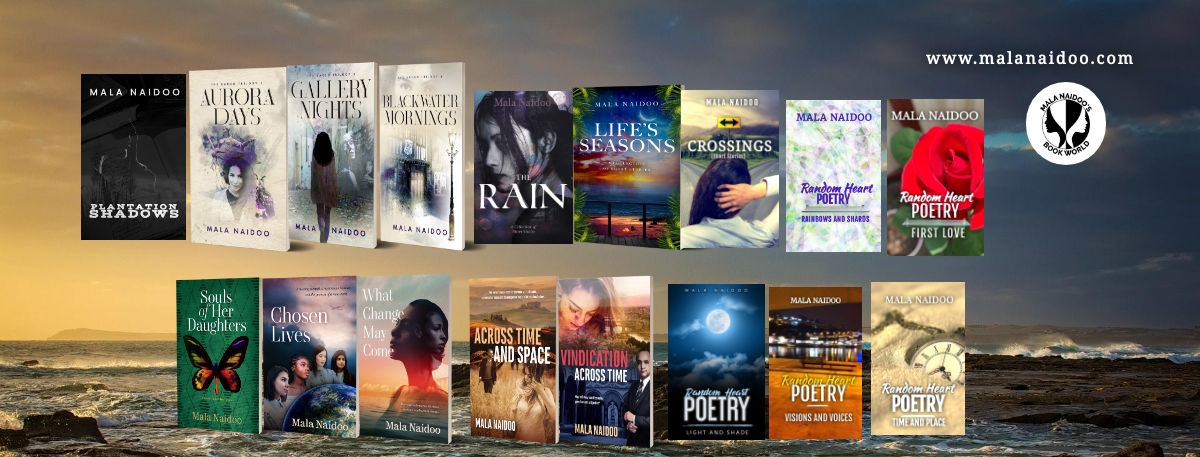
Read Plantation Shadows, to feel and understand the secret hearts of the aging Milly and her dead mother.


Secrets diminish with death – Part 3, Edgar, ‘Plantation Shadows’


Please like, share and comment below:

← Back

Thank you for your response. ✨

Creative Fiction: Keeping Histories Alive

The world is teeming with the here and now, current stories in the making with the mounting flux of national and international events and situations that drown the past as voices evaporate into the mists of time. The danger is in relegating these voices to forgotten histories when they have much to teach this time on human kindness and compassion, to obliterate the self-centred I, me and my way of thinking and behaving.

Fiction writers have the skills at their finger-tips to animate these voices through fictional recreations, Many such esteemed writers, as Toni Morrison, Maya Angelou, Chimamanda Ngozi Adichie, Elif Shafak, et al, have done so to great effect over time.


Ignorant of history, we find it easy to accept our isolation from one another. We are more able to recognize differences than shared experiences and perspectives. History proclaims our common humanity. – Author: Linda Simon


South Africa’s apartheid history has a multitude of women’s voices, women of colour – some of whom have gone unnoticed under the radar of time.

 Souls of Her Daughters arrived to highlight the role that women of colour made to the contribution in dismantling apartheid’s constructed barriers of race, sex, culture and ethnicity.

In Souls of her Daughters, two mothers, Varuna and Elsie, the mothers of Grace and Patience unite as one family when their husbands are brutally killed during the darkest times in the land’s racist history. Their daughters, Grace and Patience, become the stoic women they reveal themselves to be while fighting their own demons on sexism and abuse. Kindness and compassion pave the way forward as the personal histories of Varuna and Elsie in demonstrating their resilience under the scrutiny and accusations of racist stereotypes.


From humble beginnings both Grace and Patience emerge as women of courage, serving humanity in an international arena. Before they achieved this level of confidence they found a space where they were valued, belonged, to reach out to those struggling a similar or worse fate.

These four forgotten voices were deep, and the reach expansive that it  opened the way for two more novels to follow, Chosen Lives, and, What Change May Come. These novels that followed, Souls of Her Daughters takes the reader on a journey from South Africa to Australia, Ireland and India. The novels showcase the kindness and compassion of two sisters born from different mothers into a segregated South African society with the potential to overcome the debilitating challenges of their birth country’s political history.


Fiction has a valuable role to play in the recreated telling of stories that did not make it into the history pages of its respective time, yet these stories carry the potential to educate the here and now for a future built on kindness and compassion. These human qualities dissolve the quagmire of the human condition.


Please like and share your thoughts and ideas on the recreated fictionalised histories you would like to read.

← Back

Thank you for your response. ✨


Fiction: Women and Culture

Every writer has a unique voice drawn from culture and values. Even when one opts to write a ‘different’ tale with ‘different’ people, the authentic self seeps into some aspects of the writing process.

Having been raised in South Africa my psyche is wired to the spirit of the people. I remember older women as the stalwarts in the home –  stalwarts with hearts of sheer gold. Writing this infuses me with warmth and tenderness. This is the reason for the crafting of Mama Elsie, in Souls of Her Daughters, Mama Thembu in Vindication Across Time and Grace’s mother Varuna whom Patience lovingly refers to as ‘Mama Varuna.’ Each of these women epitomises the significance of a mother in the home which accords them profound respect for the hardships they endure in a country that negates their existence.

The character Marcia Ntuli has the strength of character that her mother, an activist for women’s rights, exudes. Yet in seeking a new life, in a new country, she is subjected to professional racism until she is forced to give up her passion with a rapidly declining sense of self-worth. It’s only when Michael Morrissey, a human rights lawyer helps her through her dark days of self-doubt is she able to pick up the pieces of her shattered life. It is not the act of racism that is showcased but rather the resilience of the women and men who help victims find their way through inhuman situations.

In offering a lesson on how to uplift the human condition, it is men like Michael, Andrei, Brad, Keefe, Petros and Andrew who cherish the broken souls of my African women characters. A multicultural cast adds colour to the worlds of these women as the way of the world  – as it should be.

I learned to appreciate this after having lived in segregation under apartheid. My premise will always remain that in our angst and joy we are one under the sky of humanity. Idealistic, perhaps,  but hope has to be pursued to make a difference in how people perceive and engage with each other.

In The Rain – A Collection of Short Stories Thuli in the title story is a young, strong village woman who will do anything to keep her family together.

The song she sings to her children, a lullaby, Thula Thula Baba as she waits for the storm to end, is one I remember hearing from the cradle. It moves me to this day in its sweet, yet haunting sounds and meaning.

I give you Thula Thula Baba– a lullaby sung by mothers to calm their fretful babies while their husbands went into the cities to find work.

What Change May Come presents the coping strategies of sisters Grace and Patience in their struggle with irreversible change. Here the notion of perfection is challenged when one woman has motivations that clash with Patience’s perception of what it means to be human.

If stories open vistas of understanding and bring a lesson while entertaining – that is the footprint needed for a better today and even better tomorrow.

Go in peace.

← Back

Thank you for your response. ✨

Food and Fiction

A good story, like good food, is an unforgettable experience.

In the creation of fictional worlds, the protagonist comes to life through his or her foibles, eccentricities, habits, relationships, hobbies, voice, mannerisms etc. While sensory details include the sounds, we hear and the images we see, through the words on the page, the degustation in a fictional novel brings the reader to the table, heightening the sensual effect in a shared meal with characters.

In my debut novel, Across Time and Space, the aging Ben loves kippers and poached eggs for breakfast. In the sequel, Vindication Across Time, while breakfast is important, especially when Ben and Meryl overhear a conversation in a tiny restaurant, on the dark history of the mysterious Professor Andrei Malakov – it’s the journey through South Africa’s gustatory delights that bring drooling joy as barbecued corn on the cob – braaied mielies, to locals, on the breathtaking beaches of the Cape, chilli pineapple in, Sweet, salty, hot and pungent collided, tantalising Michael’s tastebuds. And then who can forget the delectable Kaapse snoek! In contrast, back in Florence, Meryl consumes endless cups of coffee as the trial drains her emotional and physical strength. Her favourite chicken pasta and prawn linguini meals are left untouched as her mind swims with horrific thoughts on where her life was heading.

In the trilogy, Souls of Her Daughters, Chosen Lives, and the third book, out this April, What Change May Come, Thai Delight, a fictional place, is Patience’s favourite restaurant, but both sisters, Grace and Patience find great joy and comfort in cooking and eating their mother’s signature chicken curry – their memory of her is alive in love and food. Grilled salmon, thoughtfully prepared for an elderly neighbour is pushed aside as she perspires through, and relishes Grace’s fish curry, saying, You have your mother’s touch with the delicate spicing, what a scrumptious meal... There are wonderful Mediterranean breakfasts, turmeric lattes and cardamom chai for a full international array of gustatory heaven!


I need chillies to warm my soul’ ~ Patience says in Souls of Her Daughters


From the spicy to the crisp – ham and cheese croissants, in the April release of What Change May Come, complements the racy change and quick food that others bring to Grace and Patience.


Food and fiction are a formidable combination, setting the mood of the moment, letting the reader into a part of the character’s life that we all enjoy – eating as a necessity, or social activity, regardless of what we eat, or where we eat it.

Food will always feature in my fictional tales as comfort food, memory food, and soulful food.


Cheers to more, tasty, thrilling tales!

Share your thoughts in the comment box below.


← Back

Thank you for your response. ✨

How do you name them?

An interesting question recently from a reader prompted this post on whether the names of my characters were people I knew. As a writer I could say, yes, I do know my characters between the pages of my books, and fiction mirrors life as the angst, joy and foibles of individuals.


Meanings behind names have always intrigued me.


I  choose names for some characters that befit their personalities and behaviour or represent the opposite of what they are. In Souls of Her Daughters, Grace and Patience are indomitable women in the face of the catastrophes that befall them. Grace’s mother,  Varuna, has her name taken from the Sanskrit equivalent that attests to her strength as one who embraces all, hence she is the embodiment of the god of water and the celestial ocean surrounding the world.  Her inner strength and capacity in how she copes with the murder of her devoted, humble husband, and subsequent chastisement and ostracisation by her extended family does not alter her essential goodness. Grace, Varuna’s biological daughter, and Patience, her adopted daughter endure horrific persecution, of a cultural and tribal nature – Varuna will stop at nothing to ensure her family is reunited, while she continues being a person for others in her neighbourhood. 

In the sequel to Souls of Her Daughters, Chosen Lives sees the introduction of new characters, who are named in a similar vein, sometimes with demographic relevance, or drawn from Greek mythology – Xandria, defender of humankind, much the same as Alexis – helper or defender. Zuri, a Swahili derivative, means inspirational, beautiful, truth-seeker, and more. The head of the mission in  Chosen Lives, an underground movement for a new world of women leaders, is named Masuyo, which means to profit or benefit the world. A mission recruit, running a school for women in India is Akanya, meaning peace and humility which she exemplifies in her interactions with others. 

On the other hand, the character, Felicity, family friend and colleague to Patience, is far from what her name suggests, given her difficult childhood – her razor-sharp mind is admirable. The Arabic name, Azmil, means light, given to a young man who lost both his parents at the hands of rebel forces in Pakistan. The work he does, at the Well Study Centre,  makes him the light to many orphaned young women.  The snatched memory of his mother fosters his commitment to young women in his community.

The character, Audra, has a childhood of neglect by affluent parents, her name as explained in her testimony, is a celebration of the beauty of Audrey Hepburn. As she says, ‘to my Ramon,  I was Audra.’


A multi-cultural cast of characters representing diversity in harmony 


The third part of this trilogy, being written, will follow through with similar thought for new characters that emerge. Each of the three novels is a standalone read, too.


In my debut novel, Across Time and Space, and the sequel Vindication Across Time,  Keres Bathory is a name drawn from a combination of Greek mythology and a historical character – a combination of one who disturbs the universe.


Aspects of a character’s behaviour might be drawn from observation which is married with imagination to serve the role they play in novels.

What’s your fascination with names in stories or the people you meet?


Add your comment in the box below.


Happy reading, Happy writing!

← Back

Thank you for your response. ✨

Are you a dog with a bone?


In my world being a dog with a bone is sometimes needed to get the job done.

Persistence pays.

By the same token, I am aware how utterly annoying the person who is always a dog with a bone can be … gnawing at issues or situations for self-aggrandisement. They gnaw at the issue or situation with dogged intent. Is it with a power-laden agenda to prove a point and claim a hubristic victory?


An ego trip might well motivate a dog with a bone syndrome (my definition) hence such characters are quick at the ready to prove a point, make a statement or perhaps just want to be heard. A sad dog with a bone.

This excessive gnawing suggests self-obsession, the ‘look at me’ need.


determined puppy


You will find this character type in my novel, Vindication Across Time, or can you identify characters in literature you’ve read, where such attributes are identifiable?


How about some of these characters?

-Shakespeare’s Duke Orsino in Twelfth Night hankering after love:

If music be the food of love, play on/ Give me excess of it, that, surfeiting/The appetite may sicken and so die.

– Shakespeare’s King Lear in the play by the same name, desirous of hearing how his daughters love him:

which of you shall we say doth love us most. That we our bounty may extend. 

A vain ploy, albeit by an aging king and father, to ‘buy’ profanations of love.

Note the positions of power in each of the above, male, duke, king, etc.


But what about the humanitarian goal-focused dog with a bone? What defines this person?

#courage
# resilience
# hope, authenticity, and determination
# achievement
# embraces challenges
# wants the best things in life for self and others

Shakespeare’s Cordelia, King Lear’s daughter, says:

I love your majesty according to my bond, no more no less.

This girl tells it like it is! She speaks from the heart in her truth. She stands by her truth like a saintly puppy with a bone, she is prepared to forgo her part of her inheritance from her father’s kingly estate in:

Nothing will come of nothing. 

This is an admirable quality which has been included in my novel, Across Time and Space. Who is it?

  • Meryl?
  • Marcia?
  • Ben?
  • Andrei?
  • Michael?

I leave you to decide.

But while pursuing these noble intentions, individuals/characters might walk all over those who support and promote them by becoming consumed by their goals, to the point of frustrating others with their exuberance, self-centred, and misfired passion.


So how does one or one’s crafted character become a pleasant goal-focused dog with a bone?

# have a purpose that will also benefit others
# know when to take a break from the bone of self-promotion – in other words, give the jaw a break.
# consult with peers and others and share by being an active listener.


Where are these characters in literature?

How about Friar Laurence in Romeo and Juliet? He knew he could no longer prevent Romeo from wanting to marry Juliet, so he dutifully got them married.

And the upright, Atticus Finch,  in Harper Lee’s To Kill a Mockingbird who was relentless in proving the African American, Tom Robinson, innocent of the allegation by Mayella Ewell and her father Bob.

The dog-with-a-bone fictional characters make interesting case studies and create engaging plots with perhaps a  moral lesson.

A valuable, and historic determination is Martin Luther King in:

I refuse to accept the view that mankind is so tragically bound to the starless midnight of racism and war that the bright daybreak of peace and brotherhood can never become a reality… I believe that unarmed truth and unconditional love will have the final word. ~ Martin Luther King


Be a dog with a bone or craft such characters but know when to give the gnawing a rest. Craft characters who echo tireless values that promote change for a better world, or expose the dark side through characters who invert goodness.


Some valuable motivational quotations to guide your characters’ actions:


I hope you enjoyed this and encourage you to comment and share your views on characters who have had an impact on you. Please share your thoughts in the message box below.

Continue reading “Are you a dog with a bone?”

error: Content is protected !!