Creative Self-Care

A creative life brings much joy and excitement where it’s easy to forget that it is work. And as with all work, the mind and body tire when passion pushes on in a hedonistic surge, and more so when creating new worlds peopled with exciting characters doing extraordinary things or making the ordinary quite exciting.

Putting the foot on the brake when exhaustion sets in does not send the creative muse into permanent banishment—quite the opposite. A brief pause, a day or perhaps two, refuels the creative well with the elixir needed to push to the next level of creative intentions. It is only the physical act of doing that is on a temporary hiatus to clear the mind to absorb new inspiration, the sights, sounds, movements, to see the everyday and old with refreshed eyes.

The pause could be time spent to catch up on much needed relaxed reading, beach walks, feeling the outdoors, meandering in a museum, taking in a movie, going to the theatre, or out to breakfast or dinner with yourself. Me time invigorates the creative mind and spirit. Although most creatives work in solitude and might crave company, it is elected carefree time alone, whether in a crowd or on a private beach, that eases mental exhaustion generated by passionate overwork.


It is the creative’s passion that invests extensive time, and intense hard work to produce a work of art, be it a manuscript, painting, a sculpture, or music. The ultimate piece, the artwork outside the physical form has its own story to tell as one of sheer commitment for the love and euphoria generated by creating—early mornings before the world wakes, late nights, and oftentimes all night, fobbing off distractions and knowing when to say no to external demands irrespective of who makes the demand.

Only the creative knows what matters most.   

Allow the self to enjoy one’s own company away from the work to fine tune the energy and inner wellness of the mind and body without the noise of mental chatter. The creative soul needs that one-on-one with the self.  Decide if this one-on-one with the self should be a weekly, fortnightly or monthly date. Go out for coffee with yourself. Take a walk on the beach alone. Human gregariousness is always there to pick up when the time is right.


Work and life…life and work are indistinguishable for the dedicated creative


Have you ever set a date with yourself? Go to your favourite place once a week, alone, for a month and journal your thoughts and feelings. Something that might surprise you is that you will return after each date teeming with ideas for a new project. Time out is beneficial for productivity—the energy and freshness ignite thinking outside the four walls of a writing/creative/workplace space.


Fill the creative well with some time out.


Never be afraid, or think it selfish to enjoy your own company—you are your own best friend, number one in your tribe.


Just as we free-write in our journals every day, that private time with intimate words on a page—quite a different energy to drafting a manuscript—in the same vein, getting out of a regular creative space be it in an office at home, or elsewhere, is a self-made retreat for the creative spirit. Going AWOL for a day is liberating for creative energy, for all energy! Try it!


Make a date with number one. Enjoy your own company and return blessed and refreshed.


 Happy Creative Rest!


Please like, share and comment in  box below.


← Back

Thank you for your response. ✨

Vanity Pride and Ego

Vanity, Pride and Ego – same family, different personalities, different agendas.

All three will have a negative impact if riding this wave is all that matters. It drains creative energy.

Vanity exudes a hollowness in its overindulgence on self, achievements, and appearance, etc. It is external.

Where does the artist sit on the pedestal of vanity?

One voice says, nowhere. Another asks, how will a receptive audience to the art be found if vanity is tossed aside? Vanity needs an audience. But, should it be at the cost of dominating one’s passion and purpose?


The muse, divine grace, or however inspiration is perceived,  is not invited by vanity. Mother Muse is not needed when narcissistic vanity believes it knows it all, and celebrates personal achievements, with no filter—in every waking moment— in multiple ways. I and me overshadow growth by ignoring the voices that have much to teach and share in learning new ways. The achievement has a use-by-date if not allowed to grow and expand in new and varied ways.

Then pride prods, ‘I have published my book, or sold my artwork! I’m so excited!’ This has a ring, different to vanity. It’s internal, it is joy over what the artist has created.  Children are invited to take pride in their work, push themselves to achieve their personal best. This level and definition of pride is a healthy option. Pride reflects reality—a joyous reaction to having produced a quality work of art. There’s a dignity in the self-esteem and self-respect that comes with this type of pride. Because pride is internal, when injured, it could create feelings of worthlessness. Which do we prefer? Known for vanity or having a sense of pride? Pride may breed feelings of superiority if unchecked, and released often outside the inner glow of accomplishment.

Then there’s ego, ‘Oi! look at me and all I have achieved. I am the best in my game.’ Remember the id, ego, and superego in a Psychology 101 class? It might be necessary if marketing one’s wares, but with ego comes the threat of overzealous self-importance – conceit. Not a favourite in any working, social, or home environment.

To succeed in what we do, we need balance. The ability to know and understand who we are, and how we are received is vital to acceptance for a sense of belonging to promote mental and emotional wellness.

When acceptance and belonging thrive, productivity increases.


Balance in everything is vital to how social perceptions are influenced


Is ego overblown pride? And what of vanity? Is it a wild show-pony craving an adoring audience, or the unrestrained expression of pride and ego?

Now, there lies the dilemma.

Be proud of your creative work, yes? Avoid ego and vanity? Over-inflated expressions of self,  run the risk of sitting on the precipice of love and revulsion. What is the artist’s choice to be?


Shakespeare’s timeless tales tell us that hubris and hamartia lead to a character’s downfall. Lear’s, ‘Which of you shall we say doth love us most’, albeit being an aging man, he might be perceived as vain in wanting to hear his three daughters’ competitive utterances of undying adoration before he divides his kingdom among them.


What are your thoughts?  Vanity? Pride, or Ego? Much the same, or different?


Happy Writing and Successful Publishing!

← Back

Thank you for your response. ✨

Creative Courage

The past year of profound change where retreating was not a choice but a necessity, turned the eye inward in this time of social incarceration—a springboard for creative pursuits. 

Poetry, stories, art, music, new skills in any area of the vastness of possibilities, bring courage to those who stand in the shadows, voiceless and afraid to be seen or heard.

With the external locked out to preserve life, the inner voice raises its head, looks around and mulls over hidden possibilities. Heed the message. We need action to claim the creative possibility within grasp.

Embrace the stillness to find what a fast-paced life has stymied. With materialistic desires placed on the back-burner, an almost magical transformation emerges.


Simplicity grows courage and innovativeness


We learn from our forebears who with flintstones created fire, almost two million years ago. Today we have so much more at our fingertips.


Complacency kills creativity


                                                                      Learn More


The past spent bemoaning being time-poor is a state of mind. Creating space, both in time and place, waters the creative spirit with a thirst to innovate—encourage the spirit, and mind to seek something new.

Tip in a toe, test the waters by reading more and much more, find your tribe to encourage confidence, dive in, one stroke at a time! Feel the warmth of submersion generated from praise and acknowledgement.


Creativity requires the courage to let go of certainties ~ Erich Fromm


Planning is paramount and being flexible with the plan is equally important. Creativity flows freely when intentions are set, then the ground-work seeps in. Like the earth requires conditions to grow—sun, soil, and water, so too the creative prepares the way forward, add in basic equipment needed, one step at a time.

The indisputable thing with creativity is that once begun, ink, paint or music flows in generous abundance if invited in.


In a time of retreating from global, awaken the creative spirit by the choices made.


What will we let go to allow the creative muse to take up residence with us?


Know our passions, doggedly pursue them, and find the healing in creative pursuits.


May 2021 be the year of finding or growing and deepening our creative wells.


Happy Creating.


Stay Safe.


Please like and share to spread creative love.

What are your thoughts on inviting creative space into our lives?

← Back

Thank you for your response. ✨

Haiku Matters

Brevity is not only the soul of wit, but the lifeblood of today. Now— the immediate, matters in a world where nothing is constant.

Attention span flits in the blink of a second.


Words matter, live and linger…

The upswing in the unquenchable thirst for poetry is a gratifying return to the appreciation of the poetic word and form. Poetry propels one on a light year’s journey into measureless realms. It delights and moves the human spirit with the evocative and provocative choice of words, themes, shape and style.


Haiku is short, so brief that every word tells a story to leave its inscription on memory.

For the writer, (for me) haiku is inspiration, a deep but quick inhale and a rapid expulsion of observations and emotions. The effect is cathartic but unforgettable.

The on-tap, sharp and visual that bombard our senses every day, growing an ever-increasing need for quick satisfaction—that adrenalin rush akin to a gym workout.

The economy of life’s necessities gives haiku breath in a world juggling too many balls, where survival is a luxury.

Haiku, originally a seventeen syllable (5-7-5) three-line structure poem was predominately about nature—weather, animals, plants, and changing seasons. Traditionally the Japanese form was the opening of a longer poem,  serving as a haiku introduction to the composition.

Variations to the original 5-7-5 syllables are widely used by poets in the modern world to capture values, love, life’s challenges, and varying themes beyond the natural world.


Simple, intense and direct…


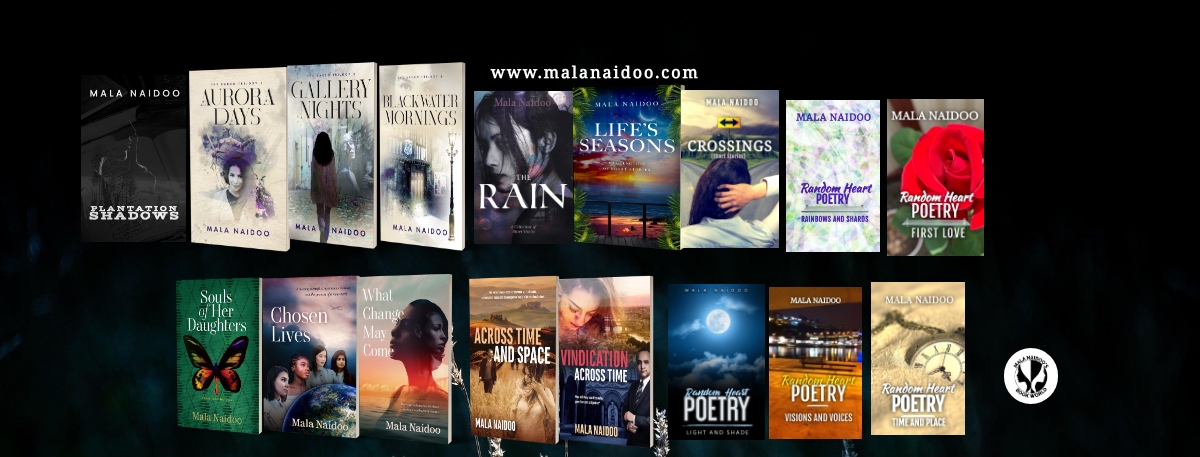
As a fiction writer, poetry fuels my imagination. In both my poetry collections, Random Heart Poetry: Light and Shade and Random Heart Poetry: Visions and Voices,  haiku has a respected space on the page.


on the precipice

have you attained the true spice

ikigai of life


Try your hand at haiku writing today, feel the inner benefit, take the inspiration into your day and share it with others.

Happy Writing and Reading this festive season, but above all, keep safe.

Join me on FB and Instagram to share our haiku stories.

Please like, share and comment.

← Back

Thank you for your response. ✨

Creative Risks


Dare you should—damned if you don’t


Writing might simmer in the novice writer’s subconscious, afraid to put words on a page, or perhaps a manuscript sits half-written or complete, but safely locked in a desk drawer or tucked away in the garage under a heap of stuff.


Are you that person?


Risk 1: Creative Exhilaration


Taking the first creative risk is writing the story or poem that dwells in the mind’s hinterland.

Then pursuing the idea through to completion is the time risk invested to get to ‘the end.’ This is the honeymoon period. Bliss reigns as a generous muse massages words


Risk 2: New Eyes on the Page


The most daunting risk is getting an extra pair of eyes to read those beloved, private words. This could go horribly wrong if fresh eyes are inclined to be super critical about EVERYTHING.

The novice writer is a sensitive soul in need of validation. A poor selection of new eyes could end a potentially stellar career. Then again, choosing new eyes as your significant other, carries the risk ramifications that over validates, or liberally criticises,  and possibly risks ‘the end’ to the union!

New eyes on new words should be benevolent in first congratulating the timid scribe on getting that far, then comment on the story, and throw in a few suggestions, expectations, and gently draw attention to plot holes that might exist.


Risk 3: Who will edit?


Choosing an editor who is the right fit for a novice writer has its risks that could go either way. Choose wisely, ask and check out vetted individuals through organisations such as ALLi, or trusted fellow authors in finding the right match that assures writing longevity.


Nobody’s perfect

Image Credit: Mohammed Hassan (Pixabay)


If a novice is averse to professional feedback then the red flag goes up, and it’s best to consider whether the risks taken to get this far will be worth risking much more, or if it’s time to hand in the pen.

To be a successful writer, lock ego in the desk drawer or stash it under the rubbish in the garage, or better still, scrub it out of existence.

It is imperative to observe and listen to the safe, knowledgeable advice of those who do it well and successfully so. This applies to anything in life. In publishing, it is necessary to do so.


Be authentic, be unique, but know the ropes.


Take risks with an open mind. Push boundaries but know when to ponder the road ahead.

The journey is not over yet, there is the risk of whether the general reading public will love or loathe a close to the heart piece of literature.

When fear is overcome, it steels the novice (for a while – NB creatives are sensitive beings) to continue dipping a toe into the world of writing and publishing.

Risk 4: Publishing

There are many ways to get your words out into the world, so carefully  consider the risk of giving up all the rights of a creative endeavour that spanned many days and nights, the ultimate sacrifices made to get to the grand finale before the decision to hand over blood, sweat, tears, and other emotional hooks.


Protect your rights, know your rights.


Risk you must, for unheard stories to be told, leave your legacy — stories have value, but choose your tribe wisely.


George Orwell in his essay, Why I Write:


‘In our time, political speech and writing are largely the defense of the indefensible.’


Best wishes, always!

Happy Reading, Happy Writing!


Where are you now in your writing dreams?


Please share, and leave a comment to help a fearful novice step out in the right writing shoes.


← Back

Thank you for your response. ✨

Patience and Perseverance

As creatives, we are flexible in what we do if we are steering the vessel.

A sense of place and time is important to the creative, but in the unpredictability of current times, adapting to everything that comes our way is daunting.

Patience is the ultimate virtue in a creative life. Nothing happens overnight, now more than ever, with all that blew in with 2020.


It is the slow burn that needs a tender mind, hand and heart


Amidst waiting for the right time, there is the desire for the energy of the muse to enlighten the artist on how much, when, and what will be written/created. This wait is underpinned by the bend and twist of the tide of change that tests adaptability.

Shifting an established creative routine generates a splurge of musings when the noise and demands of new daily expectations receive attention.

A daily meeting with oneself in morning reflections on what is and is not working facilitates the coming to terms with how to create a new routine.


Reflection is the art of patience that sharpens the creative pen.


The writing muse happily visits if the mind is willing.

Patience takes hard work; it sits on the back of perseverance — one without the other is a no go.

To cultivate the art of patience, look at reactions/behaviours to situations outside of creativity, learn from it and readjust the behaviour. While patience is a virtue, it is also a personal inner medic, keeping creative work in check by allowing the body and mind to process situations without elevating stress levels.

Finding what calms and settles the creative is the best way to grow in being patient rather than becoming a patient.

The writing world is competitive enough without adding layers of undue stress — the art of writing is profoundly therapeutic.

After writing a scene or chapter, the sense of exhilaration that follows such achievement is remarkable. Journal these moments to refresh a reflective morning that needs a reminder about why we do what we do.

To be a writer, requires barrel-loads of patience in how to nurture a story from seed to flower, chip back words and scenes, polish to refine the story and then publish.

Patience, perseverance, and adaptability are the keys to creating more stories and poems as is refining before a book/product hits retail shelves.

Step back, let time and place do the work, relax overthinking and communication to create valuable space to refine the manuscript. This aspect of the creative zone has the potential for success, abundant success if that is the desire.


Be gentle and patient with yourself, persevere with your creative goals and adapt to the ever-changing demands of a writing and publishing life.

Go well in all your endeavours.


Share, like and comment on what works for you as a creative sailing through the winds of change.


← Back

Thank you for your response. ✨

Creativity: Flex and Extend

Routine is necessary to accomplish a finished product. The creative benefits from a routine that maximises goals and intentions.

Rote, however,  harms creative growth when curiosity is denied in favour of robotic daily ‘doing’ that limits the capacity and capabilities of the mind. Rote erodes enjoyment, takes the fun out of creativity if allowed to fester in mindlessness.


Once we relinquish the act of questioning, debating, and learning alternative ways, the creative quest goes down the rabbit-hole


Open to what others are doing successfully in their creative pursuits. Debate with the self, first, to test how to improve our creative patterns and when we observe or flex to alternative methods, before embracing them, then we are on the route to extending the creative mind.

What we read is as significant as what we write. As a fiction writer, it is essential for me to move beyond restricting myself to only reading fiction.


Get out of the box – mind the bog


It is imperative that we read judiciously selected, respected successful forerunners of the craft of fiction—past and present—for inspiration on the ways in which we can flex the mind. Engaging with the information gathered is the actual flexing—then question what does not sit well.  Argue why this is so, look for alternatives to the arguments that have surfaced. Never ignore your internal unrest without asking why and how. Why am I unsettled by this? How should I address why I feel this way? We learn to flex and extend our skills from observing first and then listening to what is around us. The inner well is deep, but testing the waters from the ocean of talent available deepens and brightens the path ahead.

The choice to extend ourselves is within our grasp to refresh or radicalise how we create. Flex to invite minor changes, analyse what is working for you, and incrementally extend to achieve more.

Like muscles that face a new physical challenge which is overcome by gradual flexing and extending, achieved through the art/act of trying—not rote, but being open to challenging the self, so too, the creative mind grows.


Photo Credit: My Life Through a Lens (Unsplash)


Creative and Critical

As creatives, we ought to be critical thinking beings—not cynical but critical. Herein is the source for debate to generate fresh waves of thinking and doing.

Watching a documentary, for example, on an unfamiliar topic that holds some interest is beneficial for starting the mindset extension with exposure to new knowledge. This opens inner and external debates that arise from the observation phase to grow the knowledge base and experience on the subject/topic. 

Extend listening skills to enhance creative growth without visual distractions by listening to podcasts that present new knowledge to stimulate thinking without the bias of the visual effect. The brain rain received generates novel ways of thinking or questioning how we can reinvent old patterns.


Never stop asking why, how or what can I gain from this?


As fiction writers, we should seek to understand the values that differ from our own to invite creative ideas to emerge from this openness to what lies outside of our inner workings.

I ground my novels in, in our angst and joy we are one under the sky of humanity.’ Inclusivity is my pre-wired emotional mindset because I have lived my formative years under South Africa’s apartheid regime’s divisive rule.


Suggested Reading

Try reading all or extracts from the following non-fiction books to open new vistas of understanding, or to deepen your understanding of human relations, justice, and politics, if this is of interest.

Essays – George Orwell

The Source of Self-Regard– Toni Morrison

The End of Imagination – Arundhati Roy

Caste – The lies that Divide Us – Isabel Wilkinson


Pick up, or do something different—something you have never read or done before and observe, reflect and note by writing what it stirs within. Get past the initial discomfort then decide if you want to extend what you do and how you do it.


When we flex the mind in a new direction, there’s discomfort at first, when extended, it fuels passion and ignites creativity


How do you flex and extend the mind in your creative pursuits?


Please like, share and comment.


← Back

Thank you for your response. ✨

Creative Mojo

Being a people-pleaser often impedes the writing deadline.
Some perceive writing as not a regular day, serious job, and expectations are that the writer is always available, because the writer is self-employed, locked in the head of imagination that does not,(by choice of some), demand a fixed workspace.


Write as a free-flowing creative. Be the  rigid business manager


If we do not rectify this thinking, impositions on the writer’s free time could seriously hinder writing progress to the point of murdering the writing mojo.


Know when to say No


The writing mojo is temperamental and disappears if there’s no plan, the time and process wind up bending to the noise and demands that soon override it.


Being flexible is paramount to the creative


If the writing mojo is showing signs of being at risk — set down a plan and stick to it as far as possible. Achieve at least 80% of your daily or weekly goals with consistency to make a writing life productive.

A writing life incorporates many facets and significant among them is audience/reader engagement. To flourish in this career, and a career it is, if given every opportunity of serious intention, then it becomes that sweet spot of primary income or multiple streams of writing income – a way of life.


Turn off the phone – block the internet


Creating blocks of time to have regular hours that are not sidelined by the daily demands of life happens if there is a set plan.

Here are a few pointers to keep the writing mojo  on an upswing.

• create a routine and stick to it as you would any day job
• set the clock – have several /number of words per session/chapter a day goals
• take your working day coffee and lunch breaks – remember ONE coffee break in the morning and ONE in the afternoon.
• choose your most creative part of the day to get your words on the page.
• leave your phone in another room, muted to avoid its cradle cry.
• get some exercise – a walk outdoors for half an hour should get the mojo back on track
• track monthly, weekly and daily productivity.
• note potential distractions and cut them out.
• the space you write in must be free of distractions – • no internet – no television – no phone.
• have water and a healthy snack close by
• learn to say: writing is my work life.
• begin your day with a writing reflection, FREE Writing (Free, Raw, Exact and Easy) as Orna Ross, Founder of The Alliance of Independent Authors, teaches or writing morning pages as Julia Cameron advises in, The Artist’s Way – clear the cobwebs to open the creative path to your writing day.


Now, what is holding you back? 
Get to it with a further nudge from these inspirational lines:


If I waited for perfection, I would never write a word – Margaret Atwood

Without great solitude, no serious work is possible – Picasso

Like an ability or muscle, hearing your inner wisdom is strengthened by doing it – Robbie Gass


Inspiration may be a form of super consciousness, or perhaps of subconsciousness — I wouldn’t know. But I am sure it is the antithesis of self-consciousness – Aaron Copeland


Happy Writing, Happy Reading!

Best wishes.


Share your thoughts and ideas on how to avoid distractions in your creative day. Please like and share.


← Back

Thank you for your response. ✨

Creating in a Challenging World

We have read it and heard it repeated everywhere we look and listen.

Change is — has been — will impact all facets of life. The current global change that has claimed 2020 has challenged the ‘do I dare?’ mindset of the creative. The muse is a sensitive soul. She feels the angst as deeply as the joy — inspiration is derived and mined from this seat — gold mined!


Health crisis, economic crisis, the uncertainty of life, the fear of not so much the outdoors but whether we can trust that everybody is doing the right thing.

For how long must we entertain fear as it enslaves us by forfeiting joy?

The creative forges on to leave the carbon footprint of these challenging times.


Dare and dare again and the muse shall heed the call.


The creative day, if allowed to slide, is a difficult one to recover but is possible with the determination of, ‘I will dare.’

TS Eliot’s poem, The Lovesong of J Alfred Prufrock. conveys the uncertainty of modern times where ‘normal’ becomes unusual. Images of desolation pervade his poem:

Like a patient etherized upon a table/Let us go, through certain half-deserted streets,/The muttering retreats

This echoes the current emotional and scientific uncertainty we face.

The yellow fog that rubs its back upon the window-panes,
The yellow smoke that rubs its muzzle on the window-panes


Eliot’s raw emotions capture the universal angst of his time where rapid economic and technological advancement changed his perceptions of life. And the yellow fog of uncertainty seeps into 2020 rising, falling …

The natural outcome is to be perplexed but navigation to the new normal through introspection is vital.

The pen is the mighty memory of our time, of all times, and writing must go on as must art and music and all creative pursuits.

In the making as creatives, writers, artists, we share a universal experience in that it is normal to be afraid, and it is brave to dare by creating new worlds that either mirror the present or transport us to worlds we dream of. In dreaming we bring those hopeful worlds into the conscious mind of the reader/audience who in turn subconsciously works towards making that dreamed, hopeful world, a new reality.


The writer’s pen will never dry or fade — words speak into the future from the past bringing meaning and understanding that this too shall pass.

The human condition is live with the possibility for new stories to be told, poems to be written, songs to be sung and paintings to be created to articulate and quell all fear.

Do I dare, and do I dare, — oh yes, we must, to make this life the best life we have had the courage to dream into our reality!


Today step forward — leave the fences and backyards of your mind and speak of your fears, insecurity, and uncertainty through artistic expression.


Take a chance. Live your passion.


This is a time for you to be YOU in all that you do without the fear of judgement.


Happy writing. Happy creating. Happy daring to channel your way forward for a life free of angst with the promise of joy.


What’s your creative plan?


← Back

Thank you for your response. ✨

Doing Thinking Creating


A creative life calls for a balancing of our daily demands for a true representation of talent and untapped possibilities.


Too much doing becomes a mindless mission – routine for the sake of routine.

We rise – we shower – we go to work – we return home – dine – go to bed – and do the same thing the next day.


Thinking and overthinking generates zero doing as we are suspended in thoughts playing over, and over again – a scratched vinyl turning the whys in a dizzying circular dance until bitterness creeps in and a stony countenance is set to stay.


The quest for wonderment in everything around us generates positive energy but wait a minute, too much leaves a rose-tinted view of life. Floating through life this way might be an enjoyable ride until reality bites knocking the air out of the bubble and the fall could be a crushing blow.


Mindset balance in a creative life is essential to achieve an outcome both in the accomplishment of the product and a sense of self-satisfaction. This balance preserves the self.


Creativity involves breaking out of established patterns in order to look at things in a different way ~ Edward de Bono


Doing is vital to finish what has been started. The danger is when doing is obsessive. Unhappiness seeps in as exhaustion from too much doing consumes body and mind.


Thinking is the main ingredient, but overthinking can spiral out of control and have the opposite effect on creativity by becoming judgemental and critical of self, society and soon everything about life, leading to mental decline. The mind can heal you or kill you harks at how dire balance is.


      The chief enemy of creativity is good sense ~ Pablo Picasso


In a creative life being driven by passion requires the ability to know when to shift the dial. Enjoying the creative process is as important as doing the slog to get to THE END. No good work is created without the slog. But the balance between work and play results in a far more fulfilling outcome with the bonus of a healthy body, mind and the spirit of joy for the long haul.


This birthday that is the resolution for my older self, but in this order — think, learn, create, and enjoy. Revise new ways and start over.


May you find your creative balance. Too much of one thing denies the joy of many missed aspects of life that have the potential for new ideas and new ways of thinking.


Here are some inspirational lines to prompt a quest for a creative life.


Go forward in your balanced creative life.


← Back

Thank you for your response. ✨

Book Launch – Writer’s Joy!

I look back on Sunday with a glad and grateful heart. To see so many positive, supportive readers, friends, and family at the book launch of ‘Across Time and Space’ makes the process of writing a blessing – a joy!

What a wonderful afternoon of sharing ideas and experiences, reading and making new friends. To gather with people who are appreciative of the craft of writing is what cradles a writer through the quiet periods of solitude when the creative muse is the only other presence. Authentic voices that speak in the language of the mind and soul make readers want more as they eagerly anticipate further stories.

To see aspiring young writers wanting to know more about the craft is invigorating.

My message has been and always will be – We all have a story to tell. Let your voice be heard, and do not let fear inhibit you.

This reader’s view sums up the connection to characters and events:

‘To be able to recognise human effort and spirit and hear voices that echo the wisdom that long creates our sense of self is the essence of the novel, Across Time and Space’. The sentimental and poignant voices of the characters are authentic in their quest for recognition of self and existence, with both protagonists striving for justice both literally and metaphorically. The courage of conviction and desire for liberation may come at a cost, but dismantling the shackles of human limitation is far more rewarding. ‘Across Time and Space’ proves that the difference between impossibility and improbability is our fear – abolishing fear and harking into our soul will set us free. I truly believe from a reader’s perspective, that’s what the psychological journey of Marcia and Meryl is all about. ~ (Khadija Taiba –  reader perspective at the book launch of ‘Across Time and Space.’

Across Time and Space straddles the positivity of coexistence in society regardless of difference, a message that is palpable today.  Decisions, choices, danger, and love connect to our essential state of being. Bullying and professional injustice, crime, and deception are knitted into the fabric of life where challenges serve to create the best version of those who struggle. The endurance of the human spirit shines as the brightest star on the darkest night in this tale of possibilities now and into the future.

I hope you will pick up a copy of ‘Across Time and Space’ and share your connections.

Which characters and situations resonate with you?

Amazon

Kobo

Books2Read

Barnes and Noble


Please Share and Comment

← Back

Thank you for your response. ✨


Energising Creative Thought


Here are a few practical suggestions to a question posed this week which is a significant and very real concern:

‘How to centre yourself and clear your thoughts before writing?’

  • The time of day when your energy levels are high and you are rested is a good time to sit down to gather your thoughts.
  • Have a plan for what you hope to achieve for that particular writing session- is it a paragraph, a chapter or some research on a new idea? I have a skeleton plan of what I would like to create in my chapters- this is done through dot points which help to structure my thoughts that I build upon as I write.
  • Keep a journal on random thoughts that emerge each day.


  • If gathering your thoughts hits a roadblock, try this exercise:
  1. Look around the room you are in – what object catches your eye, write a brief description of that object using as many sensory images as you can come up with – visual, auditory, olfactory, tactile.
  2. Consider why you might have been drawn to that object – Colour? Shape? Associated memory? Who was the person who might have given you the object or where and when it became yours?
  3. Write a paragraph on the size, shape, colour, ownership and memory associated with the object.
  4. Record your thoughts, in your phone or other recording device, by speaking about the object first,  then write them down as you hear it on your recording adding on  the ideas as you go.
  • If this does not spark your creative energy, pick up a book, turn to any page and read the first line – stop – absorb – now write down what you think might happen next.
  • A quiet space, undisturbed, gives voice to your thoughts to pick up the pen or tap on your keyboard, a quiet space will lead to thoughts being centred where the noise of a crowded space might distract  creative thought. This also depends on whether you can work with complete stillness, as I do, you might find a bustling coffee shop, as the protagonist, Meryl,  in my novel, Across Time and Space, does suitable to creative thought  if undisturbed by intrusive newcomers like the infamous, ‘roving professor’.
  • Once you find the space that is conducive to creative thought, tune into your inner clock, establish a rhythm to clear and centre your thoughts. If this does not happen in one sitting, go back later, or the next day – persistence and consistency is the key.

The most potent muse of all is our inner childStephen Nachmanovitch 

Happy Writing!


← Back

Thank you for your response. ✨


Imagine Being There


Place in a story is vital to ground where and why characters react to or create situations which drive the plot of a story. Within identified locations, characters become loved or despised for the actions and reactions they indulge in.

People connect to a place for an array of reasons because it holds the memory of:

  • a brilliant childhood/not so brilliant childhood
  • first love/first break-up
  • marriage/honeymoon/divorce
  • travelling to landscapes or geographic locations where culture, cuisine, architecture, history or local people either inspire or horrify
  • favourite authors/celebrities who lived in those settings
  • the stories heard or read about  places making them part of one’s experience
  • loss and grief
  • spirituality
  • the devastation of war and politics
  • personal heritage associated with a place
  • the comfort of home, a bedroom, a garden, study

The reasons are endless making it necessary when writing a story to anchor it in a specific place or a few places to create a sense of physical reality for the reader. Place, in fiction, does not have to be grounded in a real geographic location, the sights, sounds and smells –  odours or aromas of a place will bring it to life for the reader based on how effective the sensory imagery is in connecting the reader to the context of the action.


The lines below portray an inescapable landscape that confines and stifles. The narration indicates familiarity with a place which makes it experiential for the reader through the author’s specific framing of location. Here, the place is named creating the reality the reader craves, when a place remains unnamed, evocative sensory imagery creates a link in the reader’s imagination.

The heat in the street was terrible, and dust was all about him, and that special Petersburg stench, so familiar to all who are unable to get out of town in summer –Author, Fyodor Dostoyevsky, Crime and Punishment.


 In the creation of a fictional place the writer is the creative camera lens, beginning with a wide view, then zooming into backstreets before giving close up consideration to:

  • Demography – who will be created in this terrain- will it be a multicultural environment? What morals and values might come to light,  is there an alternate way of thinking endorsed by a group?
  • What is the socio-economic dynamic of this place?
  • What’s the weather like?
  • What sounds are heard in this place?
  • Is this a city or rural setting- what other aspects will you include to define this landscape?
  • Is it a busy or laid back place?
  • Is this a contemporary world or a lost and forgotten world?

Let the reader reach his or her own conclusion but be sure to add drama to most scenes and emotions that characters go through- this will allow the reader to speculate why particular locations elicit human reactions the way they do.

I leave you with these lines that reveal the human condition through the words of Alan Paton in his  novel, Cry the Beloved Country:

The great red hills stand desolate, and the earth has torn away like flesh. The lightning flashes over them, the clouds pour down upon them, the dead streams come to life, full of the red blood of the earth. Down in the valleys, women scratch the soil that is left, and the maize hardly reaches the height of a man. They are valleys of old men and old women, of mothers and children. The men are away, the young men and the girls are away. The soil cannot keep them anymore.


Please Like, Share and Comment

← Back

Thank you for your response. ✨

Is Commitment on Your Agenda?

Across Time and Space explores commitment in relationships in romance, friendship and family relationships. Whether or not it leads to the commitment of, ‘I do’ – commitment is a primal need in relationships for one to feel valued. The protagonist in Across Time and Space has been in a relationship for a length of time, a comfortable, complacency envelopes the relationship creating restlessness that becomes the catalyst for unimagined challenges.

This begs the question, does commitment mean unstinting devotion and loyalty akin to ‘til death do us part?’ The answers are vast and varied depending on the values one has embraced or formed.

Being raised in a time and place which instilled that a promise of commitment meant fulfilment of that promise on a nominated, ceremonial day which comes with its own merits and flaws. This might be considered ‘old world’ or fit for ‘Cinderella and her Prince Charming’, yet the expectation is that couples will unite or commit in a way they deem appropriate to both of them. Yes, the operative word is both – not ‘one’ making a decision, on a whim, that life’s path has beckoned a change for ‘one’ without consideration for how this might impact on the other half of both. Such is the life of the protagonist in Across Time and Space and her partner – good people in their own right who buckle under the fear of commitment, fear for the loss that might be incurred in all that has yet to be achieved in life.

This leads me to why should commitment be feared as the end to individuality and relinquishing of one’s dreams? Commitment should encompass all spheres of one’s life in relationships: singular and joint dreams, commitment to professional ideals and commitment to going off on a whim if its one’s choice to do so by acknowledging that both need to be aware of such changes. Meryl, in  Across Time and Space will clarify the choices she makes to catch the star of her destiny that she feared might never be realised in her lifetime.

Commitment can have its dark and dangerous side when passion overrides reason. This brings to mind Catherine and Heathcliffe in Emily Bronte’s Wuthering Heights where both are inextricably and destructively hemmed to each other. Stepping outside literature as we turn on our televisions to the reality of the evening news or an online article on domestic violence which results from unhealthy commitment which is power and control. Supposed commitment, commitment without reason creates a dark, terrible and often tragic situation.

Commitment in family relationships be it as mother, father, grandparent, carer or extended family member should be based on trust, approval, open communication and support from love shared  to promote good mental health.

Love, respect and freedom of choices are a right that should not be debated, it’s a basic human right – a human right that should acknowledge commitment to respectful consideration through communication  before heading off alone into the sunset.

Commitment to values  includes commitment to the values of place, the place we call home – the country- the city- the street- our backyards. It is often those who cannot commit on a personal level who cannot commit to democracy, justice and a fair go.

Reason should always caution passion, dreams should be lived for peace and joy to reign for both halves in any relationship and for all in our choice of place that we call home.

What’s your take on commitment to all things in life?  I would love to know your thoughts.

Please Like, Share and Comment

← Back

Thank you for your response. ✨

error: Content is protected !!