Word Rhythm – some time… somehow


People ask, ‘so how does one complete a novel?’ The simple response is, ‘write every day.’

Fifty words on a page are better than a blank page.

Consistency is key and if for whatever reason writing is impossible on a day, double up the output in the next writing session. Perhaps not all in one go, divide the writing time to two sessions if possible, on a given day that fits in with what is already on your plate.


Carpe Diem!

Writing more is by showing up, at a regular time, bottom on the seat, minimal distractions or no distractions at all. Commit to a solid ninety-minutes, then change the activity, but if the juice is still flowing go back for another session.

Blocks of time, free of distractions is essential to see a creative project to completion.


Ways in which to maximise creative time is to have a notepad/journal at the ready wherever you are. I have A5 journals in my handbag, workbag and pencils stashed in every pocket. Sitting in the doctor’s or dentist’s waiting room, or with colour in your hair at the hairdresser, or as I do, while sitting in the car at the car wash, scribble a few lines to keep the momentum of your story going. Watching soap suds gyrate in a splash of colour stirs the imagination! Back at your desk, if that’s where you prefer to write, draw those mini journal creative thoughts into your WIP manuscript.

Having word count goals helps to hold one accountable. My target is to finish a chapter at each writing session,  if possible, or to leave a trigger sentence for the next writing session, to pick up the pace, action and momentum.

Caught in a roadblock? Pull out a notepad and write, if you can’t take your eyes off the road, audio record your verbal musings — now traffic cops, I dare to say, have not come up with traffic fines for the some time… somehow writer at a standstill in a roadblock, NOT in moving traffic, I must add – that is a massive NO-NO! Anything that will hinder the imagination is a blaring siren and flashing lights… although a fictional high-speed chase adds adrenaline to a thriller… let me add that… to my…

Like we need our zzzz’s,  we need our number of words down on the page each day.

Some like holding themselves accountable through a writing group and others prefer to create their own deadlines. Either way, commitment matters to take your draft from a manuscript to an actual book.


Courage is the commitment to begin without any guarantee of success ~ Wolfgang Von Goethe


Some have a few writing days set aside in the week and commit like it’s a job they go to for five or six hours a day. If these are the only days available, the habit is cultivated and creative productivity soars on those days.
Roads trips, as long as you’re not doing the driving, is another great way to nab some writing hours, the imagination will be stimulated as you travel through various locations.

My next some time… somehow is to jump on a train and go to the furthest end of the line and back while writing. I am a desk-bound writer so this is an adventure that might or might not yield a new result. Let’s hope nobody throws me off the train for wearing heavily shaded sunglasses, a cap and seen to be furtively writing some secretive lines, perhaps on the comings and goings on each platform?

Get on that train, write at the car wash, whatever you do, do create space for your book!

Happy Writing, Happy Musing!

Carpe Diem!

Please share your some time… somehow to help others maximise writing outcomes.

← Back

Thank you for your response. ✨

Whenever Wherever

As writer’s, we have our unique quirks on what works for us and what is not good for our creative energy.

Time:

The alarm screams,  reluctant eyes peer at the bedside clock, it’s an icy Sydney winter morning – characters whisper, ‘let me out, I need some fun, you left me in a dark and terrible place, remember?’ You heed the call, it’s your passion, your people, your joy, your story, your everything!

When we write is as important as how we write. I am a crack of dawn writer, rising at 4 am and writing from around 5-6 am up to 8 am and if a generous muse should pop by later, I resume writing in the afternoon. The morning is the pattern, the afternoon depends on work, the muse and other commitments. Then there are writers, like F. Scott Fitzgerald who picked up the pen at midnight and worked through into the wee hours of the morning. Individual biorhythms determine optimum brain functionality.

Consistency is key, to allow the energy to find you, to invest the time if you have a passion for writing. With a busy teaching schedule, long gaps prevented timely completion of a project started. Lots of stories sat abandoned on hard drives and usbs.  Being able to pull back allows time for creative headspace and naturally hails the muse for assistance.

And there are writers who snatch a bit of time during a daily commute to work, or during a lunch break. The time is dedicated to achieving what the soul desires.


Place:

A sense of where we write is as important as, the bed we sleep in. Some like solitude away from the presence of others, that is my quirk, I need to be at my desk for deep writing.  Stephen King in On Writing says, ‘most of us do our best in a place of our own.’ Although ideas can emerge at any time, and in any place – carparks, doctor’s waiting room, at these times a handy notebook/journal stashed in a handbag with a pencil at the ready is a godsend.

Some can do intense writing in a crowded café with headphones in place – listening to white noise for a few hours of solid writing. Such public places would gladly have the writer in their space ordering endless cups of coffee and perhaps a slice or two of banana bread, or a friand or other sugary delight.

If writing in a home with lots of distractions – children needing attention, wanting to play, or visitors popping in, then a neat garden shed with all the creature comforts a writer would need is an option. A Writer’s Wendy Workhouse, (although writing hardly feels like work) a place to call your own, for needed headspace and entry allowed to ONE visitor, the divine muse!


Some may write with the television on in a room filled with activity because they have the wonderful ability to switch off and become an un-listening shape in the room. On a personal note, this is not conducive for creative energy in my world.  I can read and mark a paper in a crowded room, just not go deep into the writing process. I wrote a short story titled, Romantic Recreation where the aspiring writer had her writing desk in the garden shed because she needed to be close to nature, to hear the rain and perhaps feel it, in a space that had a corrugated roof inviting amplified sounds – birds strutting on the roof, a cat scuttling across, big drops of rain pelting down, or the deafening hammer of hailstones.


Equally the twitter of birds, flickering shafts of sunlight, the smell of earth and flora after a storm enlivens the senses if one is tucked away in a garden shed at the furthermost end of the backyard. Some writers rent a space to have privacy/seclusion to do their deep writing. Stephen King says the writing place should be humble, something I’ve followed through on his advice is to have a room with a door you can shut to make, ‘a serious commitment to write… to walk the walk as well as talk the talk.’ There are different views on whether the room should have a view or not – I like a window although some prefer facing a wall to minimise distractions. Jane Austen preferred writing at a window in the dining room.

Whatever the choice, tell the story, only you can tell, whenever and wherever.


A private writing space is a heavenly home away from home ~ MN


What’s your dream writing or reading space?


Happy writing, happy reading!


← Back

Thank you for your response. ✨


Editing Tips

The End! A joyous moment in finishing a novel after many months or years of getting up at the crack of dawn or staying up late into the night, writing the story that has burned within, but, it is only finished after the professional edit.

A product in hand created from the imagination in a fictional story is a proud moment. Now the editing process looms. No book ever goes out into the world without this step or rather several takes of this step.


I’ll share a few pointers that might be what you’re looking for, or perhaps you have another way of approaching the first round of editing.


Let the manuscript sit for a week before you look at it. Some say leave it for a longer period, perhaps six weeks before revisiting the composition with new eyes.  Whatever works for you, ensure you have somewhat removed yourself from the emotional hooks of the work – this break allows the gaps, errors and omissions to come to light.


Print out the draft and run through the hard copy with several sharpened pencils, an eraser, and highlighter while correcting or adding in notes for a reconsideration of scenes etc. Scanning through a few chapters a day, when most energetic and lucid, perhaps over a two-week period, is an initial step towards removing redundancies, adding in omissions and checking spelling and other inconsistencies that arose during the feverish days of writing.


The second step is to read the draft out loud and record the reading. This highlights the flow or lack of it in dialogue and the unfolding of the story arc.  This is followed by revisiting what needs to be rectified on pace, plot and character. Often at this stage, while characters might be developed, plot holes might be discovered.

After this is cleaned up, I usually format the draft as an Ebook and copy it to Kindle or iBooks and read it again on my device. Things that were missed in the last round of checks,  pop in this new format and so the next round of corrections begin. This takes two rounds of  Ebook checks. Reading chapters backwards has the benefit of noting errors that slip past the eye, as the mind sees and reads what is not there when following the sequence and ‘sense’ of the story.


Then a proof-reader is engaged for what the emotionally-hooked eye might have missed during the abovementioned process. All this occurs before the professional edit –  a positive step towards getting advanced feedback on what could be improved upon to make the story sing. Ultimately, it’s up to the writer in what is accepted or rejected as plot, pace or character change.


Let the manuscript rest before revisiting it with ‘new eyes’ 


Some suggested pointers on key areas to work through during the self-editing of a manuscript.

Astound the Reader

Think about what intrigue is set up. How will the reader be surprised by an event or situation?  Will there be a sudden revelation that the reader did not anticipate? The trick is to keep the reader turning every page in expectation of the next scene. Astounding the reader improves with each book written. The imagination is like a muscle, once taken to uncharted waters, it grows and develops. How is this achieved?  ‘Read, read, read,’ the works of other successful writers,  or be curious by turning to non-fiction books on the craft of writing. Become a life-long student of the craft.

Cut-out excess

In this fast-paced existence we lead, being superfluous kills the reader’s interest. In composing the first draft, write as much as possible – get all the ideas down in whatever fashion they emerge but be prepared to cull a lot during the editing phase.

Become a surgeon or a skilled chef of words, cutting away the disease or layers of fat that serve no purpose other than to make the story sluggish. This is referred to as ‘killing your darlings’  – the crutch words that we depend on are the unconscious gremlins that creep in.

Try not to include a back-story or contextual details that serve no purpose to the story – this is info-dumping that fills white space on the page to no effect in engaging the reader. Here, reading the manuscript out loud assists with discerning where the info-dump might be sitting with unnecessary details that steal from creating a more in-depth representation of an idea/character. Don’t give it all away too soon.

Make the Prose Sing

Style – choice of language and the general flow of the narration is an ongoing development of the writer’s craft that is enhanced with every piece written. The reader wants to see, feel, and be moved by the story. The use of metaphors, symbolism, imagery etc – bring music to the language of the story. This is what it means to ‘show, don’t tell.’

Additionally, look at how chapters end, are they leaving the reader with something that makes it difficult to put the book down? Keep it subtle and suggestive leaving the reader craving for more.

‘… emotional rawness in unadorned simplicity’ is indicative that the prose is appreciated for the meaning created, as is, ‘another engaging and addictive tale…’ Read your work as a reader, to feel, find, enjoy and connect to the story,  then go back to the drawing board if something is not ‘singing,’ to polish the prose for a timeless read.


Create Characters with Emotional Depth

‘No tears in the writer,

No tears in the reader,

No surprise for the writer,

No surprise for the reader.

~ Robert Frost


If a writer does not feel it, how will the reader feel it? Invite the reader into the character’s head- what do they think, feel,  see, and believe?  How do they demonstrate this through their words, deeds and actions? Reading a review that states,  ‘…brought tears to my eyes…’ is an indication that emotional triggers achieved the desired effect.  Hearing a reader say, ‘I want a character like that in my life…’ signifies that a character has the effective emotional depth to elicit such a reader response. Reader reactions in, ‘… the characters had depth and charm…’ reveals a connection with the reader.

Creating believable characters with everyday concerns allows the reader to step into a character’s life to experience their foibles, vulnerabilities, strengths and challenges.


What are your thoughts on editing the first draft before the professional edit?


Please add your comments in the box below to share your views.

Happy Writing, Careful Editing, Enjoyable Reading!


← Back

Thank you for your response. ✨


Voices From Trinidad To Australia

As the New Year settles in, I’m following through on my creative intentions for 2019, to reach out, to connect in a global publishing landscape to learn and share ideas.

Through this shared landscape, I met and was inspired by prolific, Trinidadian author, Brenda Mohammed. She is the author of twenty-one publications, including the non-fiction book, How to Write For Success, a valuable advice book on achieving your personal best as a writer.

Brenda is also an award-winning author of Zeeka Chronicles, a Young Adult Thriller, and I am Cancer Free , a memoir, in the category Health and Fitness.
As a cancer survivor, banker, and writer, Brenda heads the rapidly growing How to Write for Success Group on Facebook for new and aspiring writers.


Getting To Know Brenda Mohammed

Biography:

Trinidadian Brenda Mohammed is a renowned, multi-genre, award-winning author and poet who has written twenty-one books to date.
She is a former Bank Manager of a leading International Bank in Trinidad and Tobago, and holds a Diploma in Banking from the Institute of Bankers in London.
When she branched off into Insurance she obtained a Diploma in Life Underwriting from the American College, USA.


Achievements

In November 2018 she received two book awards from Readers Favourite International, at an Awards Ceremony at the Regency Hotel in Miami. The awards were for I am Cancer Free in the category Health and Fitness, and Zeeka Chronicles, in the category Young Adult Thriller.

Brenda is the Founder of the group How to Write for Success.


From the Author

Becoming an author was not on my agenda.

My plans changed drastically when in 2005 I was faced with a life-changing situation. Diagnosed with cancer and living to tell my story inspired me to help others afflicted with the disease to cope. I documented my heart-wrenching experience of being diagnosed with ovarian cancer and my long and painful journey to overcoming the death sentence. In time, the essays transitioned into a book, I am Cancer Free: A Memoir, that tells my true story as a cancer survivor.

The book was published on June 3rd, 2013, and was available on digital stores worldwide. It had been read by so many people that it won the McGrath House Indie Book Awards 2016 in the non-fiction category. It also earned a five-star review and five-star seal in February 2017 from Readers’ Favorite and won an award in the Readers’ Favorite International Book Awards 2018 in the Health and Fitness category.

Encouraged by the rave reviews, I went on to write six fascinating memoirs, a five-book science fiction series, two children’s books, four books of short stories, one self-help book, How to Write for Success, two crime fiction books, and one book of poetry.

The science-fiction futuristic thriller series Zeeka Chronicles: Revenge of Zeeka also won an award for Best Science Fiction in September 2017 from Metamorph Publishing Summer Indie Book Awards, a five-star rating and five-star seal from Readers’ Favourite, the gold award in the category of science fiction in Emagazine Readers’ Choice Awards 2018 and placed in the top ten in the Author Academy Awards. It also won the Young Adult Thriller category in the Readers’ Favourite International Book Awards 2018.

Of my other books, My Life as a Banker was awarded for Best Bio/Memoir in Metamorph Publishing Summer Indie Awards 2016 and Your Time is Now, which contains a section of inspirational poems, received the IHIBRP 5 Star Recommended Read Award Badge.


Motivation

Words from my brother David V. Khan before he died:

‘Your book makes very pleasant reading, and your literary expression is superb and easy to follow. You have excellent talent, and you should follow up on a leisurely basis with perhaps publishing a book of short stories. With fiction, you will have a greater opportunity to use your imagination and your undoubted descriptive ability.
You used the word “fantasize” to create a situation. This is an outstanding quality, which you should continue to use because it is imagination, which disposes of everything, coming from within you. It creates beauty, justice, and happiness, which are everything in this world.’

It creates beauty, justice, and happiness, which are everything in this world.


Influencers

My Father, Dr Andrew M. Khan [ Deceased] – A great Educator in Trinidad and Tobago.
My Brother, Justice Addison M. Khan [Deceased] – Former President of the Industrial Court in Trinidad and Tobago. He wrote several law books which are being used in schools and Universities. He won a National Award from the Government of Trinidad and Tobago for meritorious service.
My Brother, David V. Khan [ Deceased]– Acting Comptroller of Customs and Excise in Trinidad and Tobago. He loved Literature and encouraged me to write.
My Husband Rashiff Mohammed, a former Bank Manager and Executive in a car firm – Although he has only read one book I wrote on my father’s memoirs, he has been very supportive of all my careers – Banking, Insurance, and Writing. He was my rock when Cancer struck.


Favourite books

  • The Power of Positive Thinking by Norman Vincent Peale
  • Unlimited Power by Anthony Robbins


Where to Next?

Wherever my writing takes me.

How to Write for Success has valuable nuggets of truth for new and aspiring authors.


Follow Brenda on her  Amazon Universal Link and check out all 21 of her books.

Brenda is selfless in inspiring, aspiring, and new authors in that anything is possible with commitment and humility in accepting that as writers, we too, are a work in progress.

I offer my gratitude to Brenda Mohammed for sharing her amazing journey as a prolific multi-genre, multi-award-winning author.

Please start the conversation today by adding your thoughts in the comment box below on sharing, supporting and learning from a global community of writers.

Happy Reading! Happy Writing!

← Back

Thank you for your response. ✨

Writing Life: Looking Back

Time and technology have propelled us through 2018 at the speed of light. While the end is nigh, it’s nostalgic as memorable, or a year quickly fading and forgotten.


A nostalgic or forgotten year? What’s your choice?


It has been an incredible year on the writing and publishing front with changes appearing at every corner. While embracing change is the way forward, it has been challenging keeping pace with the rapidity of change in the publishing landscape.
Keeping informed and grounded is paramount to keep creative energy buoyant and abundant. Associations with professional writing bodies, tuning in to the wise and wonderful is essential.

After three publications this year:

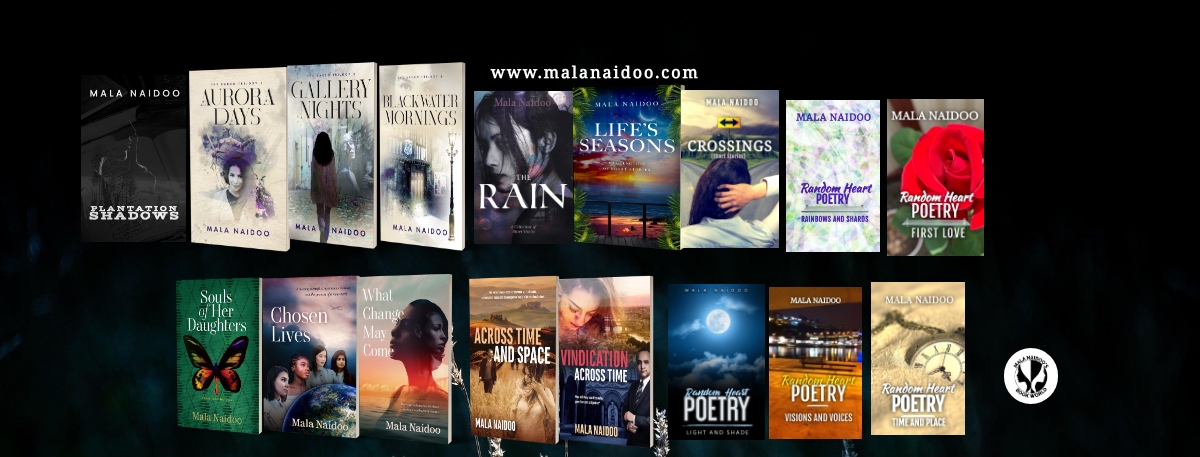
Souls of Her Daughters – March 2018
The Rain – A Collection of Short Stories – July 2018
Chosen Lives – October 2018

the year certainly sped by in a haze of complete joy and heady energy.

The Rain, A Collection of Short Stories,  an unplanned visitation that appeared between resting a novel draft before editing, took hold with an unstoppable fire, in the middle of the Australian winter, warming my heart and heating my hands, for a July 2018 publication.


The joy of writing is soulful, delightful and inspiring and brings to mind the memory of the amazing Aretha Franklin’s timeless, universal words breaking the wall to being voiceless, to find the necessary space through writing/music/painting that is unshackled by difference when it ignites, consumes, connects, offers hope, and entertains – surely that is the meaning of life!


It has been a year of connecting with writers near and far, the lovely Queensland author, Rhonda Forrest in the post, Australian Voices, and reading her novel, The Shack By the Bay, that invites the reader into the stunning North Queensland setting. Meeting online, award-winning, inspirational, Trinidadian author, Brenda Mohammed, author of How To Write For Success, a non-fiction book, and the famed fictional Zeeka Chronicles, and many more.

Valuable inspiration is drawn from  ALLi’s Director and Founder, Orna Ross, poet and author, on the creative process and the creative business mindset, essential for authors/artists. Joanna Penn’s The Creative Penn podcast provides up to date inspiration and information on publishing trends, and Mark Dawson’s SPF podcasts and courses are valuable resources for all writers.  Online inspiration is abundantly available from well-informed,  forerunners who selflessly share their experience in supporting aspiring and new authors.

Receiving readers’ comments on what they enjoyed or how they connected to your books is the sheer joy of knowing it has moved someone. It’s the validation needed to go on. Equally, it’s accepting that one learns something new every day, to improve, to become the best at what we do.

Looking back is undoubtedly encouraging the way forward to 2019, to reach out, share, connect and create.


Moving ahead, onwards and upwards is what matters the most,  by networking  in a shared global, writing community.


May the new year usher in abundant creative energy and books galore!

Happy NEW YEAR!


Happy writing, Happy reading.

Share your thoughts in the message box below to start a New Year conversation on your writing and reading aims for 2019.

← Back

Thank you for your response. ✨

How do you name them?

An interesting question recently from a reader prompted this post on whether the names of my characters were people I knew. As a writer I could say, yes, I do know my characters between the pages of my books, and fiction mirrors life as the angst, joy and foibles of individuals.


Meanings behind names have always intrigued me.


I  choose names for some characters that befit their personalities and behaviour or represent the opposite of what they are. In Souls of Her Daughters, Grace and Patience are indomitable women in the face of the catastrophes that befall them. Grace’s mother,  Varuna, has her name taken from the Sanskrit equivalent that attests to her strength as one who embraces all, hence she is the embodiment of the god of water and the celestial ocean surrounding the world.  Her inner strength and capacity in how she copes with the murder of her devoted, humble husband, and subsequent chastisement and ostracisation by her extended family does not alter her essential goodness. Grace, Varuna’s biological daughter, and Patience, her adopted daughter endure horrific persecution, of a cultural and tribal nature – Varuna will stop at nothing to ensure her family is reunited, while she continues being a person for others in her neighbourhood. 

In the sequel to Souls of Her Daughters, Chosen Lives sees the introduction of new characters, who are named in a similar vein, sometimes with demographic relevance, or drawn from Greek mythology – Xandria, defender of humankind, much the same as Alexis – helper or defender. Zuri, a Swahili derivative, means inspirational, beautiful, truth-seeker, and more. The head of the mission in  Chosen Lives, an underground movement for a new world of women leaders, is named Masuyo, which means to profit or benefit the world. A mission recruit, running a school for women in India is Akanya, meaning peace and humility which she exemplifies in her interactions with others. 

On the other hand, the character, Felicity, family friend and colleague to Patience, is far from what her name suggests, given her difficult childhood – her razor-sharp mind is admirable. The Arabic name, Azmil, means light, given to a young man who lost both his parents at the hands of rebel forces in Pakistan. The work he does, at the Well Study Centre,  makes him the light to many orphaned young women.  The snatched memory of his mother fosters his commitment to young women in his community.

The character, Audra, has a childhood of neglect by affluent parents, her name as explained in her testimony, is a celebration of the beauty of Audrey Hepburn. As she says, ‘to my Ramon,  I was Audra.’


A multi-cultural cast of characters representing diversity in harmony 


The third part of this trilogy, being written, will follow through with similar thought for new characters that emerge. Each of the three novels is a standalone read, too.


In my debut novel, Across Time and Space, and the sequel Vindication Across Time,  Keres Bathory is a name drawn from a combination of Greek mythology and a historical character – a combination of one who disturbs the universe.


Aspects of a character’s behaviour might be drawn from observation which is married with imagination to serve the role they play in novels.

What’s your fascination with names in stories or the people you meet?


Add your comment in the box below.


Happy reading, Happy writing!

← Back

Thank you for your response. ✨

Australian Voices

So many voices, so many stories in a country as diverse as Australia, each sharing a connection to people and place.

Today on the blog we have Rhonda Forrest, a high school teacher, from beautiful, sunny Queensland. Rhonda began writing under the pen name ‘Lea Davey’. Her first two novels, Silkworm Secrets and The Shack by the Bay were published under the pen name, Lea Davey, however her latest novel, Two Heartbeats, published October 2018 has been published under her real name, Rhonda Forrest. Having always lived in Queensland, the vast Australian Outback and the pristine Whitsundays feature strongly in her stories. Rhonda Forrest shares her story and tells us more about her writing journey.


Meet the Author 


Rhonda Forrest/Lea Davey


Biography – I was born in Brisbane and grew up in Rochedale, which at the time was a rural farming area. It was a fabulous place to grow up and as kids, we spent our time playing in the bush, riding horses and living in a community where everyone knew each other. I married at the age of 21 and my husband and I moved to acreage at Bannockburn where we lived for thirty years. Along with a menagerie of animals it was here that we brought up our three daughters and made life-long friends with many of our neighbours. At the age of 40, after a multitude of different jobs and running my own business, I decided to study. After 4 years of full-time study, I graduated as a high school teacher of History and English. Recently we have moved to Tamborine Mountain and live between the mountain and a 100-year-old cottage with a rambling garden up in the Whitsundays. Both places are quiet and idyllic places to live and write.


Writing Journey – As a child, I loved reading and was surrounded by books. My mother who is 90, still to this day reads every day and as a teenager, she always handed me her books after she had finished them. Nothing was off-limits and I vividly remember being enthralled by books written by Harold Robbins, James Michener, Wilbur Smith and Jackie Collins. I used to always think that one day I would write a book, however, it wasn’t until about five years ago that I had time to seriously think about pursuing my writing. Long hours spent out on a tinnie in the middle of the ocean fishing, allowed plenty of time for daydreaming and the story of, The Shack by the Bay began rolling around in my head. Once I started writing the words flowed easily and I knew that I had found a new passion in my life – writing!


Genre – All of my books are different. The Shack by the Bay is contemporary historical fiction, Silkworm Secrets is contemporary fiction and Two Heartbeats is Romance. My favourite genre is historical fiction although I also love to read true-life stories.


Motivation – If you want to do something you should just have a go at it. I don’t think I ever considered failing, actually I don’t think about the end result that much, I just go for it. Really you have nothing to lose and once I start writing it’s hard to stop until the story is finished. The editing and parts that come after the actual writing for me are the hardest parts and I would love just to be able to write and to have someone else do the rest for me. But when this is not possible I stay motivated, buoyed along by the lovely reviews and comments I get from readers. With writing, it is not about the money that you make (because that is limited) but rather the motivation that comes from readers who love your books. One of the most exciting things is to look on the Brisbane library website and see that all 5 copies of your book are being borrowed!


Influencers – Probably the biggest influence for me in relation to my writing was the Australian author Coleen McCulloch. It was after I read her book, The Thorn Birds, in 1977, that I decided I would write a book. It took 40 years to have time to do that, but eventually, it happened.


Favourite Books – Just recently I read Boy Swallows Universe which is set in Brisbane so lots of familiar places and just a fabulous entertaining read. My Instagram page has a countdown of my top 50 books and these range from Mao’s Last Dancer to All the Light We Cannot See as well as, The Old Man and the Sea and Australian classics, The Cattle King and My Place. I have so many favourite books, but I do love historical fiction. The Garden of Evening Mists, A Good Muslim Boy and The Space Between Us are also some of my favourites.


If you want to do something you should just have a go at it 


Favourite part of the Australian Landscape
That’s a difficult question as there are so many parts I love. I have travelled throughout Australia and it is often the coastlines that take my breath away. Crashing waves on rugged cliffs in South Australia, white sandy beaches with turquoise waters in Western Australia, red boulders with soaring waves in Tassie and of course the familiar pristine waters of the Whitsundays, rich with turtles, whales and dolphins. Equally beautiful though is the scrubby bush with the sun searing down on it and soaring gum trees, the bark dappled and ghostly against our vivid blue sky. We really do live in the most beautiful country and I always appreciate the beauty that surrounds me, be it the rolling hills around Tamborine Mountain, the thick rainforests just down the road from my house or the hazy valley views from the lookouts up here on the mountain. I love it all and much of that love of the landscape comes through in my books.


Book Covers – Designing book covers has been a journey in itself. The cover for The Shack by the Bay comes from part of a photo that I took of a shack down in Tasmania while Silkworm Secrets cover was a painting a friend did for me. For Two Heartbeats I engaged the help of a graphic artist, Ethel Beckett, also from Brisbane, who did a fabulous job giving me exactly what I wanted.


Rhonda Forrest’s/Lea Davey’s Books Are Available on Amazon
The Shack by the Bay (2016) – by Lea Davey
Silkworm Secrets (2017) – by Lea Davey
Two Heartbeats (2018) – by Rhonda Forrest


Book Descriptions

The Shack by the Bay (Lea Davey) An isolated fishing shack on a beautiful bay in the Whitsundays provides Luke with a retreat where he can find peace and solitude. However, the discovery of family war relics and a developing relationship with the beautiful Lily connects family histories and reveals a story that threatens to destroy his chance at real happiness.
Will the wartime secrets prove to be the breaking point for a beautiful romance? Or can two families put the deeds of the past behind them?
Romantic and purely Australian, The Shack by the Bay captures the pristine beauty of the Whitsundays and the wartime memories of older Australians while introducing an eclectic blend of friends and family.
Silkworm Secrets (Lea Davey) Ruby and Bobby are best friends who spend their spare time together in a tree house where they retreat from the adult world and share their secrets. To Ruby’s dismay, Bobby’s family life is far different from her own and when he is forced to leave home at a young age it seems that the two may never see each other again. But after many years the events of the past resurface, and as an adult, Ruby is unexpectedly faced with the gravity of their secrets and the seeking of justice. A court case forces her to search for Bobby who has not been seen since he left home as a child. Will she find him amidst the vastness of the Australian outback and if she does, will he want to return to what he has spent his entire life running away from.
This is a story about the secrets that children keep, the strength that comes from a childhood friendship and a special family love that overcomes the hardships of the past.


Two Heartbeats (Rhonda Forrest)
When Jess heads west for a fresh start in a small mining town, the dusty outback is a far cry from her former life in the city. Despite having no knowledge of country life, she finds herself loving the isolation and local people. All she has to do is keep her head down and work hard to create a better life for herself and Johnno, the only person she has ever truly cared about.
The caring warmth of a new circle of friends allows Jess to feel that maybe, for once, her life is heading in the right direction. However, problems arise when her temper and stubborn nature collide with her new boss, Daniel, who is suspicious of her background story. Has Jess been honest, or is there a hidden secret to justify his distrust of her?
Set amidst the rugged outback of Australia, with a cast of eclectic characters, Two Heartbeats is a story of friendship, resilience and the hope that ultimately loving relationships may triumph over obstacles defined by the past.

With gratitude to Rhonda for sharing her writing journey, and books with us today. Please add your thoughts in the box below:

Connect with Rhonda Forrest/Lea Davey here:

Instagram

Facebook

Email

Happy Writing, Happy Reading!


← Back

Thank you for your response. ✨


Whose Voice is it?

Voice is the defining feature of any book we read. It is unique to the author and is often what draws readers to pick up a particular book, by a particular author.


Turning to influencers is a significant aspect of the writer’s professional development, but mimicking the voice of another, as in tone, values, the nuance of language, etc, underscores the authenticity and value that a unique voice offers. Just as our personalities differ, so too does voice –  it has character, personality, and it becomes the signature of the writer/speaker/narrator.


Readers find comfort, delight, and excitement in the voice they read, in being entertained or informed, or perhaps both. The rush to ‘be like others,’ comes with the risk of losing purpose or creating a voice that is inconsistent with the message. Voice is a significant part of connecting with readers. It communicates values and visions drawn from life experience, culture, lifestyle, education, angst, joy, and more, as part of early, and ongoing socialisation. We are after all, beautifully unique.

The writer’s voice is delivered through narration, characterisation, description etc. In characterisation, the writer’s voice is distinct, based either on personal experience, research conducted, and observations of human patterns of behaviour and communicating. Tension or suspense through voice is also drawn from the writer’s observed, or experienced fears, to capture the moment with accuracy and evocative creative design. This should move the excitement/thrill to the next level, for the reader. Emotional aspects of a novel are effective in holding the reader’s attention when it comes through from an authentic/believable/unadorned voice.


We often say, ‘seeing’ is believing, but, ‘feeling’ is living the moment in a book – it might well be remembered long after the book has been put down. Now, Shakespeare’s Othello craved, ‘ocular’ proof, of his wife’s alleged infidelity, yet if he cautioned his doubting mind by embracing his deep love for her, he might have lived his happily ever after. Well, one can surmise and hope, it’s to the writer’s credit when readers are overjoyed or disappointed when the character/s either meet up to or deviate from their expectations.


The accolade is huge when readers say, I could hear your voice while reading.


 One Voice, Many Voices 


Voice in graceful narration is as important as the ‘voices’ that diverse characters are given in stories. Narration, description, and dialogue are the pillars of a novel with plot guiding the platform through the author’s voice as the vehicle that intersects with the reader’s experience.


Listen to an excerpt from  Morgan Freeman’s narration in The Shawshank Redemption, based on the novella written by Stephen King- reading a story, or excerpt out aloud after it has been written or during the process of writing is of tremendous value to shift and polish how meaning is created through voice. The flow, tone, and authenticity of voice become transparent when reading aloud. Record an excerpt and play it back to catch if ‘voice’ is represented as imagined during the writing phase.


Honesty or truth should ring through the writer’s voice to establish a valued connection to the reader, creating an expectation that makes the reader continue to turn the page. Voice can be frivolous, serious, angry, calm etc. depending on the type of tale being told. Hence consistency of voice, dependent on the genre/scene/story etc. is imperative to hold the reader’s attention. It makes the reader return for more. A relationship is formed between the reader and ‘voice’ for a fulfilling engagement with the book.


Whose voice is it anyway?


The writer’s unique voice does not have to be written in Jane Austen’s, Charles Dickens,’  or any favourite writer’s style, it is about reaching readers with an authentic voice regardless of the niche appeal the story might have. A writer’s voice is the ‘heard’ presence of the writer. 


Listen here to Pat Schneider, author, on how nuances of voice emerge.


More food for thought:


“For last year’s words belong to last year’s language
And next year’s words await another voice.”
~ T.S. Eliot


“Your writing voice is the deepest possible reflection of who you are. The job of your voice is not to seduce or flatter or make well-shaped sentences. In your voice, your readers should be able to hear the contents of your mind, your heart, your soul.” ~ Meg Rosoff


“My aim is to put down on paper what I see and what I feel in the best and simplest way.” ~ Ernest Hemingway


Happy reading and writing in your unique voice!


Please  share your ideas on the significance of ‘voice’ in stories in the comment box below.

← Back

Thank you for your response. ✨

Rear to Front View

We hear and read much about goal setting with the onset of a New Year.

The rear view must be kept in sight to negotiate the lift-off to the front view, to minimise errors and risks that need refining − that backward glance reminder is significant as the new year begins


Looking back on the not so distant past year, its exit a rapidly fading memory− caught in the fanfare and fountain of eternal fireworks that kick-start the New Year− if we linger on the threshold of the New Year,  we might not move forward fast enough.

With everything in life, we get better at it when we do it over with a new spin, a new attitude and a passion to achieve the best we can.


We are human after all, we can only get better with a little effort and skill.


How do we keep the rear view in focus while bolting to the front view?

  • Make a list of your past successes
  • Make a list of some past shortcomings
  • Match them against each other
  • Now decide what is worth pursuing and what should be culled.
  • Work at culling first and shutting down that rear mirror.
  • Pick up the shortcomings that need attention – make them a priority, review, add-in, refine and polish. Repeat the cycle a few times. Once this is defined as the way forward, look at the new front view,  you want to see,  and advance at a speed and pace that is comfortable for you.


How do we create that front view?

  • Itemise THREE small goals you want to achieve
  • Make a list of the tools you might require
  • Set a timeline for how you will achieve each goal
  • Structure the above timeline in four monthly slots
  • Start with the goal that is perceived  as  crucial to a glorious front view
  •  Proceed with getting as close as you can as the four-monthly goal post rolls in
  • Move to the next goal, even if the first has not been fully realised, the first view should continue to grow as the second is being crafted
  • Continue with this pattern, with your eye on the long view


What if there are challenges within each new view?

Here’s the thing:

  • reflect-reflect-reflect
  • write down or voice record what happened, why it happened and what you can improve upon
  • without conscious acknowledgement of why the challenge arose, the risk is,  it might recur,  awareness through thought, guides and creates a redirection for a better view.
  • turn to influencers in your craft: writer, teacher, mother, father, painter, musician etc, draw inspiration from their blogs, podcasts, Facebook specific groups, face-to-face interactions and professional associations.
  • Ask questions, no question is too simple.

It’s a pattern− not an inflexible structure− t should be one that guides your drive through the year, a look in the rear-view mirror, as you proceed, is a worthwhile look− reduce the frequency when you reach your halfway mark.

Keep driving, keep looking ahead, and a safe and happy arrival is assured!

Happy New Year!

What’s your view on the rear view? Add your comments below.

← Back

Thank you for your response. ✨

Want to be a Writer?


Why not?

You will enjoy the process of creating the story you have always wanted to write.

What’s holding you back?

Fear and Time?

Counteract fear by writing the best story you can.  Temper your inner critic, the belief that you’re an imposter in the craft – avoid this or you become your own worst enemy. Trust your desire to write and turn to the supportive person in your life who will allow your light to shine.

Find time in your day to get down as many words as you can. Do it consistently to keep yourself inspired to go on to complete your novel. Fifteen minutes a day is better than not writing at all.


Will you be a pantser or plotter?

Would you meticulously plan scenes, with graphs and maps etc or let your creative energy lead you with just the basics planned out for your novel? There are various schools of thought on being a pantser or plotter. I’m somewhat hybrid on that. Mental planning with a few scribbled thoughts here and there make me more a pantser than a plotter.


Pantser or Plotter


Challenges that could occur

Shut the door as you write, as Stephen King advises in, On Writing: A Memoir of the Craft, ( I gained the courage to finish and publish my books drawing from the advice in this book), until you are ready to tell the world.

Once you begin to tell others, be prepared for either cynicism or support. The cynics are not worth your time – leave them to their cynical worlds and do what you have to do – write the best story you can!

Writing is an emotional process that often dives into a point of long-held pain or passion. When dubious eyes, lopsided smiles, and tongues that doubt,  disturb your orbit, it’s time to turn them down or off.

Consistent writing, turning to influencers of the trade and reading books on how to write well or listening to podcasts on writing and signing up for webinars on the craft is the way to pay your way forward in your growth as a writer.

No story is not worth telling if your aim is to enlighten or connect with your reader or you know what you have to say will make a difference- write that story.

And there’s more…

Writing the story is not all you have to consider, you should then research traditional and self-publishing options and find your best fit. Know your genre, research writers in the genre you want to write in and carve your approach, your own style. Once the final product, the actual book, with a professional cover, professional editing,  blurb, author biography, ISBN, date, publisher, and place of publication etc are in place, the marketing of your book begins. Whether you opt for traditional or self-publishing, the onus is squarely on your shoulders to market your book.


Don’t put off writing your book. Now is the best time.


It took me several years to finally master the fear to turn to my beta reader to have a look at my work.

We need more stories, stories that speak of angst and optimism and stories that make us laugh out loud, hold us in suspense, evoke disbelief or leave us in meditative contemplation.


We need stories that remind us of our essential humanity.


Write your book today. Publish it…

Don’t you know yet? It is Your Light that lights the worlds – Rumi

Does this resonate with you? Please share your thoughts in the message box below.

← Back

Thank you for your response. ✨

Why a Sequel?

Do writers plan to write a sequel? Why are sequels so popular?

Sometimes they are planned and sometimes they grow from the first book for a host of reasons.

We live in an age where we are desirous of connections for the long haul, we want more as we book our Netflix favourite series into our private calendar time-slots; we crave more when we connect or are moved by a story and its people.

We desire more of what we enjoy, what we look forward to. Connections with people and places make us reluctant to leave. The story is anticipated as an after work or relaxing weekend read. It’s locked in and beware the unsolicited ringing of the telephone or doorbell! Solitude is non-negotiable!

For the writer, unfinished matters in the first book lead to the second book which unveils new situations and hidden aspects of characters and situations, sometimes shocking or expected and satisfying.

Picking up reader feedback from the first book while the sequel is being written is significant in ensuring that favourite characters are not destroyed or killed off too early, reader and writer satisfaction is imperative.

In the writing of my debut novel Across Time and Space, the sequel began to emerge by the end of the penultimate chapter, there was more my characters had to say, there was more that had to be revealed. The intrigue of the first tale created expectations that needed further exploration.  Relationships needed to grow.

Truth and deception were left skulking in the shadows at the olive grove in Viareggio in Across Time and Space and these ghosts came calling for more.

This made me restless to dive into the sequel, some cautioned ‘not so soon,’ others begged ‘when will it be ready?’ The process became an organic growth –an obsession to take the story to where it was leading me. Hence the birth of the sequel, Vindication Across Time.

Cover Design- Working Type Studio- Luke Harris
What will be lost, what will be gained when the dark forces of human nature obscure truth and justice?

Will this become an Across Time series?

The question we are left with is, ‘what are we keeping hidden from view in the hope of leading or appearing to lead a happy and by anyone’s definition, a ‘normal’ life?’

Coming to terms with our ghosts as something of the past rather than defining our present worlds is significant in Vindication Across Time. 

Whose ghosts will be exhumed in this tale of love, loss, hope, and patience?

Have you read, Across Time and Space?

What are your thoughts on book sequels and television series, what do you anticipate in Vindication Across Time? 

Please leave your comments in the message box below.

← Back

Thank you for your response. ✨


Fear: Thy Strength

After an evening at the amazing Headlong, Nottingham and Almeida Theatre production of 1984, the timeless warning of the danger of unchecked power and the futility of resistance invited thoughts about the state of society in other areas of power, control and fear.

The passive aggressive comment, the staring down to intimidate, the proclamations of intellectual superiority, cultural, religious or racial bias uttered from a monocultural, bigoted point of view instils fear in the targeted individual, reverberating with the mental torture Orwell’s character, Winston Smith undergoes.

Sleepless nights, dreaded days, endless bouts of nausea, skulking in the shadows away from penetrating eyes, questions about questions.

The long day’s journey into another sleepless night becomes relentless. Guilt, self-questioning and a whittling away of self-confidence reeks of the fascism of workplace politics.

Competitiveness of the narcissistic ladder climbing co-worker or the sadistic joy in pulling others down is yet another corrosive dimension of inhumanity.

Systemic torment dims the light of the once vibrant, optimistic individual, the light is interrupted as dark days take over. Winston Smith tried to hang onto the waning light in Nineteen Eighty-Four.

With every knock…

The eroded self-confidence and panic attacks sends the tormented individual hurtling into a bottomless pit of mental anguish …


Each act of power and control, topples the victim blow-by-blow…


BUT

While the message is bleak, while it might not seem possible, there is a light at the end of the long, dark tunnel, the light of strength.


Fear is thy strength when compassion and love grow from the depths of pain.
In fear, there resides hope.


Hope is the light — fiction and poetry hold the power to transform fear to courage as all struggles pass, they exist in the now—the page turns as truth lifts its head to the sun. 


George Orwell predicted a future that has become a reality today, not only within the realm of politics and governance but also serves as a cautionary note to take a closer look in the mirror to decide if our souls are indeed supportive or destructive of each other.

A dark message sheds light on what should be rectified to save ourselves and the ‘unborn’, the next generation, from even darker inhumane acts.


What will you do today to uplift someone from the quagmire of human cruelty?


Share and Comment:


← Back

Thank you for your response. ✨

Sensitivity in Stories

A post read recently suggested writing from a knowledge base and not from imaginative creations that might be insensitive if writing about mental illness, physical disabilities, emotional disorders etc. While I agree with being sensitive by not causing injury to others, art should mimic and extend reality if understanding and connections are to be formed.

The question is – does one have to proceed with caution when creating a character with mental illness or a physical disability in a novel?

The depiction becomes insensitive when it supports stereotypes, insults, separates and denigrates actions and situations the character is placed in. To create a character who overcomes a difficulty by honing other powerful skills or having amazing support from family and community to achieve goals is indeed not insensitive but rather supportive of what a cohesive humanity is – certainly a message for raising the lot of the human condition.

The foremost purpose of writing, fiction, in particular, is to entertain the reader more than to inform. However, if the writer is able to strike a balance between entertain and inform, the reader is likely to gain valuable understanding from such a piece of writing. If written without dictating what is right and wrong then sensitivity should prevail and the writer is more likely to connect with the consciousness of the reader which might motivate the reader to read more books by the same writer.

When entertainment and purposeful information are included in a work of fiction, a level of research is necessary to sustain the story to its logical, authentic conclusion. If the storyteller/writer has first-hand experience of events, social issues, illness, particular ways of thinking and behaving then research is not the prerequisite as it would be for a nonfiction book that covers specialised areas such as crime, history, science, psychology, culture, economics etc.

Research will not go amiss in fiction writing, it should add colour and depth to the story plot and character representations. When creating characters with a medical condition, research around the condition or perhaps speaking to a medical specialist on how the condition manifests will add authenticity to the story. How much research should one engage in is dependent on how significant that character is to the overarching story or plot. Striking a seamless balance between the story and research is essential to avoid having the story appear like an ‘unofficial’ handbook or textbook. Shaping characters in true to life situations are more likely to lead to an enjoyable reading experience. For the writer to create authenticity in a story, it is necessary that the purpose of writing is to entertain first and then inform on matters that pertain to character and plot.

The writer has to give voice first to what he or she is passionate about. If one is to expose the harsh reality of particular situations prevalent in society, then that which makes the reader uncomfortable is equally necessary. We bandy around that we need to be ‘moved’ for change to occur – to be ‘moved’ is either happily or unhappily so, with joy or sadness. If we are to be catalysts for thought change through writing fiction or nonfiction books, it should come with some thought-provoking messages – George Orwell’s Nineteen Eighty-Four might leave readers either grateful that they have control of the decisions they make in life or it might result in a re-examination of whether they are indeed free.

Fiction and nonfiction books are of equal value to the reader when they create thought change or thought searching connections.

What do you think? Should sensitivity be at the heart of all our writing? Should the writer entertain, inform and shock the reader?

I would love to hear your thoughts. Please comment below.

← Back

Thank you for your response. ✨


Wellness While You Write


Everyone is a writer- authors, students, teachers, business executives, talk show hosts, journalists, doctors, lawyers, engineers and the list goes on. Some of us write for longer periods in our day and others in short spurts, depending on what you do and want to achieve from your writing.

How do you take care of your energy levels, nutrition, body and mind, when writing pins you to your desk for most of your day?


When the writing muse comes calling, all else is forgotten, the writer lives in the space where ideas unfold upon ideas, time stands still. 


Often writing in the comfort of our own space can lead to poor eating patterns. This might seem like common sense but we need to be reminded to sustain ourselves for the long haul. Writing is mental, creative energy that needs sustenance – yes sustenance – I don’t mean food for the soul – that is important, but, you need good wholesome food, first, before the reward food if it’s your choice. Do you keep a jar of lollies at your writing desk?

Here’s a strategy for a healthier writer body and mind:

If you start your day at 5 am and head to the kettle for your coffee fix. Stop. You need to sustain your energy for the duration of your writing day/ hours.

Try this for three days and note the difference.

  •  fill a jug with water, slice half an English cucumber or a whole Lebanese cucumber, and add it to the water.Cucumber is a source of vitamin B. Leave the skin on and you add vitamin C to your drink which is much needed to ward off colds with winter advancing in this neck of the woods. A dash of chopped mint is optional but a great herb to add. Adding a thin slice of lemon will pack on more vitamin C.
  •  while the water, cucumber, and mint infuse,  get in a few back stretches while standing in the kitchen and a few more cat stretches on the carpet or exercise mat if you have one readily available. Arching and relaxing your back will serve you well for a day or hours in your writing chair.

Now for the refreshing drink:

  •  a tall glass of cucumber-infused water should be sipped while standing up – only because you will be sitting in your chair for an extended time. Keep the blood flowing like you would on a long haul flight.
  •  having that cup of coffee should come after the cucumber infused water which would have energised you by now, clearing the mind, cleansing and oxygenating the blood. The antioxidants perform their magic. Cucumber is an anti-inflammatory food which might aid with swelling feet if you are prone to this after hours of sitting at your laptop.It might help your aching fingers or wrists after hours/days of typing too.
  •  if you are an exercise junkie, (if you can fit that in with your writing schedule) and need your morning run, eat a banana before you head off.
  •  now for breakfast, you’ve stretched, cleansed, had your coffee treat or banana and run, what should your choice of breakfast be before you hit the writing page?  

Here are some options depending on whether you are vegetarian, vegan, gluten-free, lactose intolerant or diabetic etc.

  •  a small slice of fruit, if you had the banana, skip this step, – a small bowl of rolled oats will sustain you for hours of writing – if you prefer eggs – poach them and eat with a slice or two of lightly grilled tomato.
  •  If you have avocado on hand, a slice will add to a healthy mix. Limit bread to wholemeal/gluten-free if you are going to have a slice of toast.
  • take your jug of cucumber infused water and leave it close to your writing desk to sip at will – why should you do this? It hydrates you, keeps you clear-headed, mentally alert and the bonus is you will be forced to stand up to walk to the toilet! 

As writers, time does not exist when in the creative maze of writing, two hours may seem like twenty minutes. 

You might ask, what about lunch and dinner?

      A light lunch perhaps, a topping of your choice (no to jams and spreads) on wholemeal or gluten-free crackers or bruschetta followed by a cup of green tea. Dinner could include grilled or steamed vegetables, fish, or any lean protein of your choice with a salad, followed by a cup of herb tea and perhaps…perhaps… a tiny treat of your choice.

Here’s hoping this works for you as it does for me, if you have suggestions on how you remain well and sustain yourself on your writing days, please share by writing in the comment box below.


Wishing you many healthy, happy writing hours!

Please share how you maintain a healthy desk-bound body, mind and spirit?

← Back

Thank you for your response. ✨


Authenticity

We want to believe.

We crave loyalty.

We need assurance.

We are human after all.

  • In creating characters in fictional tales, those that resonate with the reader are the characters who are either perceived as most authentic in their expressions of truth or deception.  Literature mirrors the fabric of humanity highlighting concerns on the human condition creating understanding and connections with the reader. Readers want to identify with characters in the books they read to keep hopes and aspirations alive.


  • In conversation, the following were identified as underpinning the expression of authenticity

#  motives,
#  relationships
#  sincerity

What does it truly mean to be an authentic person?

Fifteen character components that I identify as essential in this quest for personal authenticity or that which you create in your characters could include:


  • being true to yourself first before you can be true to others
  • going it alone even if you are the only person in the room holding a different view
  • saying you can’t do it anymore or that you need assistance
  • risking friendship by saying you feel used or need to be heard.
  • being proud of one’s origins, culture and values
  • acknowledging the presence of others
  • being comfortable in your own skin
  • being truly happy for others in all they accomplish
  • embracing diversity/ withholding judgment on race, culture, religion, sexual orientation, disability, political affiliation, socio- economic standing
  • greeting with a smile that extends from the soul to the eyes to the mouth
  • upholding the truth as it is
  • not allowing fear to govern choices
  • protecting vulnerability rather than exploiting it.
  • reaching out to those in need even if you don’t have enough for yourself
  • striving to be the best version of yourself.


How Difficult is it to be Authentic?

It does not require one to renounce worldly aspirations nor live like a saint or hermit.
Being authentic is simply being you, not a carbon print of someone else or living up to the expectations of others.


If you are always trying to be normal you will never know how amazing you can be- Maya Angelou

To be yourself in a world that is constantly trying to make you something else is the greatest accomplishment.- Ralph Waldo Emerson

There is nothing more rare, nor more beautiful, than a woman being unapologetically herself; comfortable in her perfect imperfection. To me, that is the essence of true beauty.- Dr. Steve Maraboli


Should your brave new world of being true to yourself be feared?

Only if you lose – your way – yourself – in a sea of manipulation and deception. The character, Meryl in Across Time and Space undergoes a steep learning curve to emerge as…I leave you to find out…and the sequel will reveal more.
When you are surrounded by authentic people, you feel the positive vibration around you. This energy allows you to flourish. Separating the wheat from the chaff comes with life experience as you glide towards the true, the real you.


Here’s to creating enhanced versions of ourselves and the characters we create

Like, Comment and Share.

← Back

Thank you for your response. ✨


Energising Creative Thought


Here are a few practical suggestions to a question posed this week which is a significant and very real concern:

‘How to centre yourself and clear your thoughts before writing?’

  • The time of day when your energy levels are high and you are rested is a good time to sit down to gather your thoughts.
  • Have a plan for what you hope to achieve for that particular writing session- is it a paragraph, a chapter or some research on a new idea? I have a skeleton plan of what I would like to create in my chapters- this is done through dot points which help to structure my thoughts that I build upon as I write.
  • Keep a journal on random thoughts that emerge each day.


  • If gathering your thoughts hits a roadblock, try this exercise:
  1. Look around the room you are in – what object catches your eye, write a brief description of that object using as many sensory images as you can come up with – visual, auditory, olfactory, tactile.
  2. Consider why you might have been drawn to that object – Colour? Shape? Associated memory? Who was the person who might have given you the object or where and when it became yours?
  3. Write a paragraph on the size, shape, colour, ownership and memory associated with the object.
  4. Record your thoughts, in your phone or other recording device, by speaking about the object first,  then write them down as you hear it on your recording adding on  the ideas as you go.
  • If this does not spark your creative energy, pick up a book, turn to any page and read the first line – stop – absorb – now write down what you think might happen next.
  • A quiet space, undisturbed, gives voice to your thoughts to pick up the pen or tap on your keyboard, a quiet space will lead to thoughts being centred where the noise of a crowded space might distract  creative thought. This also depends on whether you can work with complete stillness, as I do, you might find a bustling coffee shop, as the protagonist, Meryl,  in my novel, Across Time and Space, does suitable to creative thought  if undisturbed by intrusive newcomers like the infamous, ‘roving professor’.
  • Once you find the space that is conducive to creative thought, tune into your inner clock, establish a rhythm to clear and centre your thoughts. If this does not happen in one sitting, go back later, or the next day – persistence and consistency is the key.

The most potent muse of all is our inner childStephen Nachmanovitch 

Happy Writing!


← Back

Thank you for your response. ✨


Is Commitment on Your Agenda?

Across Time and Space explores commitment in relationships in romance, friendship and family relationships. Whether or not it leads to the commitment of, ‘I do’ – commitment is a primal need in relationships for one to feel valued. The protagonist in Across Time and Space has been in a relationship for a length of time, a comfortable, complacency envelopes the relationship creating restlessness that becomes the catalyst for unimagined challenges.

This begs the question, does commitment mean unstinting devotion and loyalty akin to ‘til death do us part?’ The answers are vast and varied depending on the values one has embraced or formed.

Being raised in a time and place which instilled that a promise of commitment meant fulfilment of that promise on a nominated, ceremonial day which comes with its own merits and flaws. This might be considered ‘old world’ or fit for ‘Cinderella and her Prince Charming’, yet the expectation is that couples will unite or commit in a way they deem appropriate to both of them. Yes, the operative word is both – not ‘one’ making a decision, on a whim, that life’s path has beckoned a change for ‘one’ without consideration for how this might impact on the other half of both. Such is the life of the protagonist in Across Time and Space and her partner – good people in their own right who buckle under the fear of commitment, fear for the loss that might be incurred in all that has yet to be achieved in life.

This leads me to why should commitment be feared as the end to individuality and relinquishing of one’s dreams? Commitment should encompass all spheres of one’s life in relationships: singular and joint dreams, commitment to professional ideals and commitment to going off on a whim if its one’s choice to do so by acknowledging that both need to be aware of such changes. Meryl, in  Across Time and Space will clarify the choices she makes to catch the star of her destiny that she feared might never be realised in her lifetime.

Commitment can have its dark and dangerous side when passion overrides reason. This brings to mind Catherine and Heathcliffe in Emily Bronte’s Wuthering Heights where both are inextricably and destructively hemmed to each other. Stepping outside literature as we turn on our televisions to the reality of the evening news or an online article on domestic violence which results from unhealthy commitment which is power and control. Supposed commitment, commitment without reason creates a dark, terrible and often tragic situation.

Commitment in family relationships be it as mother, father, grandparent, carer or extended family member should be based on trust, approval, open communication and support from love shared  to promote good mental health.

Love, respect and freedom of choices are a right that should not be debated, it’s a basic human right – a human right that should acknowledge commitment to respectful consideration through communication  before heading off alone into the sunset.

Commitment to values  includes commitment to the values of place, the place we call home – the country- the city- the street- our backyards. It is often those who cannot commit on a personal level who cannot commit to democracy, justice and a fair go.

Reason should always caution passion, dreams should be lived for peace and joy to reign for both halves in any relationship and for all in our choice of place that we call home.

What’s your take on commitment to all things in life?  I would love to know your thoughts.

Please Like, Share and Comment

← Back

Thank you for your response. ✨

Women You are More

It was a good week reading and hearing the voices that speak up and out about acknowledging women in literature and in every professional, political and social sphere. The momentous global Women’s Marches this year are indicative that times have indeed changed, however, silence or ‘Feminism Lite’ as warned by Chimamanda Ngozi Adichie, subvert the right of a woman to proudly be herself, to be seen and heard for what she believes is good for her.


Women Helping Women                     


Ironically the media on this day, 10 March 2017, has reported, much to the chagrin in many quarters of society, that stay at home mums,  are draining the country of much-needed skills. This understating of the role stay at home mums play in raising children, raising the next generation to be upstanding citizens and contributors to the world of tomorrow is questioned and frowned upon as not making a valuable contribution to society and hindering the economy?

This says that the War of Women against such opinions, studies and other such claims is an ongoing battle. Margaret Atwood’s states that The Handmaid’s Tale is more relevant than ever and Jude Kelly, theatre director and producer enlightens in a TedWomen talk on  ‘Why Women should tell stories of humanity’.

                                                            ***

My Tribute to YOU

  • YOU are amazing in all you juggle in your day
  • YOU are amazing in the boundless energy and strength you demonstrate
  • YOU are amazing for your selfless dedication to your profession, family, friends, community
  • YOU endure each day with no complaints with an ever-ready smile for others
  • YOU are the rock when things fall apart
  • YOU are kind, generous and loving
  • YOU are SPECIAL –  NOBODY can take that away.

                                                           ***

 I leave you with two powerful messages from MEN on the significance of YOU

THE HAND THAT ROCKS THE CRADLE IS THE HAND THAT RULES THE WORLD.

BLESSINGS on the hand of women!
Angels guard its strength and grace.
In the palace, cottage, hovel,
Oh, no matter where the place;
Would that never storms assailed it,
Rainbows ever gently curled,
For the hand that rocks the cradle
Is the hand that rules the world.

Infancy’s the tender fountain,
Power may with beauty flow,
Mother’s first to guide the streamlets,
From them, souls unresting grow—
Grow on for the good or evil,
Sunshine streamed or evil hurled,
For the hand that rocks the cradle
Is the hand that rules the world.

Woman, how divine your mission,
Here upon our natal sod;
Keep—oh, keep the young heart open
Always to the breath of God!
All true trophies of the ages
Are from mother-love impearled,
For the hand that rocks the cradle
Is the hand that rules the world.

Blessings on the hand of women!
Fathers, sons, and daughters cry,
And the sacred song is mingled
With the worship in the sky—
Mingles where no tempest darkens,
Rainbows evermore are hurled;
For the hand that rocks the cradle
Is the hand that rules the world

-William Ross Wallace (1819-1881)


As long as outmoded ways of thinking prevent women from making a meaningful contribution to society, progress will be slow. As long as the nation refuses to acknowledge the equal role of more than half of itself, it is doomed to failure.

– Nelson Mandela (1918-2013)


Please Like, Share and Comment

← Back

Thank you for your response. ✨

error: Content is protected !!