Persistence – Dog with a Bone?

Being a dog with a bone is sometimes needed to get the job done.


Persistence pays.


By the same token, I am aware how utterly annoying the person who is always a dog with a bone can be … gnawing at issues or situations for self-aggrandisement. They gnaw at the issue or situation with dogged intent. Is it with a power-laden agenda to prove a point and claim a hubristic victory?


An ego trip might well motivate a dog with a bone syndrome (my definition) hence such characters are quick at the ready to prove a point, make a statement or perhaps just want to be heard. A sad dog with a bone.

This excessive gnawing suggests self-obsession, the ‘look at me’ need.


determined puppy


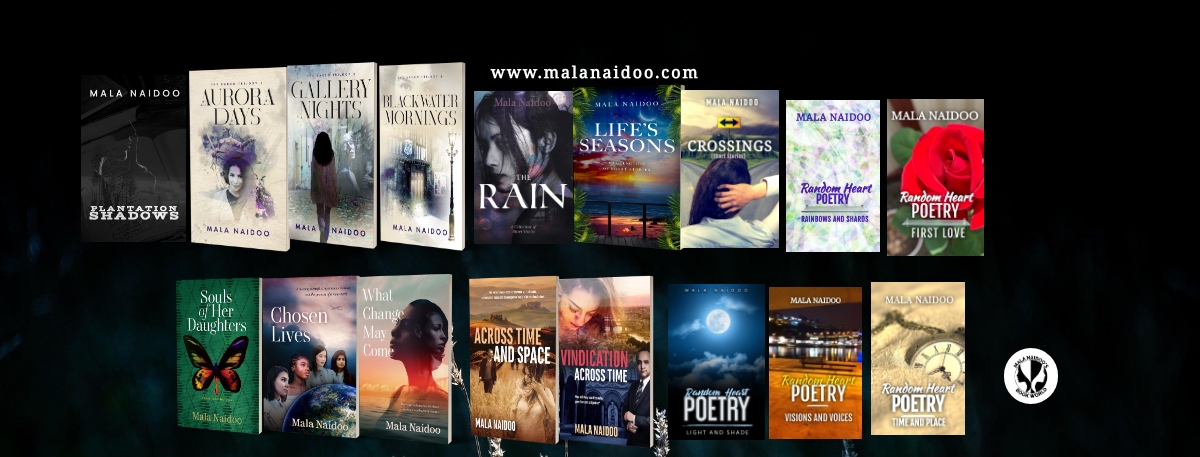
You will find this character type in my novel, Vindication Across Time, or can you identify characters in literature you’ve read, where such attributes are identifiable?


How about some of these characters?

-Shakespeare’s Duke Orsino in Twelfth Night – hankering after love:


If music be the food of love, play on/ Give me excess of it, that, surfeiting/The appetite may sicken and so die.


Shakespeare’s King Lear in the play by the same name, desirous of hearing how his daughters love him:


which of you shall we say doth love us most. That we our bounty may extend. 


A vain ploy, albeit by an aging king and father, to ‘buy’ profanations of love.


Note the positions of power in each of the above, male, duke, king, etc.


But what about the humanitarian goal-focused dog with a bone? What defines this person?

  • courage
  • resilience
  •  hope, authenticity, and determination
  •  achievement
  • embraces challenges
  •  wants the best things in life for self and others

Shakespeare’s Cordelia, King Lear’s daughter, says:

  • I love your majesty according to my bond, no more no less.

This girl tells it like it is! She speaks from the heart in her truth. She stands by her truth like a saintly puppy with a bone, she is prepared to forgo her part of her inheritance from her father’s kingly estate in:

  • Nothing will come of nothing. 


This is an admirable quality which has been included in my novel, Across Time and Space. Who is it?

  • Meryl?
  • Marcia?
  • Ben?
  • Andrei?
  • Michael?
  • I leave you to decide.

But while pursuing these noble intentions, individuals/characters might walk all over those who support and promote them by becoming consumed by their goals, to the point of frustrating others with their exuberance, self-centred, and misfired passion.


So how does one or one’s crafted character become a pleasant goal-focused dog with a bone?

  •  have a purpose that will also benefit others
  • know when to take a break from the bone of self-promotion – in other words, give the jaw a break.
  •  consult with peers and others and share by being an active listener.


Where are these characters in literature?

How about Friar Laurence in Romeo and Juliet? He knew he could no longer prevent Romeo from wanting to marry Juliet, so he dutifully got them married.

And the upright, Atticus Finch,  in Harper Lee’s To Kill a Mockingbird who was relentless in proving the African American, Tom Robinson, innocent of the allegation by Mayella Ewell and her father Bob.

The dog-with-a-bone fictional characters make interesting case studies and create engaging plots with perhaps a  moral lesson.

A valuable, and historic determination from Martin Luther King is:


I refuse to accept the view that mankind is so tragically bound to the starless midnight of racism and war that the bright daybreak of peace and brotherhood can never become a reality… I believe that unarmed truth and unconditional love will have the final word. ~ Martin Luther King


Be a dog with a bone or craft such characters but know when to give the gnawing a rest. Craft characters who echo tireless values that promote change for a better world, or expose the dark side through characters who invert goodness.


Please comment and share your views on characters who have had an impact on you.


← Back

Thank you for your response. ✨


Literary Life Lines

There has been a lot of interest this past week on a previous post,  here on why characters and quotations from literature are often remembered long after the book has been put down.

Thank you for the comments, I’m delighted that you found educational or personal clarity and have selected a few more literary life lines in this post.

Literature that speaks to the human condition echoes through time when emotional connections are formed.

Love, despair, fear, envy, passion, hatred and kindness guide our motivations in the choices or decisions we make in life.

Students of literature are often expected to engage in critical appreciation of texts.

Values, culture and language, events or situations motivate characters’ actions and in turn, motivate readers’ reactions eliciting a new wave of interpreting ideas. And so the chain of literary discourse begins…


Reading for life connections and intellectual stimulation


Let’s turn to a few more examples from literature:


William Shakespeare:

Henry IV Part 1– envy


Yea, there thou mak’st me sad, and mak’st me sin
In envy that my Lord Northumberland
Should be the father to so blest a son


This implied comparison while praising the son of another reveals a father’s apparent disappointment in his own son. King Henry IV is disgruntled with his son Hal’s ‘unprincely’ moral conduct when compared to Hotspur. No doubt a timeless view of good sons and misbehaving sons.


Anthony and Cleopatra – fear and hatred


In time we hate that which we often fear

That which instils fear breeds hatred when the victim is pushed to the edge. How often have we observed the heinous outcome from either being bullied or being mistreated? This is advice that Charmian gives Cleopatra as a life lesson on what mistreatment might court.


Jane Austen – love, passion


Pride and Prejudice

In vain I have struggled. It will not do. My feelings will not be repressed. You must allow me to tell you how ardently I admire and love you.

This proclamation of love has saved many a marriage or started the blossoming of love that might have been lost were it not for honesty! Mr Darcy became a hero in this moment not only to Elizabeth Bennett but every hopeful lover who wanted to feel the passion in such an unremitting declaration of love.


Good literature should resonate with the reader —bringing personal or literary value.

Countless writers have produced prophetic lines that will continue to reverberate into the future.

Continue reading “Literary Life Lines”

What’s Your Line? Who’s Your ‘Person’?


Why do certain quotations remain etched in memory long after the lines have been read or heard?

The association is attached to an emotion – painful or jubilant. When similar situations recur the lines that created an impact are recalled, linking the past emotional association to the present. Painful or joyous emotional experiences are triggered by words that emulate and express what the heart feels. Lyrics of particular songs act as a balm to ease pain, reignite bliss or act as a conduit to purge pent-up emotions.  Likewise, a character in a novel triggers an emotional response in the reader who feels a kinship with the character. Connections through language and people are the commonality we seek to belong in an ever-changing world.

Do you connect with any of these lines from literature?

‘I can’t go back to yesterday because I was a different person then’

-Lewis Carrol – Alice’s Adventures in Wonderland

‘I know not all that may be coming, but be it what it will, I’ll go to it laughing.’

-Herman Melville –Moby-Dick

‘The pieces I am, she gather them and give them back to me in all the right order.’

-Toni Morrison, Beloved

‘Do I dare / Disturb the universe?’

-TS. Eliot, The Love Song of J. Alfred Prufrock

‘People generally see what they look for, and hear what they listen for’

-Harper Lee, To Kill a Mockingbird 

‘I have been bent and broken, but – I hope – into a better shape.’

-Charles Dickens, Great Expectations

‘Perhaps one did not want to be loved so much as to be understood.’

-George Orwell, Nineteen Eighty-Four

‘Even the darkest night will end and the sun will rise’

– Victor Hugo, Les Miserables


What about the characters in literature that strike a chord with you?

  •         Catherine Earnshaw from Emily Bronte’s Wuthering Heights– in her torrid love for and forsaking of Heathcliff
  •          Hamlet from Shakespeare’s The Tragedy of Hamlet, Prince of Denmark- caught in the web of the fratricide against his father and his mother’s marriage to the murderer, his uncle.
  •         Atticus Finch from Harper Lee’s To Kill a Mockingbird- a father par excellence- role model extraordinaire.
  •       Frankenstein’s monster in Mary Shelley’s Frankenstein- abandoned creation seeking love.
  •         Jay Gatsby from F. Scott Fitzgerald’s The Great Gatsby– he creates exorbitant wealth to impress the girl who has his heart.
  •        Dorian Gray from Oscar Wilde’s The Picture of Dorian Gray- a handsome aristocrat who loses his virtue that his portrait cannot hide.
  •        Winston Smith from George Orwell’s, Nineteen Eighty-Four– living in hope and rebelling to reclaim his unattainable individuality.
  •       King Lear from Shakespeare’s King Lear- an aging king who is misguided in dividing his kingdom based on the narcissistic need to hear how much he is loved.

There are countless evocative lines and characters that bring a connection in a moment of greatest need.

What is your favourite literary line? Who is your most endearing literary character?

Join the community today.  Share your comment in the box below. Start a discussion on the literary allusions evident in the novel.


← Back

Thank you for your response. ✨

Why We Write, Why We Read

The oasis of literature we have been reading since time immemorial inspires us to continue reading, be it a writer of choice, genre or writer’s style that draws us into the writer’s world, forming connections to events, people and places. Inspiration gained leads the reader’s quest to search for meaning in novels, plays and poems. When discovered, a universal consciousness emerges to tell us we are indeed not alone or different.


Writing makes a difference when given thoughtful and respectful consideration


The writing urge and process emanate from a place that resides deep in the soul of the writer. It could be a major world event or a passing incident that triggers an emotional connection, thus fueling the passionate purpose to create understanding which fosters human connectedness. This motivates tireless hours of writing. A message, when written from the heart has the potential to inspire and reverberate across time and space.

Voices and visions of human atrocities never die, they visit as the muse that beckons the creation of stories, plays and poems on suffering, fear, loss, hope, and above all, renewal.


Literature, through the writer’s lens, has the power to provide profound life lessons while entertaining the reader. 


Writing with passion in the voices and visions from different contexts suggest that we are indeed connected, regardless of our geographical location or ethnicity. A universal consciousness provides clarity, anytime, anywhere, to anyone, on the necessity to improve the human condition.


The written word should unify rather than divide.


Happy Reading, Happy Writing


Please share your thoughts in the comment box below:


← Back

Thank you for your response. ✨

Women You are More

It was a good week reading and hearing the voices that speak up and out about acknowledging women in literature and in every professional, political and social sphere. The momentous global Women’s Marches this year are indicative that times have indeed changed, however, silence or ‘Feminism Lite’ as warned by Chimamanda Ngozi Adichie, subvert the right of a woman to proudly be herself, to be seen and heard for what she believes is good for her.


Women Helping Women                     


Ironically the media on this day, 10 March 2017, has reported, much to the chagrin in many quarters of society, that stay at home mums,  are draining the country of much-needed skills. This understating of the role stay at home mums play in raising children, raising the next generation to be upstanding citizens and contributors to the world of tomorrow is questioned and frowned upon as not making a valuable contribution to society and hindering the economy?

This says that the War of Women against such opinions, studies and other such claims is an ongoing battle. Margaret Atwood’s states that The Handmaid’s Tale is more relevant than ever and Jude Kelly, theatre director and producer enlightens in a TedWomen talk on  ‘Why Women should tell stories of humanity’.

                                                            ***

My Tribute to YOU

  • YOU are amazing in all you juggle in your day
  • YOU are amazing in the boundless energy and strength you demonstrate
  • YOU are amazing for your selfless dedication to your profession, family, friends, community
  • YOU endure each day with no complaints with an ever-ready smile for others
  • YOU are the rock when things fall apart
  • YOU are kind, generous and loving
  • YOU are SPECIAL –  NOBODY can take that away.

                                                           ***

 I leave you with two powerful messages from MEN on the significance of YOU

THE HAND THAT ROCKS THE CRADLE IS THE HAND THAT RULES THE WORLD.

BLESSINGS on the hand of women!
Angels guard its strength and grace.
In the palace, cottage, hovel,
Oh, no matter where the place;
Would that never storms assailed it,
Rainbows ever gently curled,
For the hand that rocks the cradle
Is the hand that rules the world.

Infancy’s the tender fountain,
Power may with beauty flow,
Mother’s first to guide the streamlets,
From them, souls unresting grow—
Grow on for the good or evil,
Sunshine streamed or evil hurled,
For the hand that rocks the cradle
Is the hand that rules the world.

Woman, how divine your mission,
Here upon our natal sod;
Keep—oh, keep the young heart open
Always to the breath of God!
All true trophies of the ages
Are from mother-love impearled,
For the hand that rocks the cradle
Is the hand that rules the world.

Blessings on the hand of women!
Fathers, sons, and daughters cry,
And the sacred song is mingled
With the worship in the sky—
Mingles where no tempest darkens,
Rainbows evermore are hurled;
For the hand that rocks the cradle
Is the hand that rules the world

-William Ross Wallace (1819-1881)


As long as outmoded ways of thinking prevent women from making a meaningful contribution to society, progress will be slow. As long as the nation refuses to acknowledge the equal role of more than half of itself, it is doomed to failure.

– Nelson Mandela (1918-2013)


Please Like, Share and Comment

← Back

Thank you for your response. ✨

‘To Kill a Mockingbird’ Moment

Going to the movies for the first time was a landmark moment in many ways. Living during the ‘Group Areas Act’ era in South Africa meant living in racially segregated suburbs. Going to the Grand Theatre on the upper end of town implied being in the same space – somewhat anyway with white residents. This anticipated visit to the Grand Theatre generated tremendous excitement in a young child’s world to see, yes that’s right, ‘Snow White and the Seven Dwarves!’


Apart from being a momentous event in a young child’s life, it came as an awakening event that dwells deep in memory resurfacing with vigour when situations trigger the enlivening of such a memory.


Two queues lined up to buy tickets for the show – one ‘Whites only’ queue, the other, ‘Non- Whites only’ just as the local park benches and public toilets were labeled. This negative, exclusion labeling applied to the airport arrival and departure terminals areas too.

The stares across the racially segregated ticket purchase queues are remembered with the awkwardness and need to keep one’s eyes downcast for fear – fear that if the stare was returned it might be perceived as ‘doing the wrong thing, an unlawful act’ – such was the fear the dark child of apartheid felt.

Entry into the movie theatre, needless to say, had its separate entrance too, this time the Non-White entrance led to a flight of 100 steps up to the gallery. Non-Whites had to sit in the upstairs gallery while White patrons to the theatre sat in spacious seats downstairs. In the early teenage years, this ignited the child’s connection to Harper Lee’s ‘To Kill a Mockingbird,’ when Tom Robinson was on trial. Non-White folk who were confined to the upstairs gallery in the tightly packed Maycomb courthouse was reminiscent of the segregation at the Grand Theatre in the dark days of apartheid South Africa.

Peering over the upstairs railing from the high in the sky gallery, childlike curiosity prompted the voyeur within to see how ‘the other side lived’. Thinking back to that moment stirs the soul with sadness – the distance between the upstairs gallery, out of sight from the downstairs gallery, a hundred steps up – no stairway to heaven for an asthmatic child or aging grandparent who lovingly accompanied grandchildren on this momentous visit to the movies.
Snow White and the dwarves transported the child into a magical world leaving behind the racially divided queues and hidden away, out of view, sky-high seating.

Growing up in a racially aware, politicised home where Nelson Mandela’s release from prison lived in the hearts and minds of most adults, had a huge impact on the child. Non-White parents put aside their deeply felt grievances with grace and dignity to ensure their children were not denied the joys of seeing and experiencing the fairy tales they loved, come to life on the silver screen, albeit in a racially segregated theatre, so far removed from the reality of their daily lives.

Social justice was born from a perception of deeply felt social injustice in the child’s psyche on that very day, the day that Snow White made her debut on the big screen in a little town in South Africa.

Atticus Finch soon became Nelson Mandela of the Rainbow Nation where black and white exploded – a palette of many colours – merging in love, acceptance, kindness,  and tolerance.


Such were the days of the child’s early childhood in a country racially divided, decreed by the law of the land.


Walk away from hatred and unkindness, you deserve better, you have much to offer the world, walk away with grace and dignity to preserve your soul, walk away to love, acceptance and  kindness, walk away to a better world that awaits you…- MN

We all have stories to tell. What’s your story?


Share your story…make a difference

← Back

Thank you for your response. ✨

error: Content is protected !!